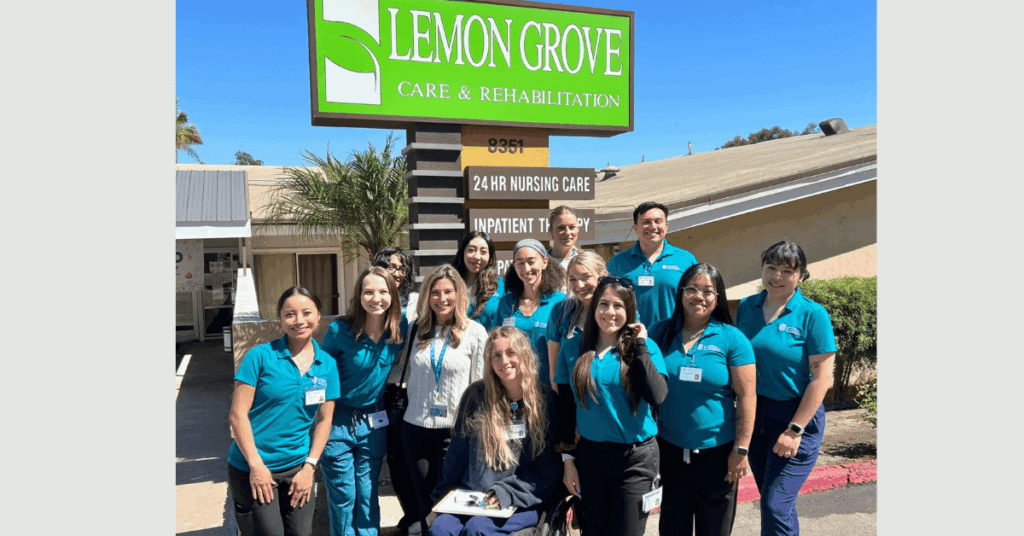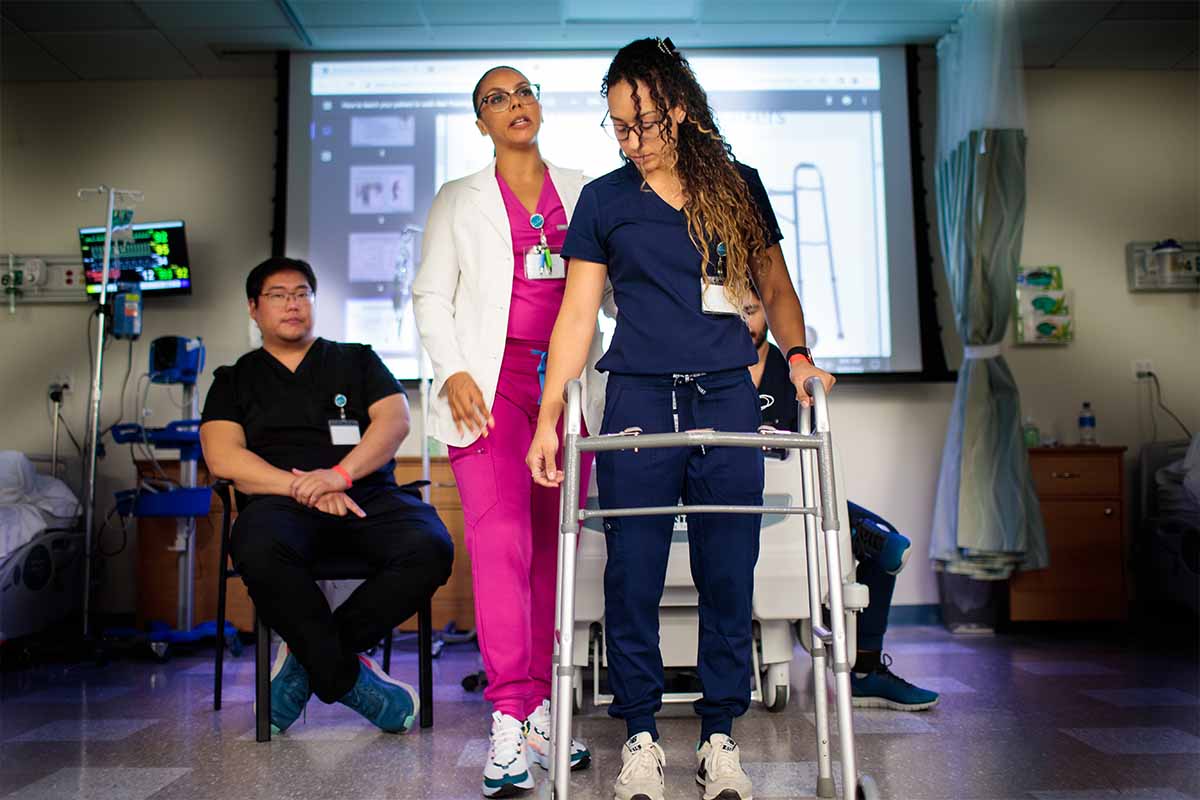


Searching for a satisfying career that helps people enhance their health and quality of life? If so, speech and occupational therapy may be promising career paths for you. As two popular professions in the healthcare industry, speech-language pathologists (SLPs) and occupational therapists (OTs) enjoy rewarding, well-paid careers—while making a lasting difference in the lives of their individuals.1,2
Both SLPs and OTs aim to improve the well-being of their patients and clients. While there are similarities between the two career paths, there are also radical differences.
Read on as we unpack the speech therapy vs occupational therapy debate and discover the route that resonates with you.
What is a Speech-Language Pathologist?
SLPs, or speech therapists, are licensed healthcare providers who aim to improve patients’ speech, language and swallowing abilities. In some scenarios, this may also include assisting patients with oral complications, such as infants who have trouble swallowing or adults who have difficulty with vocalizing.
The work of an SLP also extends beyond addressing speech and language disorders. They play a crucial role in enhancing cognitive-communication and social interaction skills, too.
This includes working with individuals with traumatic brain injuries to improve memory and problem-solving strategies. Speech therapists also help individuals with social communication difficulties build the skills to navigate and thrive in social and community settings.
Additionally, the expertise of a SLP extends to developing and implementing alternative communication strategies for those unable to speak. They may also use technology and sign language to foster effective communication.
Speech therapists work in a variety of healthcare settings—and with a wide range of individuals. This may include:
- Stroke victims who need to relearn how to talk
- Children and adults who stutter or struggle with semantics and syntax
- Patients with autism, hearing loss or developmental delays
SLPs work with individuals across the lifespan, from toddlers to teens to seniors, and have the opportunity to make an enduring impact on their patients. They ranked the third-best healthcare profession and the number 9 overall job among the 100 Best Jobs, according to U.S. News & World Report.3,4
What is an Occupational Therapist?
Occupational therapists are also licensed healthcare providers who offer therapeutic support. They focus on the ability to perform essential daily activities, such as bathing, eating and getting dressed. OTs also assist individuals and their family members or caregivers with learning how to use adaptive equipment to make everyday tasks safer and more accommodating.
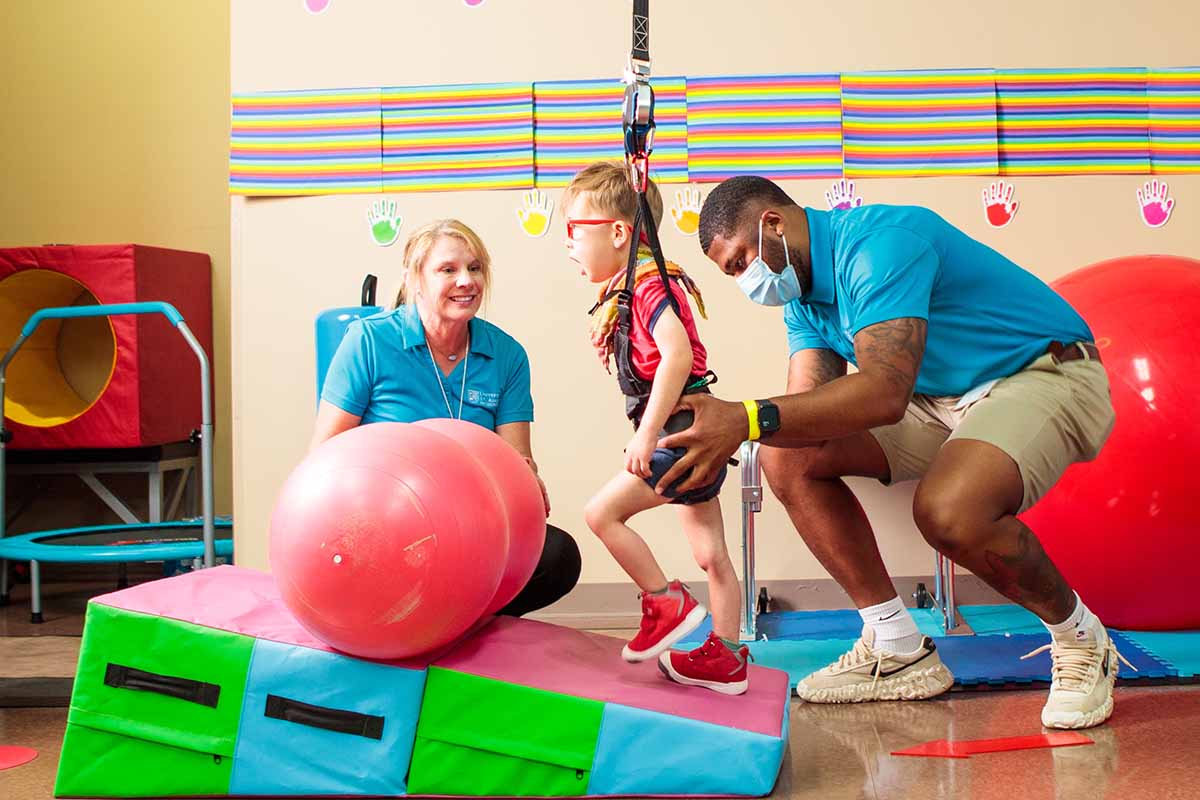
Occupational therapists specialize in customizing interventions to improve a client’s ability to perform daily activities. This can include adapting the environment to the individual’s needs to promote increased independence. For children with developmental challenges, OTs creatively incorporate play as a form of therapy to enhance motor skills, socialization and learning abilities.
Assisting aging adults is another pivotal function of occupational therapists. OTs often work to modify the homes and lifestyles of their elderly clients to improve their quality of life while maintaining their freedom and preventing injuries.
Like SLPs, OTs are employed in a variety of healthcare settings. Whether in a clinic or nursing home, OTs empower clients to take charge of their personal well-being and prepare caregivers to help them through this process. OTs also work with clients of all ages. This might mean helping:5
- Seniors who may be prone to falls and accidents
- Clients with developmental delays
- Children and adults who have suffered from an injury
When comparing a career in speech therapy vs occupational therapy, OTs fill a necessary gap between a physician’s diagnosis and the stress of daily living. They can help clients, regardless of their condition or illness, regain a sense of autonomy, power and independence.

Speech Therapy vs Occupational Therapy: How Do They Compare?
So, SLP vs OT. Each profession provides a distinct way of helping individuals reach their full potential. If you’re fascinated by language and communication, then speech-language pathology may be a natural fit. You may consider occupational therapy if you are interested in the mechanics of daily living and individuals’ capacity to adapt, relearn and heal.
Speech-Language Pathologist vs. Occupational Therapist
| Speech-Language Pathologist (SLP)1 | Occupational Therapist (OT)2 | |
| Primary Focus | Improving communication, speech, language, cognition, voice and swallowing | Helping people develop, regain or adapt the skills needed for daily living, work and meaningful activities |
| What They Treat | Speech and language disorders, stuttering, social or cognitive communication challenges, voice and swallowing disorders | Fine motor challenges, sensory processing differences, physical injuries, developmental delays, neurological conditions and difficulties with daily tasks |
| Typical Work Settings | Schools, hospitals, rehabilitation centers, outpatient clinics, skilled nursing and residential care facilities | Hospitals, rehabilitation centers, schools, outpatient clinics, skilled nursing facilities, mental health settings, home health and more |
| Degree Required | Master’s degree in speech-language pathology | Master’s degree in occupational therapy (depending on the program) |
| Licensure and Certification | State licensure plus passing the Praxis® Speech-Language Pathology exam (requirements vary by state) | State licensure plus passing the NBCOT® certification exam |
| Median Annual Salary (U.S., as of 2025) | $97,870† | $100,330† |
| Projected Job Growth (2025-2035) | 17% | 15% |
When it comes to the occupational therapy vs speech therapy debate, there are other key aspects to consider, including:
Salary
What is the difference in OT vs SLP salary? Both speech therapy and occupational therapy professionals have a genuine desire to enrich the lives of others, but salary may be a consideration. Here’s how average salaries in speech therapy vs occupational therapy compare:
- Speech-Language Pathologists – The most recent data from the U.S. Bureau of Labor Statistics (BLS) indicates that SLPs earn a median income of $97,870 per year.1† SLPs who are employed in nursing care facilities and residential care settings earn a median income of $109,660 annually, while those who provide educational services earn about $83,120 per year.1† The type of medical facility they work in, the state where they practice and their specialty can all impact an SLP’s salary.
- Occupational Therapists — According to BLS data, an OT’s median annual income is $100,330.2† OTs who work in home healthcare environments, for example, earn a median annual salary of $106,300.2†
Education and Training
If you are wrestling with the question of occupational therapy vs speech therapy, remember that both require dedicated training—at didactic and clinical levels.
- Speech-Language Pathologist – SLPs typically need to earn a Master of Science in Speech-Language Pathology (MS-SLP), a speech pathology degree program that takes about 1 year, 8 months to complete.* Then, they can apply for temporary licensure in their state and participate in a clinical fellowship. Following graduation, SLPs typically complete a postgraduate fellowship where they work under the supervision of an experienced and certified SLP. Clinical fellowships require a commitment of at least 1,260 hours over 36 weeks.6 To earn state licensure, SLP graduates in many states must pass the national Praxis exam in Speech-Language Pathology.7 Some states may require additional certifications and credentials.
- Occupational Therapist – OTs must be educated and trained at the graduate level as well and typically must earn either a Master of Occupational Therapy (MOT) or a Doctor of Occupational Therapy (OTD). At the University of St. Augustine for Health Sciences (USAHS), our MOT program takes about 1.7 to 2.7 years to complete*; and our OTD program generally takes 2–3 years to complete.* Both programs prepare graduates to sit for the national examination for licensure—a test administered by the National Board for Certification in Occupational Therapy (NBCOT).8

Finally, OTs need to be licensed in the state they choose to work, and requirements may vary by state.9 OTs also must complete supervised fieldwork to obtain licensure.10 Students must complete 24 weeks of Level II fieldwork within 24 months following completion of all prior didactic portions of the program.
For instance, at USAHS, we require prospective students to have the following:
- For an MOT:
- A bachelor’s degree from an accredited institution or an OTA degree with at least 84 college credit hours from a U.S. Department of Education recognized institution for OTA candidates
- Official transcripts from each degree-conferring institution
- Current resume or curriculum vitae
- Statement of purpose, answers to OT supplemental questions
- Completion of prerequisite coursework
- For an OTD:
- A bachelor’s degree from an accredited institution
- Official transcripts from each degree-conferring institution
- Current resume or curriculum vitae
- Statement of purpose, answers to OT supplemental questions
- Completion of prerequisite coursework
- Additional written essay
The GRE is not required for admission to USAHS’ MOT or OTD programs. The Occupational Therapy department does not require observation hours to apply for our graduate programs, however, it is highly recommended that all applicants observe occupational therapy in at least two areas of practice. This will not only support your submission essays; it will also help to ensure that you are well suited for this field of study.
Job Outlook
Both speech-language pathology and occupational therapy are experiencing strong job growth, making them promising career paths for future healthcare professionals.
- Speech-language pathologists (SLPs): Employment is projected to grow 17% from 2025–2035, much faster than the average for all occupations, with about 12,500 openings annually, over the decade.1
- Occupational therapists (OTs): Employment is expected to grow 15% from 2025–2035, with approximately about 10,000 openings annually, over the decade.2
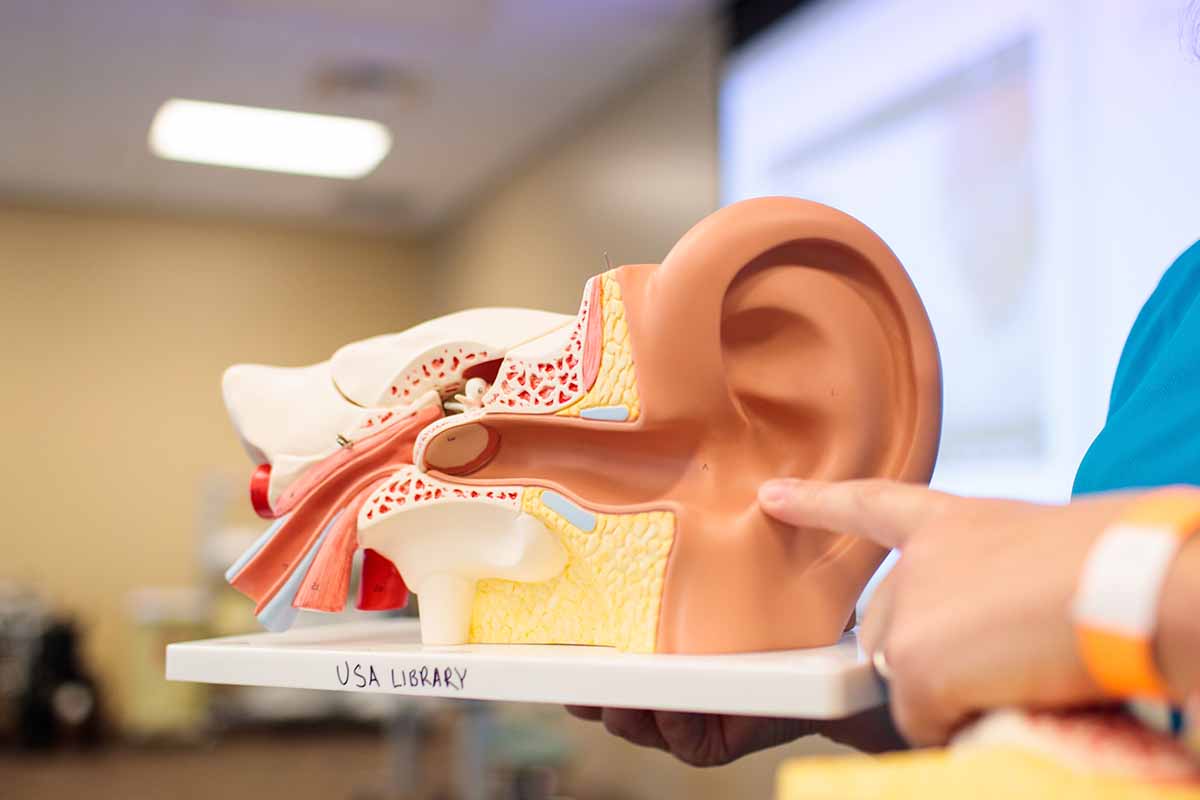
3 Key Differences Between Speech Therapy and Occupational Therapy
Key Difference #1: Primary Focus: Communication & Swallowing vs. Everyday Living Skills
The biggest difference between occupational therapy vs speech therapy is what each profession is designed to improve.
Speech-language pathologists focus on evaluating and treating speech, language, communication and swallowing disorders. They help individuals overcome communication barriers and improve their ability to express themselves, understand others and swallow safely.
Occupational therapists help people develop, regain or adapt the skills needed for everyday living. Whether someone is recovering from an injury, managing a disability or navigating a developmental condition, OTs work to increase independence in daily activities such as dressing, eating, writing, working and self-care.
Key Difference #2: Therapeutic Approach: Structured Communication Exercises vs. Functional, Activity-Based Therapy
Although both professions use evidence-based interventions, their treatment approaches differ based on the outcomes they are working toward.
SLPs typically use structured communication and swallowing interventions tailored to a patient’s specific needs. Therapy may focus on improving speech production, language development, cognitive-communication skills, voice or safe swallowing.
Key Difference #3: Where They Work & Who They Treat: Settings, Patients or Clients & Goals
SLPs and OTs often work in many of the same settings, including hospitals, rehabilitation centers, schools, outpatient clinics, skilled nursing facilities and home health. They also treat patients and clients across the lifespan, from young children to older adults.
Although SLPs and OTs often work side by side, their responsibilities look very different in practice. For example, after a stroke, an SLP may help a patient regain the ability to swallow safely or communicate more effectively. An OT helps that same individual relearn everyday tasks such as buttoning a shirt, preparing a meal or using adaptive equipment. In a school setting, an SLP might work with a child on producing speech sounds or improving language skills, while an OT focuses on handwriting, fine motor development and sensory regulation to support success in the classroom.
This collaborative approach is reinforced by faculty research. An article co-authored by Casey Keck, PhD, CCC-SLP, residency director and associate professor, MS-SLP program at USAHS, underscores the importance of interdisciplinary care in stroke rehabilitation, showing how SLPs and OTs work together to address the complex communication, swallowing and daily living challenges individuals may face after a stroke.
Their day-to-day responsibilities differ, but both professions share a common goal: improving quality of life by helping people overcome challenges that affect their health, independence and well-being.
Where SLP vs OT Overlap
Because OTs and SLPs frequently care for the same clients and patients, they often collaborate as a part of multidisciplinary healthcare teams. Both careers require compassion, strong communication skills and attention to detail, and each plays a complementary role in helping individuals achieve the best possible outcomes.

Innovations in Speech and Occupational Therapy Careers
Advancements in technology and research are shaping the future of speech therapy and occupational therapy, creating new opportunities for patient and client care, diagnosis, and treatment. From treatment optimization and evaluation and intervention tools to support occupational therapy, to sophisticated software that uses artificial intelligence (AI) to analyze and improve speech patterns, these innovations will set new standards in therapeutic care.11,12
Since the pandemic, teletherapy has emerged as a significant development.13 It’s breaking down geographical barriers and making speech and occupational therapy services more accessible to all. This digital approach not only expands the reach of therapists but also introduces a level of flexibility and convenience previously unavailable.12
Moreover, wearable technology is being integrated into OT, enabling continuous monitoring and feedback for clients with physical disabilities or those recovering from strokes.14 Wearables can support more personalized therapy plans and accelerate progress by allowing therapists to adjust strategies in real time based on data-driven insights.

Frequently Asked Questions (FAQs)
What is the main difference between speech therapy and occupational therapy?
The primary difference is their focus. SLPs help people improve communication, speech, language, cognition, voice and swallowing.1 OTs help people develop, regain or adapt the skills needed for everyday activities such as dressing, eating, writing, working and self-care.2
Do SLPs and OTs work together?
Yes. SLPs and OTs frequently collaborate as part of a multidisciplinary healthcare team in hospitals, rehabilitation centers, schools, outpatient clinics and other settings.1,2 While they have different treatment goals and approaches, they often work with the same patients or clients to improve overall function and quality of life.
Which earns more, SLP vs OT?
According to BLS, OTs have a slightly higher median annual salary than SLPs.1,2† However, salaries for both professions vary by experience, location, employer and specialty.
Which takes longer to become: an SLP or an OT?
Both careers typically require about six to seven years of higher education, including a bachelor’s degree and a graduate degree. SLPs earn a master’s degree in speech-language pathology, while OTs complete either a master’s or doctoral degree in occupational therapy.1,2
Can a patient or client need both speech and occupational therapy?
Yes. Many patients benefit from both services. For example, someone recovering from a stroke may work with an SLP to improve communication and swallowing while working with an OT to regain independence with activities of daily living (ADLs).1,2
Should I become an SLP or an OT?
The best choice depends on your interests and career goals. If you are passionate about communication, SLP may be the better fit. If you are drawn to helping people become more independent through functional rehabilitation, OT may be the right path.1,2
Discover the Right Healthcare Profession for You
Ultimately, your occupational therapy vs speech therapy decision will come down to your personal and professional goals. Each career path boasts a wealth of benefits. Beyond salary, you’ll likely have the opportunity to provide your patients and clients with the skills that they need to flourish.
Fortunately, USAHS can help you further navigate this OT-speech therapy decision. Our graduate occupational therapy programs and Master of Science in Speech-Language Pathology (MS-SLP) are designed to help aspiring healthcare practitioners receive the continuing education and training they need to thrive.
Request information about our MS-SLP and OT programs and apply now to discover the right career path for you.
*Time to completion may vary by student, depending on individual progress, traditional vs. accelerated pathway, credits transferred and other factors.
†This data represents national figures, is not based on school-specific data and represents national median annual wages, not starting pay for recent grads. Conditions in your area may vary. USAHS does not guarantee salary levels.
Sources
- “Occupational Outlook Handbook: Speech-Language Pathologists,” U.S. Bureau of Labor Statistics (BLS), August 28, 2025, https://www.bls.gov/ooh/healthcare/speech-language-pathologists.htm
- “Occupational Outlook Handbook: Occupational Therapists,” U.S. Bureau of Labor Statistics (BLS), , August 28, 2025, https://www.bls.gov/ooh/healthcare/occupational-therapists.htm
- “Best Health Care Jobs”, S. News & World Report, 2026, https://careers.usnews.com/best-jobs/rankings/best-healthcare-jobs.
- “100 Best Jobs,” S. News & World Report, 2026, https://careers.usnews.com/best-jobs/rankings/the-100-best-jobs.
- “What is Occupational Therapy?,” The American Occupational Therapy Association (AOTA), 2026, https://www.aota.org/about/what-is-ot.
- “A Guide to the ASHA Clinical Fellowship Experience,” The American Speech–Language–Hearing Association (ASHA), 2026, https://www.asha.org/certification/clinical-fellowship/.
- “Register for a Praxis Test,” Educational Testing Service (ETS), Praxis, 2026, https://praxis.ets.org/test-taker/register-process.html.
- “We certify the knowledge of occupational therapy professionals”, National Board for Certification in Occupational Therapy (NBCOT), 2026, https://www.nbcot.org/.
- “OCCUPATIONAL THERAPY PROFESSION—CONTINUING COMPETENCE REQUIREMENTS,” American Occupational Therapy Association (AOTA), State Affairs Group, April 2026, https://www.aota.org/-/media/corporate/files/advocacy/licensure/stateregs/contcomp/continuing-competence-chart-short.pdf
- “Supervision requirements,” American Occupational Therapy Association (AOTA), 2026, https://www.aota.org/career/state-licensure/supervision-requirements.
- Hood, T., “Artificial Intelligence’s Role in Occupational Therapy—The Innovation and Instability,” American Occupational Therapy Association (AOTA), August 1, 2024, https://www.aota.org/publications/student-articles/career-advice/ai-innovation-instability. Georgiou, G., “Transforming Speech-Language Pathology with AI: Opportunities, Challenges, and Ethical Guidelines,” Healthcare, September 28, 2025, https://pmc.ncbi.nlm.nih.gov/articles/PMC12524231/.
- “The Growing Role of Telehealth in Physical, Occupational, and Speech Therapy”, The National Association of Rehabilitation Providers and Agencies (NARA), July 26, 2023, https://www.naranet.org/blog/post/the-growing-role-of-telehealth-in-physical-occupational-and-speech-therapy.
- Miller, A., et al., “Perspectives of key stakeholders on integrating wearable sensor technology into rehabilitation care: a mixed-methods analysis,” Frontiers in Digital Health, April 27, 2025, https://www.frontiersin.org/journals/digital-health/articles/10.3389/fdgth.2025.1534419/full.