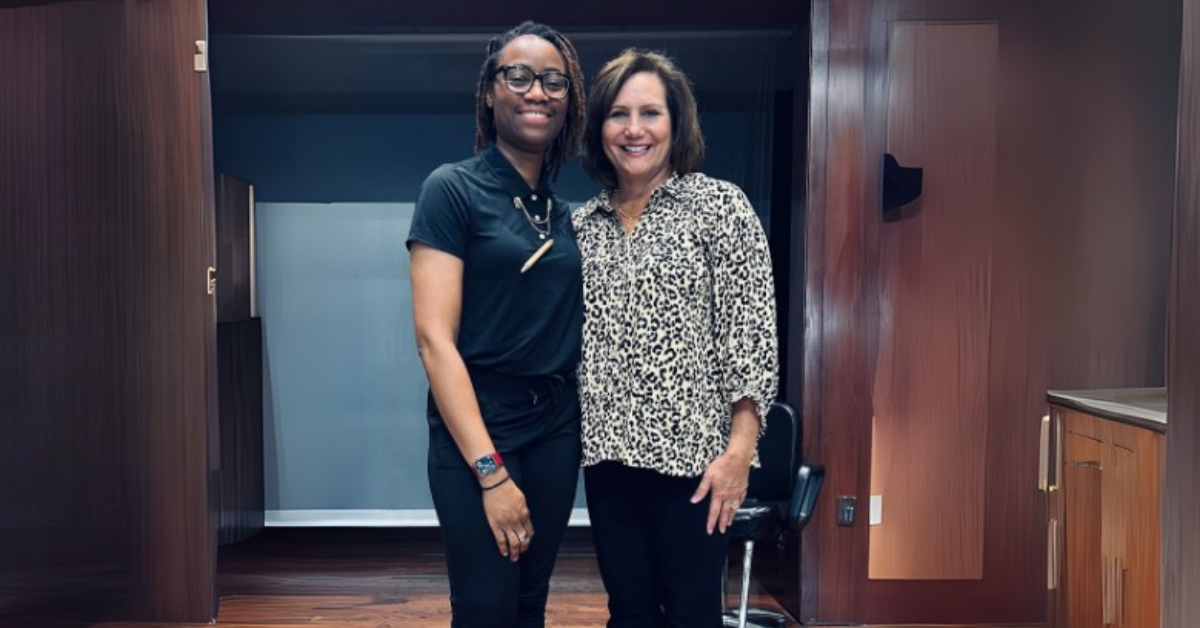
For many in the beauty industry, long hours and physical demands are simply part of the job, even as they take a toll on the body. But Doctor Occupational Therapy student Stacy Bello recognizes that the daily strain these professionals face can add up to something bigger: a widespread risk for work-related musculoskeletal disorders. The inspiration to center her capstone project on this issue came to her at a fitting location: in the hair salon chair.
“I was transitioning from natural hair to dreadlocks at the end of my first year in occupational therapy school,” says Bello. “While observing the posture and movements of my cosmetologist during hair washing and styling, I became curious about their discomfort, body positioning, pain management strategies, and education surrounding joint protection. Listening to their responses made me realize the crucial role that occupational therapy can play in providing education and advocacy for this population, which is at a high risk for repetitive strain injuries that often go unaddressed.”
She tackled this problem head-on through her capstone research, collaborating with Aveda Arts and Sciences Institutes and two independent salon owners to assess awareness of these issues and provide critical education on ergonomics and joint protection.
Understanding the Ergonomic Challenges
Cosmetologists and estheticians often spend hours on their feet, performing repetitive motions without sufficient breaks. Bello found that many professionals adopt a “booked and busy” mindset, prioritizing their clients over their own well-being. Due to the demands of the job and, at times, a lack of education in the workplace on joint protection, professionals will ignore their bodies’ signals until the pain or injury becomes unavoidable.
“They don’t realize the toll until about seven years into their careers,” she explains. “By then, the damage is already done. I encountered one worker from Aveda who had been working for 10-15 years. She was used to standing on a soft floor, but then she transitioned to a workplace with a hard floor that resulted in her contracting a leg injury. Another woman I met tore her rotator cuff. It’s critical that these hard-working individuals understand the importance of addressing pain at its early stages and that it’s okay to tell clients ‘no’ and take breaks.”
Bello found that long shifts with few breaks are only one of the culprits that can put them at risk for injury. Other norms, including relying on starchy snacks to sustain them through the day instead of fueling with proper nutrition, can lead to energy crashes. The physical environment is also paramount. Simple changes like having hair tools within arm’s reach to avoid over-extension, standing on cushioned mats instead of the hard floor, and having proper lighting all contribute to better ergonomics.
Research and Findings
To explore these issues, Bello used a mix of observational research, surveys, and educational presentations. She began by assessing cosmetologists’ baseline knowledge of ergonomics and joint protection through pre-surveys. After delivering a presentation on common musculoskeletal disorders—focusing on the hand, wrist, elbow, and shoulder—she followed up with a post-survey to measure the effectiveness of the training.
One surprising finding was that while beauty schools provide some ergonomic education, it is often superficial. “They go over how to hold shears, but there’s so much more that could be covered,” Bello notes. “This training should be more in-depth and emphasize injury prevention with real-world examples.”
Additionally, schools provide essential tools but often lack ergonomic equipment, such as anti-fatigue mats. Bello took her concerns to the Texas Department of Licensing and Regulation (TDLR) to understand why such equipment isn’t required. Through her outreach, she connected with a local board member to discuss potential changes.
“Protecting professionals early on means they can have longer, healthier careers,” she says. “If we don’t address these issues now, we risk losing talented individuals to preventable injuries.”
Making Occupational Therapy Accessible
Through this project, Bello gained a deeper understanding of how occupational therapy can make a difference in underrepresented industries. Due to insufficient resources, many cosmetologists seek advice from social media rather than healthcare professionals.
“Health literacy is a challenge. The way we speak in healthcare isn’t how they speak in the salon,” Bello explains. “As an OT, I want to be a bridge—helping them communicate their concerns to doctors and navigate solutions.”
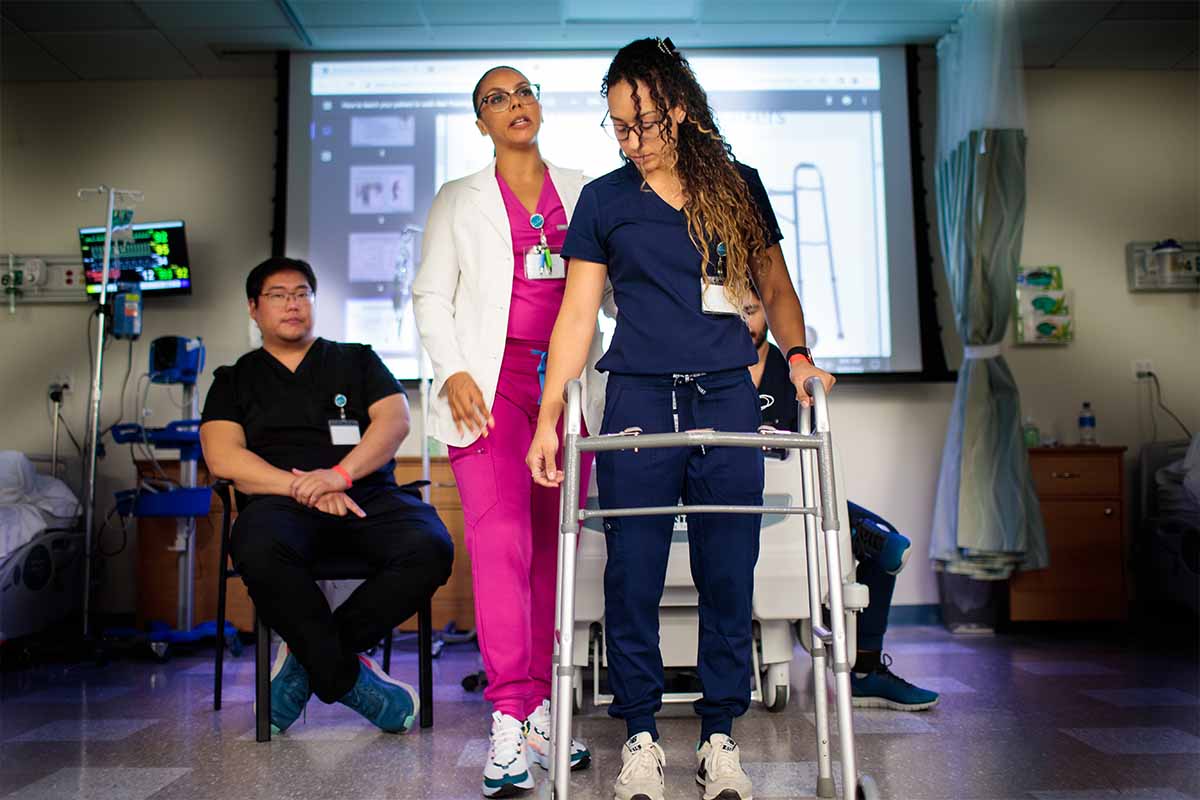
Her experience highlighted the importance of holistic care, not only for easing one’s job but for improving overall well-being. “OT isn’t just about walking—it’s about function. You can walk all you want, but can you hold a cup? Can you do your job without pain?”
Bello hopes to work in acute care for a few years before expanding her research into continuing education opportunities for beauty professionals. “There’s not enough good information out there,” she says. “I want to help stylists address problems at the root—not just put a band-aid on them.”
Through her dedication, Bello is shaping the future of ergonomic education in the beauty industry, ensuring that cosmetologists and estheticians have the tools they need to work safely and sustainably.