
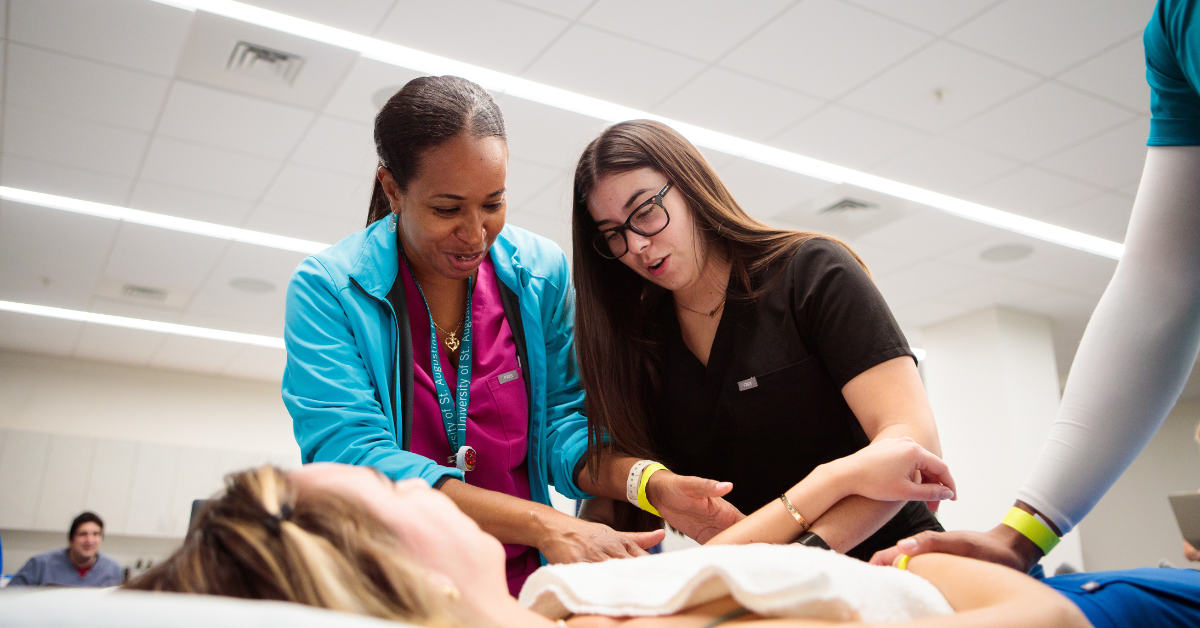
Interested in becoming a pelvic floor therapist? The path is more straightforward than you might think, and it starts with a strong foundation. Pelvic health specialists begin by earning a Doctor of Physical Therapy (DPT) degree and licensure, then build advanced expertise through specific continuing education and mentored clinical experience.1
Early exposure to pelvic health therapy, through observation hours, electives or clinical rotations, can make a big difference. It helps you graduate confident, prepared and ready to pursue specialization.
At the University of St. Augustine for Health Sciences (USAHS), we support your journey to becoming a certified pelvic floor therapist with three flexible DPT program pathways, so you can choose the option that aligns with your lifestyle while gaining the training you need for pelvic health practice and beyond.
If you’re looking for a specialized path in physical therapy that can support people across the lifespan, pelvic floor therapy may be a good fit for you. Pelvic floor therapy is a subspecialty of physical therapy focused on concerns such as urinary incontinence, pelvic pain, prolapse, bowel dysfunction and sexual dysfunction, which affect many adults, especially women.1
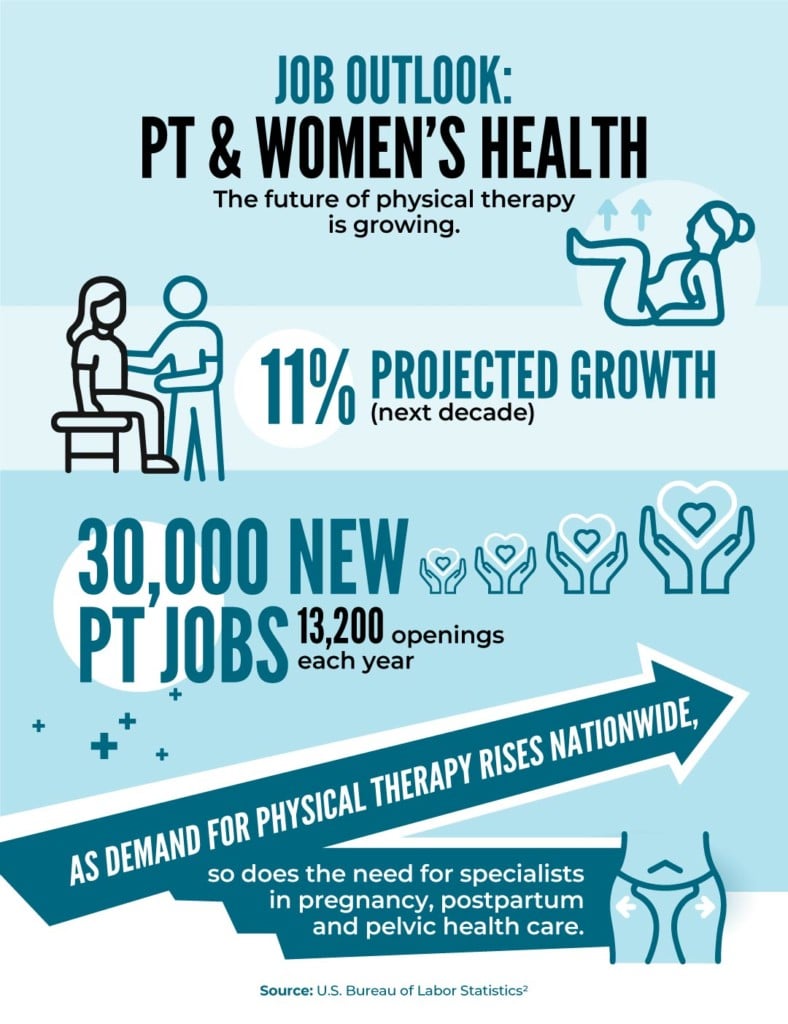
One reason pelvic health is in such high demand is the prevalence of pelvic floor dysfunction symptoms.2 If you pursue pelvic floor therapy, you can build a skill set that’s both highly specialized and widely needed.
To become a pelvic floor physical therapist (PT), you’ll need to earn a Doctor of Physical Therapy (DPT) degree from an accredited program. At USAHS, we offer a DPT program designed to help you build a strong foundation in evaluation, movement science and evidence-based care so you’re prepared to grow into specialized practice areas, such as pelvic health.
You can earn a DPT at USAHS in a Residential, Hybrid Immersion or Flex format, depending on the learning experience and schedule that fits your lifestyle. Let’s review the key steps to becoming a pelvic floor therapist and break down our DPT pathways so you can choose the option that’s best for you.
What Does a Pelvic Floor Therapist Do?
So, what does a pelvic floor therapist do? Before diving into the path for how to become a pelvic floor therapist, it’s helpful to understand what a pelvic floor therapist does.
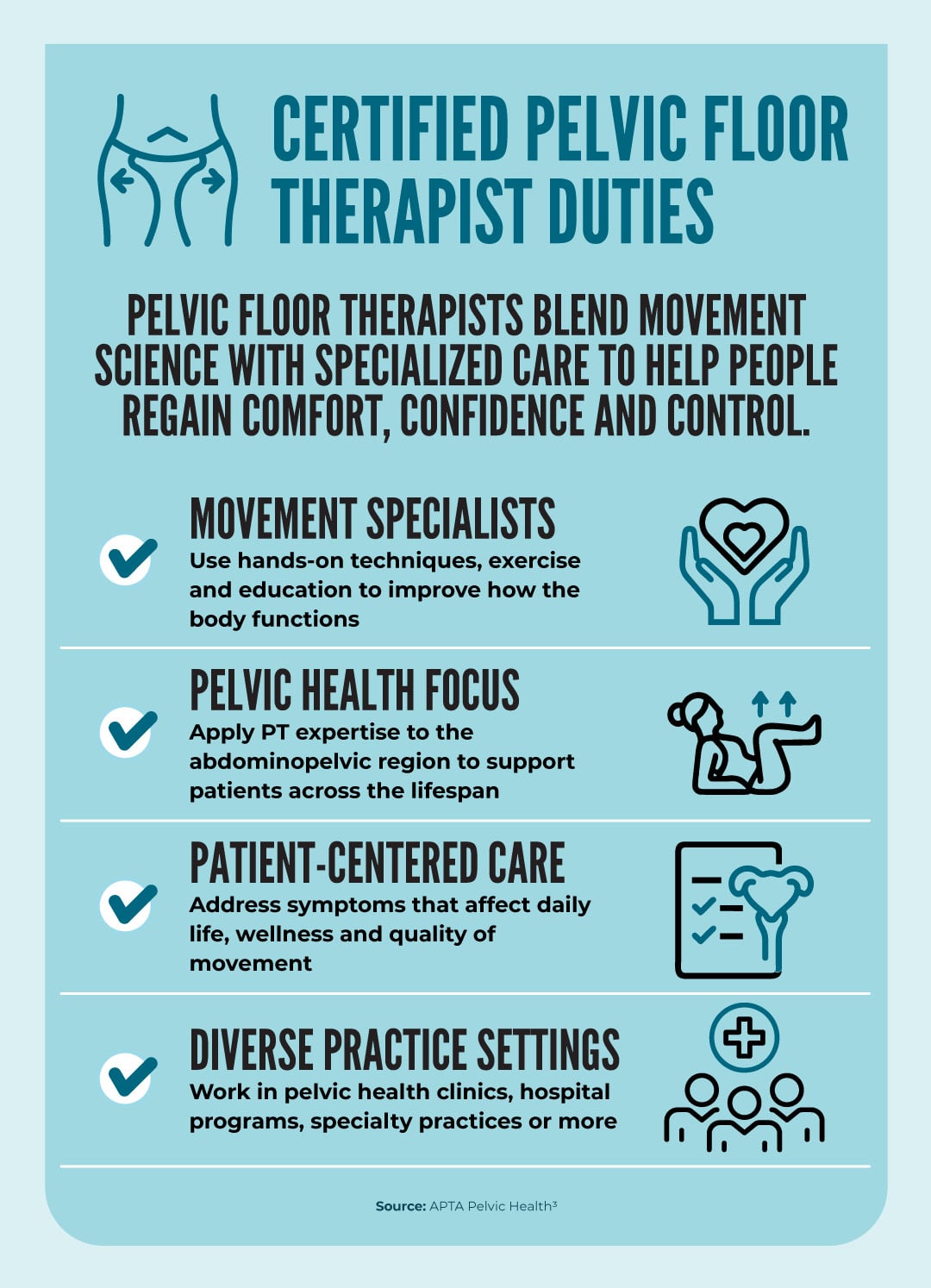
Physical therapists, generally speaking, are movement experts who improve quality of life through hands-on care, patient education and prescribed movement; pelvic health PTs apply those skills specifically to the abdominopelvic region.
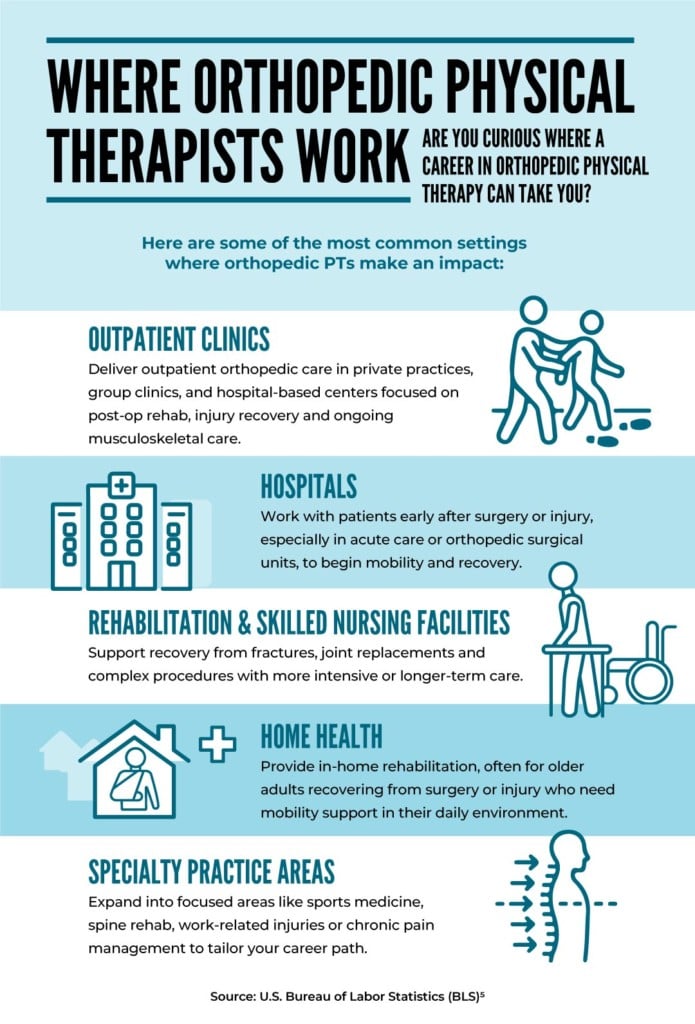
As pelvic health physical therapy is a specialized form of PT, it’s typically delivered at outpatient pelvic health clinics, hospital-based women’s health/urogynecology services and specialty pelvic clinics. However, if you choose this specialty, you may also work at a general outpatient orthopedic clinic with a pelvic health track or provide home health visits.1
What Degree Pathway Is Needed to Practice Pelvic Floor Therapy?
When you’re exploring education options for a career in pelvic health, there’s one primary route most clinicians take and one common alternative. Most pelvic health therapists are licensed physical therapists who earn a DPT degree and then complete additional pelvic health training.1
As you research DPT programs, it’s recommended to choose an accredited program and find a format that fits your day-to-day life. At USAHS, we offer multiple DPT pathways so you can build your foundation in physical therapy in a way that works for your schedule and learning style.
There’s also an alternative pathway for how to become a certified pelvic floor therapist through occupational therapy. Licensed occupational therapists (OTs) who complete pelvic health or pelvic floor continuing education can provide specialized treatment for pelvic floor conditions as part of their practice.3
Preparation for a Career in Pelvic Floor Therapy
The first step toward becoming a certified pelvic floor therapist is to complete your undergraduate education. According to the American Physical Therapy Association (APTA)1 and the Commission on Accreditation in Physical Therapy Education (CAPTE),4 PT students typically complete a bachelor’s degree with strong science preparation.
A strong academic foundation can help you thrive as a doctoral student and in your future career. That’s why most DPT programs require specific prerequisite courses as part of the admissions process. For example, at USAHS, prospective DPT students need prerequisites such as general or upper-level chemistry, physics, biology, human anatomy and physiology, social science and medical terminology.
Prerequisites vary by program, so it’s smart to double-check each school’s admissions page. A course that’s required for one program may only be recommended or not listed for another. As you prepare, it also helps to keep your undergraduate GPA competitive and complete observation hours in general physical therapy so you can confirm the profession is the right fit and strengthen your application.
If you have the opportunity, gaining exposure in pelvic health settings through volunteering or observation can be a great way to build relevant experience and show career direction.
Doctor of Physical Therapy (DPT) Degree
In the U.S., entry-level practice for new physical therapists requires a DPT degree from a CAPTE-accredited program.5 CAPTE is recognized by the U.S. Department of Education as the accrediting body for PT and Physical Therapist Assistant (PTA) education, which means that you should choose a program listed in the CAPTE directory if you want to be a practicing pelvic floor therapist, or any other type of physical therapist.4
How much pelvic health content you’ll see in a DPT program can vary from school to school. APTA Pelvic Health provides curriculum guidance for DPT programs that outlines recommended pelvic and women’s health topics such as pelvic anatomy, continence and pregnancy and postpartum considerations.
If you already know you want to specialize in pelvic floor therapy, it can be helpful to do a little extra homework before you apply. Consider reaching out to each program’s admissions or academic team to ask how pelvic health is incorporated into the curriculum, what related elective options are available and whether students have opportunities to gain exposure through labs, clinical experiences or faculty expertise.
At USAHS, you can connect with an enrollment advisor who can answer all of your questions about the program.
Obtain Your PT License
After you graduate from a DPT program, there are still a few steps to complete before you can practice as a licensed physical therapist. To become a PT, you’ll need to pass the National Physical Therapy Examination (NPTE) and meet your state’s licensure requirements, such as jurisprudence exams, background checks and other state-specific requirements, as outlined by the Federation of State Boards of Physical Therapy (FSBPT).6
As requirements vary by state, it helps to plan. The FSBPT Licensure Reference Guide can give you a side-by-side look at requirements across jurisdictions, and it’s also smart to review your target state’s licensing board website for timelines and application details.6
Keep in mind that your process may look different from your classmates’ if you plan to practice in a different state, which is why doing research is a key part of staying on track.
Consider Advanced Pelvic Health Certifications
As a licensed PT, you have a few options to continue specializing in pelvic health treatment.
First, there’s the Certificate of Advanced Practice in Physical Therapy in Pelvic Health (CAPP-Pelvic). This certificate is offered by the APTA Pelvic Health and awarded to licensed PTs and PTAs who complete a multi-course sequence, written and practical assessments and a case or treatment reflection.7
If you know that you specifically want to work with pregnant and postpartum patients as a certified pelvic floor physical therapist, you can pursue the Certificate of Advanced Practice in Physical Therapy in Obstetric Health (CAPP-OB). PTs often pursue this certificate alongside or after CAPP-Pelvic.8
Another advanced certification option is board certification in Pelvic and Women’s Health Physical Therapy (PWCS). APTA’s American Board of Physical Therapy Specialties (ABPTS) certifies women’s health clinical specialists who demonstrate advanced knowledge and experience in women’s health PT.9
Regardless of which option you choose, continuing to further your education in pelvic health physical therapy will help you become a more effective practitioner and allow you to develop and seek promotions in your professional career.
How USAHS’ DPT Program Can Help Support Your Goal of Becoming a Pelvic Floor Therapist
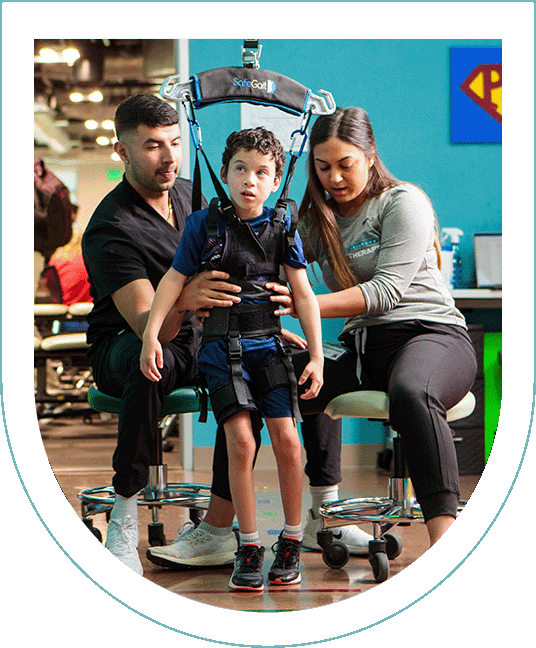
If your goal is to become a pelvic floor therapist, USAHS can help you build the foundation to get there. Our DPT program is designed to deliver an immersive learning experience that blends online study with hands-on labs and clinical education. You’ll be prepared for entry-level PT practice and positioned to pursue specialization later, including pelvic health.
Throughout the program, you’ll strengthen core skills in movement science and evidence-based practice while gaining experience through broad clinical rotations. It helps you develop a strong foundation across musculoskeletal, neurologic and cardiopulmonary care so you can step into practice confidently and adapt your skills as you move toward a specialty area.
We also know one format doesn’t fit every student. USAHS offers Residential, Hybrid Immersion and Flex DPT pathways, depending on the campus you choose to attend:
- Residential DPT: Coursework and immersive weekday lab experiences held on campus and online each week.
- Hybrid Immersion: Includes online coursework, live virtual weekday sessions and two on-campus lab immersions per term.
- Flex DPT: Built for students who need more weekday flexibility, this format combines online coursework with live virtual evening/weekend sessions and on-campus labs on select weekends so you can keep moving toward your DPT with a schedule that works for you.
Are You Ready to Pursue Pelvic Floor Therapy?
Pelvic floor therapy is a highly valued physical therapy specialty. To become a pelvic health therapist, you need to complete a science-oriented bachelor’s program and then a DPT program. Let USAHS be part of your journey to PT.
FAQs
How long does it take to become a pelvic floor therapist?
It typically takes about seven years of higher education to become a pelvic floor therapist.1 This includes four years of undergraduate education, three years of graduate education in a DPT program* and further specialized training.
Do I have to be a physical therapist to do pelvic floor therapy?
Yes, you generally have to be a physical therapist to do pelvic floor therapy. In some cases, occupational therapists, nurses and physicians can also offer pelvic floor therapy. Physical therapists are more likely to offer pelvic floor therapy than other health care providers.
What is a pelvic floor therapist salary?
The median annual salary for physical therapists is $101,020.10 A pelvic floor therapist’s salary may vary based on their level of experience, location and work setting.
*Time to completion may vary by student, depending on individual progress, credits transferred and other factors.
Salary data may not reflect starting pay for recent graduates.
References:
- “How to Become a Pelvic Health Physical Therapist (PT),” American Physical Therapy Association (APTA) Pelvic Health, , November 10, 2023, https://www.aptapelvichealth.org/info/become-a-pelvic-health-physical-therapist-pt.
- Snyder, Amber. “Women Affected More: Pelvic Floor PSA,” National Institutes of Health (NIH) Record, April 26, 2024, https://nihrecord.nih.gov/2024/04/26/pelvic-floor-psa.
- Fyhrie JH, Le Fevre E, Fruhauf CA, Weaver JA, Schmid AA, “Identifying Occupational Therapists’ Perspectives on Their Unique Role in Pelvic Health Care,” July 30, 2025, https://pubmed.ncbi.nlm.nih.gov/40735841.
- “Commission on Accreditation in Physical Therapy Education (CAPTE),” Commission on Accreditation in Physical Therapy Education, 2024, https://www.capteonline.org/.
- “American Physical Therapy Association, Commission on Accreditation in Physical Therapy Education (APTA-CAPTE),” Council for Higher Education Accreditation (CHEA).
- “Licensure Reference Guide,” Federation of State Boards of Physical Therapy (FSBPT), 2023, https://www.fsbpt.org/Free-Resources/Regulatory-Resources/Licensure-Reference-Guide.
- “Certificate of Advanced Practice in Physical Therapy in Pelvic Health or Obstetric Health (CAPP),” American Physical Therapy Association (APTA) Pelvic Health, 2026, https://www.aptapelvichealth.org/capp.
- “Certificate of Advanced Practice in Physical Therapy in Obstetric Health (CAPP-OB),” American Physical Therapy Association (APTA) Pelvic Health, https://www.aptapelvichealth.org/capp-ob.
- “Become a Board-Certified Pelvic and Women’s Health Clinical Specialist,” American Physical Therapy Association (APTA), 2025 https://specialization.apta.org/become-a-specialist/womens-health.
- “Physical Therapists,” Bureau of Labor Statistics (BLS), Occupational Outlook Handbook, August 28, 2025, https://www.bls.gov/ooh/healthcare/physical-therapists.htm#tab-5.