
What is rehabilitation science? It’s an interdisciplinary area of study focused on understanding human function, participation and its connection to health and well-being.1 Rehabilitation sciences focus on addressing limitations in functioning associated with health conditions.2 It’s a broad term that includes science-based professions such as occupational therapy, physical therapy, speech-language pathology and more.
Types of Rehabilitation Science Degrees
To become a practitioner within an area of rehabilitation sciences—such as a physical therapist (PT) or occupational therapist (OT)—earn a graduate degree. Universities offer rehabilitation science programs at the master’s and doctoral levels. Earning a bachelor’s degree is usually required. However, at USAHS we offer both an OTA entry and Bachelor’s entry to our Master of Occupational Therapy (MOT) program. With the OTA entry, even if you don’t have a bachelor’s degree you can still apply for direct enrollment to our MOT program and take the next step in advancing your OT career.
Some doctoral programs, but not all, will also call for a master’s degree for admission.
Master’s Degrees in the Rehabilitation Sciences
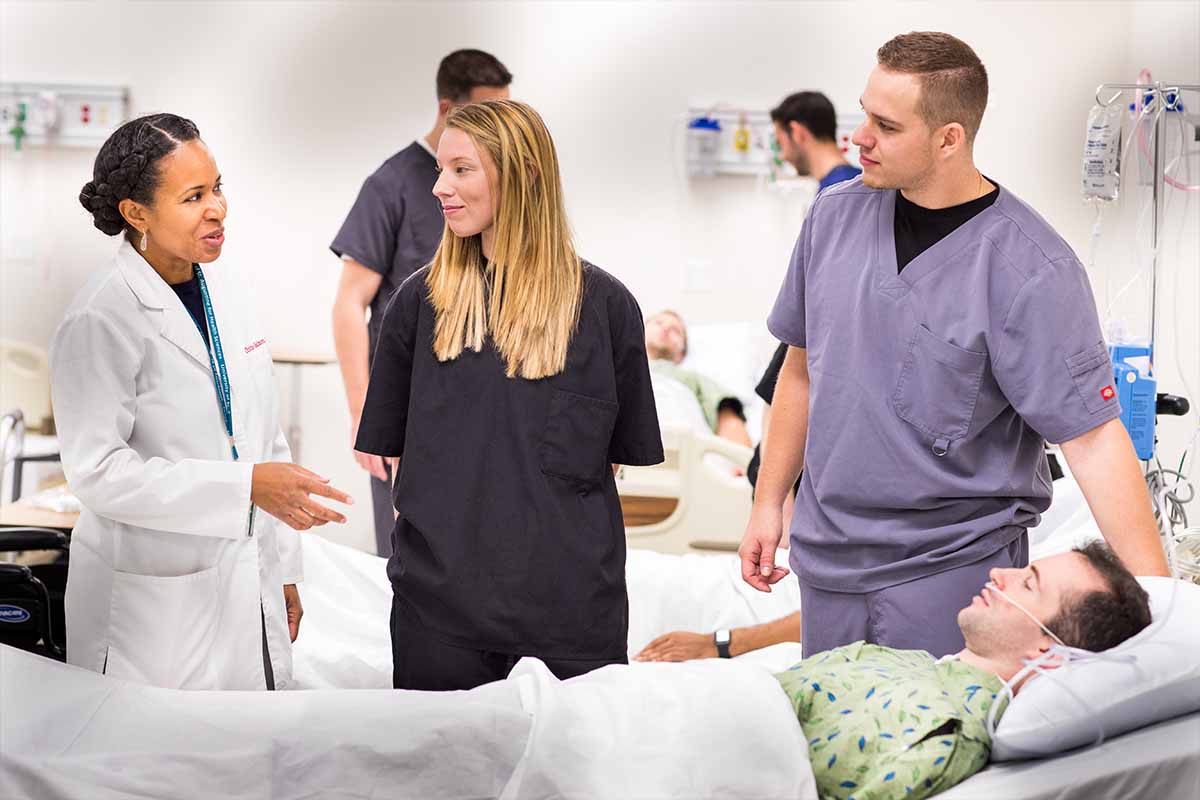
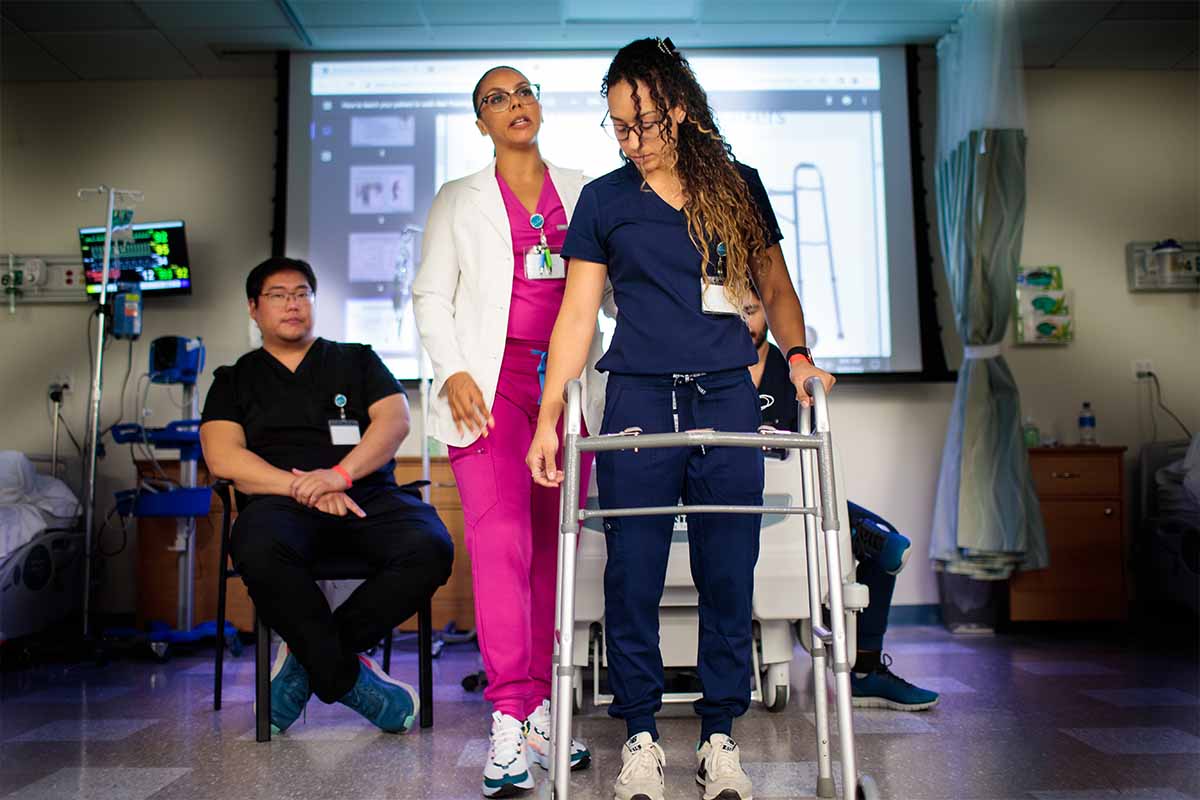
After earning a bachelor’s degree, ideally in a field related to health sciences, you can apply to a master’s program in one of the rehabilitation sciences. These programs often provide immersive, hands-on practice in labs and clinical internships, allowing you to gain valuable experience working with real patients.
Some common master’s degree programs in rehabilitation sciences are a Master of Science in Speech-Language Pathology (MS-SLP) and Master of Occupational Therapy (MOT). Depending on the program, curricula may cover various theories and practices, including:
- Assistive technology
- Theories of rehabilitation
- Client care management
- Occupational performance
- Rehabilitation science theory
- Qualitative research methods
- Adult neurogenic disorders
- Autism and social communication disorders
- Clinical applications in older adults
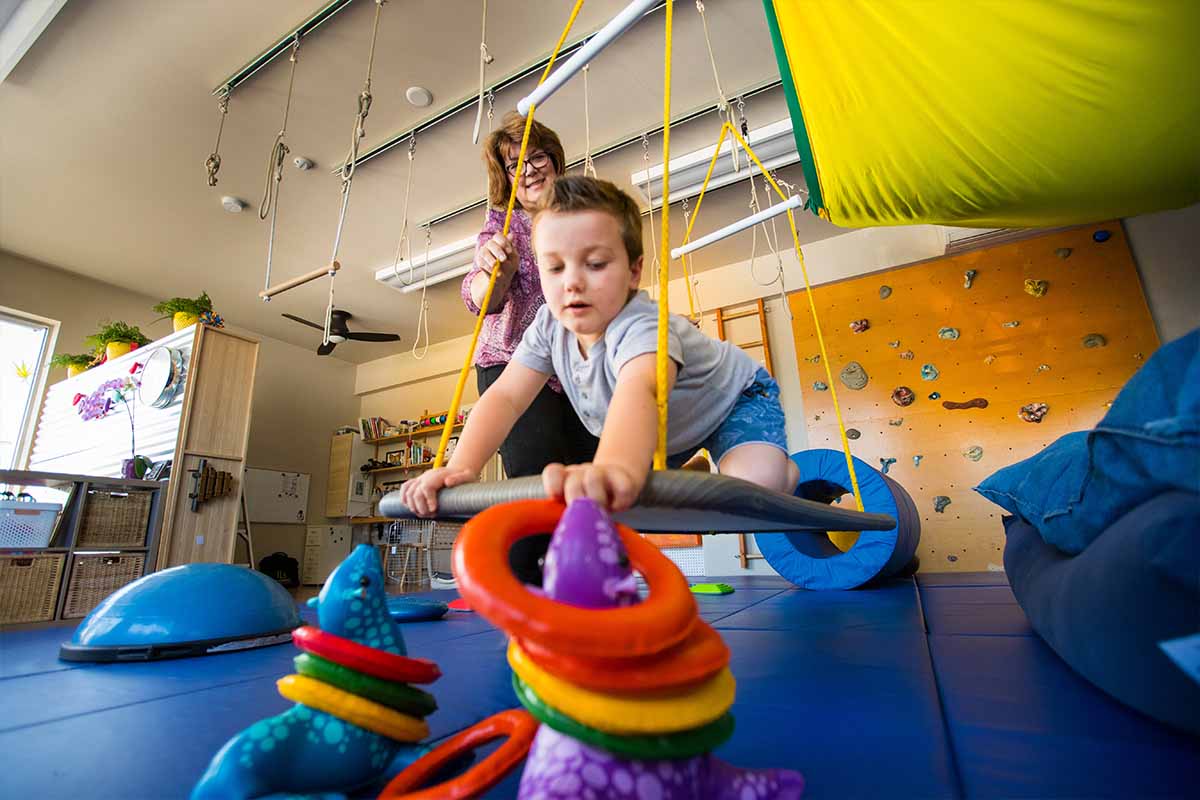
Depending on the program, you can explore areas such as assistive technology development, children’s rehabilitation, sports injury, running rehabilitation, occupational performance, and more.
Doctoral Degrees in the Rehabilitation Sciences
Ambitious students looking to further their education can opt to earn their doctorate in rehabilitation sciences. Admission requires an undergraduate degree and sometimes a graduate degree in a related field.
Some common doctoral rehabilitation science programs are a Doctor of Occupational Therapy (OTD) and a Doctor of Physical Therapy (DPT). Courses in doctoral programs may cover patient interventions and diverse research methods and practices, including:
- Applied anatomy
- Biomechanics
- Evidence-informed practice
- Differential diagnosis
- Patient/client care management
- Scholarly design
- Scholarly implementation and dissemination
With the additional education and credentials of the doctoral degree, graduates are equipped for clinical practice or to become researchers, educators, policy advocates and leaders in rehabilitation sciences.

What Can I Do with a Rehabilitation Science Degree?
Depending on the degree, graduates have the opportunity to pursue various rehabilitation science careers. They range from clinical, research and leadership positions, including:
- Occupational therapist (OT)
- Physical therapy program director
- Speech-language pathologist (SLP)
- Healthcare policy advocate
- Educator in a college or clinical setting
- Medical health services manager
- Rehabilitation science researcher
- Designer of assistive products
- Clinic owner
Employment Outlook
According to the U.S. Bureau of Labor Statistics (BLS), popular rehabilitation science careers will be booming over the next several years. Physical therapists can expect to experience a 14% increase in job growth between 2023 and 2033.3 Meanwhile, occupational therapists will see an 11% increase, followed by rehabilitation counselors with a 2% increase.4,5
A graduate degree in rehabilitation sciences will prepare you to help injured and ill patients develop or regain mobility and motor and language functions. Such degrees are your gateway to a rewarding career that allows you to help others thrive. When choosing a graduate school, find a program that offers the courses and training you need to achieve your career goals.
Sources:
- rehabINK, “what is Rehabilitation Science?,” rehabINK, https://rehabinkmag.com/rehabilitation-science/
- Gerold Stucki, “Advancing the Rehabilitation Sciences,” Frontiers in Rehabilitation Sciences, February 10, 2021;1:617749, https://pmc.ncbi.nlm.nih.gov/articles/PMC9782672/#B4.
- U.S. Bureau of Labor Statistics, “Physical Therapists: Summary,” Occupational Outlook Handbook, August 29, 2024, www.bls.gov/ooh/healthcare/physical-therapists.htm.
- U.S. Bureau of Labor Statistics, “Occupational Therapists: Summary,” Occupational Outlook Handbook, August 29, 2024, www.bls.gov/ooh/healthcare/occupational-therapists.htm.
- U.S. Bureau of Labor Statistics, “Rehabilitation Counselors: Summary,” Occupational Outlook Handbook, August 29, 2024, www.bls.gov/ooh/community-and-social-service/rehabilitation-counselors.htm.