Complex Simulation Labs, University of St. Augustine for Health Sciences
At the University of St. Augustine for Health Sciences (USAHS), students train in simulation labs designed to closely replicate real clinical environments. The labs are equipped with medical equipment, audio and video technology, and supported by staff who create and run realistic patient scenarios.
The simulations give students a chance to practice patient care, communication, and clinical decision-making in a setting where they can learn from their mistakes and ask questions. Faculty can also use the simulations to help students prepare for situations that are difficult to fully experience in a classroom or textbook.
Some simulations bring students from different programs together through interprofessional education (IPE). For example, Physical Therapy, Speech-Language Pathology, Occupational Therapy, and nurse practitioner students may work together to care for a complex patient. These experiences give students a better understanding of how different healthcare professionals contribute to patient care and how to communicate and collaborate as part of a team.
The simulation labs give USAHS students an opportunity to practice skills and work through realistic clinical situations before they encounter them in practice. By combining hands-on training with opportunities to work across disciplines, students can build experience with the clinical and communication skills they’ll use throughout their careers.
Transcript
Complex Simulation Labs, University of St. Augustine for Health Sciences
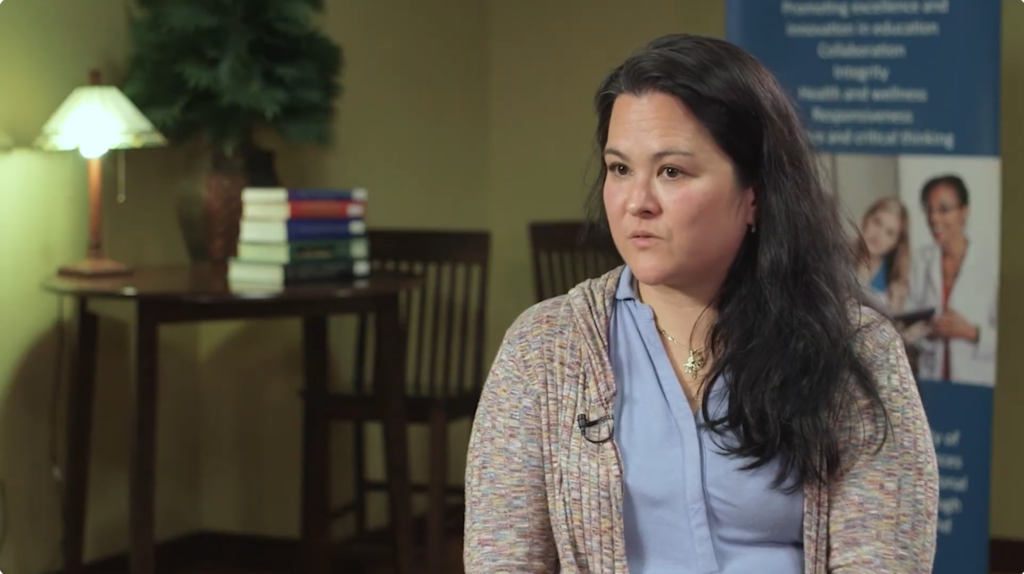
[00:00:00] Kevin Capell (USAHS): They’re going to learn 10 times over what they’re going to learn in a classroom setting. [00:00:03] Lindsey Johnston (USAHS): How do I communicate with a physician or a nurse practitioner one-on-one? [00:00:07] Kevin Capell (USAHS): This is a great safe space. [00:00:10] Lindsey Johnston (USAHS): To bring that further depth to the learning versus what a book can offer you. [00:00:15] Kevin Capell (USAHS): My role is the clinical simulation specialist here in Austin, and so my job is setting up the simulations. So this is my first time being a standardized patient. [00:00:26] Lindsey Johnston (USAHS): That was a complex simulation that we used to help students learn concepts of how do we address family members on top of our patient care. We used this as an IPE activity where we had PTs, SLPs, and OTs, and a few nurse practitioners come in and address how students need to learn about the other professionals and what they can bring to the table. [00:00:48] Matthew Sustaita (USAHS): The entire facility is outfitted with audio and video. We also have a ton of medical equipment. All of it is real equipment, although we use it for simulation purposes here. [00:00:58] Lindsey Johnston (USAHS): We saw the university thrive with its technology and ability to bring the students into the new age of healthcare, because it is not just paper and pencil anymore. We have to include the technology into the learning because that’s where we’re treating patients, is with that technology as well. So the university really supports faculty and the drive to bring practitioners out that are next-level practitioners.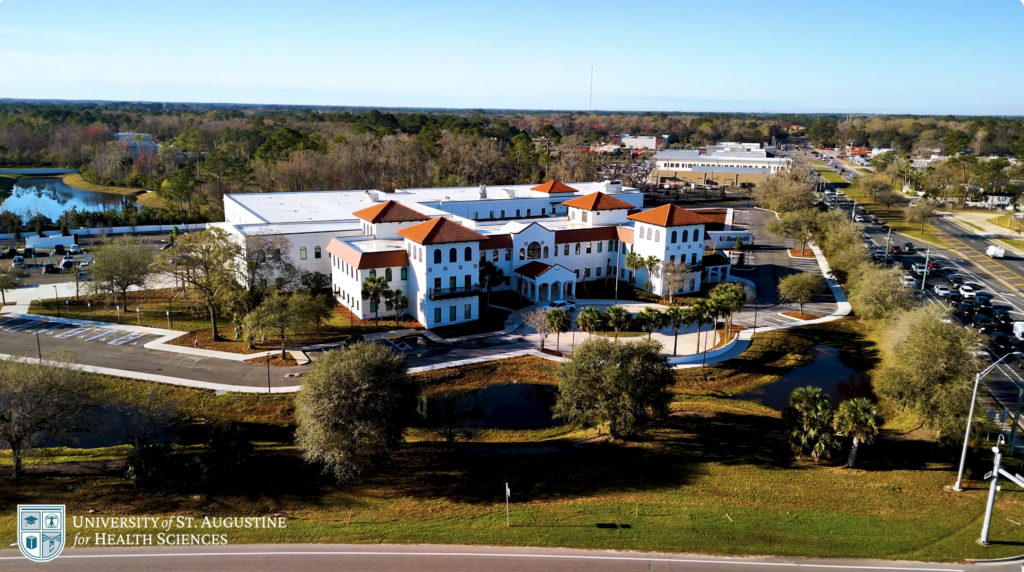
USAHS St. Augustine, FL New Campus – Opening February 2025
A look at the USAHS St. Augustine campus.
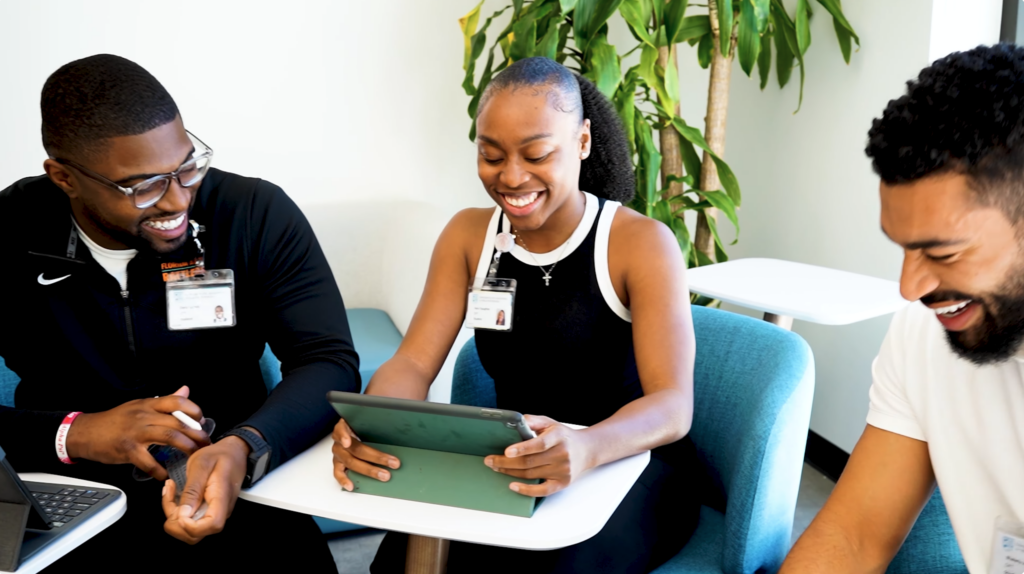
St. Augustine Campus Student Lifestyle – University of St. Augustine for Health Sciences
A look at the student experience at the St. Augustine, Florida campus.
EdD Student Testimonial – Alison Kreger
EdD students reflect on their experiences in the program.