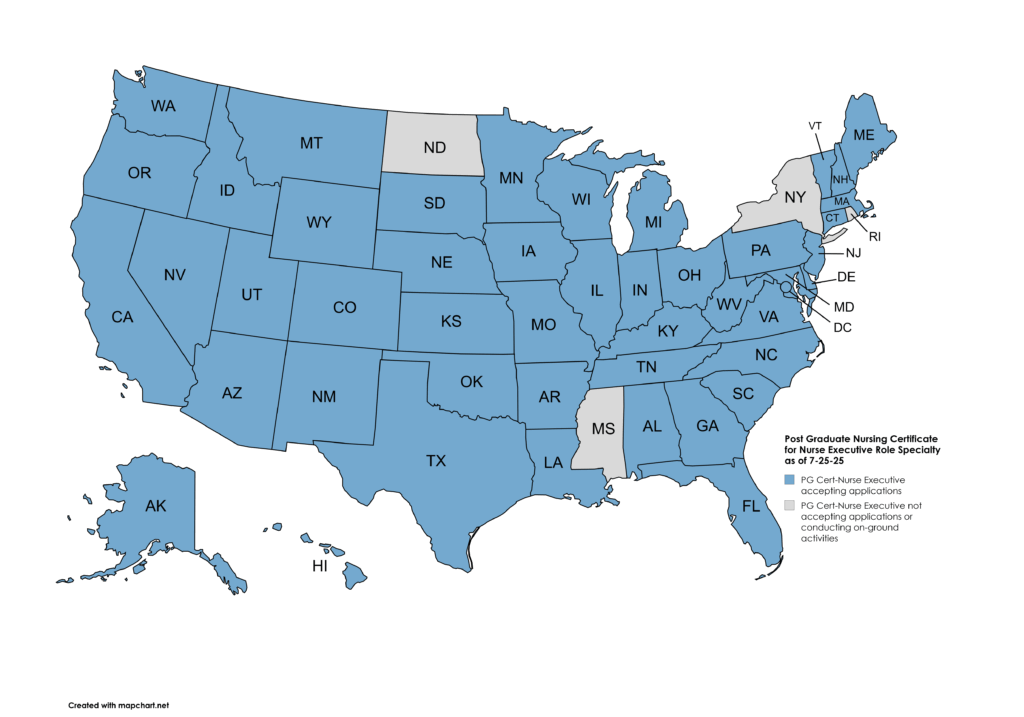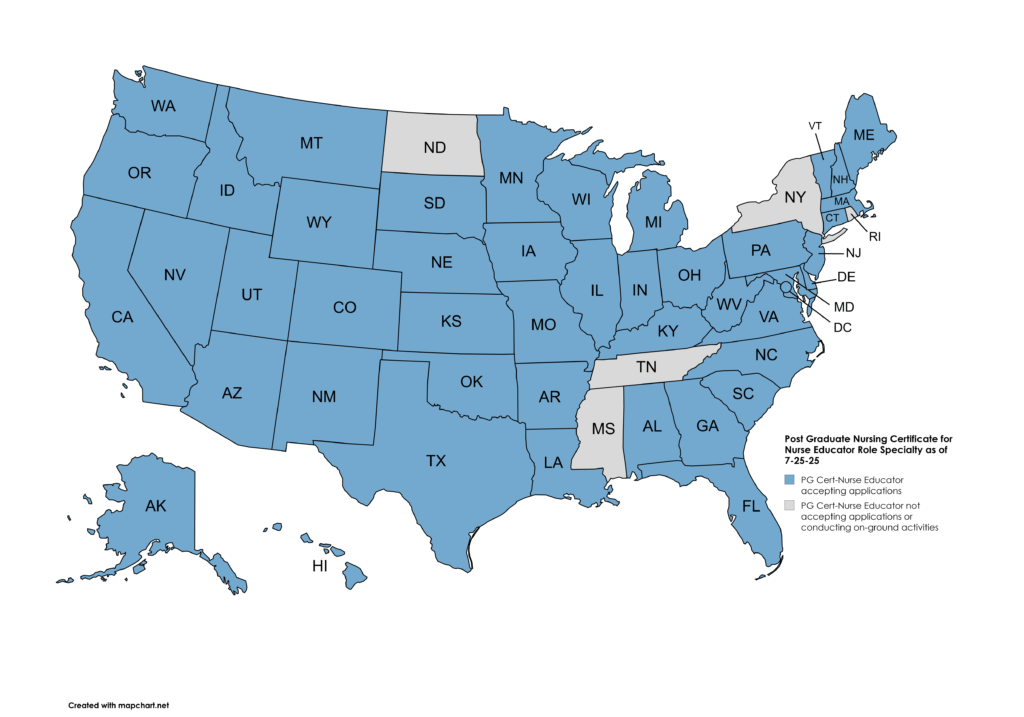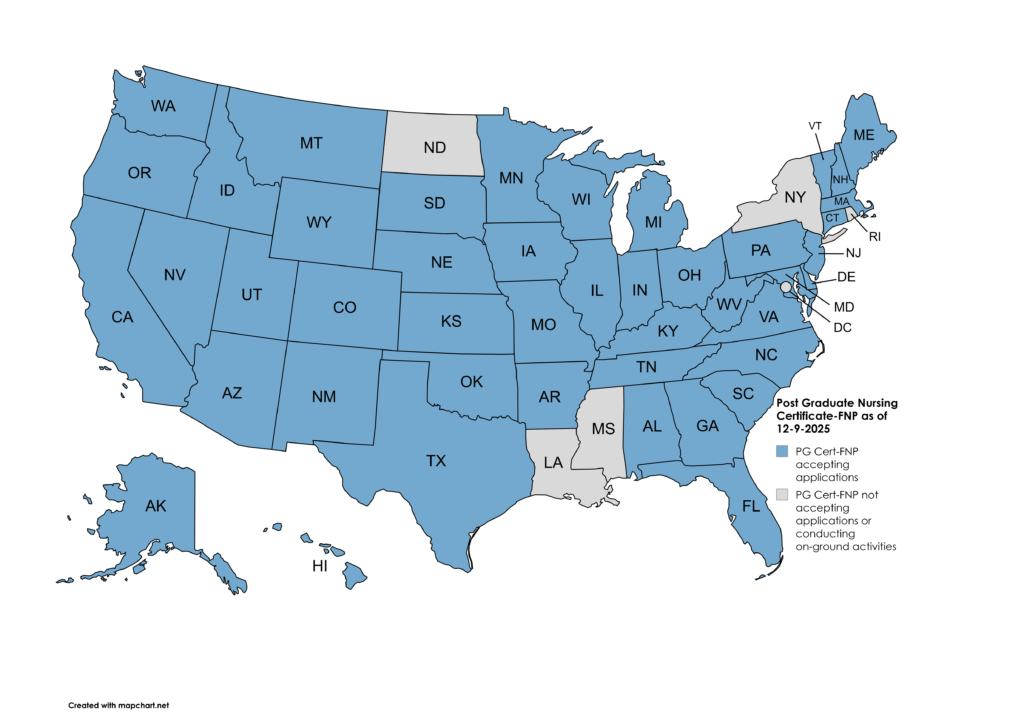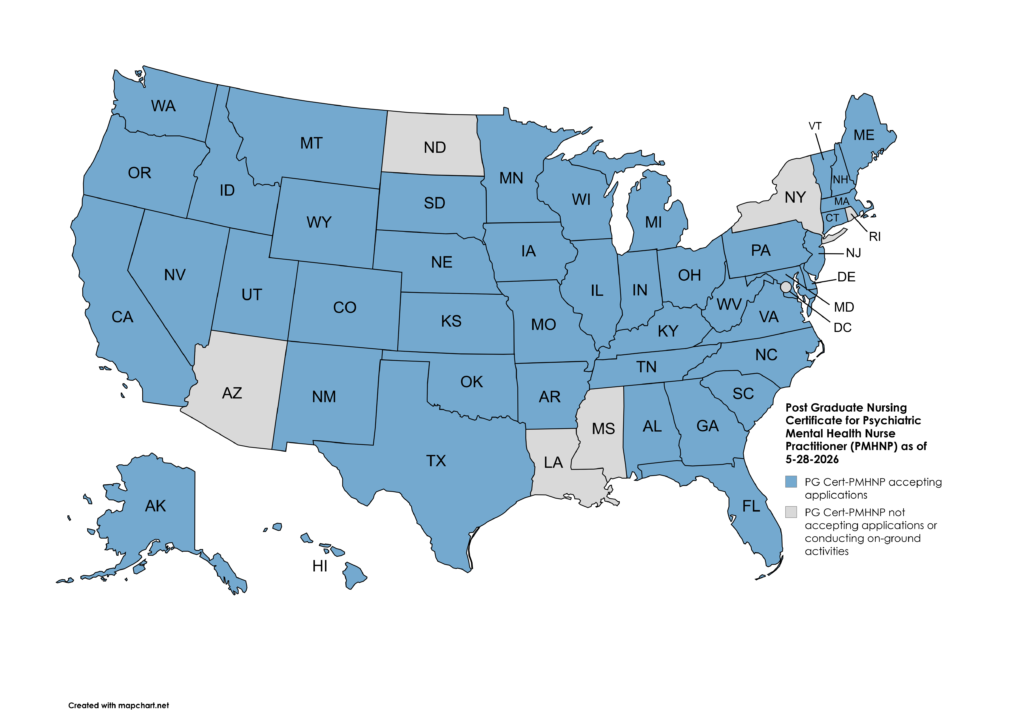







Students in the Post-Graduate Nursing Certificate program complete 12 credit hours when they choose either the Nurse Educator or Nurse Executive certificate. The Family Nurse Practitioner (FNP) certificate is 31 credit hours, while the Psychiatric Mental Health Nurse certificate is 37 hours.
Family Nurse Practitioner Post-Graduate Certificate
| Courses | Hours |
|---|---|
| Curriculum | |
| Trimester 1 | |
NUR 7560 - Advanced PharmacologyAdvanced practice nurses must be knowledgeable about pharmacotherapeutics and principles of safe prescribing. This is an online course that focuses on advanced concepts of pharmacology, including pharmacokinetics, pharmacodynamics, and pharmacogenomics. Emphasis is placed on common drug classes prescribed by advanced practice nurses for acute and chronic conditions in patients across the lifespan. Factors influencing effective therapy and legal considerations are also included. | 3 |
NUR 7610 - Advanced Physiology and PathophysiologyThis course for advanced practice nursing students explores the study of physiology and pathophysiology. Emphasis includes understanding and identifying diseases by examining alterations in common physiological conditions across the lifespan. This course equips advanced practice nurses with the requisite knowledge and skills necessary for accurate disease diagnosis and management through an in-depth exploration of pathophysiologic processes, cellular changes, and systemic manifestations. | 3 |
| Trimester 2 | |
NUR 7570 - Primary Healthcare of the Family IThis course provides in-depth exploration of healthcare issues specific to women and pediatric populations within the primary care setting. Students develop the comprehensive knowledge and skills essential for the formulation of differential diagnoses and management of acute and chronic conditions as well as for health promotion and disease prevention in women and children across the lifespan. The Family Nurse Practitioner (FNP) student applies role specialty competency-based learning through attendance at the required FNP Skills Intensive to progress to practicum. Required on-campus Intensive Experience | 3 |
NUR 7580 - Advanced Health Assessment and Differential DiagnosisThis course prepares advanced practice nurses to apply methods of advanced assessment in formulating differential diagnoses of acute and chronic conditions across the lifespan. Emphasis is on advanced physical assessment skills, risk assessment, diagnostic reasoning, and documentation. | 3 |
| Trimester 3 | |
NUR 7571 - FNP Role Practicum I †This course is the first in a series of three Family Nurse Practitioner (FNP) practicum courses. Students must demonstrate beginning proficiency in integrating theoretical and evidence-based, best practice knowledge of assessment, differential diagnosis, diagnosis, management, and evaluation of patients with acute and chronic health problems for the population of the family across the lifespan while demonstrating fiduciary stewardship in the delivery of quality care. FNP students demonstrate progressive synthesis and application of FNP role competencies, building on and translating concepts and skills derived from prerequisite courses. Students complete clinical hours in diverse primary care settings under the supervision of faculty and qualified preceptors. | 4 |
NUR 7575 - Primary Healthcare of the Family IIThis course is designed for the Family Nurse Practitioner (FNP) student, focusing on the assessment, diagnosis, management, and prevention of acute primary care conditions across the lifespan. Emphasizing clinical decision-making and evidence-based practice, students develop the comprehensive knowledge and skills essential for the formulation of differential diagnoses and management of acute primary care conditions. The course highlights care strategies, treatment protocols, and patient education to ensure safe, efficient, and cost-effective care. | 3 |
| Trimester 4 | |
NUR 7572 - FNP Role Practicum II †This course builds on the advanced practice nursing concepts, skills, and role development of the family nurse practitioner (FNP) derived in NUR 7571 - FNP Role Practicum I. The student must demonstrate competency in integrating theoretical and evidence-based, best practice knowledge of assessment, differential diagnosis, diagnosis, management, and evaluation of patients with acute and chronic health problems for the population of the family across the lifespan while demonstrating fiduciary stewardship in the delivery of quality care. The FNP student must demonstrate progressive synthesis and application of FNP role competencies. Students complete clinical hours in diverse primary care settings under the supervision of faculty and qualified preceptors. | 4 |
NUR 7585 - Primary Healthcare of the Family IIIThis course provides an in-depth exploration of chronic primary care conditions across the lifespan, with emphasis on the care of older adults and mental health management. Family Nurse Practitioner (FNP) students develop the comprehensive knowledge and skills essential for the formulation of differential diagnoses, management, and prevention of chronic primary care conditions. Students learn to deliver evidence-based, safe, and cost-effective care in primary care settings, addressing the unique challenges of chronic care management and geriatric care and integrating mental health assessments and interventions. | 3 |
| Trimester 5 | |
NUR 7573 - FNP Role Practicum III †This cumulative course is the final in the series of three FNP practicum courses. Students demonstrate mastery of FNP role competencies by engaging in a comprehensive review and evaluation process. The FNP student must exhibit advancing synthesis and application of skills showcasing cumulative proficiency in managing increasingly complex acute and chronic health problems across the lifespan. Students complete clinical hours in diverse primary care settings under the supervision of faculty and qualified preceptors. | 5 |
| Certificate Credit Hours 31 | |
Psychiatric Mental Health Nurse Practitioner Post-Graduate Certificate
PMHNP Role Specialty
| Courses | Hours |
|---|---|
| Curriculum | |
| Trimester 1 | |
NUR 7560 - Advanced PharmacologyAdvanced practice nurses must be knowledgeable about pharmacotherapeutics and principles of safe prescribing. This is an online course that focuses on advanced concepts of pharmacology, including pharmacokinetics, pharmacodynamics, and pharmacogenomics. Emphasis is placed on common drug classes prescribed by advanced practice nurses for acute and chronic conditions in patients across the lifespan. Factors influencing effective therapy and legal considerations are also included. | 3 |
NUR 7610 - Advanced Physiology and PathophysiologyThis course for advanced practice nursing students explores the study of physiology and pathophysiology. Emphasis includes understanding and identifying diseases by examining alterations in common physiological conditions across the lifespan. This course equips advanced practice nurses with the requisite knowledge and skills necessary for accurate disease diagnosis and management through an in-depth exploration of pathophysiologic processes, cellular changes, and systemic manifestations. | 3 |
| Trimester 2 | |
NUR 7310 - Foundations of NeuroscienceThis course is the foundation for practicing health professionals who explore and gain knowledge about neurobiology and psychopathophysiology as this relates to the etiology (cause), epidemiology (prevalence), developmental theories, and abnormal behavior. Students learn about evidence based empirical interventions while understanding ethical, cultural, and developmental applications. Students learn about the Diagnostic and Statistical Manual of Mental Disorders criterion and the neurobiological progression across the lifespan. | 3 |
NUR 7580 - Advanced Health Assessment and Differential DiagnosisThis course prepares advanced practice nurses to apply methods of advanced assessment in formulating differential diagnoses of acute and chronic conditions across the lifespan. Emphasis is on advanced physical assessment skills, risk assessment, diagnostic reasoning, and documentation. | 3 |
| Trimester 3 | |
NUR 7315 - Advanced PsychopharmacologyThis course focuses on evidence-based advanced practice psychopharmacology, building on previous advanced pharmacology coursework. Psychiatric mental health nurse practitioner students learn the scientific principles of pharmacokinetics, pharmacodynamics, pharmacogenetics, and psychotherapeutic medications. Emphasis is placed on psychopharmacologic treatment for acute and chronic psychiatric conditions across the lifespan. Students learn ethical safe prescribing practices and interprofessional collaboration with focus on optimal patient outcomes. | 3 |
NUR 7330 - Psychotherapy for Psychiatric Mental Health Nurse Practitioner PracticeThis course focuses on psychotherapeutic theories, psychotherapy modalities, and therapeutic skills for the Psychiatric Mental Health Nurse Practitioner student. Students acquire knowledge about a client-centered, culturally responsive approach; patient goals; therapeutic environment management; psychotherapeutic communication; psychoeducation goals; and crisis management. This course prepares students to apply multiple therapeutic approaches in psychotherapy, including cognitive and dialectical behavioral therapy, motivational interviewing, group supportive therapy, interpersonal therapy, recovery and SMART model framework, trauma therapy, and complementary alternative interventions in addition to applying interprofessional collaboration and developing a framework for clinical practice for individuals and populations across the lifespan. This course includes 50 hours of psychotherapy simulation. | 3 |
| Trimester 4 | |
NUR 7350 - PMHNP: Acute and Chronic Management of Child/Adolescent with Psychiatric Mental Health ConditionsThis course focuses on the role of the psychiatric mental health advanced practice nurse. Emphasis is on critical thinking, diagnostic reasoning, clinical judgment, theoretical underpinnings while applying scientific evidence-based theories, therapeutic concepts of communication, and screening tools. This course feeds into the associated practicum course for application of assessment skills; Diagnostic and Statistical Manual of Mental Disorders diagnostic reasoning; acute and chronic management, including psychopharmacology and psychotherapy; interprofessional collaboration; ethical standards and cultural diversity inclusion; health promotion; disease prevention; and differential diagnosis in planning care for children, adolescents, and families. Required virtual intensive | 3 |
NUR 7541 - PMHNP Role Practicum I Child & Adolescent Populations †This course focuses on the clinical role of the psychiatric mental health advanced practice nurse and builds on previous coursework. Students precept for a minimum of 232 PMHNP direct clinical practice hours through the application of didactic coursework from Acute and Chronic Management of Child/Adolescent with Psychiatric Mental Health Conditions. This clinical practicum allows students to build skills in psychiatric assessment, diagnoses, differential diagnosis, psychopharmacologic and psychotherapy interventions, and interprofessional collaboration. Emphasis is on upholding ethical standards and cultural diversity inclusion, health promotion, disease prevention, and differential diagnosis in planning care for children, adolescents, and families. | 4 |
| Trimester 5 | |
NUR 7375 - PMHNP: Acute and Chronic Management of the Adult and Older Adult with Psychiatric Mental Health ConditionsThis course focuses on the role of the psychiatric mental health advanced practice nurse. Emphasis is on critical thinking, diagnostic reasoning, clinical judgment, theoretical underpinnings while applying scientific evidence-based theories, therapeutic concepts of communication, and screening tools. This course provides foundational content, which is applied in PMHNP Role Practica II: Adult and Older Adult Populations. Foundational knowledge in advanced assessment skills; Diagnostic and Statistical Manual of Mental Disorders diagnostic reasoning; acute and chronic management, including psychopharmacology and psychotherapy; interprofessional collaboration, ethical standards, and cultural diversity inclusion; and health promotion, disease prevention, differential diagnosis in planning care for adult and older adult populations. | 3 |
NUR 7542 - PMHNP Role Practicum II Adult and Older Adult PopulationsThis course focuses on the clinical role of the psychiatric mental health advanced practice nurse and builds on previous coursework. Students precept for a minimum of 232 PMHNP direct clinical practice hours through application of didactic coursework from PMHMP: Acute and Chronic Management of the Adult and Older Adult with Psychiatric Mental Health Conditions. This clinical practicum allows students to build skills in psychiatric assessment, diagnoses, differential diagnosis, psychopharmacologic and psychotherapy interventions, and interprofessional collaboration. Emphasis is on upholding ethical standards and cultural diversity inclusion, health promotion, disease prevention, and differential diagnosis in planning care for adults and older adults. Course Requires Practicum Hours | 4 |
| Trimester 6 | |
NUR 7543 - PMHNP Role Practicum III Diverse/Special PopulationsThis course focuses on the role of the psychiatric mental health advanced practice nurse with an emphasis on diverse and special populations. This course builds on previous coursework as students demonstrate critical thinking, diagnostic reasoning, clinical judgment, theoretical underpinnings while applying scientific evidence-based theories, therapeutic concepts of communication, and screening tools. This course is a clinical practice-based practicum lead by expert clinical PMHNP faculty as students expand assessment skills; Diagnostic and Statistical Manual of Mental Disorders diagnostic reasoning; acute and chronic management, including psychopharmacology and psychotherapy; interprofessional collaboration; ethical standards and cultural diversity inclusion; health promotion; disease prevention; and differential diagnosis in planning care for diverse, special populations and specialty populations of the student's choice. Course requires 290 contact hours. Course Requires Practicum Hours | 5 |
| Certificate Credit Hours 37 | |
Nurse Educator Post-Graduate Certificate
No programs found matching "Nurse Educator Certificate*" in the selected catalog. Catalog scope: 2026-2027 Catalog/Handbook (Fall) (
acalog-catalog-52) from Acalog settings default.Nurse Executive Post-Graduate Certificate
| Courses | Hours |
|---|---|
| Curriculum | |
| Trimester 1 | |
HSA 7250 - Human Resources Management and Organizational Development in HealthcareUsing a systematic approach, students address the role of human resources in healthcare organizations. Students gain an understanding of key roles in planning for workforce needs and aligning with the strategic goals of the organization. Students examine organizational behavior and dynamics, as well as leadership principles to help navigate change. Students analyze theory and practice of managing individuals and groups through motivation, communication, teamwork, collaboration, leadership, organizational change, negotiation, and conflict management and resolution. | 3 |
NUR 7100 - Pathophysiology, Health Assessment, and Pharmacology (Non-NP)This course expands on foundational nursing education to enhance nursing expertise in pathophysiology, health assessment, and non-prescriptive pharmacology throughout the lifespan. Emphasizing the specialized knowledge and skills essential for the non-NP advanced practice nurse, this curriculum integrates pathophysiological concepts, physical assessment techniques, and pharmacology principles. Students explore application of these principles to become proficient in the provision of safe and quality care for patient populations across the lifespan and cross-culture presenting with routine medical conditions. | 3 |
| Trimester 2 | |
IPE 7133 - Foundations in Healthcare Administration with Strategic PlanningStudents build on leadership concepts introduced in IPE 7121 to develop a foundational understanding of healthcare administration while analyzing the changing landscape of the healthcare environment. Application of these concepts occurs through formulating, implementing, and evaluating a strategic plan while working with an interprofessional team. Students examine the role of strategic planning in achieving organizational performance measures as well as the notion of planning as a cyclical process within the healthcare organization in the role of a healthcare administrator. | 3 |
HSA 7236 - Accounting, Finance and Economics for the Healthcare LeaderThis course provides basic accounting, finance, and economics for the healthcare leader. Students will be able to educate patient care team members on financial implications of patient care decisions, use financial statements for decision making, use basic accounting, finance, and economics concepts needed for efficient management of the healthcare organization, develop policies and procedures for coding and reimbursement, and negotiate contracts for effectiveness and compliance. | 3 |
| Certificate Credit Hours 12 | |
| † Course requires practicum hours. | |
Close