
Originally Published on Forbes
Inclusive play is often treated as optional. Something sweet but secondary. A reward after the “important” parts of the day are finished.
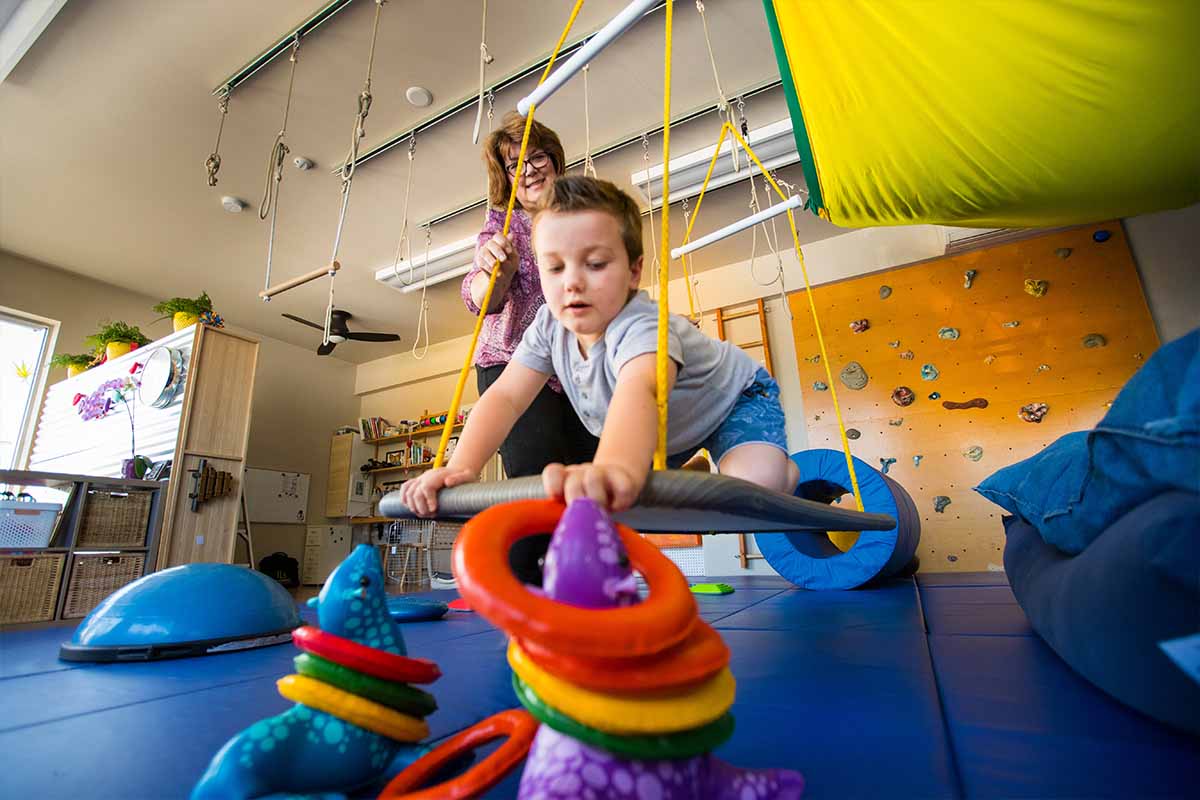
For children, play is their main occupation. It is how they learn cause and effect, test boundaries, build social skills, and figure out how their bodies and minds work in the world. Inclusive play is not a break from learning. It is learning.
For children with disabilities, that essential work is often interrupted. Traditional toys require certain abilities: strong fine-motor control, fast reaction time, tolerance for noise or flashing lights, and comfort with rigid rules. When play tools are built on those assumptions, many children are left watching instead of participating.
That gap between wanting to play and being able to play is not about motivation or interest. It is about access. Research published in the Journal of Occupational Therapy, Schools, & Early Intervention has shown that inclusive play participation directly affects development, social connection, and emotional well-being for children with disabilities, reinforcing that engagement is a developmental need rather than a luxury.
Inclusive Play Starts When Toys Become Invitations
Recently, the University of St. Augustine for Health Sciences hosted an event that quietly reshaped the holidays for dozens of local families by centering inclusive play. Occupational therapy students partnered with local robotics teams and faculty to transform ordinary, store-bought toys into accessible gifts for children with mobility, sensory, and developmental differences.
Thirty-four switch-adapted toys were created and delivered directly to children in the St. Augustine community, each tailored to a child’s specific abilities and family input. For many of these families, inclusive play options are limited, expensive, or simply unavailable.
Event leader and assistant professor Cheryl Sheffield, OTD, OTR/L, ATP, sees this gap every day in her clinical work.
“Many toys rely on fine motor skills, precise finger movements, and complex controls that many children with disabilities cannot access due to physical impairments,” Sheffield said. “These barriers may lead to frustration, limit developmental opportunities, and exclude children from shared play and learning experiences.”
For parents, this frustration is often familiar. Watching a child want to engage but struggle to activate a toy can feel heartbreaking, especially during gift-heavy seasons when inclusive play should feel joyful rather than isolating.
Inclusive Play Depends on Control, Choice, and Agency
Sheffield explains that inclusive play is not just about entertainment. It is about agency.
“Volitional play, the ability to choose and control one’s own actions, is essential for cognitive, social, and emotional development,” she said. “When children cannot actively engage with toys, they miss out on critical opportunities for learning and social connection.”
Switch-adapted toys are hoping to change that dynamic. By replacing small buttons or complicated mechanisms with large, easy-to-activate switches, children gain control over when and how a toy responds. That control is foundational to inclusive play.
“Play adaptation; it is a gateway to independence in mobility, communication, and social participation,” Sheffield said. “The skills learned through switch-controlled play can then be applied to foster independence in other areas of life.”
When a child presses a switch and something happens on purpose, confidence grows. Curiosity follows. Inclusive play becomes collaborative rather than passive.
“By enabling reliable activation, these toys give children agency, allowing them to explore, interact, and play alongside peers,” Sheffield said. “This sense of control fosters confidence, autonomy, and inclusion in meaningful play.”
Inclusive Play as a Teaching Tool for Future Clinicians
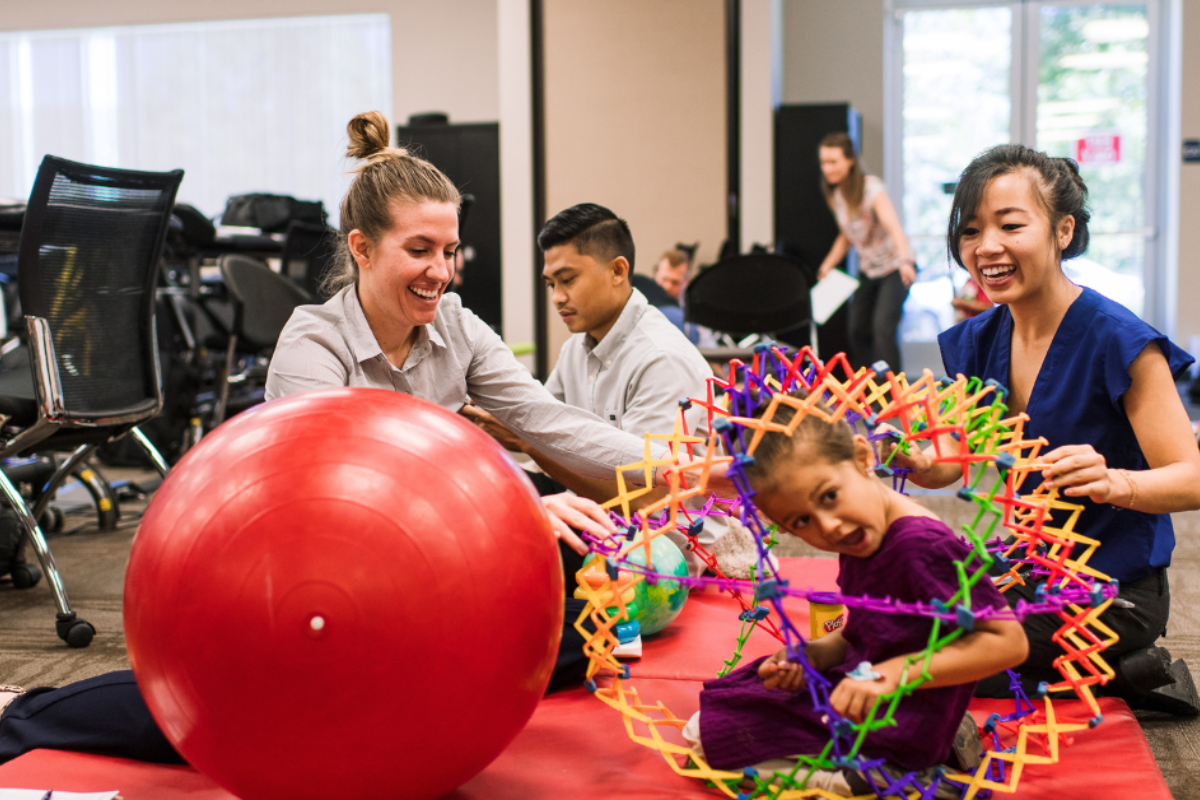
The collaboration behind the toys was just as impactful as the gifts themselves. Occupational therapy students worked alongside occupational therapy assistant students and members of a local high school robotics team, rewiring toys with circuit boards and switch ports.
“The type and placement of each switch is determined by the child’s unique cognitive and motor abilities,” Sheffield explained. “That ensures the adaptation truly meets their needs.”
For students, this hands-on work reframed their thinking about inclusive play.
“This collaboration teaches future clinicians that accessible design is not one-size-fits-all but requires creativity, problem-solving, and empathy,” she said. “Students gain insight into how motor limitations, sensory sensitivities, and cognitive differences shape play.”
They also see how inclusive play emerges through collaboration. OT students, OTA students, and engineers problem-solve together, mirroring real clinical environments and reinforcing that access is rarely created in isolation.
Inclusive Play Guidance for Families Without Custom Adaptations
Custom-adapted toys can be life-changing, but they can also be expensive and difficult to access. Sheffield emphasizes that inclusive play does not require specialized equipment or perfection.
“For families who don’t have access to customized adaptive toys, choosing inclusive, developmentally supportive gifts is less about finding specific products and more about focusing on the toy design,” she said.
She encourages parents to look for toys that reduce fine motor demands and allow children to interact with minimal effort.
“Toys that offer rich sensory experiences, simple mechanics, and durability are among the most universally accessible,” Sheffield said. “Even small design considerations like larger activation surfaces or toys that respond to minimal input can make a big difference.”
For families seeking guidance, resources such as the Autism Society’s guide on choosing toys for autistic children and curated collections like National Autism Resources’ sensory toy selection can help identify inclusive play options that prioritize accessibility over flash.
Inclusive Play and Regulation Across the Lifespan
Inclusive play does not end in childhood. Sensory tools and playful interaction continue to support regulation and well-being into adulthood. Patty Laushman, Certified Autism Life Coach and co-founder of Thrive Autism Coaching, works with autistic adults who often feel overlooked during high-stimulation seasons like the holidays.
“Items that people typically think of as fun toys for children can serve vital functions across the lifespan,” Laushman said. “For autistic adults, these aren’t simply recreational extras. They can serve as really useful supports for nervous system regulation.” Inclusive play tools for adults often prioritize predictability, portability, and personal preference.
“The most effective regulation tools are ones that people can access discreetly and use without explanation or permission,” she said. “Agency matters enormously.” That agency can look simple. A smooth stone in a pocket. A textured ring. Earplugs that soften overwhelming sound. Inclusive play at this stage is about staying regulated, present, and grounded.

Inclusive Play and What “Autism-Friendly” Really Means
Laushman cautions families against relying on labels. “The ‘autism-friendly’ label is fairly meaningless,” she said. “Every autistic individual is different.”
Inclusive play works best when it is personal. What soothes one person may overwhelm another. The most supportive gifts are chosen through observation, conversation, and respect. She encourages parents and gift-givers to prioritize predictable sensory input, user control, low cognitive load, and open-ended use. Toys that allow exploration without rules or failure states often support inclusive play more effectively than complex, outcome-driven games. She also emphasizes honoring special interests.
“A gift that connects to someone’s special interests communicates respect,” Laushman said. “It says, ‘I see you.'”
Why Inclusive Play Strengthens Everyone’s Experience
Inclusive play benefits more than children with disabilities. It improves play for all children by reducing pressure, increasing flexibility, and supporting shared engagement.
Research-backed insights on inclusive play tools and sensory-rich environments, explored in pieces such as this examination of adaptive play tools and this look at sensory play in childhood development, show that accessible design removes barriers to participation.
Inclusive play should feel like an invitation, not a test. When children and adults can engage on their own terms, confidence builds. Stress softens. Connection deepens. And that is what play was meant to do all along.