Interprofessional Education – University of St. Augustine for Health Sciences
At the University of St. Augustine for Health Sciences (USAHS), Physical Therapy and Occupational Therapy students have opportunities to learn alongside each other through interprofessional education simulations. In one example, students work together to treat a simulated patient in a hospital room, practicing how they would communicate and coordinate care in a real clinical setting.
These co-treatment scenarios give students a chance to see how another healthcare profession approaches patient care while practicing their own skills. They also receive feedback during the simulation, allowing them to work through questions and adjust their approach in the moment.
Students say these experiences help them better understand the roles of PTs, OTs, nurses, and other healthcare providers. Faculty also emphasize that knowing your own profession is only part of working in healthcare. Being able to communicate and collaborate with other members of a care team is an important part of providing effective patient care.
By bringing students from different healthcare disciplines together, USAHS gives them an opportunity to practice the communication and teamwork they’ll use when working with patients and other providers in clinical settings.
Transcript
Interprofessional Education – University of St. Augustine for Health Sciences
[00:00:00] Catherine Andrea (PT Faculty): Teamwork in the clinic actually leads to better patient outcomes. [00:00:07] Sabrina (PT Student): It shows the patient that we are working together as a team, and that the patient is our number one goal. [00:00:13] Catherine Andrea (PT Faculty): We created this simulation so that occupational therapists and physical therapy students came together and actually worked to provide care to a patient. They get real-time feedback from the patient that’s in front of them. [00:00:27] Emily (OT Student): I knew that they did incorporate the PT and the OT students together. That was something I had heard about the university before I ever applied to it. [00:00:35] Catherine Andrea (PT Faculty): We put them in a hospital room with a simulated patient, and we said, “Go ahead and complete a co-treatment,” which is a very typical thing to do in the clinic. We really want to make sure that our students know their own profession, but it’s so important to have an idea of somebody else’s profession to understand how you work in a team together. [00:00:53] Sabrina (PT Student): It’s extremely beneficial. It’s exposing us to occupational therapists, nurses, doctors, dieticians, any healthcare member we would come across. It’s very realistic. [00:01:04] Emily (OT Student): It really gives you a feel for what the other profession does and how valuable they are to you. To see how you would really interact with other professionals, getting to know how you work as a team before you’re already out in the field. [00:01:18] Catherine Andrea (PT Faculty): And when they get out to the clinic, they’re not going to be so nervous. [00:01:21] Catherine Andrea (PT Faculty): They’re going to see that they have succeeded before. But we are extremely lucky to have this here. [00:01:25] Sabrina (PT Student): It’s really upped my skill level.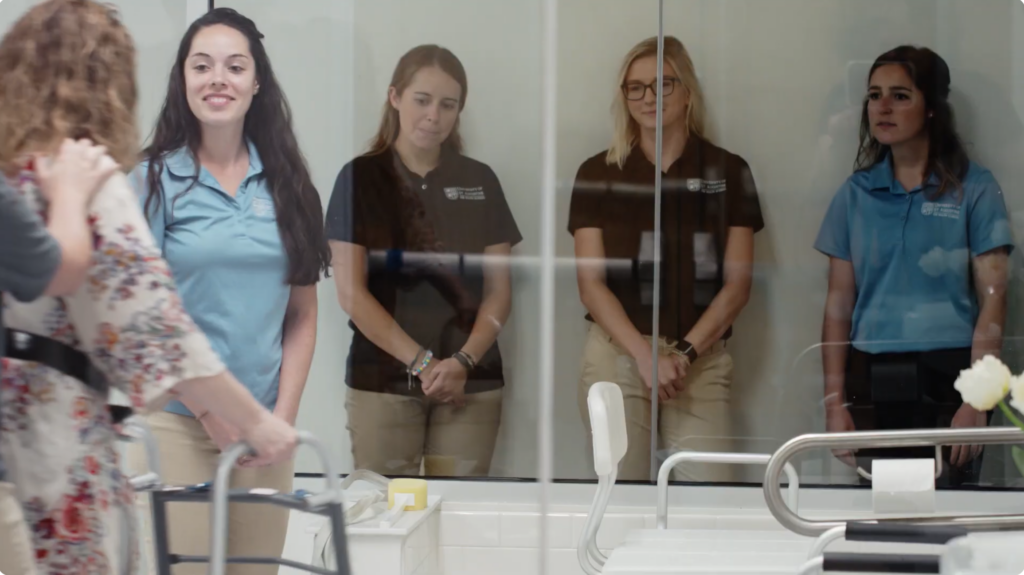
OT Students Practice ADL Skills with Mock Patients in Simulated Home — USAHS
Students and faculty discuss learning through realistic OT simulations.
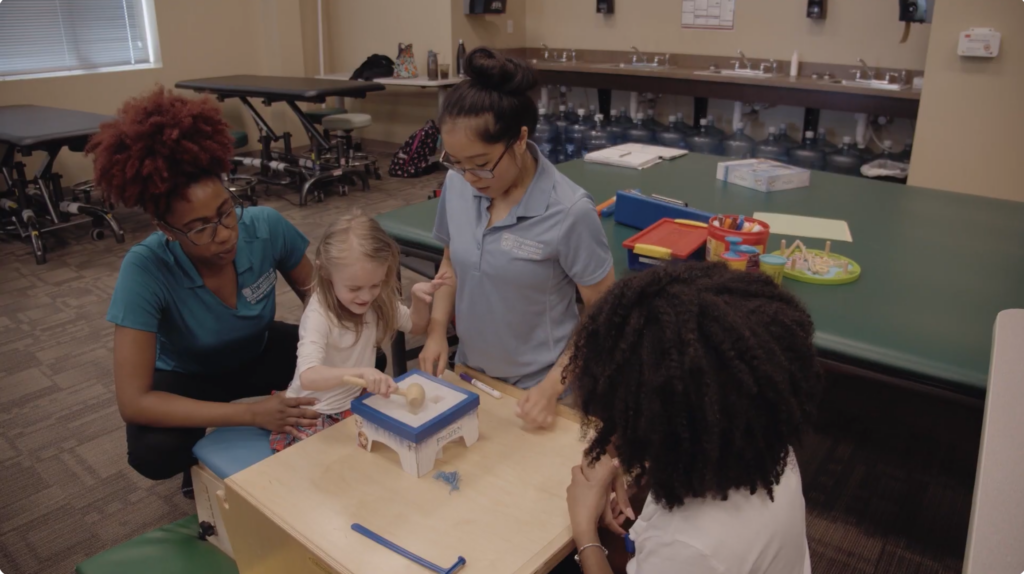
Pediatrics at the University for St. Augustine for Health Sciences
Learn how faculty prepare students for pediatric care.
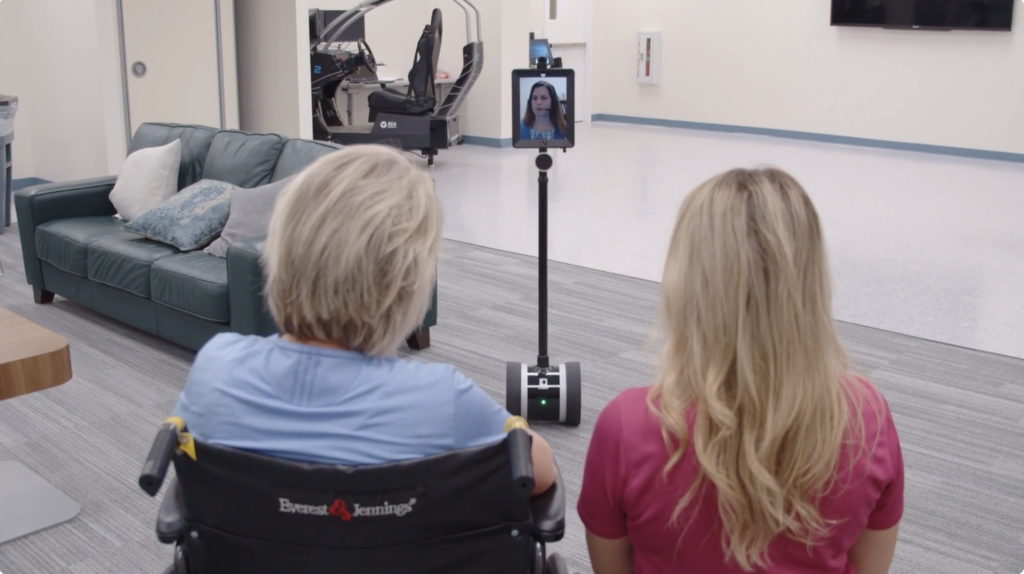
Introducing the Double Robot & Telehealth at the University of St. Augustine
A look at innovative learning technology at USAHS.