Center for Innovative Clinical Practice (CICP)—University of St. Augustine for Health Sciences
The Center for Innovative Clinical Practice (CICP) at the University of St. Augustine for Health Sciences (USAHS) draws on experiential learning theory. According to Elisabeth McGee and Lindsay Perry, it recreates settings like an ICU, inpatient rehab, a mental health clinic and a school system, so students have a simulated clinical experience before they ever reach a clinic.
Realism matters down to the smallest detail, because in actual clinicals students are at the mercy of whoever walks through the door. In simulation, instructors can make anything happen, such as a sudden drop in blood pressure, so students learn to think on their feet.
For OT student Stephanie L., simulation has been the most impactful part of learning at USAHS, especially for building a bedside manner that a classroom can’t teach.
Transcript
Center for Innovative Clinical Practice (CICP)—University of St. Augustine for Health Sciences
[00:00:00] Elisabeth McGee (USAHS): The Center for Innovative Clinical Practice is an environment that really draws on experiential learning theory, that pulls in what the students have learned in, in, in the classroom and brought it to life through a realistic learning environment. [00:00:20] Lindsay Perry (USAHS): What we have here at the university is a space that simulates the environment of the clinical settings that you’re going to experience. That being an ICU center, that being inpatient rehab, that being a mental health clinic, that being a school system. So it brings those practice areas to life and prepares them. And what that will do for you as a student is it’s going to put you in the mindset that you are in that space, so you as a student are going to have a clinical simulated experience before you even have to go to the clinic, and I think that’s a huge advantage for our program. [00:00:55] Cameron S. (PT Student): It’s awesome. I mean, it’s incredible because the more that we can get true to- Simulating what we’re going to experience in a clinical environment and outside of school, the better that we can assimilate our, our practice, our application of knowledge it’s incredibly valuable. [00:01:12] Stephanie L. (OT Student): For me, the simulation experience here in this environment has been the most impactful portion of my learning here at the University of St. Augustine. It gives us that opportunity to, you know, use our therapeutic use of self to address our bedside manners, right? Which is something that a classroom really can’t teach you. [00:01:29] Kaitlyn Cremer (OT Faculty): So the whole point of a simulation experience is to simulate real life, and in real life, occupational therapists aren’t working with just occupational therapists, and physical therapists aren’t working with just physical therapists. So this simulation experience allows us to create not only an environment, you know, with a physical environment, but also have the other disciplines there. [00:01:49] Christina (PT Student): I thought it was amazing. It was very interesting to see hospital environment in PT, because you don’t really think about that when you’re first going in for PT. [00:01:58] Kelsey (OT Student): Well, I’m a very hands-on and visual learner, and so it’s, it’s one thing to read about it in the textbook and one thing to talk about in the class, but to actually get in there and mess with some of the, the bed rails or the wheelchair locks adds that, that extra level to help us be better equipped. [00:02:16] Michelle Roy (USAHS): I feel like it’s important even down to the smallest detail to make it as real as we possibly can, because when these students are going into clinicals or hospital settings, they’re really at the mercy of whatever walks through the door. But in a simulation setting, we can make whatever that instructor needs to have happen, happen. [00:02:31] Stephanie L. (OT Student): It’s very lifelike, so you have to be quick on your feet and to really think through and draw on all of that information and knowledge that you’ve previously gained in your other classes and kind of weave it into one situation. [00:02:44] Joshua (OT Student): It brought in a lot of areas of the learning experience that aren’t mimicked in a book, aren’t mimicked in a lecture. So that was a really positive experience. [00:02:54] Christina (PT Student): They’ll tell you, “Oh no, their blood pressure’s dropping. What are you gonna do?” So they set you up for the scary scenarios so that they can see how you’re gonna process it, and it’s like a shell shock, and then you’re like, “Okay, I’ve done this before. I know what to do now.” [00:03:06] Elisabeth McGee (USAHS): One of the greatest things is in the end, we all come together, and it’s called debriefing. We talk about it. We reflect upon it. We think about what we would do differently, what was great, and how we can apply it to practice.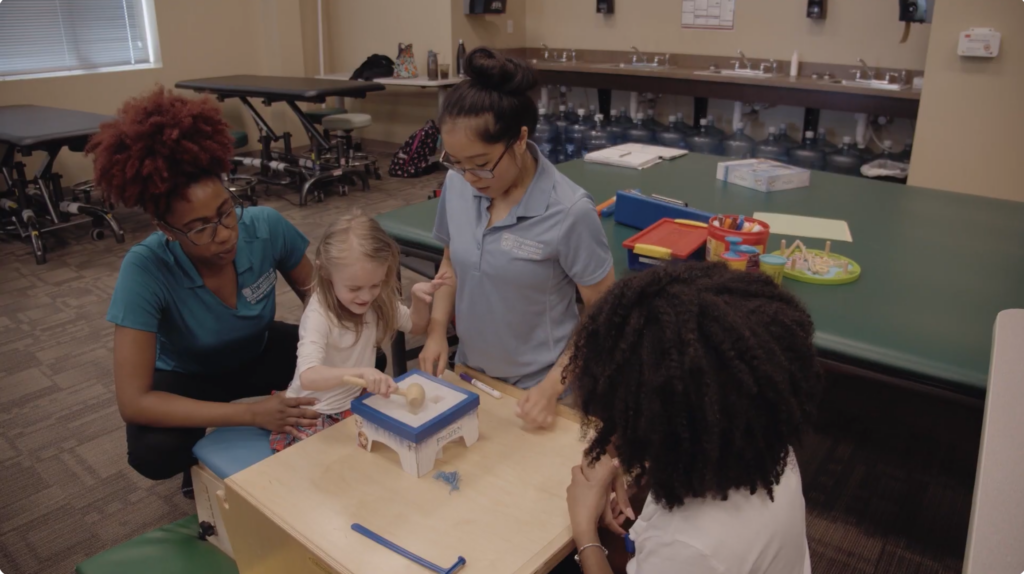
Pediatrics at the University for St. Augustine for Health Sciences
Learn how faculty prepare students for pediatric care.
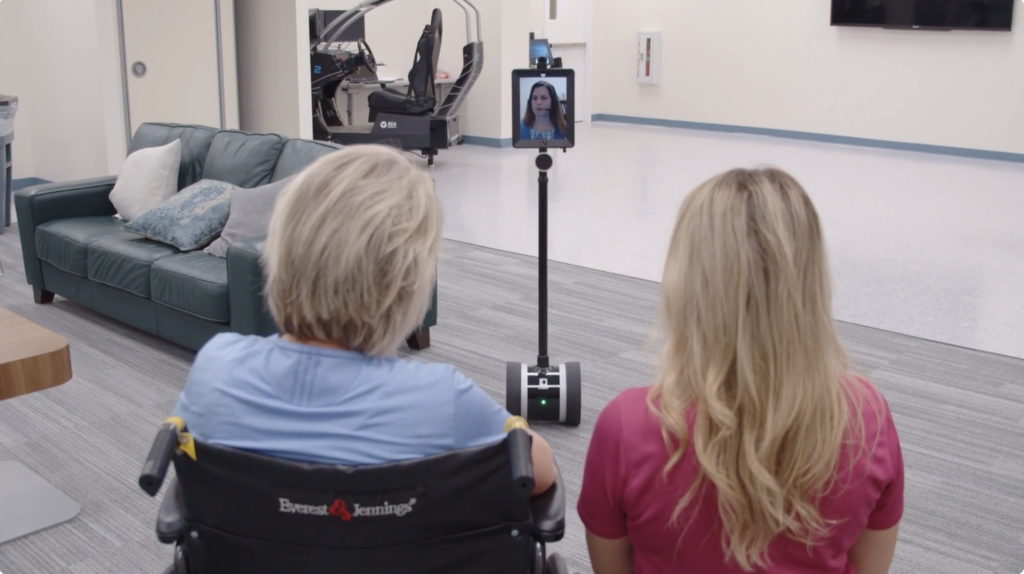
Introducing the Double Robot & Telehealth at the University of St. Augustine
A look at innovative learning technology at USAHS.
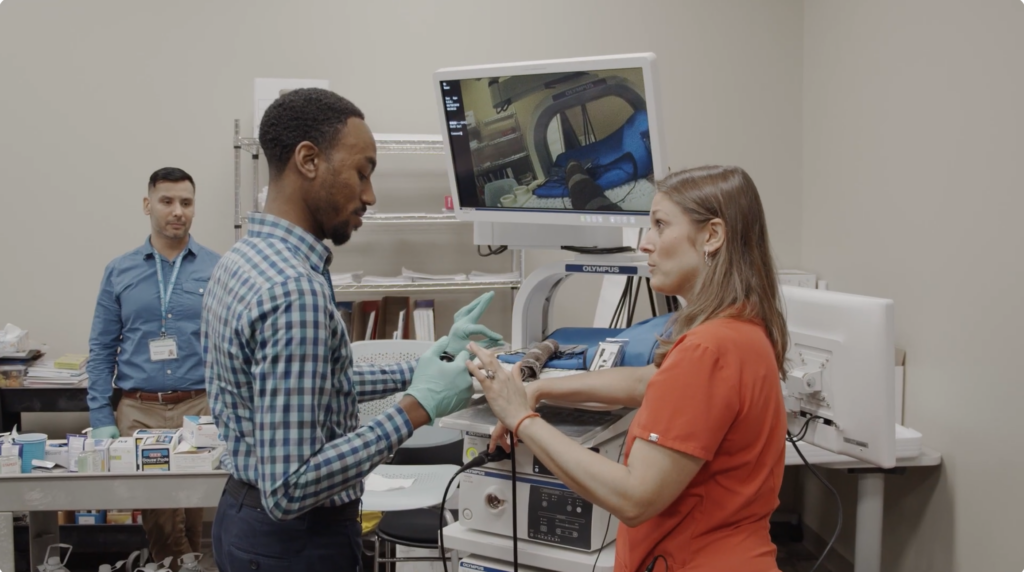
Innovation at USAHS – Endoscopy: F.E.E.S. and Videostroboscopy
A look at innovative learning technology at USAHS.