USAHS DPT Students Lead Parkinson’s Day Event | Hands-On Physical Therapy Experience
Doctor of Physical Therapy (DPT) students at the University of St. Augustine for Health Sciences (USAHS) partner with The Brain Center to host Parkinson’s Day: Move and Learn, a community event for people living with Parkinson’s disease.
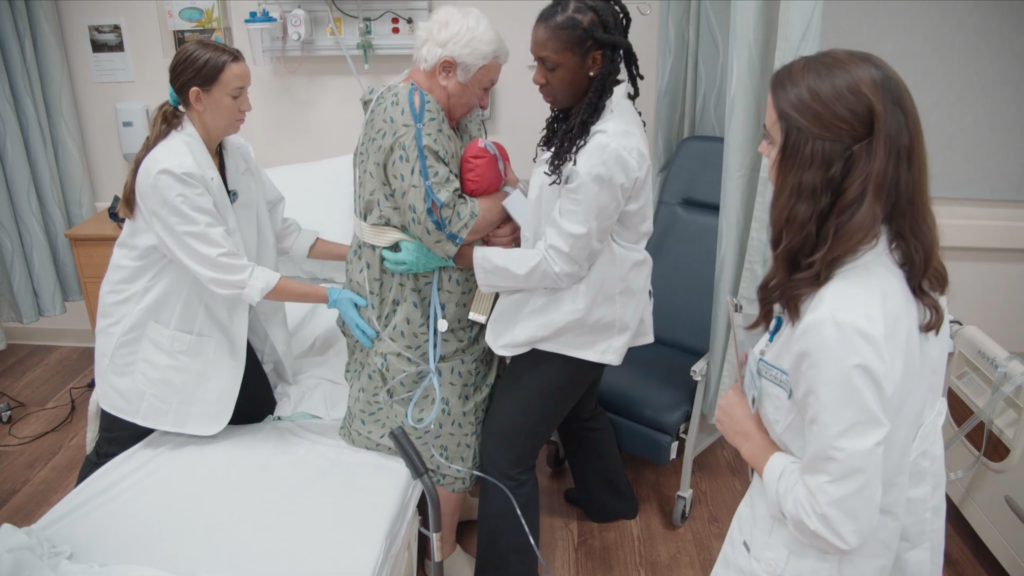
Students lead activities such as music therapy, yoga, and Rock Steady Boxing, allowing them to work directly with people living with neurological conditions. They can put their clinical knowledge into practice while learning how movement, exercise, and social connection can support quality of life.
The event also creates a welcoming space where participants can connect and with the students supporting them. For DPT students, experiences like this build confidence, strengthen clinical skills, and provide an opportunity to work with people in a community setting.
Transcript
USAHS DPT Students Lead Parkinson’s Day Event _ Hands-On Physical Therapy Experience
[00:00:00] Miguel Garcia (PT Faculty): Today we had a really fun event. We partnered with, uh, with a community partner, the Brain Center, to host what we call Parkinson’s Day, Move and Learn. [00:00:09] Gabriel Somarriba (PT Faculty): So it was a great day of celebration for people with Parkinson’s disease. [00:00:13] Isabella Marina (OT Student): We try to get a bunch of different people from the community, different organizations. [00:00:16] Miguel Garcia (PT Faculty): So we started the day with a health fair. Our students led different stations involving different aspects of the patient’s health. [00:00:24] Isabella Marina (OT Student): We did music therapy, we did yoga, and then we’re also ending with Rock Steady Boxing. We had guest speakers come in. [00:00:33] Gabriel Somarriba (PT Faculty): They’re here to participate, do activities, exercise. So initially it’s all about their improvement on their motor skills. [00:00:42] Gabriel Somarriba (PT Faculty): But something that really isn’t appreciated as much until they start bringing it up is really the social network that they build. They’re the ones that really understand what they’re going through. [00:00:52] Miguel Garcia (PT Faculty): At the same time, they love coming on campus, they love interacting with our students. [00:00:55] Kristen Fleitas (PT Student): And we bring them on campus, and we learn from each other. [00:00:59] Kristen Fleitas (PT Student): We learn from the patients, and the patients learn from us. [00:01:02] Miguel Garcia (PT Faculty): Here they get to interact with actual patients and get to give back from what they’re learning in our programs. [00:01:07] Mark Rosenblum (Client): I enjoy the camaraderie, I enjoy the good workout, I enjoy the student support and the faculty support. And I feel like it protects me from progressing faster than if, if I didn’t participate. [00:01:25] Miguel Garcia (PT Faculty): Overall, it really provides them this sense of, of being, right? A sense of, “I have somewhere to go that I can battle this and not be on my own.”