Pro Bono Clinics – Overview, University of St. Augustine for Health Sciences
At the University of St. Augustine for Health Sciences (USAHS), pro bono clinics give students an opportunity to evaluate and treat real patients in a supportive, low-pressure setting, all under the direct guidance of faculty.
Patients come from our surrounding communities, often individuals who are underinsured or facing barriers to affordable healthcare, and receive free physical therapy, occupational therapy, or speech-language services across a wide range of diagnoses, from orthopedic and neurological conditions to prosthetic rehabilitation and mental health. Faculty describe the clinics as mutually beneficial: patients receive meaningful, free care, while students build real clinical confidence in a safe environment before heading into fieldwork.
These clinics reflect USAHS’s broader commitment to combining hands-on clinical training with genuine community impact, helping students grow into confident practitioners while extending care to those who need it.
Transcript
Pro Bono Clinics – Overview, University of St. Augustine for Health Sciences
[00:00:00] Christian Guarino (USAHS): The way that I would describe pro bono is in-house clinical experiences for students to test out their skills and treat real live patients under the watchful guidance of our faculty. It’s a no pressure scenario for students to really hone in on their skills before they go out to clinical practices. [00:00:19] Nicole Capell (USAHS): It’s, for many of them, the first time that they are providing evaluation and treatment services to real people. [00:00:26] Christian Guarino (USAHS): The benefit for the patient is free physical therapy, occupational therapy, or speech and language, both in the adult and in the pediatric setting. For them, it’s something that’s very meaningful, especially when you consider the high cost of healthcare. [00:00:38] Garrett Mandel (PT Faculty): And if we can address those impairments here in the clinic, we can get them back to doing whatever it is that they’re desiring for either work or their hobbies. [00:00:44] Christian Guarino (USAHS): So all our patients are obtained through the community. So what we do is we serve those that are underserved, under-insured. Could be patients that do not have insurance or their copays are too high. [00:00:54] Nicole Capell (USAHS): It’s a wide range of diagnoses. Everything from neurological to orthopedic to mental health. [00:01:01] Garrett Mandel (PT Faculty): We’ve had patients come in with prosthetic limbs, and we’ve been able to help them get back to walking and even running. [00:01:06] Dana Kolbfleisch (OT Faculty): They get to help provide a service for the students as well, as well as the students providing that service to them. [00:01:12] Raquel Guarino (OT Faculty): I think it gets their jitters out a little bit. Initially, they get really nervous having to go out on field work and not having to engage with patients right away, and this gives them that opportunity to engage with the community and be able to practice their evaluation processes and everything that they have learned in class. [00:01:29] Dana Kolbfleisch (OT Faculty): There is nothing like putting your hands on a patient for the first time, but it’s also nice that it’s a safe space, right? It’s here at the university. It’s with clients who’ve come from the community who want to be here. [00:01:41] Nicole Capell (USAHS): They know that their professor or that supervising therapist is right there to step in if they have any questions or problems. [00:01:47] Sereniti F. (OT Student): And if you’re approaching something a little not quite the way you should, you’re kind of like guided and told, “Hey, let’s approach it this way.” And it just helps. You have like a better understanding. [00:01:56] Bryanna H. (PT Student): I think it’s a great opportunity for us students to finally apply the knowledge that we’ve been learning so far and have the support of all of our professors that we’ve been working with throughout our time in the program. [00:02:07] Sereniti F. (OT Student): It was kind of exciting to kind of like take the reins. It was a really good experience. I feel like I learned a lot. [00:02:12] Keke F. (PT Student): I loved every second of it, and just being able to see them grow and seeing the different things that they can do from each week. [00:02:19] Kathy (PT Student): Honestly, the laughs that we get and just seeing the progress. [00:02:24] Kathy (PT Student): Being able to see them not need as much assistance whenever we’re working with them. [00:02:29] Brenda Thompson (Client): I’ve seen a big improvement. I was just speaking to Debbie over here, and we, we’re both amazed at how much better we have in the few sessions that we’ve had with you guys, how much better we are. [00:02:40] Debbie Bundy (Client): I came in mostly using my wheelchair, switching between wheelchair and walker, and now I’m mainly using my walker or not. [00:02:46] Brenda Thompson (Client): I love working with the students. Every time I have to let them go ’cause they’re moving on, it just makes me sad. They all do different things for you physically, but mentally, they talk to you. They learn more about you. You learn about them. But it’s good for your mental too. [00:03:01] Debbie Bundy (Client): And it’s just fun for me to watch them progress, and it’s also fantastic that I’m progressing. [00:03:07] Brenda Thompson (Client): This has been the best thing that happened to me. It really has. I mean, they’ve given me confidence that I’m actually gonna go on my first trip in four years to go see my family. [00:03:15] Bryanna H. (PT Student): It’s definitely very rewarding, and it kind of gives me some insight of what the rest of my career could look like. It confirms that I chose the right profession.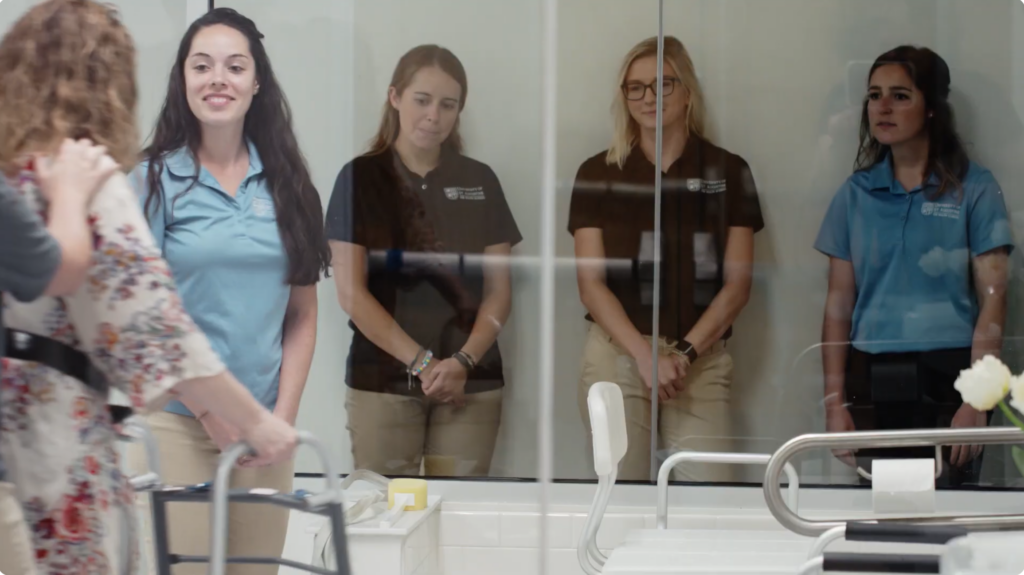
OT Students Practice ADL Skills with Mock Patients in Simulated Home — USAHS
Students and faculty discuss learning through realistic OT simulations.
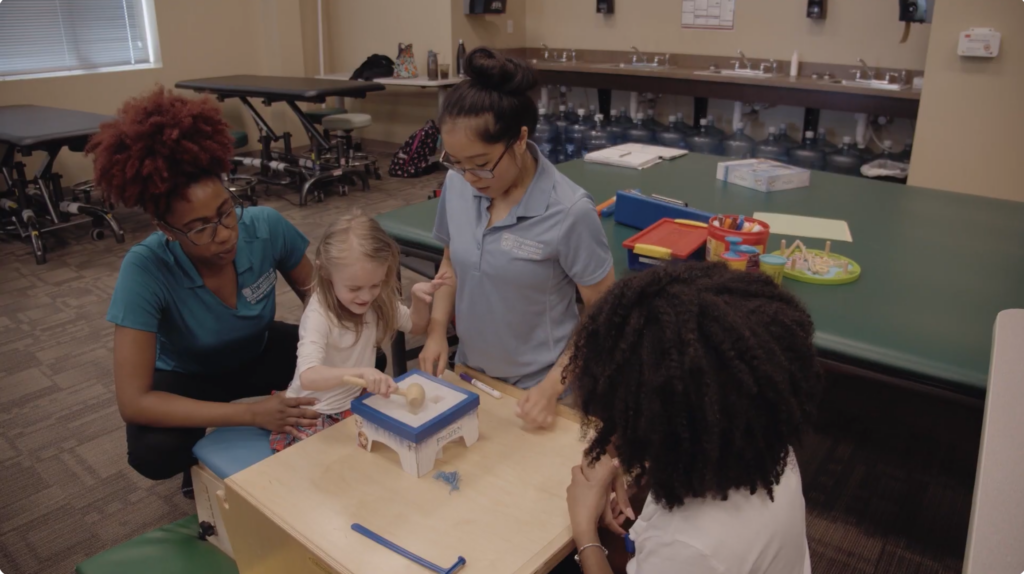
Pediatrics at the University for St. Augustine for Health Sciences
Learn how faculty prepare students for pediatric care.
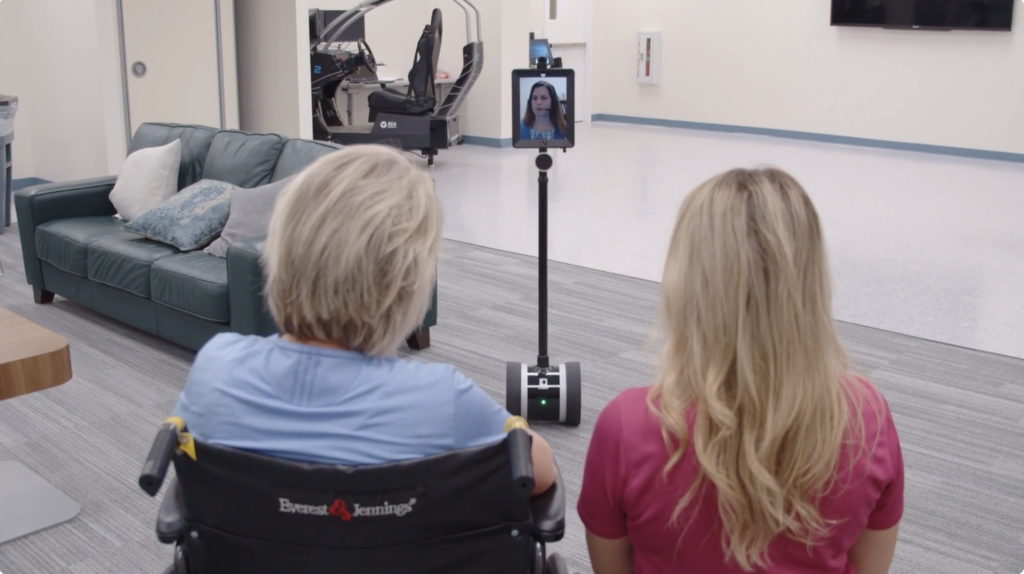
Introducing the Double Robot & Telehealth at the University of St. Augustine
A look at innovative learning technology at USAHS.