What Makes USAHS Occupational Therapy Programs Different?
Explore what distinguishes the occupational therapy programs at the University of St. Augustine for Health Sciences (USAHS), as faculty members discuss the university’s approach to occupational therapy education, hands-on learning, and clinical preparation. The video highlights the importance of a holistic, client-centered approach to occupational therapy, along with the use of technology, high-fidelity simulation, and specialized learning environments.
Faculty share examples of how students practice essential clinical skills in simulated healthcare settings and the Activities of Daily Living (ADL) lab, gaining experience with adaptive equipment, mobility, and techniques that help individuals regain independence.
The video also introduces the Master of Occupational Therapy (MOT) and Doctor of Occupational Therapy (OTD) programs at USAHS, outlining the different educational pathways and career opportunities each offers. Faculty discuss their diverse clinical backgrounds in areas such as neurological rehabilitation, pediatrics, orthopedics, and acute care, and how their professional experience informs their teaching. Together, these perspectives provide an overview of the resources, faculty expertise, and practical training that help prepare occupational therapy students for professional practice.
Transcript
What Makes USAHS Occupational Therapy Programs Different
[00:00:00] Keith McWilliams (OT Faculty): An occupational therapist is someone who takes a holistic approach to treating a client who is impacted. [00:00:06] Gwen Morris (OT Faculty): I am the function expert. if I can’t fix it, let’s modify it to get you back to doing the things you want and need to do. [00:00:12] Keith McWilliams (OT Faculty): So we’re helping the person rather than treating the disease or the disability that they may be dealing with. We’re helping them to turn their disabilities into abilities. [00:00:21] Claribell Bayona (OT Faculty): I think our use of technology is really important from how we connect with the students online to the labs that we have on campus. We’re able to provide simulated patients and bring them in, into spaces that simulate a hospital, someone having high blood pressure and then what to do. And some of that technology and innovation really is, it’s forward in the field, and so it prepares our students even better. [00:00:46] Marcia Hamilton (OT Faculty): Our ADL lab has a kitchen, it has a washer-dryer, it has a bathroom where we are able to allow students to practice transfers into a shower, standing behind a sink, getting on and off of the toilet, all important things for people to be able to regain following physical injuries and challenges that have prevented that independence. [00:01:10] Gwen Morris (OT Faculty): I’ve never seen at another university, you can check out walkers, and wheelchairs, and mat tables, bones, you name it, from the library. That’s not a thing that happens. And this is also the only university I’ve ever had that had true high-fidelity simulation that’s in-house. [00:01:23] Cody Cox (OT Faculty): We have two programs here at USA, so, for those who are looking to get a master’s degree in occupational therapy, we have that. If they’d like to get a doctorate in occupational therapy, we have that program as well. [00:01:33] Marcia Hamilton: The master’s in occupational therapy program is for those who want to get into the field and working as quickly as possible. [00:01:40] Cody Cox (OT Faculty): Our doctorate of occupational therapy is a wonderful program for folks who want to go into leadership, policymaking, even education. We have great instructors, great professors with expertise in so many different areas. [00:01:53] Sean Brim (OT Faculty): You have educators that are knowledgeable in neuro, neurological rehab, orthopedics pediatrics, acute care. [00:02:02] Cody Cox (OT Faculty): We have clinical experience. We’ve been out in the real world, and we’ve dealt with clients with real-world situations. [00:02:10] Marcia Hamilton: And most importantly, the desire to make students feel comfortable with their learning and prepare them to be really exceptional practitioners when they go out into the field to, to light that passion inside of them to say, “I can’t wait to practice occupational therapy.”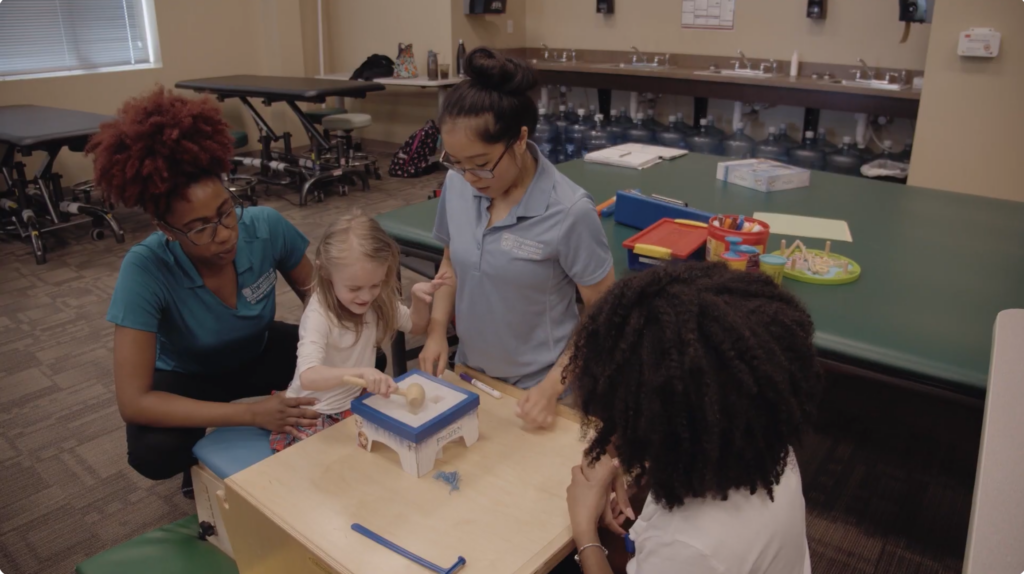
Pediatrics at the University for St. Augustine for Health Sciences
Learn how faculty prepare students for pediatric care.
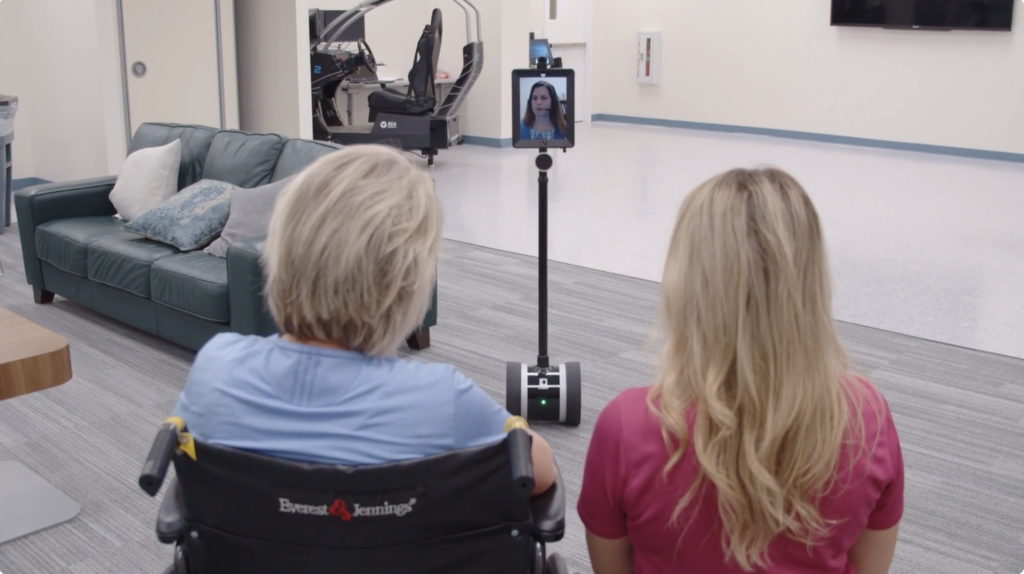
Introducing the Double Robot & Telehealth at the University of St. Augustine
A look at innovative learning technology at USAHS.
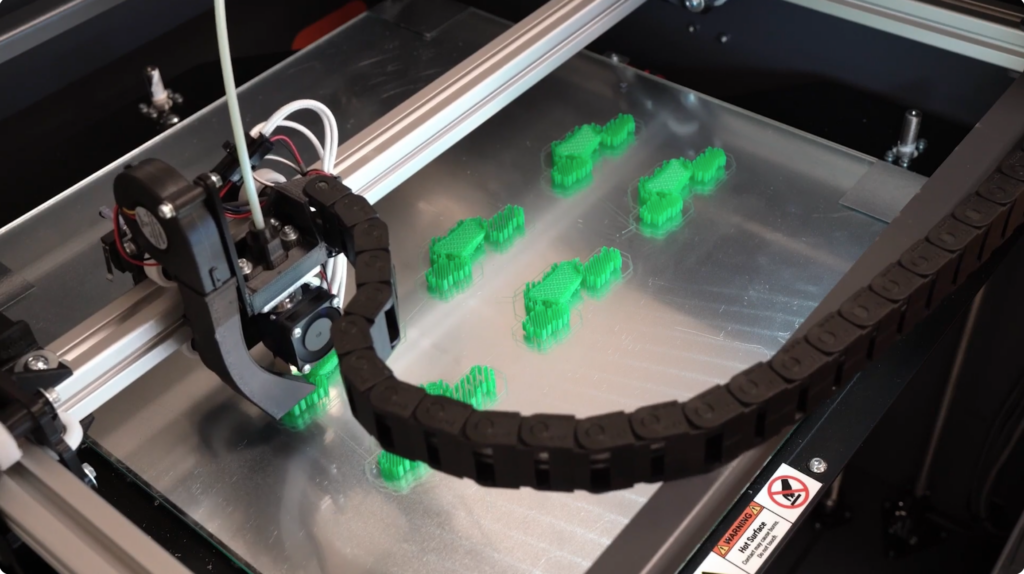
3D Printer and Scanner
A look at innovative learning technology at USAHS.