

Using Virtual Reality for OT — USAHS, St Augustine, FL
Explore how the University of St. Augustine for Health Sciences (USAHS) is incorporating virtual reality (VR) technology into its occupational therapy curriculum to enhance hands-on learning and clinical preparation. Faculty discuss an innovative pilot program that uses immersive virtual environments to help occupational therapy students evaluate accessibility, assess wheelchair positioning, and identify home modifications that promote safety and independence for individuals with disabilities.
The video also features students experiencing virtual reality simulation and sharing how the technology helps them better understand the environments and challenges their future patients may encounter. From evaluating workspace accessibility to exploring assistive technology applications, students gain opportunities to develop clinical reasoning skills and prepare for occupational therapy fieldwork and professional practice.
Transcript
Using Virtual Reality for OT — USAHS, St Augustine, FL
[00:00:00] Deborah Ruediger (OT Faculty): The focus of the innovation pilot is to incorporate virtual reality simulation technology into the assistive technology course, and eventually into each term of the OT curriculum. The focus is to allow students the ability to assess ADA universal design of various community settings. They will use this technology to complete a virtual wheelchair seating assessment and evaluation, and also look at a client’s home modification recommendations for safety and independence. [00:00:49] This will allow the students to be knowledgeable in new and emerging innovation, and be able to utilize this device in many ways in their clinical practice. Some examples of usage to assist clients is either to maybe increase their mobility or to assist with mental health concerns using that immersive environment. [00:01:08] Angelica (OT Student): I was placed, like, right in his workspace, and it felt really crowded. And even though it wasn’t, I wasn’t really there, it really, like, I could … It brought out emotions in me. Like, I could really feel what he feels every day. Like, it’s really cramped, and it gives me the opportunity as a future clinician to assess for safety. [00:01:27] Steven (OT Student): Oh, absolutely. It definitely allows you to interact. It allows, it’s pretty much you’re there. You know? You have, you, you can see your two hands in it. You get to grab things. You get to move things around. You get to look at different environments. You get to turn your head around. Whatever you look at that’s what, uh, whatever way you turn your head, that’s what you’re looking at on the screen, you know? [00:01:45] It’s really, it’s real life. I know it, it’s, people say that jokingly, but it’s actually real life. You are actually there. Um, and again, that, that, to me, that’s perfect for occupational therapy where you’re there. You’re with the patient. You can experience that one-to-one kind of feedback, honestly, of you being with that patient in that different environment and kind of preparing yourself for, you know, your fieldwork and also your future as an occupational therapist.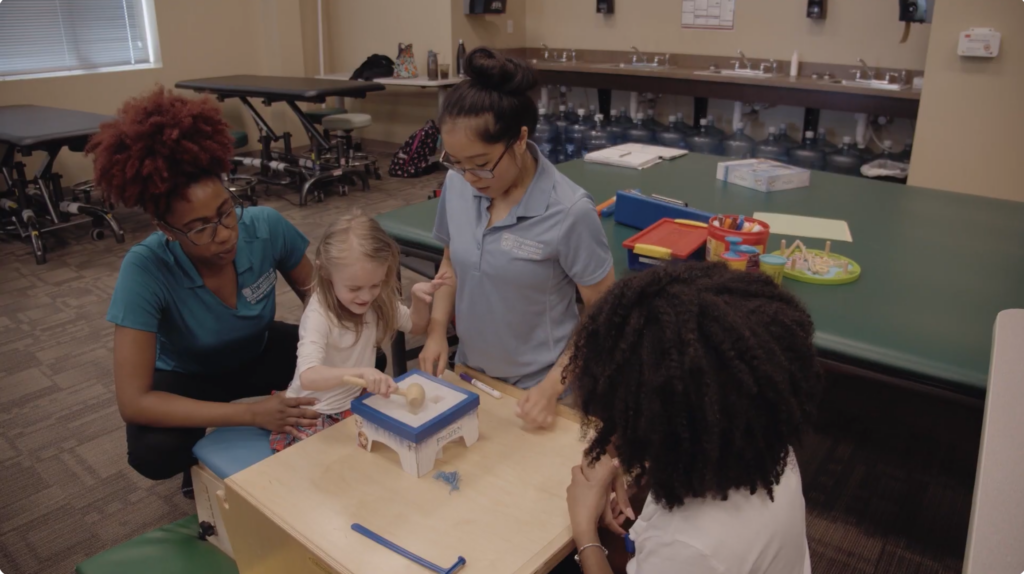
Pediatrics at the University for St. Augustine for Health Sciences
Learn how faculty prepare students for pediatric care.
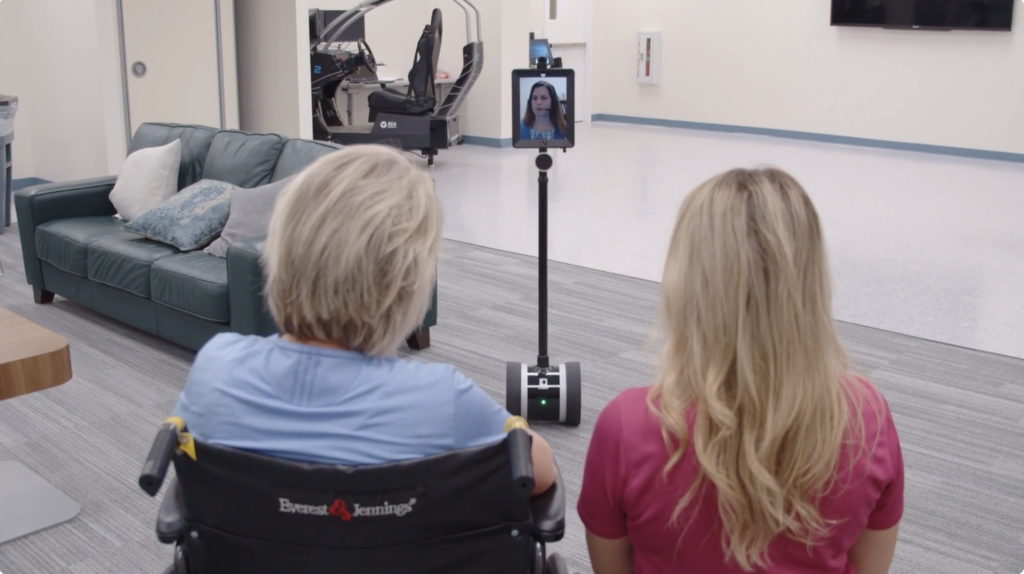
Introducing the Double Robot & Telehealth at the University of St. Augustine
A look at innovative learning technology at USAHS.
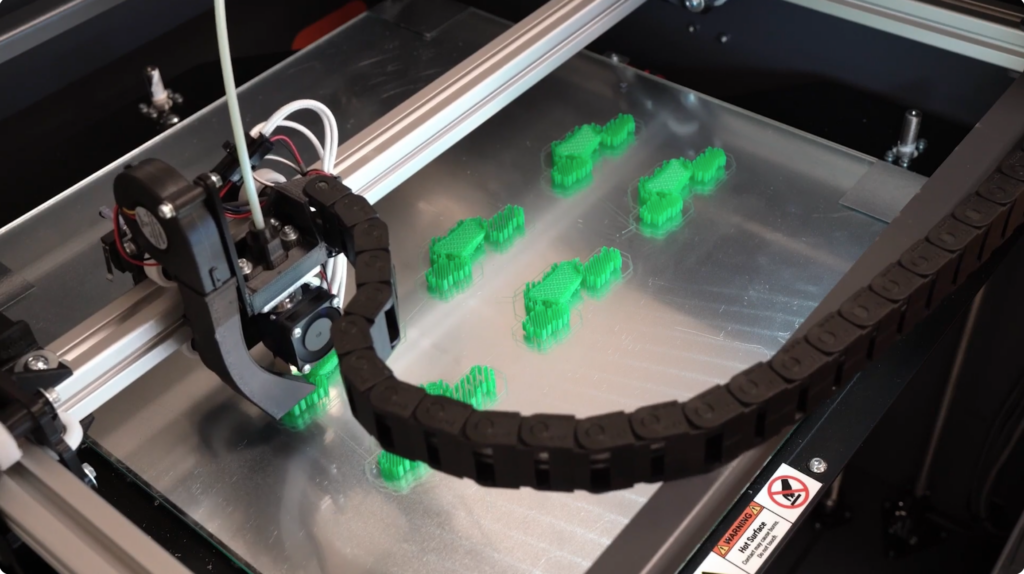
3D Printer and Scanner
A look at innovative learning technology at USAHS.