Double Robot Technology at USAHS
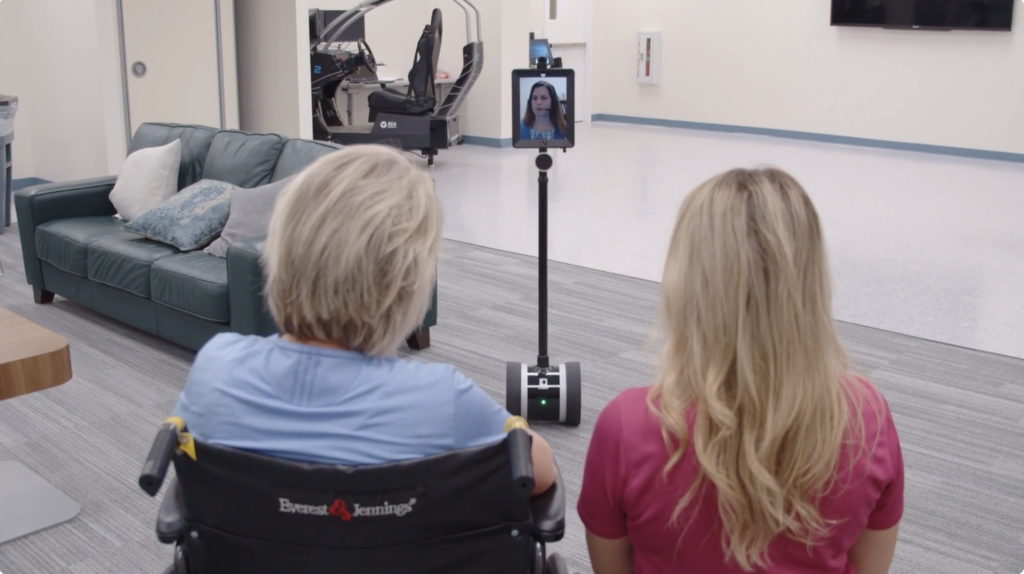
When the pandemic shut students out of skilled nursing facilities, Jennie DiGrado of the University of St. Augustine for Health Sciences (USAHS) saw two needs at once. Students still had to learn to work with residents, and residents cut off from the world needed social connection. The answer was the Double robot, which let students join resident groups remotely.
Sitting at the activity table alongside group members, the robot displays a student’s face on screen and adjusts its height and direction so students can meet residents at eye level. That extra engagement mattered. Students ran activities like themed bingo with prizes.
Jennie encourages students to see telehealth as an emerging practice area and to think creatively about which populations it can reach, helping break down barriers to serve more of the community.
Transcript
Double Robot Technology at USAHS
[00:00:00] Jennie DiGrado (USAHS): So the Double robot program, the idea came from really when we had the pandemic happen, and we had the loss of being able to go to skilled nursing facilities. I really just thought about the need for our students knowing that they needed to be able to interact with the residents, but at the same time, that great need for the residents to be able to interact with our students. [00:00:42] And just thinking about the social isolation that was going on for those individuals specifically who were in skilled nursing facilities, and now had really been shut off from the world. Most of the time we would be at a small table in the activities room. The Double robot would be right there at the table sitting alongside the group members, and the students would come into the Double robot with their face on the screen just like they were sitting at the table. [00:01:10] One of the really cool things with the Double robot is that you can turn the screen and you can adjust the height of it. So they could really be at eye level with their participants. They could turn and look, and that honestly really did add that extra layer of engagement and that extra layer of social connectedness that was needed. [00:01:31] A lot of the students looked at different types of activity. We did things like bingo. We had fall bingo, Halloween bingo, and we would set it up where the residents were getting prizes at that same time. So we had some that had, like, monster glasses for Halloween themed, and we’d see the residents wearing those glasses. [00:01:53] I would have a morning group and an afternoon group, and in the… If the morning group won bingo prizes, I’d see them wearing those bingo prizes in the afternoon group. So that was pretty fun. As we look at our emerging practice areas, we look at telehealth as an emerging practice area, but not just thinking of telehealth. Now think about what populations can you service with telehealth. Who can you connect with using this platform? How can we maybe meet larger need, meet larger communities utilizing this service, and be flexible, innovative, and think outside the box as how we can end up meeting that need and being creative with it? [00:02:35] And don’t let, don’t let those barriers, barriers get you down. Break through them. Be the force for change. Be a force for good. And, you know, keep on looking on the bright side, and try to help the community to make it a better place.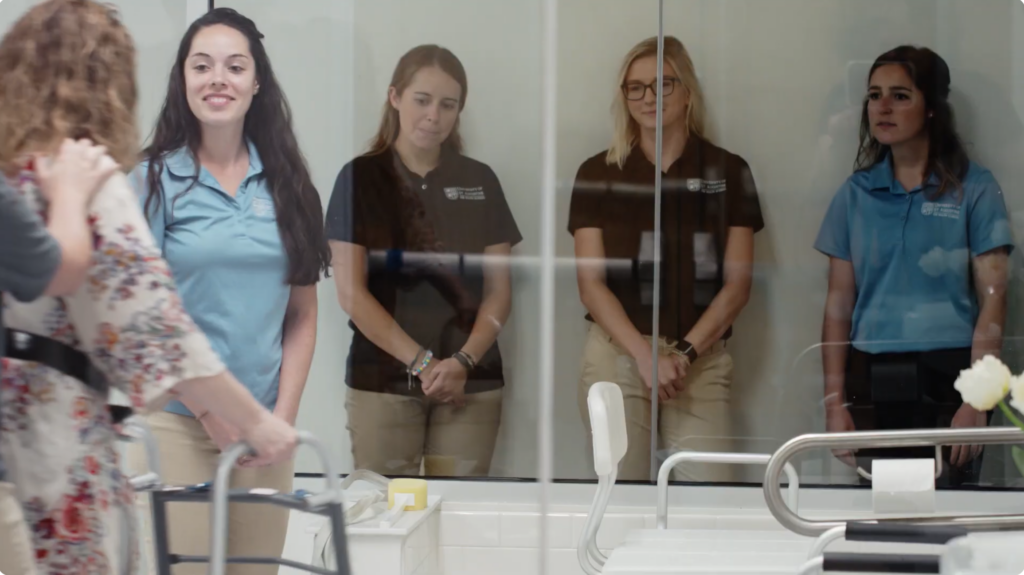
OT Students Practice ADL Skills with Mock Patients in Simulated Home — USAHS
Students and faculty discuss learning through realistic OT simulations.
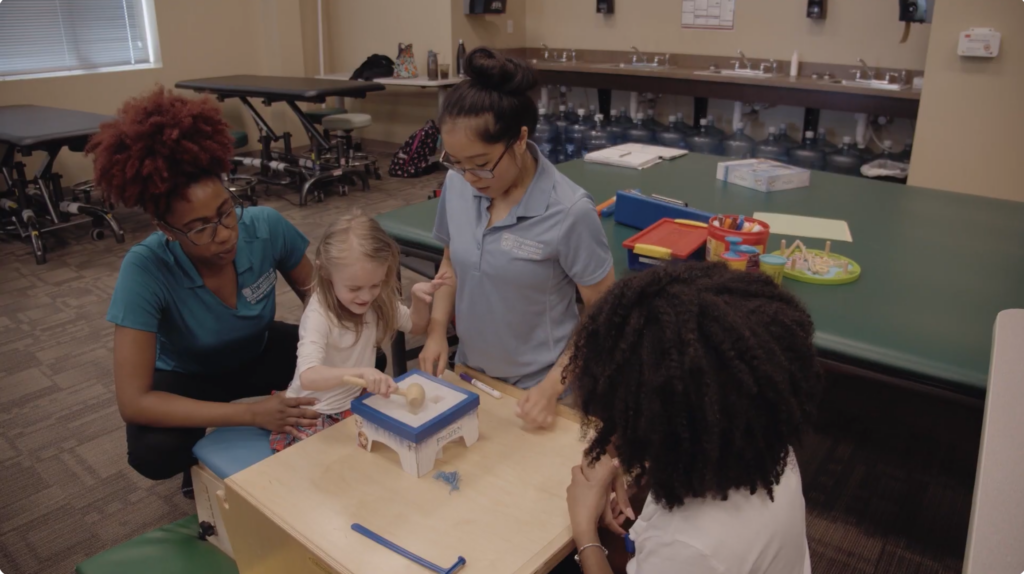
Pediatrics at the University for St. Augustine for Health Sciences
Learn how faculty prepare students for pediatric care.
Introducing the Double Robot & Telehealth at the University of St. Augustine
A look at innovative learning technology at USAHS.