College of Health Sciences

Master of Health Administration (MHA) Program


Locations: Distance + optional immersions
Formats: Online + hands-on
Program duration: The program can be completed in as few as 16 months*
See Requirements & Program Details

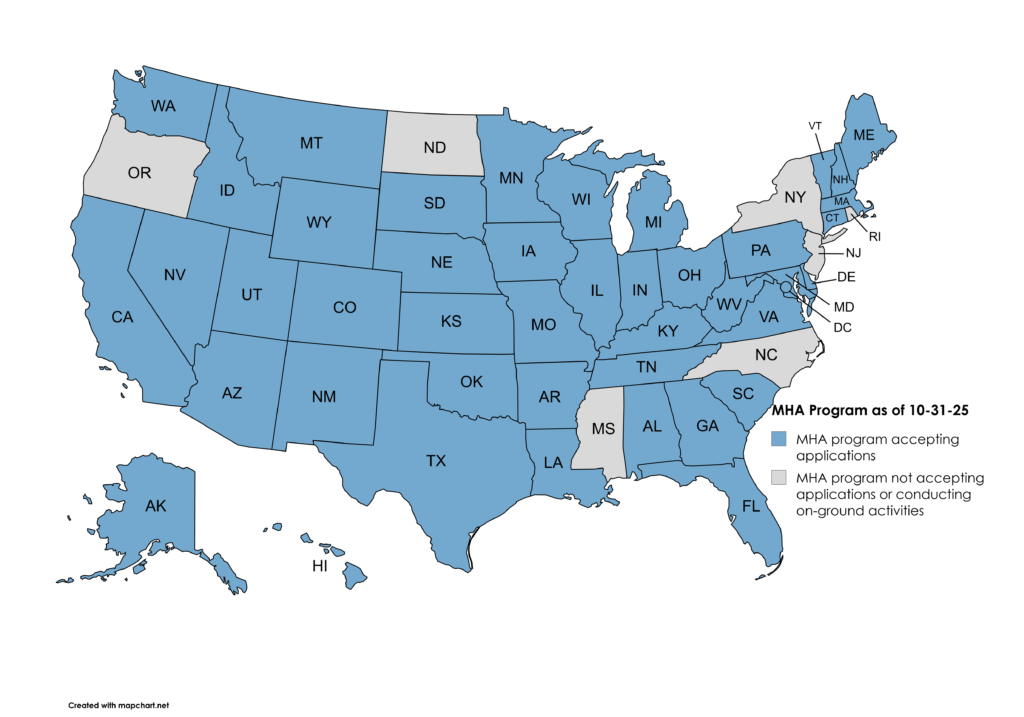
NOTE: The MHA program is not currently enrolling new students.


MHA at Glance 

  • Online coursework
  • Up to four optional virtual immersion sessions
  • Traditional and accelerated pathways
  • 37 credit hours (22 required, 15 electives)
  • 4–6 trimesters (1.3–2 years)*
  • Sept., Jan. & May start dates
  • Capstone project with optional internship

*Based on transfer credit and prior learning experience. The average time to degree is 2 years for students who have graduated within the past 6 years.

Not Currently Enrolling Students

The MHA program is not currently enrolling new students. Stay tuned for updates.

Become a dynamic, highly skilled healthcare leader.

Today’s healthcare systems need dynamic and skilled healthcare administrators, healthcare leaders, and C-suite executives to guide integrated teams. In USAHS’ Master of Health Administration (MHA), you can gain the management, financial, technological, operational, and people skills you need to lead your organization into the future. You can complement your degree by earning one or more specializations, plus national-level certifications.

At USAHS, a university dedicated to graduate health sciences education, our advanced simulation technologies prepare you to manage the health systems of tomorrow. You will collaborate with your interprofessional peers to solve problems in patient-centric scenarios. Designed for working professionals, this flexible online program shows you how to lead teams to deliver the highest quality of patient care within a healthcare system, clinic, or outpatient environment.

Advance your credentials in a field that is rapidly expanding, with job opportunities for health administrators projected to grow 23% from 2024 to 2034 “Bureau of Labor Statistics, Occupational Outlook Handbook, “Medical and Health Services Managers” last visited January 15, 2026.

How Our MHA Program Stands Apart

We provide MHA certification opportunities.

USAHS has partnered with the Healthcare Financial Management Association (HFMA) to bring healthcare professional certification opportunities to our students. The Certified Revenue Cycle Representative (CRCR) is available for all MHA students, while the Certified Specialist in Business Intelligence (CSBI) is available for students in the Business Intelligence specialization.

We offer specialization options.

You can follow the general program—or specialize in Executive Leadership, Business Intelligence, or Interprofessional Education to enhance your skills and credentials in an area of focus.

We’re interprofessional.

Our core courses and optional virtual immersions emphasize interprofessional education, enabling students from different healthcare professions to learn together and practice working in a team. You will contribute your management perspective to problem-solving in collaborative scenarios.

We’re online + hands-on.

Alongside our online coursework, some core courses offer optional virtual immersions, a chance to enjoy connections with faculty and fellow students—and complete the course faster.

MHA Specializations

Areas of Specialization

Executive Leadership

If you want to expand your leadership role within your healthcare organization, choose the MHA’s Executive Leadership specialization. With courses on organizational leadership and policy, human resources management, project management, and more, this specialization will prepare you to make strategic decisions that benefit patient care and the organization’s bottom line. You’ll prepare for roles such as:

  • Health services manager
  • Business operations strategist
  • Revenue cycle manager
  • Director of compliance

Business Intelligence

Health administrators translate data into intelligence to make decisions about business operations and patient care. In the Business Intelligence specialization, you will study data analytics, health informatics, information management, and more—so that you can oversee strategic technology investments and help bridge the gap between the IT, clinical, and business aspects of your healthcare organization. You’ll prepare for roles such as:

  • Business intelligence analyst
  • Healthcare data analyst
  • Clinical systems support manager
  • Telemedicine services coordinator

Interprofessional Education

Facilitating collaboration between healthcare providers is an important competency for health administrators. In the Interprofessional Education specialization, you will gain the leadership, project management, and communication skills you need to guide your teams. All of your courses involve problem-solving in groups of your peers, ranging from nurses to rehabilitative professionals to other managers. You’ll learn to:

  • Collaborate with clinicians to optimize aspects of health informatics
  • Demonstrate cultural competence when managing diverse teams
  • Communicate well with a variety of stakeholders

Professional Certifications

USAHS has partnered with the Healthcare Financial Management Association (HFMA) and Neehr Perfect to bring professional certification opportunities to our students.

Certified Revenue Cycle Representative (CRCR) Certification

Available to all MHA students, the CRCR is a national-level certification that demonstrates your knowledge of the contemporary patient-centered revenue cycle. In the MHA’s core courses, you will study processes around patient access, registration, billing, and claims management, as well as best-practices recommendations to positively impact the revenue cycle and enhance the patient experience.

Certified Specialist in Business Intelligence (CSBI) Certification

Available to students in the Business Intelligence specialization, the CSBI is a national-level certification that demonstrates your understanding of data governance, data analytics, the use of business intelligence to make strategic decisions in a healthcare environment, and much more.

Neehr Perfect® Certificate of Completion

Neehr Perfect is the electronic health record (EHR) simulation tool used throughout the courses in the Business Intelligence specialization. It gives you the chance to work with an EHR system in real-world clinical scenarios involving your peers and diverse patients. Students in this specialization receive a Neehr Perfect certificate of completion as part of the program.

Close

MHA Curriculum

The MHA program is not currently enrolling new students.Students enrolled in the MHA General program will take a total of 37 credit hours—22 credit hours of required core courses as well as 15 credit hours of elective courses. Of the 15 credit hours of elective courses, only 6 credit hours from the specialty tracks can be accepted for credit in the general track.  Students may choose a traditional learning pathway that requires 6 credit hours per trimester (7 credit hours in Trimester 5) or an accelerated learning pathway that requires 9 credit hours per trimester (10 credit hours in Trimester 5). While USAHS does not offer Title IV financial aid for any term in which an accelerated learning course is taken without a full term "anchor" course, other financing alternatives may be available. Please refer to the Financial Aid Office for additional information. 
CoursesHours
General Electives Curriculum
IPE 7121/IPE 7121B is a foundation general elective course; students choose four additional general electives for a total of 15 credit hours.
COM 7130 - Healthcare Communication and Collaboration
In this online course, students will develop the understanding and competency to deal with common communication issues in the healthcare professions, including cultural differences, interdisciplinary collaboration, professional and clinical documentation, case presentations, social media presence, and successful project management. This course will focus on effective writing, speaking, and conflict management skills. These abilities determine professional credibility and impact patient outcomes.
3
EDF 7050 - Teaching Methods in Higher Education
This online course engages learners to examine the basic concepts associated with teaching and learning within higher educational environments and methods to be an effective academic educator. This course focuses on educational theoretical underpinnings for teaching in an academic setting and experiential learning of the processes of instructional design, course development, and effective teaching and facilitation of learning in a higher education environment. Emphasis is placed on the application of knowledge to demonstrate mastery of content taking into consideration the needs of adult learners. This course discusses the fundamentals of teaching and is highly recommended for the new instructor, or instructors wishing to review theories and concepts related to teaching, learning, and assessment.
OR
EDF 7050B - Teaching Methods in Higher Education (B)
This online course engages learners to examine the basic concepts associated with teaching and learning within higher educational environments and methods to be an effective academic educator. This course focuses on educational theoretical underpinnings for teaching in an academic setting and experiential learning of the processes of instructional design, course development, and effective teaching and facilitation of learning in a higher education environment. Emphasis is placed on the application of knowledge to demonstrate mastery of content taking into consideration the needs of adult learners. This course discusses the fundamentals of teaching and is highly recommended for the new instructor, or instructors wishing to review theories and concepts related to teaching, learning, and assessment.This is an Accelerated Learning Course.
3
EDF 7161 - Program and Curricular Design for Health Science Education
The focus of this course is a systematic approach to program planning design. This course examines program planning models such as Interactive Model of Program Design. Learners investigate and learn about constructing program outcomes, learning objectives, transfer of learning, program structure, program evaluation, budgeting, and marketing.
3
EDF 7171 - Motivation Theory in Health Care Education
An investigation and discussion of current and historically significant theories of motivation in educational research and how they can be utilized in various settings including the classroom, at work, and with patients/clients.
3
EDF 7175 - Foundational Theories in Education
This online course examines the theories of teaching and learning related to research and health science education. Selected learning theories are analyzed from the perspective of teaching and learning. Students are introduced to the various historical learning theories and research-based educational theories from the perspective of a modern-day learner. Strategies and ideas for the use of educational theories in learning are explored with emphasis on application in today's learning environments.
OR
EDF 7175B - Foundational Theories in Education (B)
This online course examines the theories of teaching and learning related to research and health science education. Selected learning theories are analyzed from the perspective of teaching and learning. Students are introduced to the various historical learning theories and research-based educational theories from the perspective of a modern-day learner. Strategies and ideas for the use of educational theories in learning are explored with emphasis on application in today's learning environments.This is an Accelerated Learning Course.
3
EDF 7181 - Technology in Higher Education
It is important for educators to evaluate the dynamic and strategic application of technology in education to enhance teaching and learning practices and influence higher education institutions. This course will provide the student with an understanding of learning models, the influence of technology on the learning process, and the body of literature that informs the utilization of technology in higher education. The primary focus will be the application of teaching and learning strategies that integrate technology as a method or tool to enrich the educational process. Using technology tools for solving a variety of problems, teaching presentation, evaluating student performance, and implementing distance learning systems will also be explored. This course will help students develop the skills necessary to be a change agent to enhance the use of educational technology in higher education institutions.
3
HSA 7250 - Human Resources Management and Organizational Development in Healthcare
Using a systematic approach, students address the role of human resources in healthcare organizations. Students gain an understanding of key roles in planning for workforce needs and aligning with the strategic goals of the organization. Students examine organizational behavior and dynamics, as well as leadership principles to help navigate change. Students analyze theory and practice of managing individuals and groups through motivation, communication, teamwork, collaboration, leadership, organizational change, negotiation, and conflict management and resolution. 
3
HSA 7455 - Special Topics in Professional Practice
This Special Topics course encourages students to engage in a guided independent study of theory application, professional topics and skills, and emerging practice questions. Learning experiences may be in the form of guided readings and discussion, directed projects, seminars, or community/clinical experience with focus on advanced supplemental or exploratory learning. Specific topics and formats will vary as they are generated by student interest and faculty expertise.
Varies
HSC 7470 - Legal and Regulatory Issues
This course investigates the legal and regulatory environment of the health services industry. Case law, statutory and regulatory analysis, and trends in health services delivery law will be analyzed in context of implications among major stakeholder groups (providers, patients, administrators, third-party payers, and health care organizations). Topics include civil and criminal law, ethics, contract law, antitrust, malpractice, human resources/personnel laws, managed care laws, professional and corporate liability, information management/medical records, patient safety and mandatory reporting issues, patients' rights and responsibilities, among others.
3
IPE 7025 - Psychosocial Strategies for Healthcare
This innovative course explores the evidence surrounding holistic patient care across healthcare and wellness professions. Psychosocial characteristics of effective practitioners are identified and patient education tools for use across healthcare and wellness settings are presented. Critical examination of contemporary literature serves as the foundation for implementation of client care plans.  
OR
IPE 7025B - Psychosocial Strategies for Healthcare (B)
This innovative course explores the evidence surrounding holistic patient care across healthcare and wellness professions. Psychosocial characteristics of effective practitioners are identified and patient education tools for use across healthcare and wellness settings are presented. Critical examination of contemporary literature serves as the foundation for implementation of client care plans. This is an Accelerated Learning Course.
3
IPE 7100 - Ethics in Health Care
This course provides a comprehensive perspective on ethical issues in healthcare. It takes a practical approach toward contemporary ethical issues surrounding healthcare professions and emphasizes an interprofessional appreciation of ethical decision-making. Ethical principles, theory and decision-making models will provide the foundation for ethical case analysis and other critical thinking activities. Principles and constructs such as morality, goals of professional practice, professional and organizational values, and socio-cultural contexts of health care will be defined and realistic solutions will be discussed. Understanding the ethical-legal relationship in areas of greatest risk, minimizing such risk, and gaining the knowledge required to prepare for the circumstances will be discussed.
3
IPE 7121 - Organizational Leadership & Policy in Health Care
This course introduces students to interprofessional healthcare policy and organizational leadership concepts. Students have the opportunity to analyze and advocate for health policy with the inclusion of diverse stakeholders to optimize access to care, improve care coordination, and reduce disparities affecting population health. Various leadership styles are examined as well as self-assessment, goal setting, and strategies for continuous improvement as healthcare leaders.
OR
IPE 7121B - Organizational Leadership & Policy in Health Care (B)
This course introduces students to various concepts and tools necessary for understanding operationalization of health service delivery and the effect on performance outcomes, including leadership competencies that support interprofessional collaboration, process improvement, health policy and regulation, and project and quality management. Students will discover the essential relationship linking operations and quality management and develop metrics for monitoring daily operations within their field.
required general elective
3
IPE 7155 - Clinical Data Analytics and Decision Support
Course Description: This interprofessional course is focused on the synthesis of data and information into knowledge, wisdom, and clinical decision-making to support all members of the healthcare team and the consumer. Areas of emphasis include healthcare data standards and taxonomies, data analytics, and data security.
3
IPE 7200 - Cultural Competence in Healthcare
This course introduces participants to population demographics and their impact on cultural influence with regard to health care and wellness. Emphasis is placed on cultural awareness and cultural competence, discussing methods of inclusion and appropriate intervention using an interprofessional model.
OR
IPE 7200B - Cultural Competence in Healthcare (B)
This course introduces participants to population demographics and their impact on cultural influence with regard to health care and wellness. Emphasis is placed on cultural awareness and cultural competence, discussing methods of inclusion and appropriate intervention using an interprofessional model.This is an Accelerated Learning Course. 
3
IPE 7230 - Program/Project Planning and Management for Practice and Policy Change
Learning how to plan, develop and manage projects and programs are essential skills for healthcare professionals. This course focuses on the processes of analyzing organizations and systems, completing a gap analysis through use of selected quality improvement tools, and identifying specific steps in the project sequence. Experiential opportunities are integrated into the project life cycle phases in validating the need for developing an improvement change project. Leadership and interprofessional team collaboration are incorporated into project and program development and management. 
3
IPE 7250 - Healthcare System Life Cycle Analysis and Design
This healthcare informatics course is focused on the phases of system implementation life cycle. Areas of emphasis include project management, strategic planning, system analysis, workflow redesign, system implementation, evaluation and service management.
3
IPE 7255 - Evidence-based Concussion Management
A contemporary approach to understanding the prevention, assessment, and rehabilitation of concussion injury. This course examines concussion position statements, methods of neurocognitive assessment and evaluation, case examples, and individual state laws. This course presents an interprofessional team approach to concussion management.
3
IPE 7300 - Entrepreneurial Strategies in Health Care
This course presents an interprofessional approach to the principles and practices of financial management, human resources management, vision and strategy, marketing and consulting, as well as many other business-related skills applied across the health care arena.
3
IPE 7365 - Information Management for Quality and Safety
This graduate level interprofessional informatics specialty course provides the learner an overview of healthcare quality and patient safety with an emphasis on healthcare informatics. This course uses a systems approach to introduce the learner to the complexities of quality and patient safety management with understanding of measurement and improvement of outcomes. This course will expose the learner to multiple measures for quality and patient safety from a variety of organizations and regulatory bodies that offer measure comparisons. The framework within this course will establish broad concepts to practical application of improvement steps, including issues related to data quality, challenges within HIT management, collaborative efforts between disciplines, and challenges of calculating quality measures with data from the EHR. Areas of emphasis include data analytics for quality improvement and patient safety, control chart methodology, failure modes and effects analysis, and HIT influence in change management.
3
IPE 7400 - Healthcare Informatics and Technology Management
This course introduces the student to healthcare informatics, focusing on the foundational experiences with health information systems and technology; roles within interprofessional teams (when applicable); and ethical and legal use of technology to improve patient safety, healthcare quality, and population health outcomes. Students examine data management systems to improve outcomes of care and technology for care delivery and to explore new trends to improve patient outcomes using evidence to inform the design of workflows and utilization of health information systems to improve user experience, standards, and safety.
OR
IPE 7400B - Healthcare Informatics and Technology Management (B)
This online interprofessional education (IPE) course introduces the student to healthcare informatics focusing on the foundational experiences with health information systems and technology, roles within interprofessional teams to optimize ethical and legal use of technology to improve consumer safety, healthcare quality, and population health outcomes. Students examine data management systems to improve outcomes of care and utilize evidence to inform redesign of workflow and utilization of health information systems to improve user experience, standards, and safety.This is an Accelerated Learning Course. 
3
IPE 7421 - Interprofessional Approaches to Regional and Global Population Health
Students evaluate cultural, environmental, societal, and economic factors impacting population health and health outcomes. Students assimilate factors impacting individual and community health. Knowledge is applied to create interprofessional, evidence-based interventions to improve population health and advance health equity.
OR
IPE 7421B - Interprofessional Approaches to Regional and Global Population Health (B)
This course explores concepts relevant to population health practice. These include the importance of reflective practice and a focus on prevention and upstream interventions, with particular attention to social determinants of health and mitigation of adverse childhood events.  Using an interprofessional/cross disciplinary approach, students examine how economics, social factors, cultural safety/competency, health literacy, policy, urbanization, globalization, the environment, and other factors influence health and disease. Students consider how research in prevention, health determinants, cultural ecology, and global health applies to population and community health efforts.
3
IPE 7495 - Application of Technology for Population Health and Healthcare Professional Education
This healthcare informatics and nurse informaticist specialty course is focused on the design, use, and promotion of innovative technologies that advance healthcare outcomes. Areas of emphasis include information literacy, social media, genomic, consumer products to facilitate health, and the Technology Informatics Guiding Education Reform (TIGER) initiative. 
3
MHS 7315 - Contemporary Trends in Wellness
This course introduces students to contemporary trends in wellness that impact the goal of living a healthful lifestyle and achieving personal well-being. Students will explore a wide variety of available resources at individual, community, and global levels that enable individuals adopt wellness techniques correlated with long-term health. Innovative course design affords collaborations with industry partners and the opportunity to impact the greater wellness community. 
3
General Elective Credit Hours 15
Degree Credit Hours 37
* Optional residency available in IPE 7001/7001B†Course includes the Certified Revenue Cycle Representative (CRCR), which is a professional industry certification examination offered by the Healthcare Financial Management Association (HFMA).

Follow the General Program or Choose a Specialization

General Electives

IPE 7121/B is a foundation course within the General program; students choose four additional general electives from the list below or from within any of the specializations: Business Intelligence, Executive Leadership, or Interprofessional Education.

The MHA program is not currently enrolling new students.Students in the MHA program take a total of 37 credits—25 credits of required core courses as well as 12 elective/specialization credits. 
CoursesHours
HSA 7200 - Foundations of Healthcare Administration
Students investigate and analyze the changing landscape of the healthcare environment and the factors affecting the practice of healthcare administration. Students consider stakeholders in a variety of settings to establish a framework for scholarly investigation of effective strategies for healthcare administrators in practice. Particular emphasis will include the importance of collaboration, critical thinking, communication, and diversity. The course introduces students to techniques applied by successful healthcare administrators, such as setting goals and managing time, as well as the attitudes and motivation required for success as a healthcare manager, administrator, and leader.
OR
HSA 7200B - Foundations of Healthcare Administration (B)
Students investigate and analyze the changing landscape of the healthcare environment and the factors affecting the practice of healthcare administration. Students consider stakeholders in a variety of settings to establish a framework for scholarly investigation of effective strategies for healthcare administrators in practice. Particular emphasis will include the importance of collaboration, critical thinking, communication, and diversity. The course introduces students to techniques applied by successful healthcare administrators, such as setting goals and managing time, as well as the attitudes and motivation required for success as a healthcare manager, administrator, and leader.This is an Accelerated Learning Course.
3
HSA 7233 - Revenue Cycle and Reimbursement Management
Course Description In this course, students break down the complexities of revenue cycle and reimbursement management for healthcare services. The course provides details on the impact of patient access accuracy, billing and collections of various payers and patients, managed care, and steps healthcare administrators can take to navigate these challenges to maximize reimbursement. The Certified Revenue Cycle Representative (CRCR) study materials and examination offered through the Healthcare Financial Management Association (HFMA) is used as one of the learning tools. Current topics is used to ensure the timeliness of the healthcare reform efforts in the United States. 
1
HSA 7236 - Accounting, Finance and Economics for the Healthcare Leader
This course provides basic accounting, finance, and economics for the healthcare leader. Students will be able to educate patient care team members on financial implications of patient care decisions, use financial statements for decision making, use basic accounting, finance, and economics concepts needed for efficient management of the healthcare organization, develop policies and procedures for coding and reimbursement, and negotiate contracts for effectiveness and compliance.
3
HSA 7260 - Operations and Quality Management in Healthcare
There are many opportunities for healthcare organizations and/or their unitary departments to employ strategies to affect the challenges and enhance the outcomes found in today's healthcare delivery system. This course familiarizes the student to a framework of various concepts and tools necessary for understanding the operationalization of health service delivery processes and their effect on performance outcomes. The development of leadership performance competencies that support interprofessional collaboration in organizational health care delivery systems, process improvement, and project and quality management will be emphasized. Through clinical and service quality planning, control and improvement initiatives, outcomes will demonstrate that quality improvement is a strategic mandate Students will discover the essential relationship linking operations and quality management and the importance and use of metrics in daily operations.
3
HSA 7497 - Integrated Field Project
This is an integration of the knowledge and skills appropriate to a student's specialty area or area of interest. By applying theory and practice, students have the opportunity to explore various approaches relating to the delivery and administration of healthcare services. Under the advisement of a faculty member, the student has two options in completing the project. One option is to identify unique and significant problems in the administration of health services and develop one publishable case report. The second option is to develop one publishable article related to critical issues in the delivery of healthcare today. 
3
IPE 7001 - Interprofessional Education and Collaborative Practice
This course provides students with a foundation for interprofessional education and collaboration. Emphasis is on learning roles and responsibilities of healthcare peers, effective interprofessional communication, teams and teaming, as well as ethical practice and patient (or client)-centered care. All coursework prepares the student to engage on highly functioning healthcare teams, while striving to improve healthcare delivery through increasing patient and practitioner satisfaction, reducing costs, and achieving better outcomes. The course will expose the student to industry-relevant tools and techniques that meet the demands of the contemporary healthcare workplace.  
OR
IPE 7001B - Interprofessional Education and Collaborative Practice (B)
This course provides students with a foundation for interprofessional education and collaboration. Emphasis is on learning roles and responsibilities of healthcare peers, effective interprofessional communication, teams and teaming, as well as ethical practice and patient (or client)-centered care. All coursework prepares the student to engage on highly functioning healthcare teams, while striving to improve healthcare delivery through increasing patient and practitioner satisfaction, reducing costs, and achieving better outcomes. The course will expose the student to industry-relevant tools and techniques that meet the demands of the contemporary healthcare workplace.  
3
IPE 7050 - Evidence-Based Practice for Healthcare Professionals
This course provides an overview of the evidence-based practice process to prepare the healthcare professional as a consumer of scientific evidence for decision making. A process for formulating a practice question and conducting literature searches for existing evidence. The course also includes an overview of the research process for quantitative, qualitative, and mixed methods research with emphasis on the critical appraisal of evidence for determination of inclusion in a literature synthesis related to a practice question. The discussion of biostatistics focuses on determining the appropriateness of the statistical analysis and interpretation of the statistical results in the critically appraised research evidence. Finding and critically appraising research summaries, such as systematic reviews, meta-analyses, and meta-syntheses, and clinical practice guidelines is included. Effectively implementing, evaluating, and disseminating an evidence-based change process is discussed. 
OR
IPE 7050B - Evidence-Based Practice for Healthcare Professionals (B)
This course provides an overview of the evidence-based practice process to prepare the healthcare professional as a consumer of scientific evidence for decision making. A process for formulating a practice question and conducting literature searches for existing evidence. The course also includes an overview of the research process for quantitative, qualitative, and mixed methods research with emphasis on the critical appraisal of evidence for determination of inclusion in a literature synthesis related to a practice question. The discussion of biostatistics focuses on determining the appropriateness of the statistical analysis and interpretation of the statistical results in the critically appraised research evidence. Finding and critically appraising research summaries, such as systematic reviews, meta-analyses, and clinical practice guidelines is included. Effectively implementing, evaluating, and disseminating an evidence-based change process is discussed. 
3
IPE 7121 - Organizational Leadership & Policy in Health Care
This course introduces students to interprofessional healthcare policy and organizational leadership concepts. Students have the opportunity to analyze and advocate for health policy with the inclusion of diverse stakeholders to optimize access to care, improve care coordination, and reduce disparities affecting population health. Various leadership styles are examined as well as self-assessment, goal setting, and strategies for continuous improvement as healthcare leaders.
OR
IPE 7121B - Organizational Leadership & Policy in Health Care (B)
This course introduces students to various concepts and tools necessary for understanding operationalization of health service delivery and the effect on performance outcomes, including leadership competencies that support interprofessional collaboration, process improvement, health policy and regulation, and project and quality management. Students will discover the essential relationship linking operations and quality management and develop metrics for monitoring daily operations within their field.
3
IPE 7133 - Foundations in Healthcare Administration with Strategic Planning
Students build on leadership concepts introduced in IPE 7121 to develop a foundational understanding of healthcare administration while analyzing the changing landscape of the healthcare environment. Application of these concepts occurs through formulating, implementing, and evaluating a strategic plan while working with an interprofessional team. Students examine the role of strategic planning in achieving organizational performance measures as well as the notion of planning as a cyclical process within the healthcare organization in the role of a healthcare administrator.  
3
General Electives Curriculum
COM 7130 - Healthcare Communication and Collaboration
In this online course, students will develop the understanding and competency to deal with common communication issues in the healthcare professions, including cultural differences, interdisciplinary collaboration, professional and clinical documentation, case presentations, social media presence, and successful project management. This course will focus on effective writing, speaking, and conflict management skills. These abilities determine professional credibility and impact patient outcomes.
3
HSA 7250 - Human Resources Management and Organizational Development in Healthcare
Using a systematic approach, students address the role of human resources in healthcare organizations. Students gain an understanding of key roles in planning for workforce needs and aligning with the strategic goals of the organization. Students examine organizational behavior and dynamics, as well as leadership principles to help navigate change. Students analyze theory and practice of managing individuals and groups through motivation, communication, teamwork, collaboration, leadership, organizational change, negotiation, and conflict management and resolution. 
3
HSA 7455 - Special Topics in Professional Practice
This Special Topics course encourages students to engage in a guided independent study of theory application, professional topics and skills, and emerging practice questions. Learning experiences may be in the form of guided readings and discussion, directed projects, seminars, or community/clinical experience with focus on advanced supplemental or exploratory learning. Specific topics and formats will vary as they are generated by student interest and faculty expertise.
Varies
HSC 7470 - Legal and Regulatory Issues
This course investigates the legal and regulatory environment of the health services industry. Case law, statutory and regulatory analysis, and trends in health services delivery law will be analyzed in context of implications among major stakeholder groups (providers, patients, administrators, third-party payers, and health care organizations). Topics include civil and criminal law, ethics, contract law, antitrust, malpractice, human resources/personnel laws, managed care laws, professional and corporate liability, information management/medical records, patient safety and mandatory reporting issues, patients' rights and responsibilities, among others.
3
IPE 7100 - Ethics in Health Care
This course provides a comprehensive perspective on ethical issues in healthcare. It takes a practical approach toward contemporary ethical issues surrounding healthcare professions and emphasizes an interprofessional appreciation of ethical decision-making. Ethical principles, theory and decision-making models will provide the foundation for ethical case analysis and other critical thinking activities. Principles and constructs such as morality, goals of professional practice, professional and organizational values, and socio-cultural contexts of health care will be defined and realistic solutions will be discussed. Understanding the ethical-legal relationship in areas of greatest risk, minimizing such risk, and gaining the knowledge required to prepare for the circumstances will be discussed.
3
IPE 7155 - Clinical Data Analytics and Decision Support
Course Description: This interprofessional course is focused on the synthesis of data and information into knowledge, wisdom, and clinical decision-making to support all members of the healthcare team and the consumer. Areas of emphasis include healthcare data standards and taxonomies, data analytics, and data security.
3
IPE 7200 - Cultural Competence in Healthcare
This course introduces participants to population demographics and their impact on cultural influence with regard to health care and wellness. Emphasis is placed on cultural awareness and cultural competence, discussing methods of inclusion and appropriate intervention using an interprofessional model.
3
IPE 7230 - Program/Project Planning and Management for Practice and Policy Change
Learning how to plan, develop and manage projects and programs are essential skills for healthcare professionals. This course focuses on the processes of analyzing organizations and systems, completing a gap analysis through use of selected quality improvement tools, and identifying specific steps in the project sequence. Experiential opportunities are integrated into the project life cycle phases in validating the need for developing an improvement change project. Leadership and interprofessional team collaboration are incorporated into project and program development and management. 
3
IPE 7250 - Healthcare System Life Cycle Analysis and Design
This healthcare informatics course is focused on the phases of system implementation life cycle. Areas of emphasis include project management, strategic planning, system analysis, workflow redesign, system implementation, evaluation and service management.
3
IPE 7255 - Evidence-based Concussion Management
A contemporary approach to understanding the prevention, assessment, and rehabilitation of concussion injury. This course examines concussion position statements, methods of neurocognitive assessment and evaluation, case examples, and individual state laws. This course presents an interprofessional team approach to concussion management.
3
IPE 7300 - Entrepreneurial Strategies in Health Care
This course presents an interprofessional approach to the principles and practices of financial management, human resources management, vision and strategy, marketing and consulting, as well as many other business-related skills applied across the health care arena.
3
IPE 7365 - Information Management for Quality and Safety
This graduate level interprofessional informatics specialty course provides the learner an overview of healthcare quality and patient safety with an emphasis on healthcare informatics. This course uses a systems approach to introduce the learner to the complexities of quality and patient safety management with understanding of measurement and improvement of outcomes. This course will expose the learner to multiple measures for quality and patient safety from a variety of organizations and regulatory bodies that offer measure comparisons. The framework within this course will establish broad concepts to practical application of improvement steps, including issues related to data quality, challenges within HIT management, collaborative efforts between disciplines, and challenges of calculating quality measures with data from the EHR. Areas of emphasis include data analytics for quality improvement and patient safety, control chart methodology, failure modes and effects analysis, and HIT influence in change management.
3
IPE 7400 - Healthcare Informatics and Technology Management
This course introduces the student to healthcare informatics, focusing on the foundational experiences with health information systems and technology; roles within interprofessional teams (when applicable); and ethical and legal use of technology to improve patient safety, healthcare quality, and population health outcomes. Students examine data management systems to improve outcomes of care and technology for care delivery and to explore new trends to improve patient outcomes using evidence to inform the design of workflows and utilization of health information systems to improve user experience, standards, and safety.
OR
IPE 7400B - Healthcare Informatics and Technology Management (B)
This online interprofessional education (IPE) course introduces the student to healthcare informatics focusing on the foundational experiences with health information systems and technology, roles within interprofessional teams to optimize ethical and legal use of technology to improve consumer safety, healthcare quality, and population health outcomes. Students examine data management systems to improve outcomes of care and utilize evidence to inform redesign of workflow and utilization of health information systems to improve user experience, standards, and safety.This is an Accelerated Learning Course. 
3
IPE 7421 - Interprofessional Approaches to Regional and Global Population Health
Students evaluate cultural, environmental, societal, and economic factors impacting population health and health outcomes. Students assimilate factors impacting individual and community health. Knowledge is applied to create interprofessional, evidence-based interventions to improve population health and advance health equity.
OR
IPE 7421B - Interprofessional Approaches to Regional and Global Population Health (B)
This course explores concepts relevant to population health practice. These include the importance of reflective practice and a focus on prevention and upstream interventions, with particular attention to social determinants of health and mitigation of adverse childhood events.  Using an interprofessional/cross disciplinary approach, students examine how economics, social factors, cultural safety/competency, health literacy, policy, urbanization, globalization, the environment, and other factors influence health and disease. Students consider how research in prevention, health determinants, cultural ecology, and global health applies to population and community health efforts.
3
IPE 7495 - Application of Technology for Population Health and Healthcare Professional Education
This healthcare informatics and nurse informaticist specialty course is focused on the design, use, and promotion of innovative technologies that advance healthcare outcomes. Areas of emphasis include information literacy, social media, genomic, consumer products to facilitate health, and the Technology Informatics Guiding Education Reform (TIGER) initiative. 
3
MHS 7313 - Fundamentals of Healthcare Law
This course introduces students to the myriad of ethical and legal implications of health care administration, particularly regarding the legal rights of patients as they interact within an increasingly complex healthcare system. The course specifically focuses on patients' rights, healthcare access, ethical best practices, and affordability. In addition, students will discover the multifaceted implications impacting healthcare professionals in providing ethically-sound and quality-driven healthcare services in an ever-changing legal and regulatory environment. 
3
MHS 7315 - Contemporary Trends in Wellness
This course introduces students to contemporary trends in wellness that impact the goal of living a healthful lifestyle and achieving personal well-being. Students will explore a wide variety of available resources at individual, community, and global levels that enable individuals adopt wellness techniques correlated with long-term health. Innovative course design affords collaborations with industry partners and the opportunity to impact the greater wellness community. 
3
Degree Credit Hours 37

Business Intelligence Specialization

Students specializing in Business Intelligence are required to take all courses listed.

The MHA program is not currently enrolling new students.Students enrolled in the MHA Business Intelligence program will take a total of 37 credit hours—22 credit hours of required core courses as well as 15 credit hours of elective courses. Students may choose a traditional learning pathway that requires 6 credit hours per trimester (7 credit hours in Trimester 5) or an accelerated learning pathway that requires 9 credit hours per trimester (10 credit hours in Trimester 5).
CoursesHours
HSA 7200 - Foundations of Healthcare Administration
Students investigate and analyze the changing landscape of the healthcare environment and the factors affecting the practice of healthcare administration. Students consider stakeholders in a variety of settings to establish a framework for scholarly investigation of effective strategies for healthcare administrators in practice. Particular emphasis will include the importance of collaboration, critical thinking, communication, and diversity. The course introduces students to techniques applied by successful healthcare administrators, such as setting goals and managing time, as well as the attitudes and motivation required for success as a healthcare manager, administrator, and leader.
OR
HSA 7200B - Foundations of Healthcare Administration (B)
Students investigate and analyze the changing landscape of the healthcare environment and the factors affecting the practice of healthcare administration. Students consider stakeholders in a variety of settings to establish a framework for scholarly investigation of effective strategies for healthcare administrators in practice. Particular emphasis will include the importance of collaboration, critical thinking, communication, and diversity. The course introduces students to techniques applied by successful healthcare administrators, such as setting goals and managing time, as well as the attitudes and motivation required for success as a healthcare manager, administrator, and leader.This is an Accelerated Learning Course.
3
HSA 7233 - Revenue Cycle and Reimbursement Management
Course Description In this course, students break down the complexities of revenue cycle and reimbursement management for healthcare services. The course provides details on the impact of patient access accuracy, billing and collections of various payers and patients, managed care, and steps healthcare administrators can take to navigate these challenges to maximize reimbursement. The Certified Revenue Cycle Representative (CRCR) study materials and examination offered through the Healthcare Financial Management Association (HFMA) is used as one of the learning tools. Current topics is used to ensure the timeliness of the healthcare reform efforts in the United States. 
1
HSA 7236 - Accounting, Finance and Economics for the Healthcare Leader
This course provides basic accounting, finance, and economics for the healthcare leader. Students will be able to educate patient care team members on financial implications of patient care decisions, use financial statements for decision making, use basic accounting, finance, and economics concepts needed for efficient management of the healthcare organization, develop policies and procedures for coding and reimbursement, and negotiate contracts for effectiveness and compliance.
3
HSA 7260 - Operations and Quality Management in Healthcare
There are many opportunities for healthcare organizations and/or their unitary departments to employ strategies to affect the challenges and enhance the outcomes found in today's healthcare delivery system. This course familiarizes the student to a framework of various concepts and tools necessary for understanding the operationalization of health service delivery processes and their effect on performance outcomes. The development of leadership performance competencies that support interprofessional collaboration in organizational health care delivery systems, process improvement, and project and quality management will be emphasized. Through clinical and service quality planning, control and improvement initiatives, outcomes will demonstrate that quality improvement is a strategic mandate Students will discover the essential relationship linking operations and quality management and the importance and use of metrics in daily operations.
OR
HSA 7260B - Operations and Quality Management in Healthcare (B)
There are many opportunities for healthcare organizations and/or their unitary departments to employ strategies to affect the challenges and enhance the outcomes found in today's healthcare delivery system. This course familiarizes the student to a framework of various concepts and tools necessary for understanding the operationalization of health service delivery processes and their effect on performance outcomes. The development of leadership performance competencies that support interprofessional collaboration in organizational health care delivery systems, process improvement, and project and quality management will be emphasized. Through clinical and service quality planning, control and improvement initiatives, outcomes will demonstrate that quality improvement is a strategic mandate Students will discover the essential relationship linking operations and quality management and the importance and use of metrics in daily operations.This is an Accelerated Learning Course.
3
HSA 7497 - Integrated Field Project
This is an integration of the knowledge and skills appropriate to a student's specialty area or area of interest. By applying theory and practice, students have the opportunity to explore various approaches relating to the delivery and administration of healthcare services. Under the advisement of a faculty member, the student has two options in completing the project. One option is to identify unique and significant problems in the administration of health services and develop one publishable case report. The second option is to develop one publishable article related to critical issues in the delivery of healthcare today. 
3
IPE 7050 - Evidence-Based Practice for Healthcare Professionals
This course provides an overview of the evidence-based practice process to prepare the healthcare professional as a consumer of scientific evidence for decision making. A process for formulating a practice question and conducting literature searches for existing evidence. The course also includes an overview of the research process for quantitative, qualitative, and mixed methods research with emphasis on the critical appraisal of evidence for determination of inclusion in a literature synthesis related to a practice question. The discussion of biostatistics focuses on determining the appropriateness of the statistical analysis and interpretation of the statistical results in the critically appraised research evidence. Finding and critically appraising research summaries, such as systematic reviews, meta-analyses, and meta-syntheses, and clinical practice guidelines is included. Effectively implementing, evaluating, and disseminating an evidence-based change process is discussed. 
OR
IPE 7050B - Evidence-Based Practice for Healthcare Professionals (B)
This course provides an overview of the evidence-based practice process to prepare the healthcare professional as a consumer of scientific evidence for decision making. A process for formulating a practice question and conducting literature searches for existing evidence. The course also includes an overview of the research process for quantitative, qualitative, and mixed methods research with emphasis on the critical appraisal of evidence for determination of inclusion in a literature synthesis related to a practice question. The discussion of biostatistics focuses on determining the appropriateness of the statistical analysis and interpretation of the statistical results in the critically appraised research evidence. Finding and critically appraising research summaries, such as systematic reviews, meta-analyses, and clinical practice guidelines is included. Effectively implementing, evaluating, and disseminating an evidence-based change process is discussed. 
3
IPE 7001 - Interprofessional Education and Collaborative Practice
This course provides students with a foundation for interprofessional education and collaboration. Emphasis is on learning roles and responsibilities of healthcare peers, effective interprofessional communication, teams and teaming, as well as ethical practice and patient (or client)-centered care. All coursework prepares the student to engage on highly functioning healthcare teams, while striving to improve healthcare delivery through increasing patient and practitioner satisfaction, reducing costs, and achieving better outcomes. The course will expose the student to industry-relevant tools and techniques that meet the demands of the contemporary healthcare workplace.  
OR
IPE 7001B - Interprofessional Education and Collaborative Practice (B)
This course provides students with a foundation for interprofessional education and collaboration. Emphasis is on learning roles and responsibilities of healthcare peers, effective interprofessional communication, teams and teaming, as well as ethical practice and patient (or client)-centered care. All coursework prepares the student to engage on highly functioning healthcare teams, while striving to improve healthcare delivery through increasing patient and practitioner satisfaction, reducing costs, and achieving better outcomes. The course will expose the student to industry-relevant tools and techniques that meet the demands of the contemporary healthcare workplace.  
3
IPE 7133 - Foundations in Healthcare Administration with Strategic Planning
Students build on leadership concepts introduced in IPE 7121 to develop a foundational understanding of healthcare administration while analyzing the changing landscape of the healthcare environment. Application of these concepts occurs through formulating, implementing, and evaluating a strategic plan while working with an interprofessional team. Students examine the role of strategic planning in achieving organizational performance measures as well as the notion of planning as a cyclical process within the healthcare organization in the role of a healthcare administrator.  
3
Core Credit Hours 22

Executive Leadership Specialization

IPE 7121/B is a foundation course within the Executive Leadership specialization; students choose four additional courses within this specialization.

The MHA program is not currently enrolling new students.Students enrolled in the MHA Executive Leadership program will take a total of 37 credit hours—22 credit hours of required core courses as well as 15 credit hours of elective courses. Students may choose a traditional learning pathway that requires 6 credit hours per trimester (7 credit hours in Trimester 5) or an accelerated learning pathway that requires 9 credit hours per trimester (10 credit hours in Trimester 5).
CoursesHours
HSA 7200 - Foundations of Healthcare Administration
Students investigate and analyze the changing landscape of the healthcare environment and the factors affecting the practice of healthcare administration. Students consider stakeholders in a variety of settings to establish a framework for scholarly investigation of effective strategies for healthcare administrators in practice. Particular emphasis will include the importance of collaboration, critical thinking, communication, and diversity. The course introduces students to techniques applied by successful healthcare administrators, such as setting goals and managing time, as well as the attitudes and motivation required for success as a healthcare manager, administrator, and leader.
OR
HSA 7200B - Foundations of Healthcare Administration (B)
Students investigate and analyze the changing landscape of the healthcare environment and the factors affecting the practice of healthcare administration. Students consider stakeholders in a variety of settings to establish a framework for scholarly investigation of effective strategies for healthcare administrators in practice. Particular emphasis will include the importance of collaboration, critical thinking, communication, and diversity. The course introduces students to techniques applied by successful healthcare administrators, such as setting goals and managing time, as well as the attitudes and motivation required for success as a healthcare manager, administrator, and leader.This is an Accelerated Learning Course.
3
HSA 7233 - Revenue Cycle and Reimbursement Management
Course Description In this course, students break down the complexities of revenue cycle and reimbursement management for healthcare services. The course provides details on the impact of patient access accuracy, billing and collections of various payers and patients, managed care, and steps healthcare administrators can take to navigate these challenges to maximize reimbursement. The Certified Revenue Cycle Representative (CRCR) study materials and examination offered through the Healthcare Financial Management Association (HFMA) is used as one of the learning tools. Current topics is used to ensure the timeliness of the healthcare reform efforts in the United States. 
1
HSA 7236 - Accounting, Finance and Economics for the Healthcare Leader
This course provides basic accounting, finance, and economics for the healthcare leader. Students will be able to educate patient care team members on financial implications of patient care decisions, use financial statements for decision making, use basic accounting, finance, and economics concepts needed for efficient management of the healthcare organization, develop policies and procedures for coding and reimbursement, and negotiate contracts for effectiveness and compliance.
3
HSA 7260 - Operations and Quality Management in Healthcare
There are many opportunities for healthcare organizations and/or their unitary departments to employ strategies to affect the challenges and enhance the outcomes found in today's healthcare delivery system. This course familiarizes the student to a framework of various concepts and tools necessary for understanding the operationalization of health service delivery processes and their effect on performance outcomes. The development of leadership performance competencies that support interprofessional collaboration in organizational health care delivery systems, process improvement, and project and quality management will be emphasized. Through clinical and service quality planning, control and improvement initiatives, outcomes will demonstrate that quality improvement is a strategic mandate Students will discover the essential relationship linking operations and quality management and the importance and use of metrics in daily operations.
3
HSA 7260B - Operations and Quality Management in Healthcare (B)
There are many opportunities for healthcare organizations and/or their unitary departments to employ strategies to affect the challenges and enhance the outcomes found in today's healthcare delivery system. This course familiarizes the student to a framework of various concepts and tools necessary for understanding the operationalization of health service delivery processes and their effect on performance outcomes. The development of leadership performance competencies that support interprofessional collaboration in organizational health care delivery systems, process improvement, and project and quality management will be emphasized. Through clinical and service quality planning, control and improvement initiatives, outcomes will demonstrate that quality improvement is a strategic mandate Students will discover the essential relationship linking operations and quality management and the importance and use of metrics in daily operations.This is an Accelerated Learning Course.
3
HSA 7497 - Integrated Field Project
This is an integration of the knowledge and skills appropriate to a student's specialty area or area of interest. By applying theory and practice, students have the opportunity to explore various approaches relating to the delivery and administration of healthcare services. Under the advisement of a faculty member, the student has two options in completing the project. One option is to identify unique and significant problems in the administration of health services and develop one publishable case report. The second option is to develop one publishable article related to critical issues in the delivery of healthcare today. 
3
IPE 7001 - Interprofessional Education and Collaborative Practice
This course provides students with a foundation for interprofessional education and collaboration. Emphasis is on learning roles and responsibilities of healthcare peers, effective interprofessional communication, teams and teaming, as well as ethical practice and patient (or client)-centered care. All coursework prepares the student to engage on highly functioning healthcare teams, while striving to improve healthcare delivery through increasing patient and practitioner satisfaction, reducing costs, and achieving better outcomes. The course will expose the student to industry-relevant tools and techniques that meet the demands of the contemporary healthcare workplace.  
OR
IPE 7001B - Interprofessional Education and Collaborative Practice (B)
This course provides students with a foundation for interprofessional education and collaboration. Emphasis is on learning roles and responsibilities of healthcare peers, effective interprofessional communication, teams and teaming, as well as ethical practice and patient (or client)-centered care. All coursework prepares the student to engage on highly functioning healthcare teams, while striving to improve healthcare delivery through increasing patient and practitioner satisfaction, reducing costs, and achieving better outcomes. The course will expose the student to industry-relevant tools and techniques that meet the demands of the contemporary healthcare workplace.  
3
IPE 7050 - Evidence-Based Practice for Healthcare Professionals
This course provides an overview of the evidence-based practice process to prepare the healthcare professional as a consumer of scientific evidence for decision making. A process for formulating a practice question and conducting literature searches for existing evidence. The course also includes an overview of the research process for quantitative, qualitative, and mixed methods research with emphasis on the critical appraisal of evidence for determination of inclusion in a literature synthesis related to a practice question. The discussion of biostatistics focuses on determining the appropriateness of the statistical analysis and interpretation of the statistical results in the critically appraised research evidence. Finding and critically appraising research summaries, such as systematic reviews, meta-analyses, and meta-syntheses, and clinical practice guidelines is included. Effectively implementing, evaluating, and disseminating an evidence-based change process is discussed. 
OR
IPE 7050B - Evidence-Based Practice for Healthcare Professionals (B)
This course provides an overview of the evidence-based practice process to prepare the healthcare professional as a consumer of scientific evidence for decision making. A process for formulating a practice question and conducting literature searches for existing evidence. The course also includes an overview of the research process for quantitative, qualitative, and mixed methods research with emphasis on the critical appraisal of evidence for determination of inclusion in a literature synthesis related to a practice question. The discussion of biostatistics focuses on determining the appropriateness of the statistical analysis and interpretation of the statistical results in the critically appraised research evidence. Finding and critically appraising research summaries, such as systematic reviews, meta-analyses, and clinical practice guidelines is included. Effectively implementing, evaluating, and disseminating an evidence-based change process is discussed. 
3
IPE 7133 - Foundations in Healthcare Administration with Strategic Planning
Students build on leadership concepts introduced in IPE 7121 to develop a foundational understanding of healthcare administration while analyzing the changing landscape of the healthcare environment. Application of these concepts occurs through formulating, implementing, and evaluating a strategic plan while working with an interprofessional team. Students examine the role of strategic planning in achieving organizational performance measures as well as the notion of planning as a cyclical process within the healthcare organization in the role of a healthcare administrator.  
3
Core Credit Hours 22

Interprofessional Education Specialization

IPE 7121/B is a foundation course in the Interprofessional Education specialization; students choose four additional courses within this specialization.

The MHA program is not currently enrolling new students.Students enrolled in the MHA Interprofessional Education program will take a total of 37 credit hours—22 credit hours of required core courses as well as 15 credit hours of elective courses. Students may choose a traditional learning pathway that requires 6 credit hours per trimester (7 credit hours in Trimester 5) or an accelerated learning pathway that requires 9 credit hours per trimester (10 credit hours in Trimester 5).
CoursesHours
HSA 7200 - Foundations of Healthcare Administration
Students investigate and analyze the changing landscape of the healthcare environment and the factors affecting the practice of healthcare administration. Students consider stakeholders in a variety of settings to establish a framework for scholarly investigation of effective strategies for healthcare administrators in practice. Particular emphasis will include the importance of collaboration, critical thinking, communication, and diversity. The course introduces students to techniques applied by successful healthcare administrators, such as setting goals and managing time, as well as the attitudes and motivation required for success as a healthcare manager, administrator, and leader.
OR
HSA 7200B - Foundations of Healthcare Administration (B)
Students investigate and analyze the changing landscape of the healthcare environment and the factors affecting the practice of healthcare administration. Students consider stakeholders in a variety of settings to establish a framework for scholarly investigation of effective strategies for healthcare administrators in practice. Particular emphasis will include the importance of collaboration, critical thinking, communication, and diversity. The course introduces students to techniques applied by successful healthcare administrators, such as setting goals and managing time, as well as the attitudes and motivation required for success as a healthcare manager, administrator, and leader.This is an Accelerated Learning Course.
3
HSA 7233 - Revenue Cycle and Reimbursement Management
Course Description In this course, students break down the complexities of revenue cycle and reimbursement management for healthcare services. The course provides details on the impact of patient access accuracy, billing and collections of various payers and patients, managed care, and steps healthcare administrators can take to navigate these challenges to maximize reimbursement. The Certified Revenue Cycle Representative (CRCR) study materials and examination offered through the Healthcare Financial Management Association (HFMA) is used as one of the learning tools. Current topics is used to ensure the timeliness of the healthcare reform efforts in the United States. 
1
HSA 7236 - Accounting, Finance and Economics for the Healthcare Leader
This course provides basic accounting, finance, and economics for the healthcare leader. Students will be able to educate patient care team members on financial implications of patient care decisions, use financial statements for decision making, use basic accounting, finance, and economics concepts needed for efficient management of the healthcare organization, develop policies and procedures for coding and reimbursement, and negotiate contracts for effectiveness and compliance.
3
HSA 7260 - Operations and Quality Management in Healthcare
There are many opportunities for healthcare organizations and/or their unitary departments to employ strategies to affect the challenges and enhance the outcomes found in today's healthcare delivery system. This course familiarizes the student to a framework of various concepts and tools necessary for understanding the operationalization of health service delivery processes and their effect on performance outcomes. The development of leadership performance competencies that support interprofessional collaboration in organizational health care delivery systems, process improvement, and project and quality management will be emphasized. Through clinical and service quality planning, control and improvement initiatives, outcomes will demonstrate that quality improvement is a strategic mandate Students will discover the essential relationship linking operations and quality management and the importance and use of metrics in daily operations.
OR
HSA 7260B - Operations and Quality Management in Healthcare (B)
There are many opportunities for healthcare organizations and/or their unitary departments to employ strategies to affect the challenges and enhance the outcomes found in today's healthcare delivery system. This course familiarizes the student to a framework of various concepts and tools necessary for understanding the operationalization of health service delivery processes and their effect on performance outcomes. The development of leadership performance competencies that support interprofessional collaboration in organizational health care delivery systems, process improvement, and project and quality management will be emphasized. Through clinical and service quality planning, control and improvement initiatives, outcomes will demonstrate that quality improvement is a strategic mandate Students will discover the essential relationship linking operations and quality management and the importance and use of metrics in daily operations.This is an Accelerated Learning Course.
3
HSA 7497 - Integrated Field Project
This is an integration of the knowledge and skills appropriate to a student's specialty area or area of interest. By applying theory and practice, students have the opportunity to explore various approaches relating to the delivery and administration of healthcare services. Under the advisement of a faculty member, the student has two options in completing the project. One option is to identify unique and significant problems in the administration of health services and develop one publishable case report. The second option is to develop one publishable article related to critical issues in the delivery of healthcare today. 
3
IPE 7001 - Interprofessional Education and Collaborative Practice
This course provides students with a foundation for interprofessional education and collaboration. Emphasis is on learning roles and responsibilities of healthcare peers, effective interprofessional communication, teams and teaming, as well as ethical practice and patient (or client)-centered care. All coursework prepares the student to engage on highly functioning healthcare teams, while striving to improve healthcare delivery through increasing patient and practitioner satisfaction, reducing costs, and achieving better outcomes. The course will expose the student to industry-relevant tools and techniques that meet the demands of the contemporary healthcare workplace.  
OR
IPE 7001B - Interprofessional Education and Collaborative Practice (B)
This course provides students with a foundation for interprofessional education and collaboration. Emphasis is on learning roles and responsibilities of healthcare peers, effective interprofessional communication, teams and teaming, as well as ethical practice and patient (or client)-centered care. All coursework prepares the student to engage on highly functioning healthcare teams, while striving to improve healthcare delivery through increasing patient and practitioner satisfaction, reducing costs, and achieving better outcomes. The course will expose the student to industry-relevant tools and techniques that meet the demands of the contemporary healthcare workplace.  
3
IPE 7050 - Evidence-Based Practice for Healthcare Professionals
This course provides an overview of the evidence-based practice process to prepare the healthcare professional as a consumer of scientific evidence for decision making. A process for formulating a practice question and conducting literature searches for existing evidence. The course also includes an overview of the research process for quantitative, qualitative, and mixed methods research with emphasis on the critical appraisal of evidence for determination of inclusion in a literature synthesis related to a practice question. The discussion of biostatistics focuses on determining the appropriateness of the statistical analysis and interpretation of the statistical results in the critically appraised research evidence. Finding and critically appraising research summaries, such as systematic reviews, meta-analyses, and meta-syntheses, and clinical practice guidelines is included. Effectively implementing, evaluating, and disseminating an evidence-based change process is discussed. 
OR
IPE 7050B - Evidence-Based Practice for Healthcare Professionals (B)
This course provides an overview of the evidence-based practice process to prepare the healthcare professional as a consumer of scientific evidence for decision making. A process for formulating a practice question and conducting literature searches for existing evidence. The course also includes an overview of the research process for quantitative, qualitative, and mixed methods research with emphasis on the critical appraisal of evidence for determination of inclusion in a literature synthesis related to a practice question. The discussion of biostatistics focuses on determining the appropriateness of the statistical analysis and interpretation of the statistical results in the critically appraised research evidence. Finding and critically appraising research summaries, such as systematic reviews, meta-analyses, and clinical practice guidelines is included. Effectively implementing, evaluating, and disseminating an evidence-based change process is discussed. 
3
IPE 7133 - Foundations in Healthcare Administration with Strategic Planning
Students build on leadership concepts introduced in IPE 7121 to develop a foundational understanding of healthcare administration while analyzing the changing landscape of the healthcare environment. Application of these concepts occurs through formulating, implementing, and evaluating a strategic plan while working with an interprofessional team. Students examine the role of strategic planning in achieving organizational performance measures as well as the notion of planning as a cyclical process within the healthcare organization in the role of a healthcare administrator.  
3
Core Credit Hours 22

Close

MHA Accreditation & State Approvals/Post-Graduation Licensure

The University of St. Augustine for Health Sciences is accredited by the WASC Senior College and University Commission (WSCUC), 1080 Marina Village Parkway, Suite 500, Alameda, CA 94501, (510) 748-9001.

For more information, visit our Accreditation page.

State Approvals

MHA Program

USAHS is currently accepting applications for enrollment to the Master of Health Administration program from the following states:  Alabama, Alaska, Arizona, Arkansas, California, Colorado, Connecticut, Delaware, District of Columbia, Florida, Georgia, Hawaii, Idaho, Illinois, Indiana, Iowa, Kansas, Kentucky, Louisiana, Maine, Maryland, Massachusetts, Michigan, Minnesota, Missouri, Montana, Nebraska, Nevada, New Hampshire, New Jersey, New Mexico, Ohio, Oklahoma, Pennsylvania, South Carolina, South Dakota, Tennessee, Texas, Utah, Vermont, Virginia, Washington, West Virginia, Wisconsin and Wyoming.

USAHS is not accepting applications from states where the institution does not have state authorization. However, prospective students are encouraged to check back in the near future as the program may be offered in additional states. Current and admitted students are also advised to monitor this page for any updates prior to relocating to another state, as this can have an impact on continued enrollment in the program and the ability to be placed for clinical field experiences or conduct on-the-ground activities. It remains the student’s responsibility to understand, evaluate, and comply with all requirements relating to authorization or endorsement for the state in which she or he resides.

Post-Graduation Licensure

USAHS’ program is not designed or intended to lead to professional licensure in any state.

The map below identifies the states from which the University is now accepting applications for the MHA program (indicated in blue).


Close

MHA Admissions Requirements

Application to the program is open to candidates with a bachelor’s degree, master’s degree or higher from an accredited institution.

To be considered for admission, a candidate must submit the following:

  • Online application for admission
  • Official transcripts from each college or university previously attended. An official transcript is one sent directly to the Admissions Office office by the Registrar of the issuing institution or one forwarded in a sealed envelope from the issuing institution.
  • TOEFL scores are sent directly to the University, if an applicant completed his/her education in a country where English is not the primary language or if the applicant is from a non-English speaking country, or is deemed necessary by the Director of Admissions. Please refer to the “Additional Requirements for Domestic, International, and/or Foreign-Educated Students” section of the University Catalog/Handbook for further information.
  • One recommendation from a professional colleague.
  • Statement of Purpose – Essay of approximately 500 words describing the applicant’s short and long-term career goals and plans to achieve those goals.
  • Current Resume or Curriculum Vitae

Prospective students who already hold a valid, non-F-1 student visa may be eligible for admission to the MHA program, provided a copy of an unexpired visa and passport reflecting non-F1 student visa status is provided prior to admission and that the individual meets all other admission requirements. Students must keep their non-F-1 student visa in good standing throughout the duration of their studies with USAHS, as the University cannot sponsor those students for study now or at any point in the future for the MHA program. Students holding a visa that is renewed during their course of study must provide a copy of the updated visa reflecting current eligibility to the Admissions office. Further, all programs that require an in-person clinical component require the student to reside in the United States while completing the program. Students are also required to provide proof of residency (e.g., current lease agreement in the student’s name). There may be additional requirements for students seeking federal financial aid. Students should contact the Office of Financial Aid prior to enrolling and provide any required documents.

International students and those applying for admission, as well as current students planning international travel, should monitor travel advisories frequently by visiting https://travel.state.gov/en/international-travel/travel-advisories.html. Conditions can change rapidly in a country at any time, including implementation of no-fly zones, so it is important to monitor any developments prior to travelling to the United States for educational purposes.

Close

MHA Tuition & Fees

The 37-credit-hour, online Masters of Health Administration (MHA) online program may be completed in two (2) years. Total program tuition and fees for the Summer 2026 academic term are as follows.


Tuition is approximately $5,558 per trimester or $901 per credit hour for all courses not involving a separate seminar. Tuition and fees are subject to change each academic year. Students whose address on record is in California at the time tuition is first charged and/or who attend the California campus will be responsible for paying a one-time Student Tuition Recovery Fund non-refundable fee, pursuant to California Code of Regulations §76120.
School ExpensesTuition and Fees
Tuition$33,346.00
Program,Grad and Certification Fees$2,700.00
Books & Associated School Expenses$996.00
Total Program Direct Expenses$37,042.00

Financial Aid

Student loans may be available to assist with funding your program. USAHS has financial aid counselors who are available to explain your options.

Financial aid counselors can be reached by email, phone, or on campus.  Regular office hours are 8 a.m. to 5 p.m., Monday through Friday in each time zone. If you are unable to meet during regular office hours, after-hours appointments are available by request.

Please visit our Financial Aid Contact page for more information.

Close

MHA Faculty Industry Leaders

Meet Our MHA Faculty Industry Leaders

Rachelle Agatha

Dr. Rachelle Agatha currently teaches finance courses in the Master of Health Administration (MHA) Program where she developed the Finance and Economics and Revenue Cycle Management courses.

Christine Sibley

Christine Sibley has been a Contributing Faculty member since January 2018.  She is currently the Assistant Vice-President, Reimbursement for Atrium Health (Carolinas HealthCare System) in Charlotte, NC.

Close

MHA Advisory Board

MHA Advisory Board

Thomas E. Beeman, PhD, Rear Admiral, USN, (ret)

Thomas E. Beeman, PhD, Rear Admiral, USN, (ret), is currently Executive in Residence at The University of Pennsylvania Health System (UPHS).  He previously served as Chief Operating Officer for Regional Operations. Tom has more than 44 years of experience in the healthcare field.  Prior to his roles at UPHS, Tom served as President and CEO of Lancaster General Health for 10 years.  Prior to LG Health, he served at Saint Thomas Health Services (Nashville, TN) as its President and Chief Executive Officer, and the Senior Vice President for Hospital Operations and Executive Director of the Hospital of the University of Pennsylvania (HUP) in the late 1990’s. Tom recently retired as Assistant Deputy Surgeon General for Reserve Affairs, U.S. Navy, where he has served as deputy commander for the National Intrepid Center of Excellence, National Naval Medical Center in Bethesda, MD. He is a Fellow of the College of Physicians of Philadelphia, a Fellow of the American College of Health Care Executives and a member of the Association of Military Surgeons of the United States.  He holds a Ph.D. from Vanderbilt University where he has taught System Theory. He holds a master’s degree in Hospital Administration from Widener University, a master’s degree in Health Education and a bachelor’s degree in Community Health Studies from St. Joseph’s University. He is the co-author of “Leading from Within” and “Developing Philanthropic Champions” and has published a number of academic articles on health care leadership.

Michele Crissman, Esq., J.D., M.S., R.N., C.N.S.

My name is Michele Crissman and I live in Sioux Falls, South Dakota. I received a BS in Nursing from Minnesota State University in Mankato, MN and received a MS in Nursing from South Dakota State University. I continue to be licensed as a registered nurse and clinical nurse specialist. My clinical areas of practice focused on neurological, neurosurgical and rehabilitation nursing. I have been a staff nurse, clinical nurse educator, Director of Physical Medicine and Rehabilitation, Director of Organizational Improvement, and Director of Credentialing.  After twenty years in healthcare, I decided to attend law school and received a Juris Doctorate from the University of South Dakota. I worked as a law clerk and magistrate judge. I have been blessed with a rewarding career in healthcare and combining the legal experience with my healthcare background has made my career even more rewarding and challenging. I am currently an attorney at a health plan with oversight for legal and compliance matters.

I have nearly fifteen years of experience in the academic field as a University Dean and professor. I have taught in the criminal justice, nursing, healthcare management and legal fields.

In my free time, I spend time with my family – husband, son, daughter and son-in-law – and my one-year old adorable puppy. I love watching sports especially the Minnesota Vikings, Minnesota Twins and Iowa Hawkeyes.

James M. Lineberger, Ph.D., MHA, FACMPE, FACHE

James Lineberger is the Executive Director of Anesthesia Associates of Boise, in Idaho. He has over 30 years of experience in health care administration, including 6 years as a practice management consultant and interim medical practice administrator, 3 years as a health system director, 6 years as a cardiology group practice administrator, 6 years as an orthopedic group practice administrator, and 10 years as an active duty U.S. Army Medical Service Corps officer.

Lineberger’s academic preparation includes a PhD in Adult and Organizational Learning from the University of Idaho, a Master of Health Administration degree from Baylor University, and a Bachelor of Science in Business Administration (Management) from the University of Central Florida.

He is a Fellow and past national board member of the American College of Medical Practice Executives (ACMPE), a Fellow in the American College of Healthcare Executives (ACHE), and a member of the Medical Group Management Association (MGMA). He is board-certified in medical practice management, healthcare administration, and health information systems. He is a graduate of the College of Healthcare Information Management Executives (CHIME) Healthcare Chief Information Officer (CIO) Boot Camp, and successfully passed CHIME’s Certified Health Care Chief Information Officer (CHCIO) examination. A member of the Idaho Medical Group Management Association (IMGMA) since 1995, he served as IMGMA’s President in 1998-1999, and was named its Member of the Year in 2004. In 2016, IMGMA honored him with its Lifetime Achievement Award at the association’s annual conference.

He has published numerous articles and lectured nationally regarding medical practice management and health information technology issues. In 2000 the Idaho Business Review identified him as one of Idaho’s “40 Under 40 Young Achievers.” An 8-time “Top Walker,” Lineberger has raised over $30,000 for the American Heart Association’s Heart Walk since 2003. While on active duty, he earned Airborne and Air Assault wings, earned the Expert Field Medic distinction, and was awarded the Meritorious Service Medal on 3 occasions.

Todd Nelson, MBA

Todd is the Vice President of Education and Organizational Solutions at HFMA. In this role Todd is a member of the HFMA Executive team and is responsible for developing and overseeing the Educational development and delivery, as well as development and implementation of Organizational Solutions for industry partners. In his role, he develops collaborative relationships within the healthcare industry, for both HFMA members and non-members.

Prior to his current role he was the Director, Healthcare Finance Policy, Operational Initiatives in the Healthcare Financial Practices Group at HFMA. In that role Todd was responsible for creating content in the areas of Leadership, Senior Financial Executives and Accounting and served as staff to the Principles and Practices Board of the HFMA. Todd championed the collaboration, communication, and translation of financial information among financial, revenue cycle, and clinical staff.

Todd was the Vice President and Chief Financial Officer of a rural Midwest hospital for over 15 years, focused on finance and operations related areas before joining HFMA as an employee. He also served in a volunteer role on the HFMA Senior Financial Executive National Advisory Committee, as well as Chapter President, and Regional Executive.

Mr. Nelson received his undergraduate degree in Business Administration, as well as his MBA from the University of Iowa. Todd makes his home in a window seat on United Airlines.

Craig Maxey

Craig Maxey joined IllumiCare in 2017, bringing with him more than 15 years of progressive experience in health care and analytic leadership.

At IllumiCare, Craig serves as the VP of Customer Success where he utilizes his background as a data scientist and healthcare executive to identify and illuminate clinical improvement opportunities that reduce both the financial and clinical impact of healthcare decisions.

Craig left the Navy in 2014 after serving at the MTF, BUMED and DHA where he was able to work in roles such as the Department Head – Healthcare Operations as well as an Operations Research Analyst within M-81 and DHA.

After his Naval career, Craig worked as an executive with Tenet Healthcare Company serving in operational and strategic roles with two different Hospitals.  During that time he developed, oversaw and opened multiple ambulatory access points and worked with the state to procure a CON for a Cath Lab thus starting a heart program in an underserved community.  In addition, he pioneered new e-marketing campaigns that utilized data to maximize brand and content exposure while minimizing cost.

Craig earned his bachelor’s degree in business administration from The Citadel in Charleston, SC, a Master of Business Administration and a Master of Healthcare Administration from the University of Alabama at Birmingham, and a Masters in Operations Research from the Naval Postgraduate School where his thesis research focused on statistical machine learning algorithms and their application to healthcare disease classification.

Dr. Paul A. Markham, DBA, MBA, BBA

A global strategist and transformational business leader and marketing change agent, committed to revenue and EBITDA growth in Fortune 100 (GE), mid-size and start-ups. A chief strategist and operating officer with a deep background in change management. A trusted advisor in influencing and shaping the future of healthcare, Cryptocurrency, Value Based Medicine, AI/Deep Learning, Genomics, Pharmacogenomics, Stem Cell Therapy & IT for payers, providers & vendors. Always at the cutting edge of singularity driven market trends. Proven experience in; developing and positioning for SaaS, niche EMR, advanced visualization, enterprise imaging, analytics, compliance, corporate turnaround, brand creation, corporate positioning, B2B and OEM channel development. A snapshot of areas covered includes; EMR, cardiology, oncology, radiology, ACO, MU, CMS, Population Health Management, HIE, HIX, Wellness marketplaces, genomics. Deep experience consulting; reinvigorating turnaround strategies for start-ups and growth companies. Creator of entire healthcare market segments CVIS (2001) VNA and Universal Viewer (2004).

Christian Wallis

CDR Christian Wallis received his commission in1993 and was first assigned to the surface warfare community.  He completed two tours as a surface warfare officer, earned a Masters in Business Administration, and was subsequently approved for a lateral transfer into the Navy Medical Service Corps in April of 2000.  Over the next 14 years, he served in various healthcare administration positions including Patient Administration Department Head at Naval Hospital Camp Pendleton; Department Head of TRICARE Business Services at the National Naval Medical Center; Director of Remote Site Healthcare for TRICARE Europe; Officer in Charge of Branch Health Clinic Bangor; and retired as the Director for Administration at the Federal Health Care Center in Great Lakes, Illinois.  During his time as a Medical Service Corps Officer, CDR Wallis became certified as a Fellow in the American College of Healthcare Executives, served as a Malcolm Baldrige Examiner and earned his Doctorate in Healthcare Administration.

Upon retiring from active duty in June of 2014, Christian started the next chapter of his professional career in the private sector as the Director of Pediatric Subspecialties for Advocate Children’s Hospital in Chicago.  In 2018, he was promoted to the position of Vice President of Operations at Advocate Condell Medical Center.  In addition, he has been an adjunct professor over the last nine years and currently teaches for Northwestern University’s Masters in Health Informatics program.

Dr. Susan Chim, DHA, MAT, BA

Dr. Susan Chim hails from Houston, Texas and currently resides in San Francisco, California. Her experience in healthcare began in 2005, when she provided social work services to elderly participants in an adult day healthcare center in Los Angeles. Since then, she has had the honor of serving in numerous roles at UCSF Health and UCLA Health, two of the top hospitals in the nation as ranked by the U.S. News & World Report. Susan also has a background in teaching and training. She has had the privilege of serving as an adjunct instructor for UCLA, an EHR trainer at UCLA Health, a Lean coach at UCSF Health, and an educator and intervention specialist for hundreds of students in grades K-8.

Dr. Chim enjoys collaborating with leaders, frontline providers and staff, and patients and their family members on continuous process improvement efforts aimed at improving health, healthcare delivery, and education. At UCLA Health, she supported the launch of the patient and family advisory council for the department of psychiatry and co-facilitated improvement efforts using a patient- and family- centered approach. In 2017, her unit-based healthcare leadership team’s efforts to eliminate CAUTIs for patients in the neurointensive care units earned them UCSF Health’s prestigious Patient Safety Award.

Jeff Plummer – FACHE

Senior healthcare executive with 31 years of diverse experience and extensive success as Chief Executive Officer, Chief Operating Officer and Senior Corporate Executive for the Military Health System (MHS). A visionary healthcare leader recognized for strategic planning, development of high performing teams, financial stewardship and problem solving through innovation. Proven ability to deliver exceptional performance in complex environments through building strong relationships and a disciplined approach to execution.

Close

MHA Program Data

Click the program below to view the program data:

Master of Health Administration


Close

Students Residing Outside the United States

Foreign-trained candidates who do not require a student visa to participate in University courses and/or degrees can be considered for admission. Please note that many countries have their own accrediting and licensing bodies, and degree recognition and licensure differ from country to country. Additionally, a number of countries do not recognize online degrees for employment or promotion purposes, particularly government agency employment or promotion. University programs are designed to meet accreditation, licensure and other requirements in the United States. If you reside outside of the United States, it is important that you review and understand the requirements of your country of residence to confirm licensure requirements, as well as recognition of your program for employment or promotion purposes in those countries.

Close

Learning Outcomes

Upon completion of the Master of Health Administration (MHA) program, graduates will be able to:

  • Evaluate scholarly research that contributes to sound, evidence-based practice in the administrative healthcare setting.
  • Develop and maintain standards of accountability based on the healthcare organization’s values.
  • Collaborate with other healthcare disciplines in the administration of healthcare services.
  • Demonstrate skills necessary to create an ideal organizational performance standard in private and public healthcare settings.

  • Analyze the effect of various policies on the delivery of services in a healthcare environment.
  • Apply evidence-based decision making to the process of quality improvement.
  • Develop written and oral presentations that effectively communicate to both health professionals and non-health professional audiences.

Graduate Certificate Options

If you aren’t sure that the MHA is the best option for you right now, but you want to enhance your skills, qualifications, and competitive advantage in healthcare administration, consider our Graduate Certificates. The Certificates are a way to get a taste of the MHA program in just two trimesters, without committing to earning a degree. If you choose to enroll in the MHA program following the completion of your 12-credit certificate, you may apply to transfer those credits into the program.

Relevant Articles

Latest MHA News