

Psychology is one of the most popular undergraduate majors in the United States.1 Over six percent of all degrees conferred in 2024 were in psychology.2 Are you wondering, “What can you do with a psychology degree?”
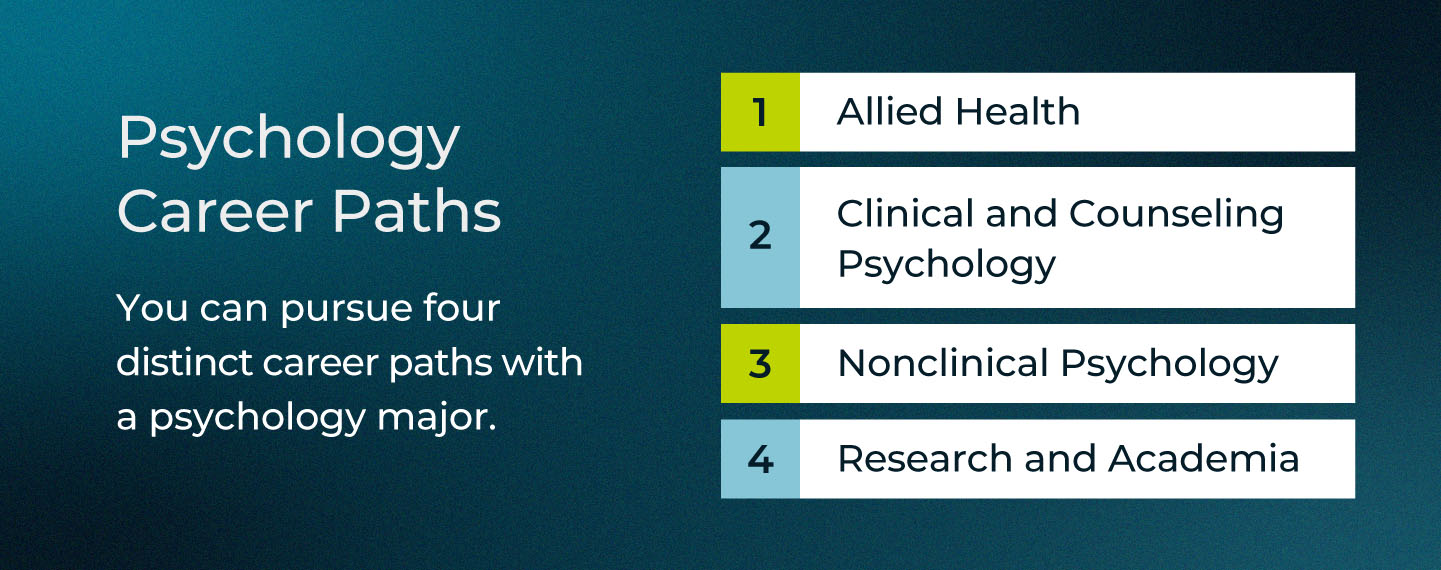
We’ve outlined 22 potential careers for psychology majors in allied health, clinical care and academia, plus a few nonclinical pathways you might not have considered.
What to Do with a Psychology Degree: Allied Health Careers
Allied health refers to professionals who work alongside doctors and nurses to provide health care to patients.3 They are part of the healthcare team and can work in direct patient care, for example, as an occupational therapist (OT) or in a role like a pharmacy technician. So, what can you do with a psychology degree in allied health? Here are some options.
1. Occupational Therapist
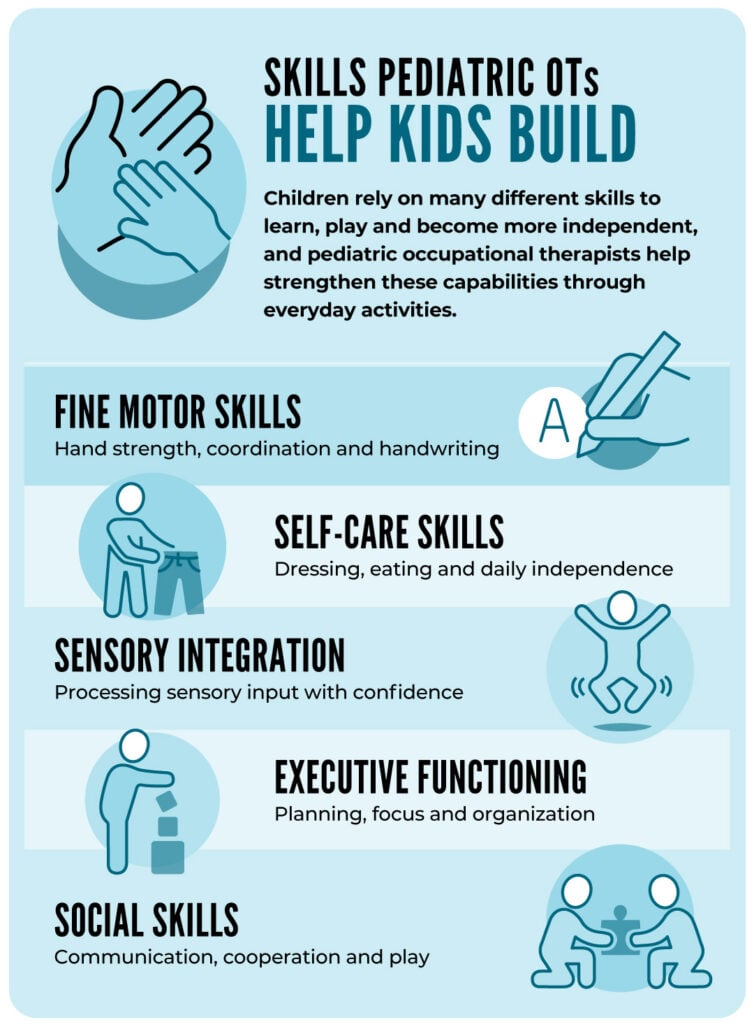
Occupational therapist (OT) is a role you may pursue with a psychology degree. OTs help people enhance their quality of life by therapeutically improving their ability to do everyday tasks.4 Patients may have suffered an injury or illness that inhibits their ability to function as they used to, or they may be a child who has experienced developmental delays. An OT uses adaptive equipment or modifies their patient’s environment to help them perform tasks in new ways.
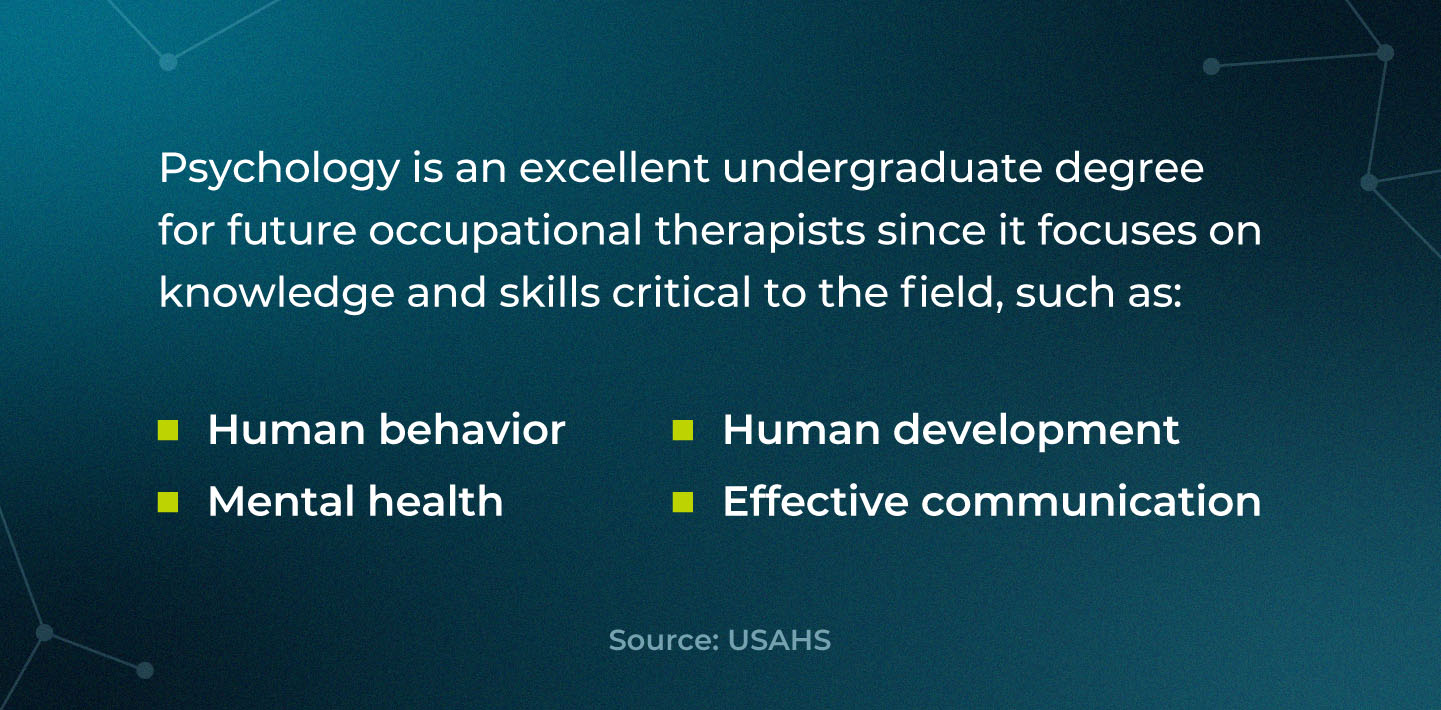
Start your journey to become an occupational therapist by earning a bachelor’s degree with a major in psychology from an accredited institution. Psychology is one of the best undergraduate majors for occupational therapy. A major in psychology focuses on human behavior and mental health, which helps occupational therapists relate to patients. Psychology emphasizes effective communication skills, a key skill for occupational therapists to provide the best possible care for patients.
Once you’ve earned your bachelor’s degree, you’ll need a Master of Occupational Therapy (MOT) or a Doctor of Occupational Therapy (OTD). An MOT will qualify you to practice as an occupational therapist. An OTD will open the door to psychology degree career paths in research, advocacy and leadership, in addition to professional practice.
2. Physical Therapist
A physical therapist (PT) is one of the jobs you can get with a psychology degree that helps patients recover their range of motion and manage pain after injuries or chronic health conditions to improve their quality of life. They may work in hospitals, private practices, clinics, schools or other settings.
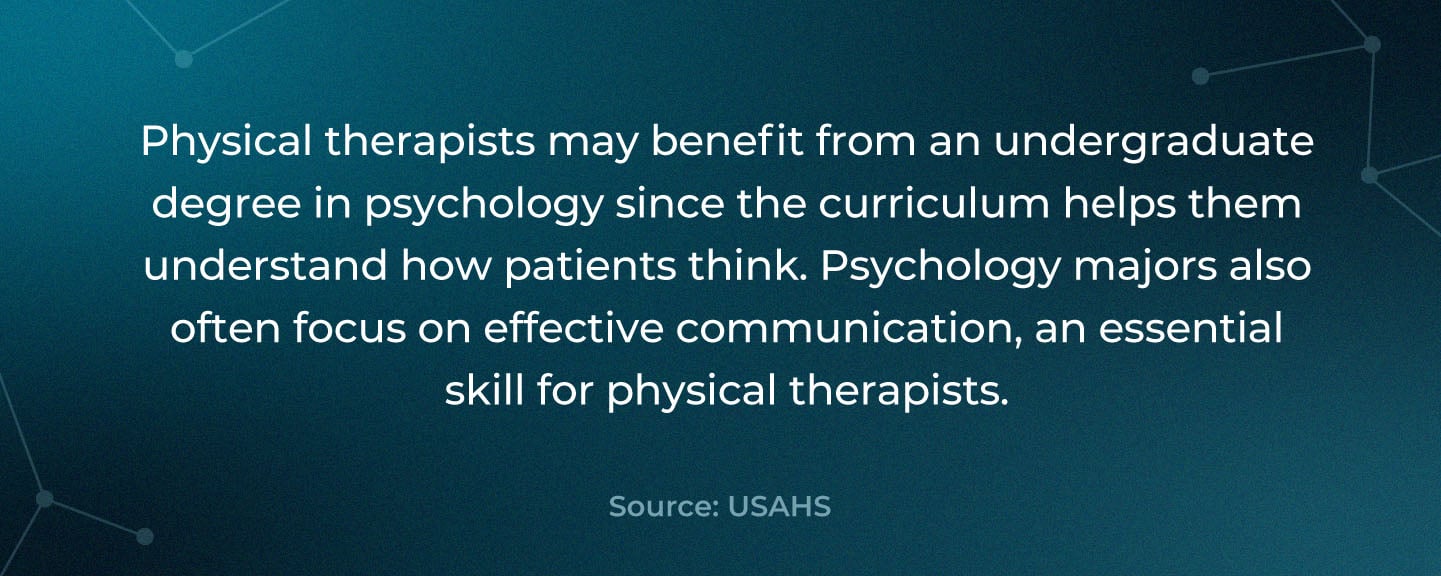
If you want to become a physical therapist, first earn a bachelor’s degree in a related field. A major in psychology is one of the best undergraduate degrees for physical therapists since understanding how people think, especially when in pain, can help guide them to recovery.
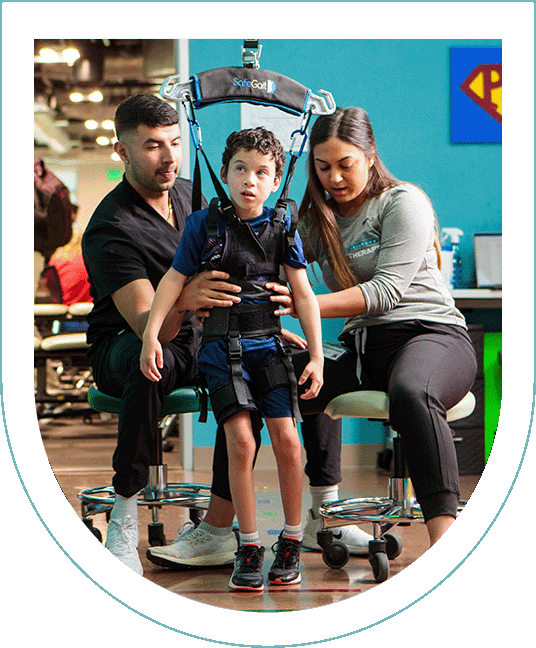
After earning a bachelor’s degree, complete a Doctor of Physical Therapy (DPT). It generally takes two to three years to complete and blends coursework with hands-on clinical education. After completing your studies, you’ll need to take the National Physical Therapy Examination (NPTE) before you can qualify to practice.5
3. Psychiatric-Mental Health Nurse Practitioner
Psychiatric-mental health nurse practitioners (PMHNPs) are trained mental health professionals who work with patients who experience mental illness. They can assess and diagnose patients and oversee a treatment plan that includes medication and therapeutic interventions. They also promote educational tools and information to support patients and families.
The first step to careers for psychology majors such as PMHNP is to become a registered nurse (RN). Earn either an Associate Degree in Nursing (ADN) or a Bachelor of Science in Nursing (BSN) and then pass the National Council Licensure Examination for Registered Nurses (NCLEX-RN).
Once you’re an RN, you’ll need to earn a Master of Science in Nursing (MSN), a Doctor of Nursing Practice (DNP) or a post-graduate nursing certificate in the Psychiatric Mental Health Nurse Practitioner (PMHNP) role specialty. Next, you’ll need to pass the Psychiatric Mental Health Nurse Practitioner Certification exam to earn your PMHNP-Board Certified credential.6
4. Physician Assistant
A physician assistant (PA) is another field you can pursue with a psychology degree. As a PA, you can be a highly trained healthcare professional who provides many of the same duties as a medical doctor.7
The typical responsibilities of this job include:
- Examining patients
- Ordering and interpreting diagnostic assessments
- Implementing treatment plans for patients
- Prescribing medication
- Performing some medical procedures, such as setting broken bones or stitching wounds
- Educating patients and their families
To become a PA:8
-
- Earn an undergraduate degree, preferably in a science-focused field such as psychology.
- Get healthcare experience (although this varies by program).
- Complete a Master of Science in Physician Assistant Studies (MSPAS) program.
- Pass the Physician Assistant National Certifying Examination (PANCE).
- Get licensed in your state. Requirements vary by state.9
Clinical and Counseling Jobs You Can Get with a Psychology Degree
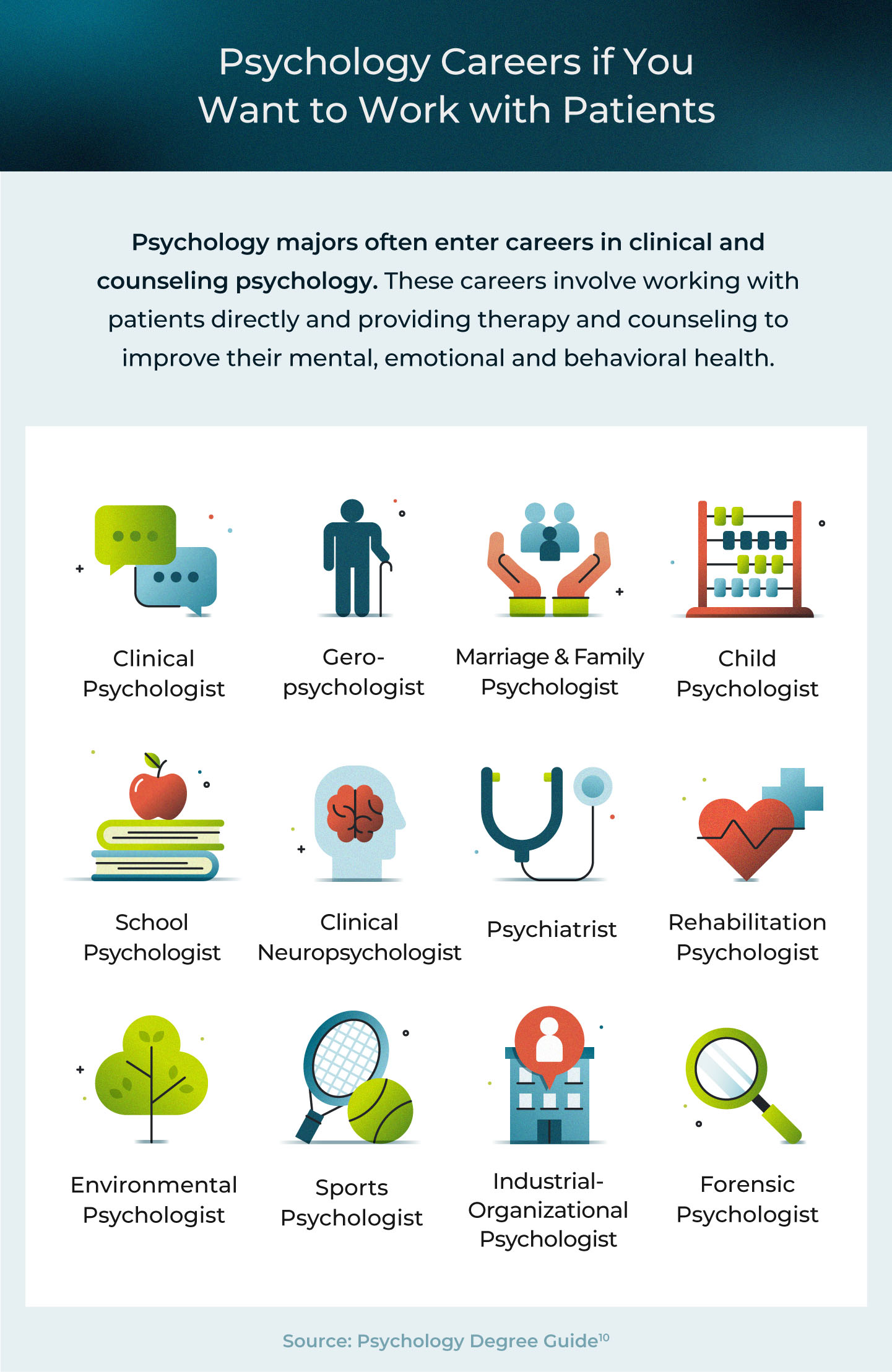
Clinical psychology focuses on understanding, evaluating and treating conditions related to mental, emotional and behavioral health.10 Counseling psychology also focuses on mental, emotional and behavioral disorders, but it focuses on promoting and helping patients improve their personal and interpersonal functioning.10
5. Clinical Psychologist
A clinical psychologist diagnoses and treats mental illnesses using talk therapy, cognitive behavioral therapy or other therapy.11 People in these careers for psychology majors typically do not prescribe medication as part of their treatment plans. Many clinical psychologists work in private practice, but they can also work in treatment facilities for mental illness or addiction or psychiatric hospitals.
To become a clinical psychologist, it typically looks like the following:11,12
- Earn an undergraduate degree, preferably in psychology or a related field.
- Earn your master’s in psychology. This step is optional.
- Earn a doctorate, which can be a Doctor of Philosophy (PhD) in psychology (a research-focused degree intended for researchers, educators or practitioners) or a Doctor of Psychology (PsyD), a practice-focused doctorate.
- Complete a clinical experience or an internship.
- Pass the Examination for Professional Practice in Psychology (EPPP).13
- Get your state license.14 The requirements vary by state.
6. School Psychologist
These jobs you can get with a psychology degree center on helping children succeed academically, socially, emotionally and behaviorally.15 School psychologists most often work in K-12 public schools but may assume a position at a private school, preschool, university or another learning institution. They partner with families, teachers, school administrators and other education professionals to:
- Increase academic achievement
- Improve mental health
- Encourage positive behavior
- Support diverse learners
- Create positive school environments
- Strengthen the connection between schools and families
- Monitor individual student progress toward academic and behavioral goals
To become a school psychologist:16
- Earn a bachelor’s degree, preferably a major in psychology, education or other related field.
- Earn a master’s degree in school psychology or educational psychology.
- Depending on your state, pass an exam such as the Praxis exam.
- Obtain your state’s required license. Requirements vary by state.17
7. Child Psychologist
A child psychologist is one of the careers for psychology majors that evaluates and treats children experiencing mental, emotional, behavioral or social conditions such as anger, grief and loss, disruptive behavior disorders or depression and anxiety.18 While they typically don’t prescribe medication as part of their treatment plans, people in these careers for psychology majors treat these conditions with various interventions such as psychotherapy, art therapy or child-centered play.
To become a child psychologist, you’ll typically need to:19
- Earn a bachelor’s degree, typically in psychology or a related field.
- Earn a master’s degree in psychology.
- Earn a doctorate (either PsyD or PhD), depending on the state requirements.
- Pass the EPPP.
- If required by your state, obtain your state’s license to practice, which may include an internship or jurisprudence exam. Requirements vary by state.
8. Marriage and Family Psychologist
Marriage and family psychologists help families, couples and individuals identify and manage problems using therapy.20 These are jobs you can get with a psychology degree, and they foster conversations between family members and help them develop strategies and skills to deal with difficult situations or changes within the family unit, such as divorce.
Marriage and family psychologists often work in private practice and center on treatment with a family-centered focus.
To become a marriage and family psychologist:21
- Earn a bachelor’s degree, preferably in psychology or a related field.
- Earn a master’s degree in marriage and family therapy, psychology or a related mental health field.
- Complete 2,000-4,000 hours in a residency or internship.
- Pass the Examination in Marital and Family Therapy (MFT).22
- Obtain your state license to practice.20
9. Forensic Psychologist
Forensic scientists apply their clinical psychology expertise to the legal system.23 Individuals in these types of careers for psychology majors may conduct psychological assessments on people in the legal system, participate in criminal investigations or serve as expert witnesses or consultants during a court case. They often conduct psychological research and interview those who have been convicted of a crime or are a victim of one.
To become a forensic psychologist:24
- Earn a bachelor’s degree, preferably in psychology, forensic psychology or a related field.
- Earn a master’s degree in psychology, forensic psychology or a related field.
- Earn a doctorate (PhD or PsyD) in psychology or forensic psychology.
- Consider postdoctoral training.
- Pass the EPPP.
- Obtain your state license to practice.
10. Sports Psychologist
Sports psychologists help athletes and individuals in the sports industry manage the pressures of being an athlete.25 They address everything from enhancing their performance to motivation to injury rehab to career transition at the end of their athletic career. While they often work with professional or Olympic athletes, some sports psychologists also work with youth athletes who play recreationally.
To become a sports psychologist, you’ll typically need to do the following:26
- Earn a bachelor’s degree, preferably in psychology, sports science or other related fields.
- Earn a master’s, ideally in psychology, particularly in sports psychology.
- If you choose to do so or if required for your role, earn a doctorate in psychology or sports psychology.
- Gain professional experience.
- Pass the EPPP if required by your state.
- If required by your state, obtain your state license to practice.
11. Geropsychologist
Geropsychology is a growing field that focuses on helping older people and their families tackle the mental and emotional challenges of aging.27 People in these careers with a psychology degree may help aging adults cope with chronic illness or age-related stressors such as family conflict and changing roles. Often, they help family members manage the emotional and physical strain of being a caregiver for an aging parent.
To become a geropsychologist:28:
- Earn a bachelor’s degree, preferably in psychology.
- Earn a master’s degree in psychology and choose a specialization.
- Earn a doctorate in psychology.
- Complete an internship or other supervised practice. Many psychology programs also require a capstone or thesis to graduate.
- Pass the EPPP and a jurisprudence exam for your state.
- If required by your state, obtain state licensure to practice.
12. Rehabilitation Psychologist
What can you do with a psychology degree? Rehabilitation psychology! These professionals assess and treat emotional, cognitive and functional difficulties people face when they experience disability due to an injury or illness.29 The goal is to help them adapt positively to their disability to overcome barriers to day-to-day activities.
To become a rehabilitation psychologist:30
- Earn a bachelor’s degree, preferably in general psychology.
- Major in psychology to earn your master’s degree.
- Earn a doctorate in psychology.
- Complete a one-year internship.31
- Pass the EPPP.
- Obtain licensing.
13. Environmental Psychologist
Environmental psychologists study the connection between individuals and their environment, in nature or the workplace.32 However, people in these careers with a psychology degree may have different specializations.
Some environmental psychologists are involved in urban planning or interior design to create safe and healthy spaces for work and school.33 Others focus on conservation, what shapes our attitudes toward nature and how to encourage others to promote sustainability. They may work for nonprofit organizations, government agencies or the business sector.
To become an environmental psychologist:32
- Earn a bachelor’s degree, preferably in psychology.
- Earn a master’s in environmental psychology if available. Some environmental psychology programs allow you to focus your degree on architecture or ecology.
- Earn a doctorate, typically a PhD.
- If required by your state, get your state’s license to practice.33

14. Clinical Neuropsychologist
A clinical neuropsychologist specializes in how brain injuries and conditions impact a person’s cognitive skills and behavior.34 They often treat conditions such as:
- Traumatic brain injury (TBI)
- Concussions
- Epilepsy
- Stroke
- Alzheimer’s disease
- Parkinson’s disease
- Brain cancer
After assessing cognitive function, they’ll work with patients and the healthcare team to design a treatment plan.
To become a clinical neuropsychologist:35
- Earn a bachelor’s degree, preferably in psychology or a related field.
- Earn a master’s degree, ideally in neuropsychology, unless you enroll directly into a doctoral program after completing your bachelor’s program.
- Earn a doctorate in neuropsychology, either a PsyD or a PhD.
- Complete a postdoctoral fellowship in neuropsychology.
- Pass the EPPP.
- Obtain your state’s license to practice.
15. Psychiatrist
Unlike the other things you can do with a psychology degree on this list, a psychiatrist is a medical doctor specializing in mental health.36 Instead of a PhD or PsyD, psychiatrists earn a Doctor of Medicine (MD) or a Doctor of Osteopathic Medicine (DO). As a result, they are allowed to prescribe medications, which a psychologist typically does not do.
To become a psychiatrist:37
- Earn a bachelor’s degree, preferably in psychology.
- Gain healthcare experience.
- Pass the Medical College Admission Test (MCAT).
- Earn an MD or DO.
- Pass the appropriate exam.
- Obtain your state’s license to practice.
- Complete a psychiatry residency.
- Consider a subspecialty with a fellowship
- Get certified by the American Board of Psychiatry and Neurology (ABPN).
16. Industrial-Organizational (I/O) Psychologist
Industrial organization (I/O) psychologists focus on studying the behavior of employees in the workplace.38 Their goal is to improve the organizational work environments, employee performance and communication.
Improving safety and job satisfaction are also top priorities for I/O psychologists. Businesses often hire them to help with leadership development, diversity initiatives and ensuring their employees have a healthy work-life balance.
To become an I/O psychologist:38
- Earn a bachelor’s degree, preferably in psychology.
- Earn a master’s degree in I/O psychology.
- Optional: Earn a doctorate in I/O psychology.
What Can You Do with a Psychology Degree in a Nonclinical Field?
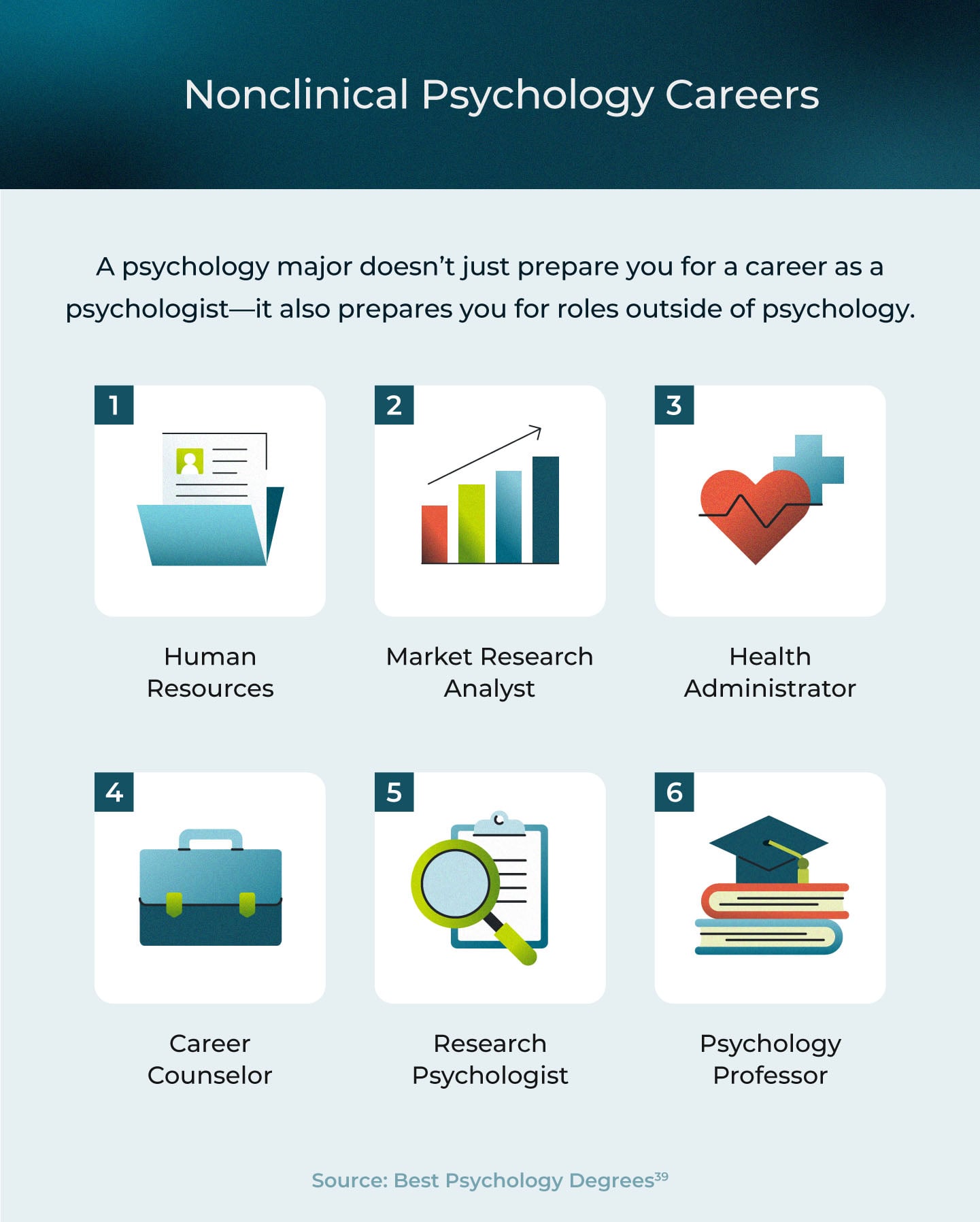
One of the best perks of being a psychology major is that it prepares you for careers outside of the field of psychology.39 The knowledge you gain from studying psychology can help you better understand human behavior, a helpful skill for almost any role. So, what jobs can you get with a psychology degree outside the field? Here are a few possibilities if you want to study psychology but do not want to become a psychologist.
17. Human Resources Specialist
Among the jobs you can get with a psychology degree are human resources (HR) specialists. This role involves hiring job candidates and training them.40 HR specialists may train existing employees in specific areas. Many HR specialists help companies comply with federal and state regulations.
To become an HR specialist:
- Earn a bachelor’s degree, preferably in human resources, business, communications or psychology.41, 42
- Gain experience in human resources, like as an assistant.41
- Optional: Get certified in human resources from the Society for Human Resource Management (SHRM) or HR Certification Institute (HRCI) to increase your opportunities.
18. Market Research Analyst
A market research analyst is a career you can pursue after earning your psychology degree if you want to work for businesses to assess potential product or service sales.43 They collect and analyze data about consumers, competitors and business conditions to forecast marketing and sales trends. Once a new product is released, they monitor its performance.
To become a market research analyst:44
- Earn a bachelor’s degree, preferably in business, communications or social sciences, such as psychology.
- Optional: Earn a master’s degree in marketing or business administration.
- Optional: Obtain a license for additional earning potential.
19. Health Administrator
Careers for psychology majors in the health administration field let you supervise the day-to-day operations of a healthcare system.45 Health administrators focus on areas such as facilities, services, programs, staff and budgets, and they do not deal directly with patients.
To become a health administrator:46
- Earn a bachelor’s degree, preferably in healthcare administration, public health, business or a clinical discipline, such as psychology.
- Get real-world experience in health administration or a related role, such as in billing or human resources in a hospital.
- Earn a Master of Health Administration (MHA) (optional).
- Optional: Obtain certification in your state.
20. Career Counselor
Not everyone knows what to do with a psychology degree. Those who do sometimes need help accomplishing goals. That’s where a career counselor comes in. Career counselors help people identify career goals through personality and career tests and education.47 Once they know what they want to do, they help them find jobs. As part of their role, career counselors often give presentations, run workshops about job-hunting skills or coordinate career fairs.
To become a career counselor, earn a bachelor’s degree in psychology, education, social work or another related field.47
Research and Academic Careers for Psychology Majors
If you want to work in psychology but not with patients, there are a few possible jobs you can get with a psychology degree in the research and academic arenas.
21. Research Psychologist
Rather than working with patients, a research psychologist, also called an experimental psychologist, studies human and animal behavior.48 They conduct experiments, often in a laboratory setting, and may work in public, private, nonprofit or government sectors. Many also often teach or present their findings.
To become a research psychologist:49
- Earn a bachelor’s degree, preferably in psychology.
- Earn a master’s in psychology to qualify for research assistant positions.
- Earn a doctorate for greater autonomy and access to more job opportunities.
22. Psychology Professor
If you want to study psychology but not practice and are asking yourself, “What jobs can you get with a psychology degree?” consider becoming a psychology professor. These individuals teach psychology courses at the undergraduate and graduate levels.50 As part of their academic role, they often conduct original research, publish their findings and advise students majoring in psychology.
To become a psychology professor:50
- Earn a bachelor’s degree in psychology or a related field.
- Earn a master’s degree in psychology or a related field.
- Earn a doctoral degree in psychology (usually a PhD or PsyD).
- Get research experience through an internship or work as a research assistant or coordinator.
- Gain teaching experience as an adjunct professor or postdoctoral fellow.
FAQ
Are you still wondering if you should pursue a psychology major? Or, are you wondering what you can do with a psychology degree? The answers to these questions may help.
Is a Psychology Degree Worth It?
If you are interested in learning more about the human mind and how it works, a major in psychology is valuable since it is helpful for many different career paths and industries.51 You learn many crucial skills future employers look for, including:52
- Understanding human behavior
- Interpreting and using data
- Problem-solving
- Communicating effectively
What Are the Benefits of a Psychology Degree?
What can you do with a psychology degree? Plenty, and it has many benefits, including:52
- Learning about yourself and others
- Finding a job that’s in demand
- Making a difference in others’ lives
- Preparing for graduate education
What Type of Psychology Career Pays the Most?
What job can you get with a psychology degree that pays well? A psychiatrist generally earns the highest of any psychology career, with an average annual salary of $251,279.53*
What Do Psychology Majors Study?
Psychology majors study the following:54,55
- Research skills
- Human behavior and development
- Counseling strategies
- Analysis of others
- Biology
- Chemistry
- Math
You may also have to complete internships or practicums that apply what you have learned in class to real-world situations.
Put Your Psychology Degree to Work at USAHS
Psychology is an exciting major due to its career opportunities. If you want to help people live longer, healthier lives, explore the University of St. Augustine for Health Sciences’ (USAHS) graduate degree programs to find the right path to achieve your career aspirations.
Whether you want to help patients regain mobility after an accident as a physical therapist or work on improving the quality of a patient’s life with occupational therapy, USAHS can help you achieve your career goals. Apply today!
*The information provided on this website is based on self-reported data and is intended for general informational purposes only. Payscale is a limited data source that relies on voluntary submissions from individuals and employers.
Please be aware that the accuracy, completeness and reliability of the data may vary due to its voluntary nature and limited scope. While efforts are made to maintain the data’s accuracy, we cannot guarantee its absolute correctness or currency.
Salary data may not reflect starting pay for recent graduates.
Sources:
- Castillo, E., “Psychology Majors Are Booming. Here’s Why,” BestColleges, Updated January 9, 2025, https://www.bestcolleges.com/news/psychology-majors-booming-why/.
- Coursera, “10 Most Popular College Majors,” Coursea, May 30, 2025, https://www.coursera.org/articles/most-popular-college-majors.
- “Allied Health Professionals,” Florida Hospital Association, https://www.fha.org/common/Uploaded%20files/FHA/Allied-Health-Professions-Final.pdf.
- American Occupational Therapy Association, “What Is Occupational Therapy?” AOTA, 2025, https://www.aota.org/about/what-is-ot.
- American Physical Therapy Association, “About the National Physical Therapy Examination,” APTA, 2025, https://www.apta.org/your-practice/licensure/national-physical-therapy-examination.
- American Nurses Credentialing Center, “Psychiatric-Mental Health Nurse Practitioner (Across the Lifespan) Certification (PMHNP-BC)” Nursing World, 2025, https://www.nursingworld.org/our-certifications/psychiatric-mental-health-nurse-practitioner/.
- U.S. Bureau of Labor Statistics, “What Physician Assistants Do,” BLS, April 18, 2025, https://www.bls.gov/ooh/healthcare/physician-assistants.htm#tab-2.
- American Academy of Physician Associates, “Become a PA,” AAPA, 2025, https://www.aapa.org/career-central/become-a-pa/.
- American Academy of Physician Associates, “Statutory and Regulatory Requirements for Initial Licensure and License Renewal,”AAPA, April 2025,, https://www.aapa.org/download/19739/.
- Administrator, “What Is the Difference Between Clinical and Counseling Psychology?” Psychology Degree Guide, 2023, https://psychologydegreeguide.org/resources/clinical-vs-counseling-psychology/.
- Janice Monti, “The Key Steps to Becoming a Clinical Psychologist,” Psychology.org, April 24, 2025, https://www.psychology.org/careers/clinical-psychologist/.
- Careers in Psychology, “How to Become a Clinical Psychologist,” Careers in Psychology.org, 2025, https://careersinpsychology.org/becoming-a-clinical-psychologist/.
- Association of State and Provincial Psychology Boards, “Examination for Professional Practice in Psychology (EPPP),” ASPPB, 2025, https://www.asppb.net/page/EPPPPart1.
- “Psychologist Licensing Process,” Psychologist-License.com, 2025, https://www.psychologist-license.com/articles/psychologist-licensure/.
- Judith Contreras Landess, “Who Are School Psychologists,” National Association of School Psychologists, 2024, https://www.nasponline.org/about-school-psychology/who-are-school-psychologists.
- Genevieve Carlton, “How to Become a School Psychologist,” Psychology.org, May 5, 2025, https://www.psychology.org/careers/school-psychologist/
- National Association of School Psychologists, “School Psychology Credentialing Resources,” NASP, 2024, https://www.nasponline.org/standards-and-certification/school-psychology-credentialing-resources.
- “11 Types of Children’s Psychology Jobs To Consider,” Indeed, June 17, 2025, https://www.indeed.com/career-advice/finding-a-job/children-psychology-jobs.
- James M. Tobin, “How To Become a Child Psychologist,” Psychology.org, April 24, 2025, https://www.psychology.org/careers/child-psychologist/.
- U.S. Bureau of Labor Statistics, “What Marriage and Family Therapists Do,”BLS, April 18, 2025, https://www.bls.gov/ooh/community-and-social-service/marriage-and-family-therapists.htm#tab-2.
- U.S. Bureau of Labor Statistics, “How To Become a Marriage and Family Therapist,” BLS, April 18, 2025, https://www.bls.gov/ooh/community-and-social-service/marriage-and-family-therapists.htm#tab-4.
- Online Counseling Programs, “How To Become a Marriage and Family Therapist (LMFT),” Online Counseling Programs, 2025, https://onlinecounselingprograms.com/mental-health-careers/how-to-become-marriage-and-family-therapist/.
- Liz Simmons, “What Is Forensic Psychology?” Psychology.org, March 31, 2025, https://www.psychology.org/careers/what-is-forensic-psychology/.
- James M. Tobin, “How To Become a Forensic Psychologist,” Psychology.org, April 2024, 2025, https://www.psychology.org/careers/forensic-psychologist/.
- American Psychological Association, “Sport Psychology,” APA, 2025, https://www.apa.org/ed/graduate/specialize/sports.
- Janice Monti, “How To Become a Sports Psychologist,” Psychology.org, April 28, 2025, https://www.psychology.org/careers/sports-psychologist/.
- American Psychological Association, “Geropsychology,” APA, 2025, https://www.apa.org/ed/graduate/specialize/geropsychology.
- Nina Chamlou, “How To Become a Geropsychologist,” Psychology.org, August 6, 2024, https://www.psychology.org/careers/geropsychologist-and-gerontology/.
- American Psychological Association, “Rehabilitation Psychology,” APA, 2025 https://www.apa.org/ed/graduate/specialize/rehabilitation.
- Careers in Psychology, “Rehabilitation Psychology Careers,” Careers in Psychology, 2025, https://careersinpsychology.org/start-your-rehabilitation-psychology-career/.
- Psychologist-License.com, “Rehabilitation Psychologists: What Are They and How To Become One,” Psychologist-License.com, https://www.psychologist-license.com/types-of-psychologists/rehabilitation-psychologist/.
- American Psychological Association, “A Career in Climate and Environmental Psychology,” APA, 2025, https://www.apa.org/education-career/guide/subfields/environment/education-training.
- Environmental Science, “What Is an Environmental Psychologist?” Environmental Science, 2025, https://www.environmentalscience.org/career/environmental-psychologist.
- Cleveland Clinic, “Neuropsychologist,” Cleveland Clinic, February 10, 2023, https://my.clevelandclinic.org/health/articles/24691-neuropsychologist.
- Nina Chamlou, “How To Become a Neuropsychologist,” Psychology.org, May 5, 2025, https://www.psychology.org/careers/neuropsychologist/.
- Howard Liu, “What Is Psychiatry?” Psychiatry.org, January 2023, https://www.psychiatry.org/patients-families/what-is-psychiatry.
- LearnHowToBecome.org Staff, “How To Become a Psychiatrist,” Learn How To Become, May 2024, https://www.learnhowtobecome.org/psychiatrist/.
- American Psychological Association, “Pursuing a Career in I/O Psychology,” APA, , 2025, https://www.apa.org/education-career/guide/subfields/organizational/education-training.
- Best Psychology Degrees, “Should I Major in Psychology? — 8 Big Reasons Why You Should Major in Psychology,” Best Psychology Degrees, 2025, https://www.bestpsychologydegrees.com/faq/should-i-major-in-psychology/.
- U.S. Bureau of Labor Statistics, “What Human Resource Specialists Do,” BLS, April 18, 2025, https://www.bls.gov/ooh/business-and-financial/human-resources-specialists.htm#tab-2.
- U.S. Bureau of Labor Statistics, “How To Become a Human Resources Specialist,”BLS, April 18, 2025, https://www.bls.gov/ooh/business-and-financial/human-resources-specialists.htm#tab-4.
- “FAQ: Human Resources Jobs With a Psychology Degree,” Indeed, June 9, 2025, https://www.indeed.com/career-advice/finding-a-job/human-resources-psychology-degree.
- U.S. Bureau of Labor Statistics, “What Market Research Analysts Do,” BLS, April 18, 2025, https://www.bls.gov/ooh/business-and-financial/market-research-analysts.htm#tab-2.
- U.S. Bureau of Labor Statistics, “How To Become a Market Research Analyst,”BLS, April 18, 2025, https://www.bls.gov/ooh/business-and-financial/market-research-analysts.htm#tab-4.
- Explore Health Careers, “Health Administration,” Explore Health Careers, 2025, https://explorehealthcareers.org/career/health-administration-management/health-administrator/.
- Lusk, H., “Healthcare Administrator Career: Degrees, Salary & Steps,” HealthJob, March 18, 2025, https://www.healthjob.org/guide/healthcare-administration.
- Kendall Upton, “Learn How To Become a Career Counselor,” All Psychology Schools, March 21, 2023, https://www.allpsychologyschools.com/how-to-become-a-career-counselor/.
- Learn.org, “Research Psychologist: Career and Education Facts,” Learn.org, 2025, https://learn.org/articles/Research_Psychologist_Career_and_Education_FAQs.html.
- Careers in Psychology, “Choosing To Focus on Research as a Psychologist,” Careers in Psychology, 2025, https://careersinpsychology.org/choosing-to-focus-on-research-as-a-psychologist/.
- Psychology Jobs, “Professor of Psychology Jobs & Career Guide 2023,” Psychology Jobs, January 6, 2025, https://psychologyjobs.com/professor-of-psychology-jobs/.
- Amy Hayes, “Is Earning a Psychology Degree Worth It?” My College Guide, 2025, https://mycollegeguide.org/is-a-psychology-degree-worth-it/.
- Cherry, K., “10 Reasons to Major in Psychology,” Verywell Mind, December 14, 2023, https://www.verywellmind.com/reasons-to-earn-a-psychology-degree-2795621.
- Payscale, “Average Psychiatrist Salary, Payscale, May 13, 2025
https://www.payscale.com/research/US/Job=Psychiatrist/Salary. - Staff Writers, “Best Types of Psychology Degrees [2023 Guide],” Psychology.org, September 2023, https://www.psychology.org/degrees/.
- Psychology.org Staff, “Bachelor’s Degrees in Psychology,” Psychology.org, July 2023, https://www.psychology.org/degrees/bachelors/.