

You might picture physical therapists (PTs) always working hands on in clinics or hospitals, but that’s no longer the full story. Today, some PTs are building careers that blend patient care with the flexibility to work from home, from leading telehealth visits to guiding patients through remote monitoring programs.
If you are exploring a future in physical therapy (PT), your degree can open doors to innovative, flexible career paths. The University of St. Augustine for Health Sciences (USAHS) can help you build the skills and confidence to step into remote physical therapist jobs.
If you are interested in physical therapy and wondering whether remote work is a possibility, the good news is that there are now more opportunities. While PT has traditionally been an in-person profession, the growth of telehealth and digital health tools has created new pathways for delivering physical therapist work from home jobs.
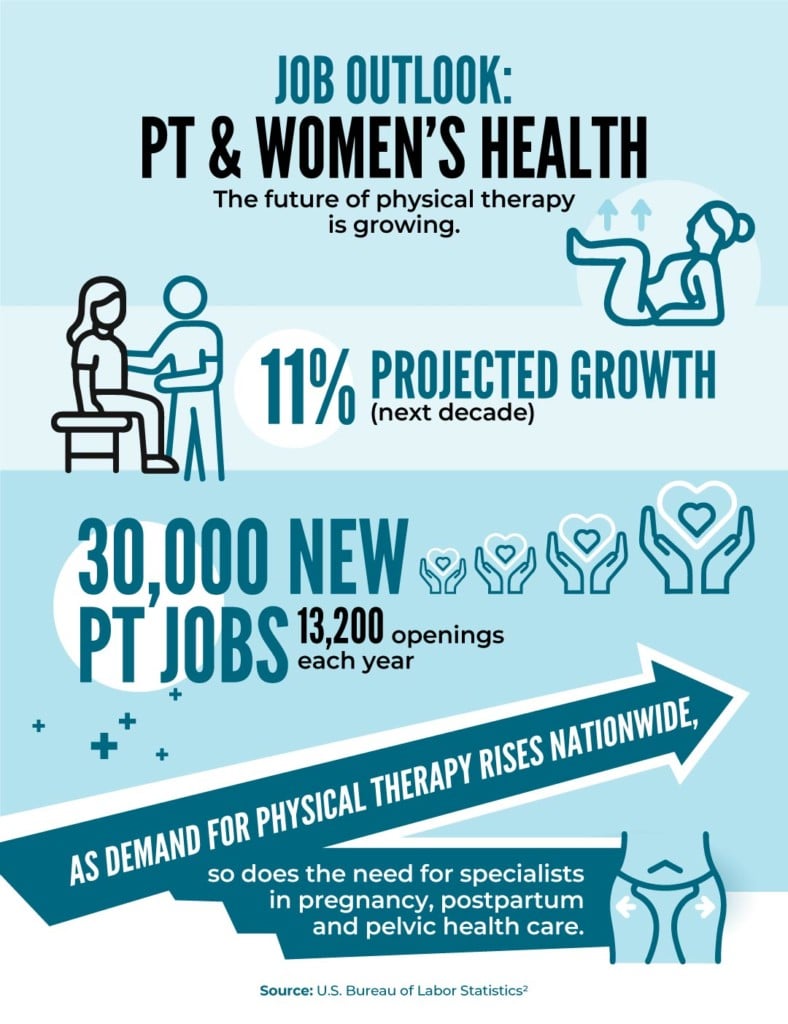
It’s also a strong time to enter the field. The U.S. Bureau of Labor Statistics (BLS) projects physical therapy employment will grow 11% from 2024 to 2034, much faster than the average across all occupations.1 If you want a Doctor of Physical Therapy (DPT) education with built-in flexibility, we offer multiple program formats at USAHS.
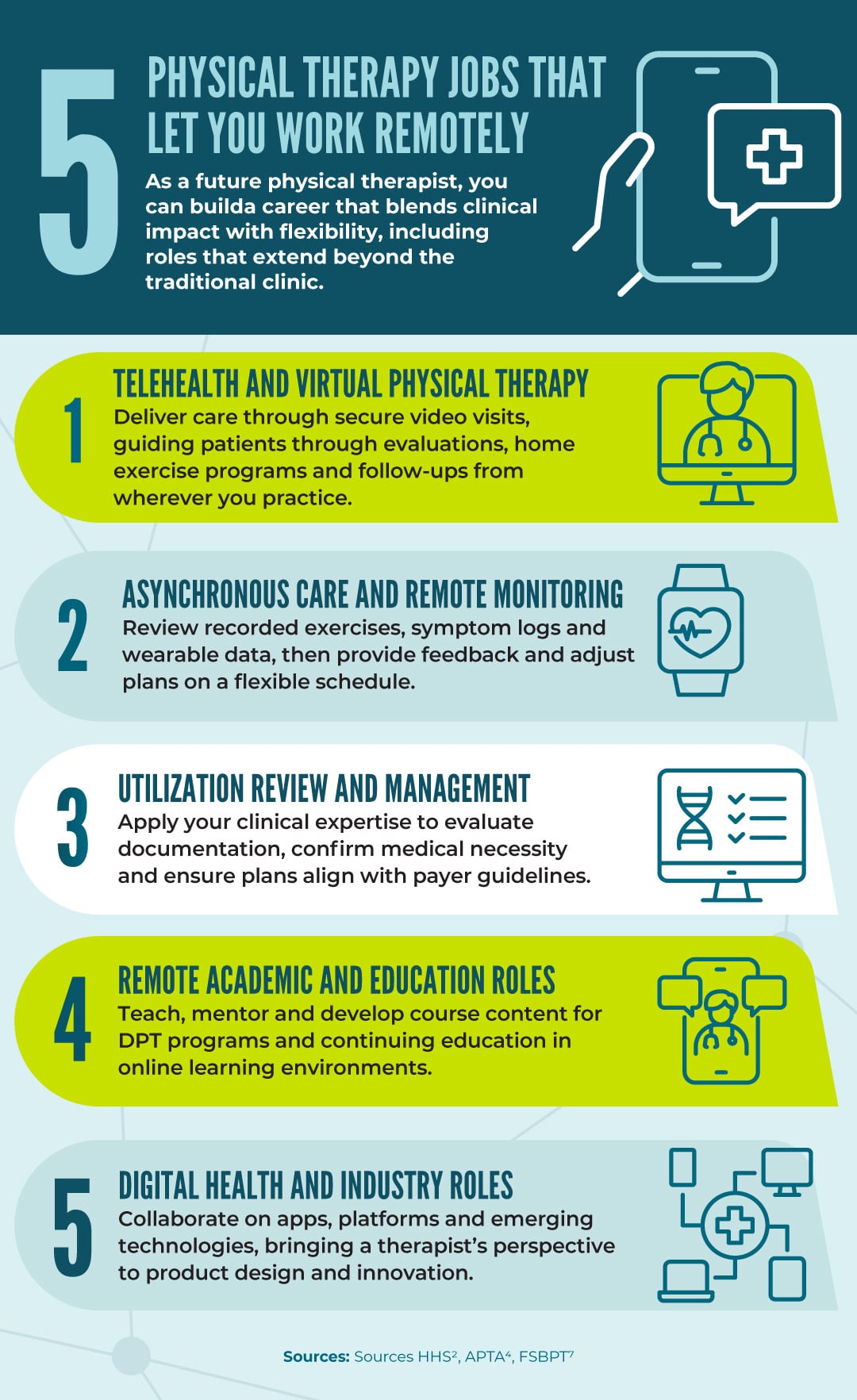
1. Remote Direct-Patient-Care Jobs: Telehealth & Virtual Physical Therapy
In a telehealth PT role, you may support patients with concerns like child development issues, sports injuries, leg and hip injuries, lower back pain and balance or movement assessments. You may also be able to complete post-hospital check-ins and safety visits depending on the patient’s needs and the setting.2 In a hybrid model, telehealth can be beneficial for guided home exercise, education and follow-up appointments that don’t require hands-on assessment.3
When you work virtually as a physical therapist, in one of several work from home physical therapist jobs, care is generally delivered through video appointments with additional communication via email or text. This approach can help you reach patients who may have trouble accessing in-person care and it may allow for more frequent check-ins to keep progress on track.2
Even if the format feels new at first, virtual physical therapy has shown positive results for certain conditions. In some cases, outcomes comparable to in-person care. The American Physical Therapy Association (APTA) clinical practice guideline on telerehabilitation in physical therapist practice summarizes evidence that remote and hybrid PT can produce outcomes comparable to in-person care for many musculoskeletal and neurologic conditions when used appropriately.4
Telehealth PT Settings
Telehealth PT can be a strong fit in several situations, especially when access, mobility or scheduling make in-person visits more difficult.
For example, virtual PT may be used in school-based tele-PT services for students, with athletes managing certain sports injuries and for post-hospital support such as home safety evaluations, mobility screens, post-discharge checkups and safety screenings aimed at reducing the risk of readmission.3
2. Asynchronous Care and Remote Monitoring Roles
Another option for remote physical therapy work is asynchronous care and remote monitoring roles. The HHS describes asynchronous physical therapy, or store-and-forward PT, as therapy where providers review recorded exercise performance, symptom logs or forms and then respond later.3
This is physical therapy work you can do from home, on your schedule. It’s often used for patient intake or follow-up care and may involve using interactive models, videos and images to explain common injuries to patients and help them understand the steps they need to take to improve.
Remote patient monitoring (RPM) is another option that may support PT care outside of in-person visits. RPM leverages technology to collect and share patient data to monitor progress over time. In some cases, apps guide patients through exercises and track movement patterns, then send data back to an electronic health record (EHR) system to provide feedback and adjust the plan of care as needed.5
For providers, these models can create more flexibility and may help reduce burnout by expanding remote work options. They can also be valuable for patients by supporting continuity of care between visits. The APTA’s digital health paper highlights how tools such as remote monitoring, wearable sensors, health apps and AI-enhanced platforms can help extend care beyond the clinic.6
3. Utilization Review and Utilization Management (Remote Non-Clinical PT Jobs)
If you are interested in remote physical therapist jobs, including non-clinical work in physical therapy, utilization review and utilization management are two common paths. In these roles, PTs use their clinical knowledge to review documentation, confirm medical necessity and check whether a plan of care aligns with established guidelines and payer policies. This work is often done for insurance companies or independent review organizations.
Even though you wouldn’t be treating patients directly, you typically still need to hold an active PT license and follow professional expectations for documentation and conduct. The Federation of State Boards of Physical Therapy telehealth resource also emphasizes that PTs working in digital and remote roles must continue to meet licensure, documentation and ethical standards, even when they’re not providing direct patient care.7
4. Remote Academic, Education and Professional Roles
If you love the science behind physical therapy but want to step away from direct patient care, remote academic and education-focused roles can be a strong option. Licensed PTs may work as online faculty or adjunct instructors for universities and continuing education providers. Depending on the role, that can include teaching courses, grading assignments and mentoring students through learning management systems and video conferencing.
The APTA Learning Center offers online courses, including options focused on telehealth and digital health certificates.8
5. Digital Health, Product and Industry Roles for PTs (Often Remote or Hybrid)
If you are drawn to the intersection of technology and physical therapy, digital health and industry roles may be a strong fit, and many are remote or hybrid. In these positions, PTs can bring a clinical perspective to the design and rollout of new tools that support care. APTA’s The Digitally Enabled Physical Therapist framework outlines how PTs can help design, evaluate and implement digital health technologies such as apps, virtual platforms, wearables and AI-driven tools.9
Even though these roles are often more corporate than clinical, professional expectations still apply. The Federation of State Boards of Physical Therapy (FSBPT) and APTA emphasize that PTs involved in digital products need to understand regulatory, ethical and safety considerations connected to telehealth, remote monitoring and decision-support technology.7
If you want to work in this space, a strong PT education that includes both classroom learning and clinical training can help you build the foundation to contribute responsibly and effectively.
Skills and Credentials That Help You Thrive in Remote PT Roles
Digital Health Literacy
If you want to build stronger digital health literacy, APTA’s Telehealth Certificate Series is worth exploring.8 It’s designed to help PTs strengthen skills related to remote visit workflows, patient selection, technology use, documentation and legal considerations.
APTA’s broader digital health resources also encourage PTs to become more proficient with remote monitoring tools, apps, wearables and virtual platforms so they can deliver remote care that is safe and effective.
Telehealth Policy and Billing
Understanding telehealth policy and billing is a key part of working as a remote physical therapist. The Centers for Medicare & Medicaid Services (CMS) telehealth toolkit and HHS best-practice guides outline when and how remote services can be billed, and what documentation is required.10
Licensure and Regulation
Another main consideration when practicing remote physical therapy is licensure and regulation. FSBPT’s telehealth resource recommends that PTs practicing remotely review state practice acts, licensure board guidance and the Model Practice Act’s telehealth definition, especially when working across state lines.7
Build a PT Career Path with USAHS
Diving into the field of physical therapy means entering a career with strong long-term demand, according to the Bureau of Labor Statistics (BLS).1 Plus, APTA emphasizes that PTs will increasingly practice as digitally enabled clinicians, integrating telehealth, remote monitoring and digital tools into care. Digital skills and graduate education may become even more important over time.9
If you’re exploring physical therapy at USAHS, you’ll find options for becoming a PT, sharpening a specialty and continuing to grow long after graduation.
Our DPT is the entry-level degree that prepares you to sit for licensure and step into clinical practice. You can choose from three pathways that all lead to the same degree, with different schedules and on-campus requirements.
Our DPT pathways include:
- Residential DPT: A campus-based experience with weekday classes, hands-on labs and in-person skill development supported by some online coursework.
- Hybrid Immersion: Includes online coursework, live virtual weekday sessions and two on-campus lab immersions per term.
- Flex DPT: Built for students who need more weekday flexibility, this format combines online coursework with live virtual evening/weekend sessions and on-campus labs on select weekends so you can keep moving toward your DPT with a schedule that works for you.
Across pathways, we emphasize early hands-on skill-building and simulation-based learning, plus opportunities to personalize your learning through PT electives. Get started with USAHS and head on the path toward your dream career.
FAQs
Can you work remotely as a physical therapist?
Yes. While physical therapy has traditionally been an in-person profession, the growth of telehealth and digital health tools has created new pathways for PTs to work remotely or in hybrid roles.
What physical therapy jobs are remote?
Some of the physical therapy jobs that are fully remote include telehealth and virtual PT, asynchronous care and remote monitoring roles, utilization review and management and digital health, product and industry roles.
What skills are helpful for remote physical therapy jobs?
It’s helpful to have strong digital health literacy, knowledge of telehealth policy and billing and an understanding of PT licensure and regulation when pursuing a remote physical therapy job.
References:
- “Physical Therapists,” U.S. Bureau of Labor Statistics Occupational Outlook Handbook, August 28, 2025, https://www.bls.gov/ooh/healthcare/physical-therapists.htm.
- “How can I use telehealth for physical therapy?” U.S. Department of Health and Human Services, Telehealth.HHS.gov, July 17, 2024, https://telehealth.hhs.gov/patients/how-can-i-use-telehealth-physical-therapy.
- Getting Started: Telehealth and physical therapy,” U.S. Department of Health and Human Services, “ Telehealth.HHS.gov, January 17, 2025, https://telehealth.hhs.gov/providers/best-practice-guides/telehealth-for-physical-therapy/getting-started.
- American Physical Therapy Association. “Telerehabilitation in Physical Therapist Practice: A Clinical Practice Guideline from the American Physical Therapy Association (CPG+).” APTA. https://www.apta.org/patient-care/evidence-based-practice-resources/cpgs/telerehabilitation-pt-practice-apta-cpg
- “Physical Therapy and Remote Patient Monitoring,”U.S. Department of Health and Human Services, Telehealth.HHS.gov, July 29, 2025, https://telehealth.hhs.gov/providers/best-practice-guides/telehealth-for-physical-therapy/physical-therapy-and-remote-patient-monitoring.
- “Digital Health in Practice,” American Physical Therapy Association (APTA), https://www.apta.org/your-practice/practice-models-and-settings/digital-health-in-practice.
- “Telehealth in Physical Therapy: Policy Recommendations for Appropriate Regulation,” Federation of State Boards of Physical Therapy (FSBPT), September 2023, https://www.fsbpt.org/Portals/0/documents/free-resources/TelehealthInPhysicalTherapy2023.pdf.
- “APTA Telehealth Certificate Series,”American Physical Therapy Association (APTA), APTA Learning Center, https://learningcenter.apta.org/products/apta-telehealth-certificate-series.
- “The Digitally Enabled Physical Therapist: An APTA Foundational Paper,” American Physical Therapy Association (APTA) November 2022, https://www.apta.org/contentassets/e37aa1765cab4b1791d22717d3ac20af/apta-digital-health-foundational-paper-2022.pdf.
- “Telehealth for Providers: What You Need to Know,” Centers for Medicare & Medicaid Services (CMS), https://www.cms.gov/files/document/telehealth-toolkit-providers.pdf.