
If you’re looking for a non-surgical, hands-on career in healthcare, you might be weighing two popular career options: chiropractor or physical therapist (PT). While each role focuses on helping people move and feel better, they’re shaped by different training paths, treatment approaches and clinical tools.
No matter what sparks your interest, perhaps you are career planning, drawing on personal experience or are curious, let’s break down the key similarities and differences between chiropractors and physical therapists. You’ll gain a clear perspective on how each profession works, what to expect from each type of care and how to choose between chiropractor vs. physical therapist jobs.
So, what’s the difference between a chiropractor and a physical therapist?
Chiropractor vs. Physical Therapist at a Glance
Understanding the key differences between chiropractors and physical therapists is a helpful first step as you explore which career path is the right fit for you.
How Chiropractors and Physical Therapists Approach Patient Care
Chiropractors primarily focus on hands-on care for issues related to the spine and nervous system. The underlying idea is that when your spine and nervous system work well together, you’re more likely to feel stronger and healthier.1
If the spine becomes misaligned or restricted, communication between the brain and body can be affected. Chiropractors often use stretching and joint manipulation to address musculoskeletal concerns and support healthier spinal alignment.2
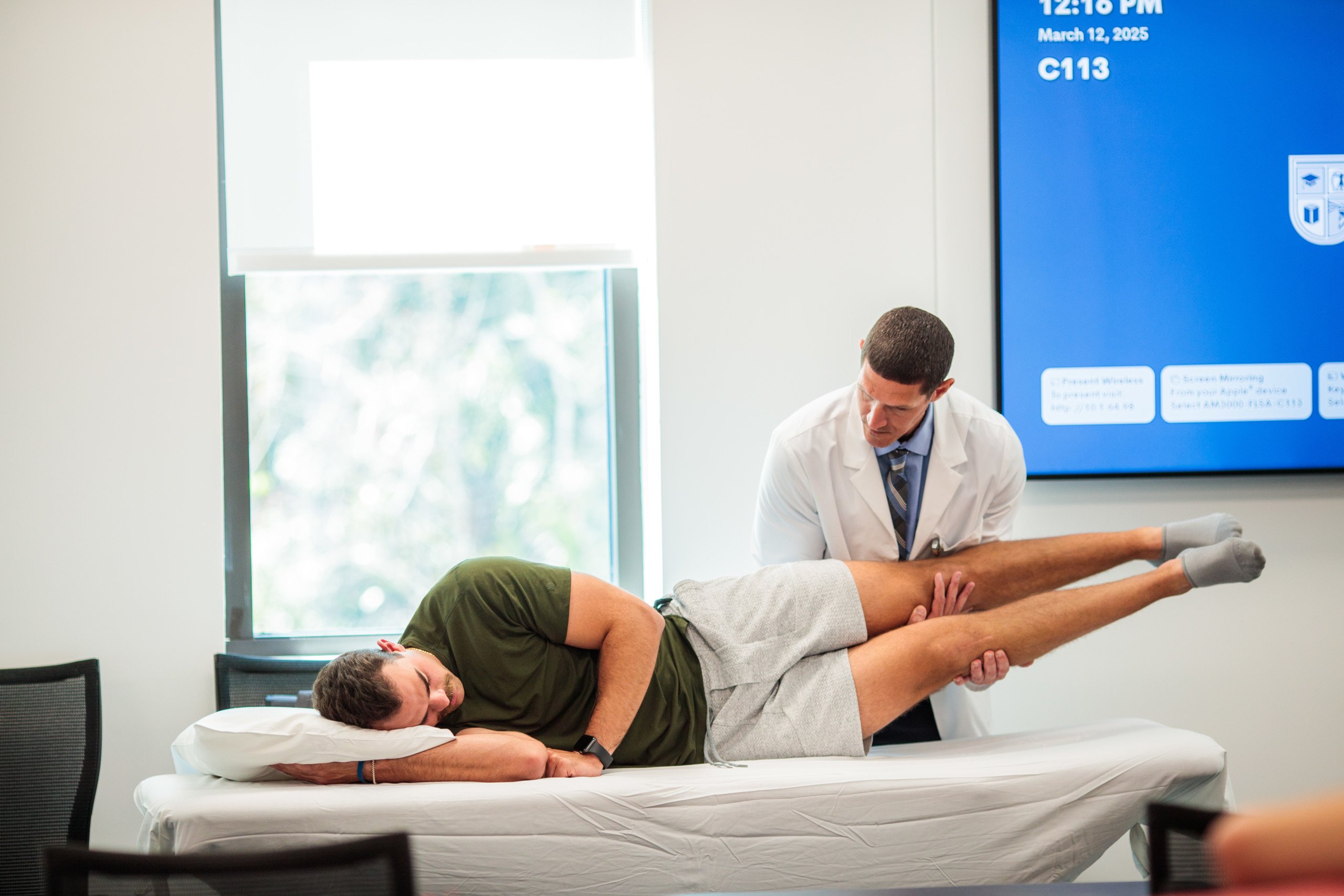
Physical therapists take a broader view, focusing on movement, strength and function across the entire body, including the spine and extremities. Their goal is to help people across the lifespan restore and maintain optimal physical function. Physical therapy is commonly recommended after an injury to help manage symptoms of a condition or to reduce the risk of preventable health issues.3
Degree Requirements for Chiropractors and Physical Therapists
Both chiropractors and physical therapists must complete graduate-level education to become licensed to practice; however, their programs differ in length, focus and overall scope.
To become a Doctor of Chiropractic (DC), you’ll complete a professional chiropractic program after earning your undergraduate degree. These programs typically include 4,800 or more hours of classroom and clinical training. The curriculum often emphasizes biomechanics, radiology and hands-on spinal adjustments.4
Physical therapists earn a Doctor of Physical Therapy (DPT) degree. Most DPT programs involve about three additional years of study, after completing an undergraduate degree, and focus on biomechanics, neuroscience, pharmacology and more.* DPT students also complete clinical education as part of their program, and some may pursue a clinical residency after graduation.5
At the University of St. Augustine for Health Sciences (USAHS), you can earn your Doctor of Physical Therapy (DPT) degree in a format that aligns with your schedule, learning preferences and location.
USAHS offers Residential DPT, Hybrid Immersion and Flex DPT pathways, depending on the campus you choose to attend:
- Residential DPT: Coursework and immersive weekday lab experiences held on campus and online each week.
- Hybrid Immersion: Includes online coursework, live virtual weekday sessions and two on-campus lab immersions per term.
- Flex DPT: Built for students who need more weekday flexibility, this format combines online coursework with live virtual evening/weekend sessions and on-campus labs on select weekends so you can keep moving toward your DPT with a schedule that works for you.

Chiropractor vs Physical Therapist Licensure
Although chiropractors and physical therapists must pass a licensure exam, each profession is regulated by a different testing body and path to licensure. Chiropractors take exams administered by the National Board of Chiropractic Examiners (NBCE) and then apply for state licensure.6 In many states, that process may also include a state-specific jurisprudence exam, a background check and required continuing education.
Physical therapists take the National Physical Therapy Examination (NPTE) before pursuing state licensure.7 The NPTE typically covers a broader range of topics across patient populations and practice settings than chiropractic board exams. The state licensure process is similar in that PTs submit their education and exam credentials to the state board for review.
One key difference is that physical therapy also has the Physical Therapy Compact, an interstate agreement in more than 30 states that can make it easier for eligible PTs to practice across participating member states.8
The Patient Experience: Chiropractic Care and Physical Therapy
A chiropractic patient visit typically starts with questions about your health history, followed by a physical exam. If the chiropractor determines it’s appropriate, they may perform a spinal or joint manipulation. This involves using their hands or a specialized tool to adjust a joint to improve function, reduce inflammation and ease pain. Appointments often wrap up with a recommended treatment plan along with lifestyle guidance to help manage discomfort moving forward.2,9
A physical therapy visit also usually begins with a detailed health history. From there, the PT will complete a movement assessment and use the findings to create an individualized plan, often centered on exercise. A typical evaluation may include tests of strength, range of motion, functional mobility, flexibility and balance.10
When needed, PTs may also use manual therapy such as passive stretching or scar tissue massage, share education to help you understand and manage symptoms and build a home program you can do on your own.
Physical therapists work with a wide range of patients, not only people recovering from injuries.10 For example, individuals living with long COVID, chronic pain, osteoarthritis or concussion symptoms or those at higher risk of falling may benefit from physical therapy.
Chiropractor vs Physical Therapist Practice Settings
Another key difference between chiropractors and physical therapists is where they may practice. If you’re seeing a chiropractor, it’s most common to visit a private outpatient clinic.
Physical therapists work across a much wider range of settings. Depending on your needs, you might see a PT in a hospital, outpatient clinic, rehab center, school and more.10
Chiropractor vs Physical Therapist Salary
The median salary for chiropractors and physical therapists also differs.
The median annual salary for chiropractors is $79,000,11 whereas the median annual salary for physical therapists is $101,020.12
Considering a Career in Movement Health? Physical Therapy at USAHS
If learning more about these two hands-on health sciences careers has you leaning toward exercise-based rehabilitation, long-term mobility and working as part of an interprofessional care team, physical therapy may be a strong fit for you.
At USAHS, we offer immersive DPT programs that blend online learning with hands-on lab experiences. Our Hybrid Immersion format, for example, combines online coursework, live virtual weekday sessions and two on-campus lab immersions each term. With multiple start dates and availability at select campuses, it’s designed to help you keep moving forward with your education.
As a USAHS student, you can also start making an impact in your local community by applying what you’ve learned during clinical rotations. That mix of academic preparation and real-world experience helps prepare our graduates for licensure, specialty practice and collaborative care with professionals such as chiropractors, physicians and athletic trainers.
Learn more about our graduate physical therapy programs and request information.

FAQs
Is a physical therapist a doctor like a chiropractor?
Yes, physical therapists and chiropractors have to earn doctoral degrees to legally practice. Physical therapists must graduate from a Doctor of Physical Therapy program, while chiropractors must graduate from a Doctor of Chiropractic program. Neither physical therapists nor chiropractors are medical doctors (MDs).
Which is better for back pain, a chiropractor or a physical therapist?
When it comes to deciding if a chiropractor or a physical therapist would be better for back pain, it depends on what kind of relief a patient is seeking. For immediate, acute relief, a chiropractor may be a better option. Physical therapists can offer more options for long-term recovery, posture correction and strengthening.
Can physical therapists do spinal manipulation, too?
Yes, physical therapists can perform spinal manipulations as well. A spinal manipulation is a hands-on technique where a high-velocity thrust is applied to spinal joints. Even though spinal manipulations are often associated with chiropractors, physical therapists are also trained in performing them.
*Program designed to be completed in this time frame. Time to completion may vary by student, depending on individual progress, credits transferred and other factors.
Salary data may not reflect starting pay for recent graduates.
References:
- “What is chiropractic?,” International Chiropractors Association, November 26, 2025, https://www.chiropractic.org/what-is-chiropractic/.
- “Chiropractic adjustment,” Mayo Clinic, November 5, 2024, https://www.mayoclinic.org/tests-procedures/chiropractic-adjustment/about/pac-20393513.
- “Highlights From the APTA Guide to Physical Therapist Practice,” American Physical Therapy Association (APTA), 2023,
https://guide.apta.org/contentassets/f04dd37bfbb141a1b1e05f828acd5c74/highlights_apta_guide_to_physical_therapist_practice.pdf. - “What is Chiropractic?,” International Chiropractors Association, November 26, 2025, https://www.chiropractic.org/what-is-chiropractic/.
- “Physical Therapists,” Bureau of Labor Statistics (BLS), Occupational Outlook Handbook, August 28, 2025, https://www.bls.gov/ooh/healthcare/physical-therapists.htm#tab-4.
- National Board of Chiropractic Examiners, NBCE, 2026, https://www.nbce.org/.
- “National Exam (NPTE®),” The Federation of State Boards of Physical Therapy, 2026, https://www.fsbpt.org/Secondary-Pages/Exam-Candidates/National-Exam-NPTE.
- “What is the PT Compact,” Physical Therapy Compact Commission, 2026, https://ptcompact.org/about/.
- “About Chiropractic,” American Chiropractic Association, 2023, https://www.acatoday.org/wp-content/uploads/2023/04/ACA_AboutChiropractic_2023.pdf.
- “APTA Guide to Physical Therapist Practice Educator Module,” American Physical Therapy Association (APTA), 2023,
https://guide.apta.org/contentassets/9adfce23cab04408b11f87c7c48c682a/guide_educator_module_ppt.pdf. - “Chiropractors,” Bureau of Labor Statistics (BLS), Occupational Outlook Handbook, August 28, 2025, https://www.bls.gov/ooh/healthcare/chiropractors.htm.
- “Physical Therapists,” Bureau of Labor Statistics (BLS), Occupational Outlook Handbook, August 28, 2025, https://www.bls.gov/ooh/healthcare/physical-therapists.htm#tab-1.