
Nursing clinicals are a crucial component of a nursing curriculum. However, they can be a cause of concern, especially if you’re unsure of what to expect or aren’t yet confident in your ability to be responsible for someone else’s health. 1, 2
At the University of St. Augustine for Health Sciences’ (USAHS) School of Nursing, nursing clinicals are referred to as practicums because they provide students with a learning environment in which to practice their nursing skills on real patients, offering a bridge between the classroom and practice. USAHS advanced nursing degree programs, for candidates who have earned an associate’s or bachelor’s degree, offer the real-world patient care experience needed to successfully transition from student to nurse.
What are Clinicals in Nursing School?
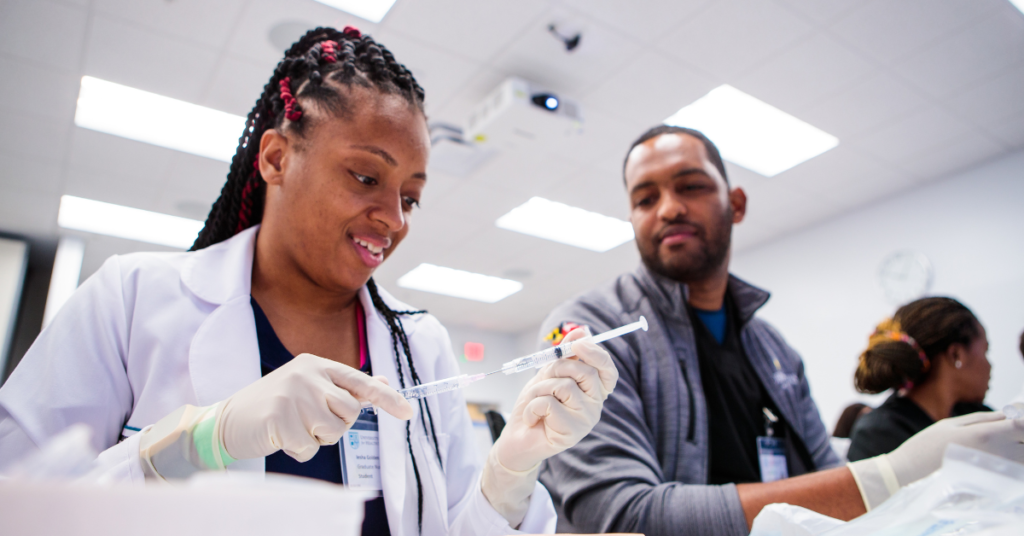
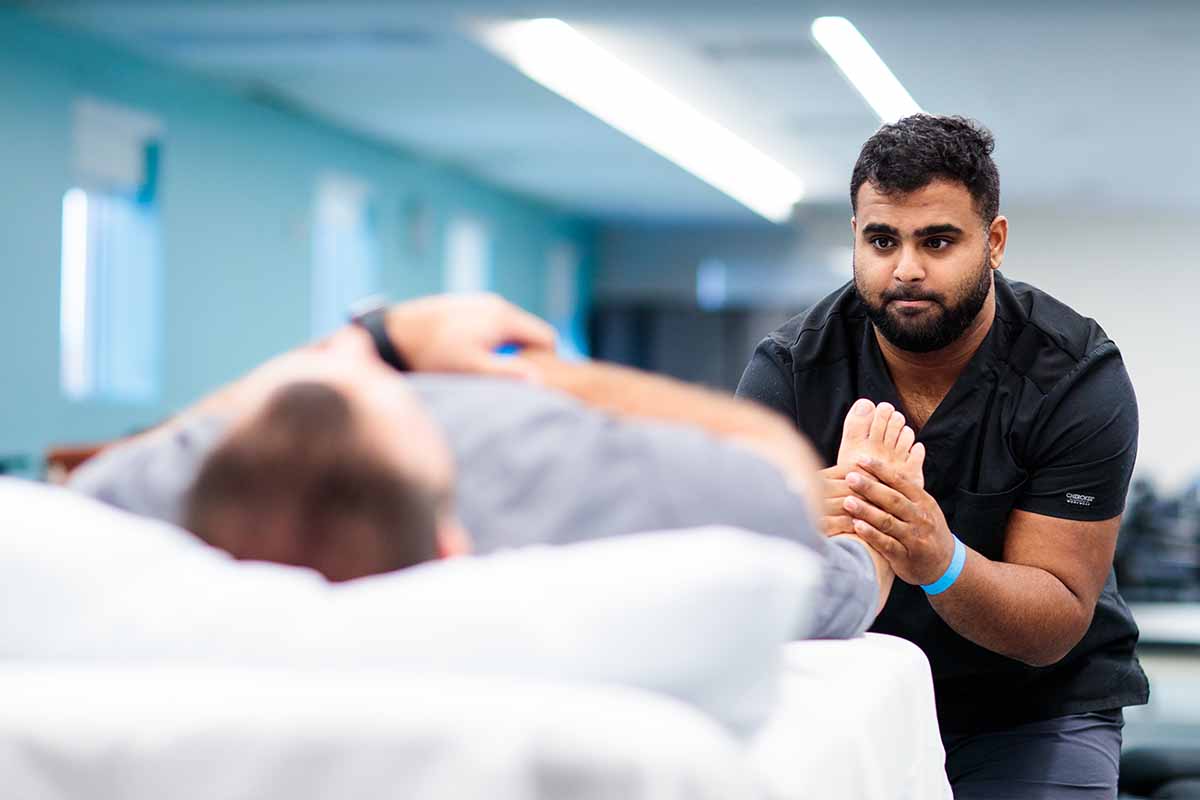
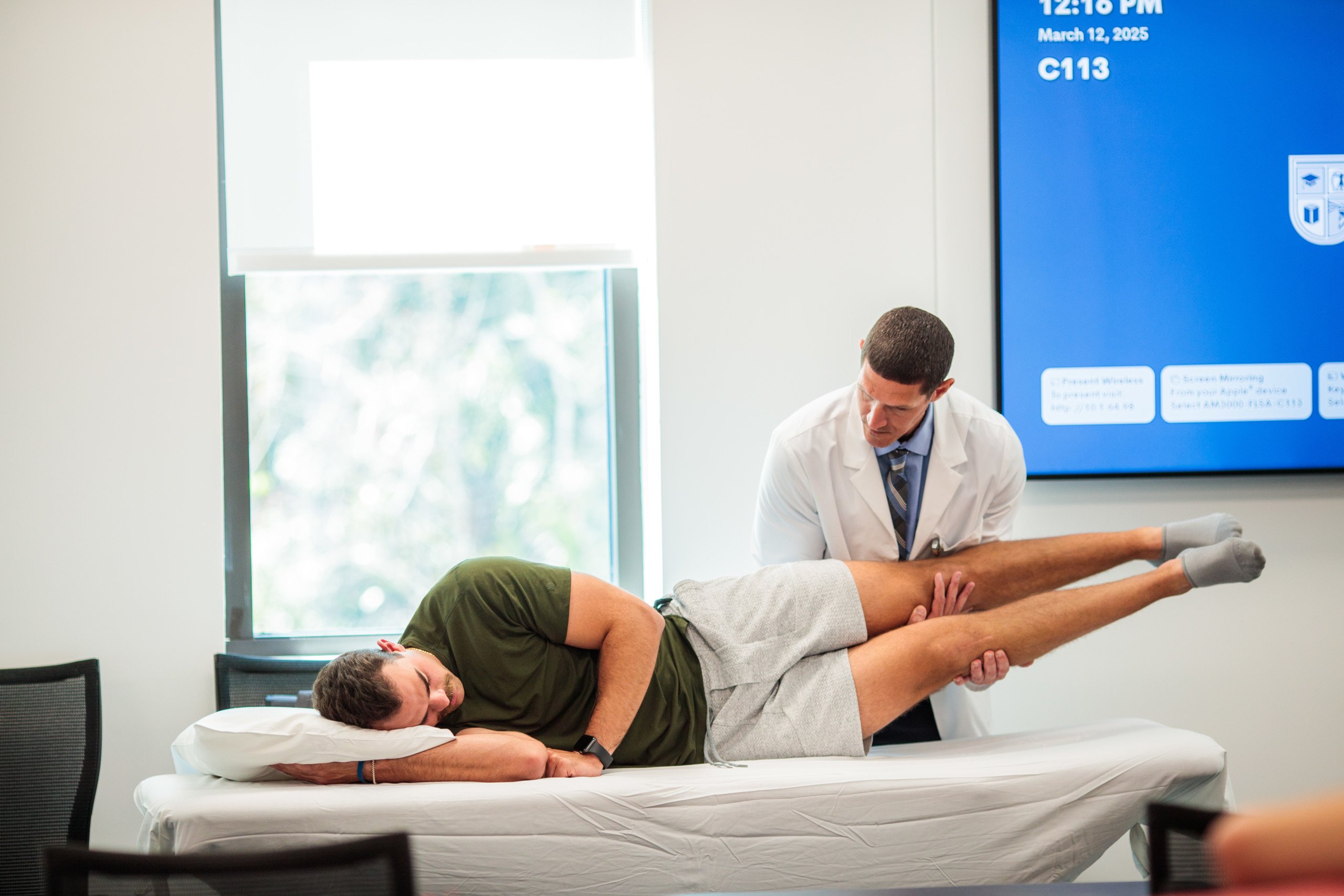
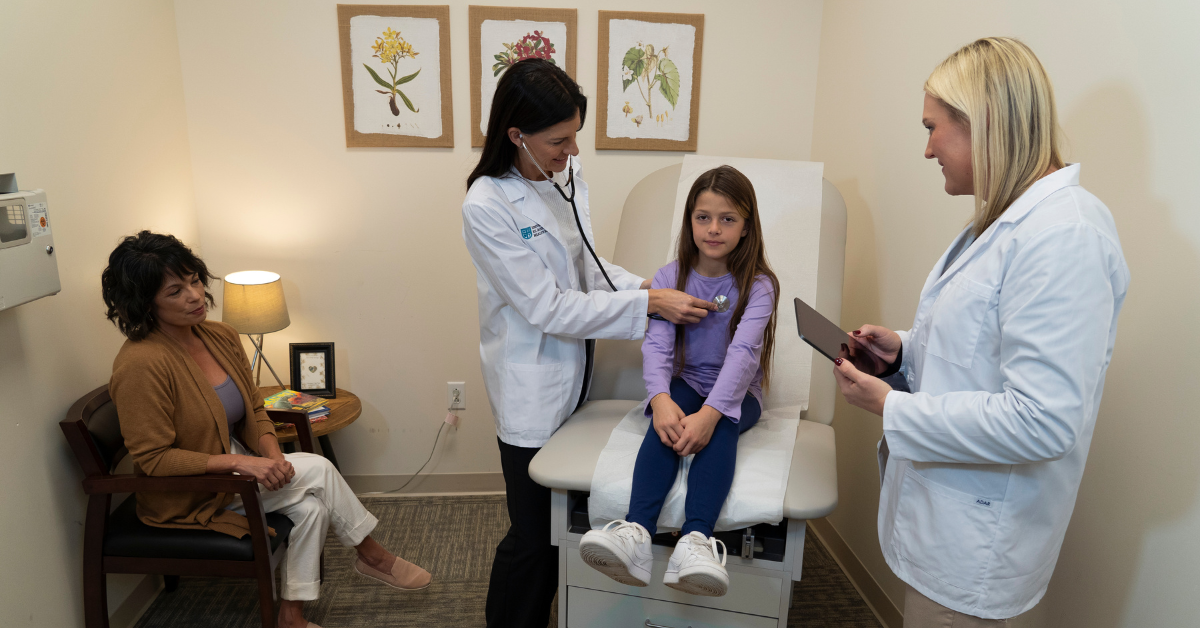
Nursing school clinicals, also known as practicums at some educational institutions such as USAHS, are experiences that allow aspiring nurses to gain hands-on practice caring for real patients. During nursing school clinicals, students are supervised by a nurse educator, licensed RN or physician as they hone their skills.2
Some of the skills that students may practice during clinical hours for nursing school include:2
- Administering medication
- Assisting patients as they walk
- Preparing rooms
- Taking patient vital signs
- Taking a medical history
- Assisting with procedures
The tasks that you are responsible for depend on the nursing level of your program and how far into the program you are.2
Why are Nursing Clinicals Important?
Nursing clinicals allow students to apply their textbook nursing knowledge to real patients. Not only does this help to bridge the gap between theory and practice, but it also allows students to apply their knowledge while working with diverse populations, gain exposure to fast-paced patient care environments, and practice communicating with patients and other healthcare providers.2, 3 These are vital nursing skills that aren’t always possible to teach in a standard classroom.
Through nursing school clinicals, students can increase confidence in critical thinking, decision-making and problem-solving.2 These are skills that develop over time, and clinicals in nursing create a supervised scenario and hands-on educational opportunity that extends beyond textbook learning.
When Do Nursing Students Start Clinicals?
The time at which nursing students begin their clinicals in nursing school can vary by program and the degree, associate’s or bachelor’s, that the student enters with.
For instance, at USAHS, the start of practicum experiences for students in the Master of Science in Nursing (MSN) program varies depending on their academic background and chosen specialty. Typically, students begin their practicums after completing core foundational coursework. The timing is adjusted to align with each program’s structure and focus, whether students are entering with a registered nurse (RN) license or Bachelor of Science in Nursing (BSN) and pursuing roles such as Nurse Executive or Nurse Educator.
The timing of practicum experiences for those pursuing a Doctor of Nursing Practice (DNP) degree at USAHS varies based on prior education and chosen specialty. Students entering with a BSN or MSN may follow different timelines, with practicum typically beginning after foundational coursework is completed. Whether focusing on the family nurse practitioner or nurse executive role specialty, the practicum schedule is designed to support progression through the program’s advanced clinical and leadership components.
For all pathways, nursing clinicals typically begin after foundational courses so that students can apply this knowledge to treating patients.
How Many Clinical Hours for Nursing School Are Required?
The average duration of clinicals per semester and the overall clinical hours needed for nursing school can also vary based on program requirements, nursing role specialties, state regulations and regulatory standards for licensure.4
At USAHS, the number of practicum hours needed for students seeking an MSN with either the Nurse Educator* or Nurse Executive role specialty is a total of 225 contact hours of practicum. If you’re a student in the BSN-entry or online RN to MSN programs, you’ll complete a total of 585 practicum hours in the Family Nurse Practitioner (FNP) role specialty; 630 practicum hours in the Psychiatric/Mental Health Nurse Practitioner (PMHNP) and Adult Gerontology Nurse Practitioner (AGNP)* role specialties.
The number of clinical hours needed for the DNP program at USAHS increases. For BSN-entry into a Family Nurse Practitioner role specialty, a total of 1035 contact hours is required. For the Nurse Executive role specialty, the curriculum includes a total of 1000 clinical hours. If you enter with an MSN from another accredited university, you may need to complete between 540 and 1,000 practicum hours. Students can request to have their MSN transcripts evaluated for potential credit transfer, which can lower the number of credits needed to complete a DNP degree.
What to Expect During Nursing Clinicals
What you can expect during nursing clinicals can vary from program to program. However, the following is a standard guide:2
Before Nurse Clinicals
Before beginning your nursing school clinicals, you will prepare mentally and academically for the clinical experience by taking foundational courses that give you the core knowledge you need. Before beginning your nursing clinicals, your professors will also ensure you understand the clinical rotation and complete any required documentation or prerequisites.
First Day of Nursing Clinicals
Your first day in nursing clinicals will likely seem overwhelming, but remember that the more exposure you get, the less scary it will seem.
On your first day, you can expect to receive a tour of the facility, learn the unit protocols and meet your preceptor.2 The goal of day one is to familiarize you with the facility and the staff you’ll be working with.
During Clinicals in Nursing School
Your day-to-day tasks during clinicals will vary based on the practicum program and type of nursing program, but may include patient assessments, documentation and assisting with procedures. 2
After Nursing Clinicals
Following your clinical hours for nursing school, you’ll likely be asked to reflect on the experience, ask questions and analyze how you handled each situation so that you know how to improve.2 This step is particularly important to better prepare you for your next rotation and identify the skills you need to strengthen.
Tips to Succeed in Nursing Clinicals
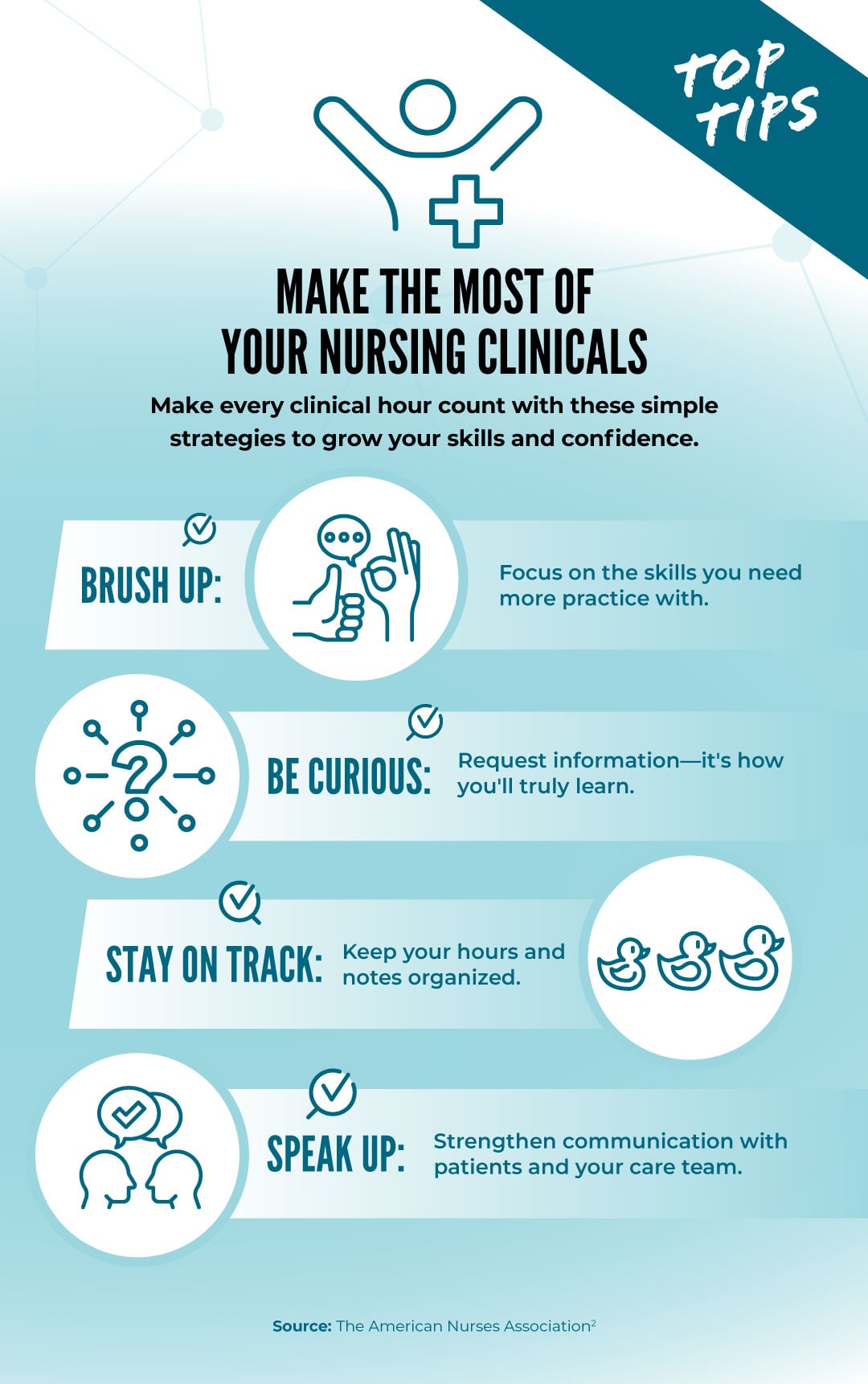
The following tips can help you gain the most from your time in nursing clinicals:
- Review your skills. Note what skills you need to work on and spend this time gaining experience.
- Ask questions. Don’t be afraid to ask questions; it’s the only way that you’ll learn.
- Stay organized. Keep track of your nursing clinical hours so that you can properly report them.
- Practice communicating with patients and staff. Use your time in nursing clinicals to practice your bedside manner and learn how to work alongside other healthcare professionals.
Making the Most of Your Nursing Clinical Experience
Nursing clinicals are a critical element of nursing education as students apply the knowledge and theory they learn in the classroom to real-life scenarios.2 Clinicals also allow students to practice communicating with patients and other healthcare professionals while being introduced to a fast-paced environment where decision-making must be quick and well-thought-out.3
Clinicals may seem overwhelming, but they’re a learning opportunity. When you approach clinicals in nursing with confidence, a willingness to learn and a proactive mindset, you’ll see the greatest success because you’re in a position to learn and improve.
Interested in advancing your nursing career? Learn more about how USAHS School of Nursing’s innovative and hands-on practice helps prepare you for an advanced nursing career upon graduation.
The University of St. Augustine for Health Sciences (USAHS) offers a Master of Science in Nursing (MSN), a Doctor of Nursing Practice (DNP) and Post-Graduate Nursing Certificates designed for working nurses. Our degrees are offered online, with optional on-campus immersions.** Role specialties include Family Nurse Practitioner (FNP), Psychiatric Mental Health Nurse Practitioner (PMHNP)*** and Nurse Executive. The MSN and DNP have options to accelerate your time to degree completion. Earn your advanced nursing degree while keeping your work and life in balance.
*The Nurse Educator and AGNP role specialties at USAHS are not currently enrolling students.
**The FNP role specialty includes one required hands-on clinical intensive as part of the curriculum.
***The Psychiatric Mental Health Nurse Practitioner role specialty is not available for the DNP program.
Sources
- Cruz Araújo AA, de Godoy S, Arena Ventura CA, Rodolfo Silva Í, Santos de Almeida EW and Costa Mendes IA, “Reflections on nursing students fear and anxiety arising from clinical practicums,” Investigación y Educación en Enfermería, February 14, 2023, https://pmc.ncbi.nlm.nih.gov/articles/PMC10017137/.
- “What to Expect During Nursing Clinicals,” ANA, 2023, https://www.nursingworld.org/content-hub/resources/becoming-a-nurse/what-to-expect-during-clinicals/.
- Liu, Y., et al. “Nursing students’ experience during their practicum in an intensive care unit: A qualitative meta-synthesis,” Frontiers in Public Health, September 2022: 10, https://doi.org/10.3389/fpubh.2022.974244.
- “FAQs,” Aacnnursing.org, 2025, https://www.aacnnursing.org/essentials/tool-kit/faqs.