
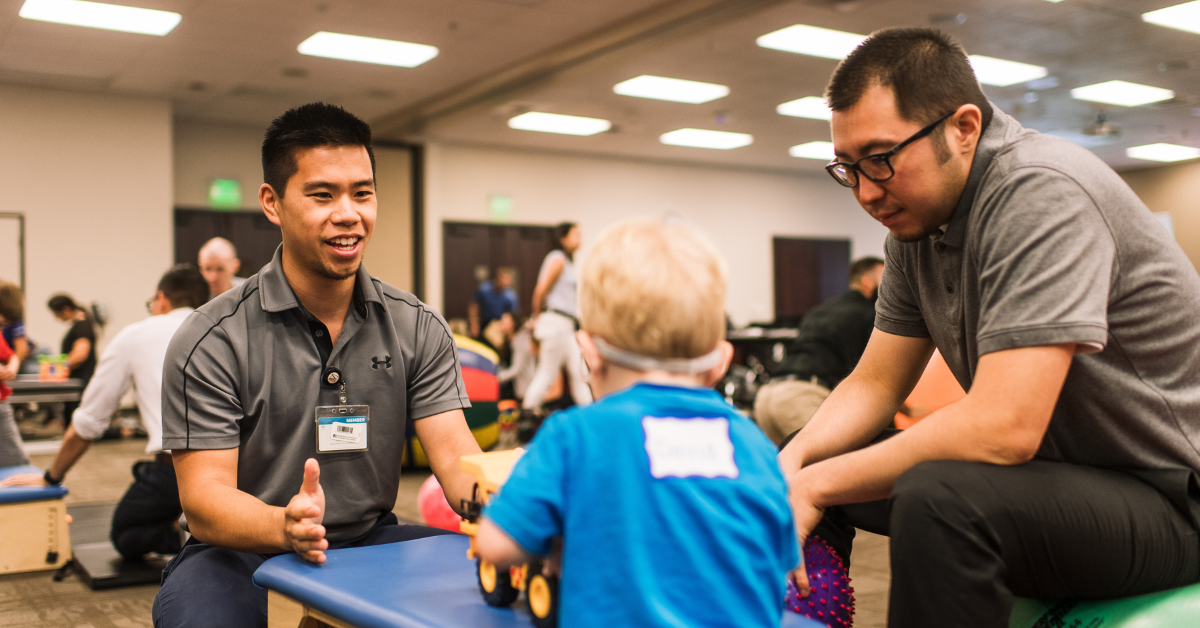
If you are considering becoming a pediatric physical therapist (PT), you are probably imagining the impact first, from helping kids build strength and mobility, along with balance and motor skills, so they can jump into play, succeed at school and feel more confident in their daily lives.1 It’s meaningful and rewarding work.
However, you may also be curious about a pediatric physical therapist salary. Most national pay and job outlook data group all physical therapists together, which is still helpful when you are researching your future earning potential.2 For example, PayScale estimates an average annual pediatric physical therapist salary of $74,577.*†3 However, earning potential can vary depending on setting, location and experience.
Pediatric PTs are licensed physical therapists (PTs) who work with infants, children and adolescents to support strength, mobility, balance and motor development so kids can participate more fully in play, school and everyday life.1
If you’ve tried to look up pediatric physical therapist pay, you’ve probably noticed it can be hard to find a specific number. That’s because many national salary sources report physical therapy wages as a single category rather than breaking out pediatric PT as its own specialty.
Let’s walk through what pediatric PTs do, what salary data can and can’t tell you, the factors that influence earning potential, what job outlook trends suggest and the education and licensure path that takes you from undergrad to pediatric specialization.
What Is a Pediatric Physical Therapist?
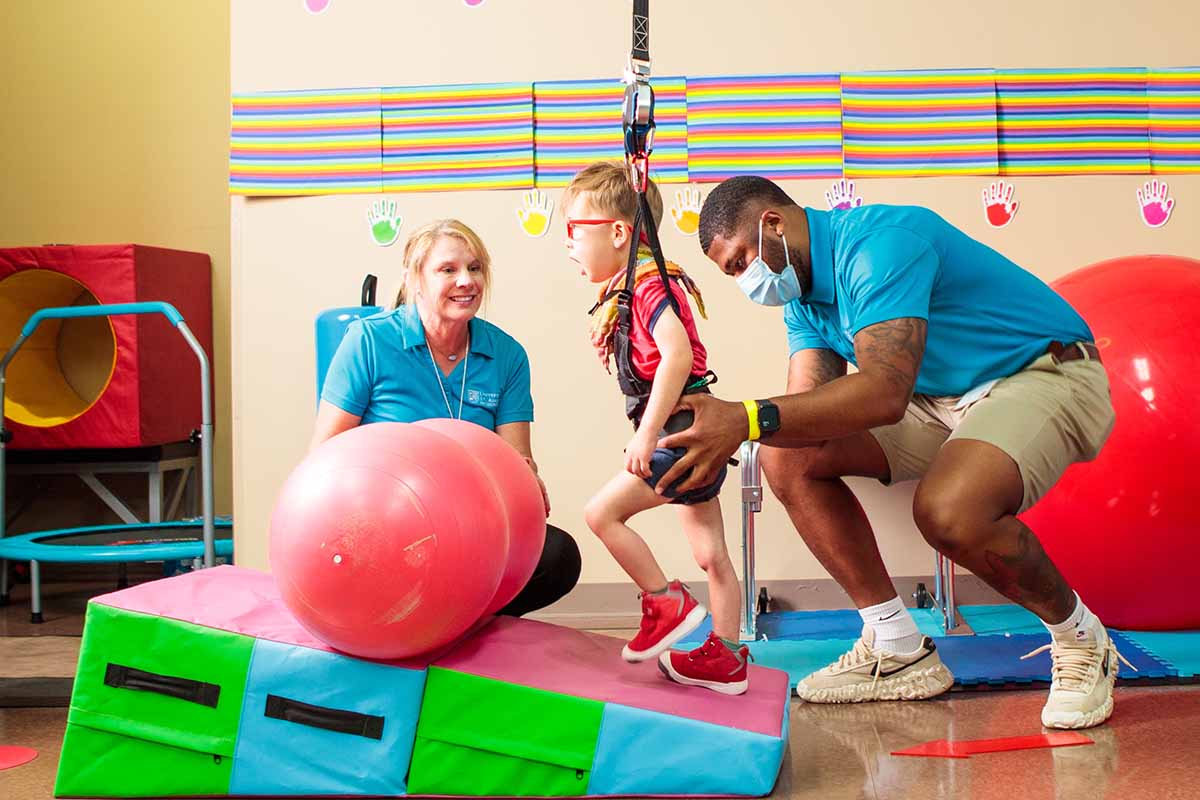
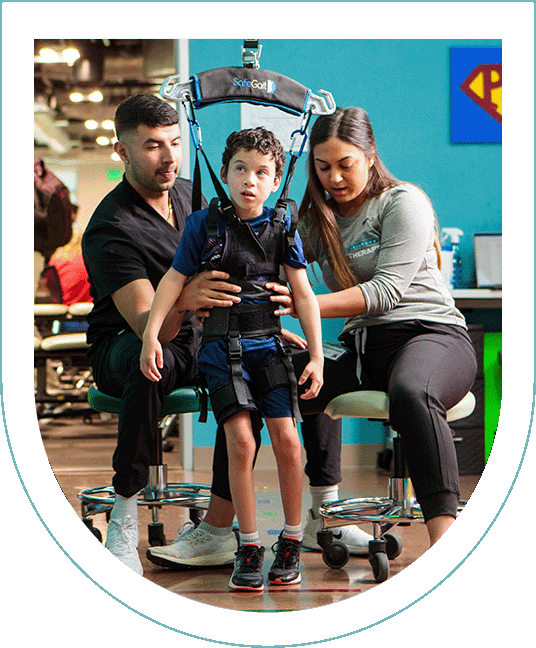
Pediatric PTs work with children and families to support independent function and active participation in home, school and community environments.1 They leverage their expertise in movement and motor development, supporting posture, mobility, strength, endurance and motor skills.1
Pediatric physical therapy typically involves a team of caregivers, teachers and other healthcare professionals to help a child function better across different settings.
Pediatric Physical Therapist Work Settings
Pediatric PT exists in various environments. The American Physical Therapy Association (APTA) Academy of Pediatric Physical Therapy mentions pediatric physical therapy work in diverse settings, including children’s hospitals and pediatric rehabilitation units, outpatient
pediatric clinics, multidisciplinary rehabilitation centers, early intervention and home-based services for infants and toddlers and community-based programs for children with disabilities.4
Big-Picture Salary: Pediatric Physical Therapists
The Bureau of Labor Statistics (BLS) reports the median annual wage for physical therapists as $101,020.†2 It also reports a wage distribution, with the lowest 10% of professionals earning less than approximately $74,420 and the highest 10% earning more than approximately $132,500.†2
In terms of projected growth, the BLS projects PT employment will grow 11% from 2024 to 2034, and estimates about 13,200 job openings each year on average.2 The BLS also notes many openings come from replacement needs, like people retiring or transferring to other jobs.2
For pediatric-specific pay, PayScale reports a median salary of $74,577 per year for pediatric physical therapists.*†3 This can be a helpful reference point, but it’s not a guarantee.
Pediatric-Specific Drivers
There are several broader trends that can support the demand for pediatric PT services, like early identification of developmental delays and a push for inclusive education and community advocacy for children with disabilities.4
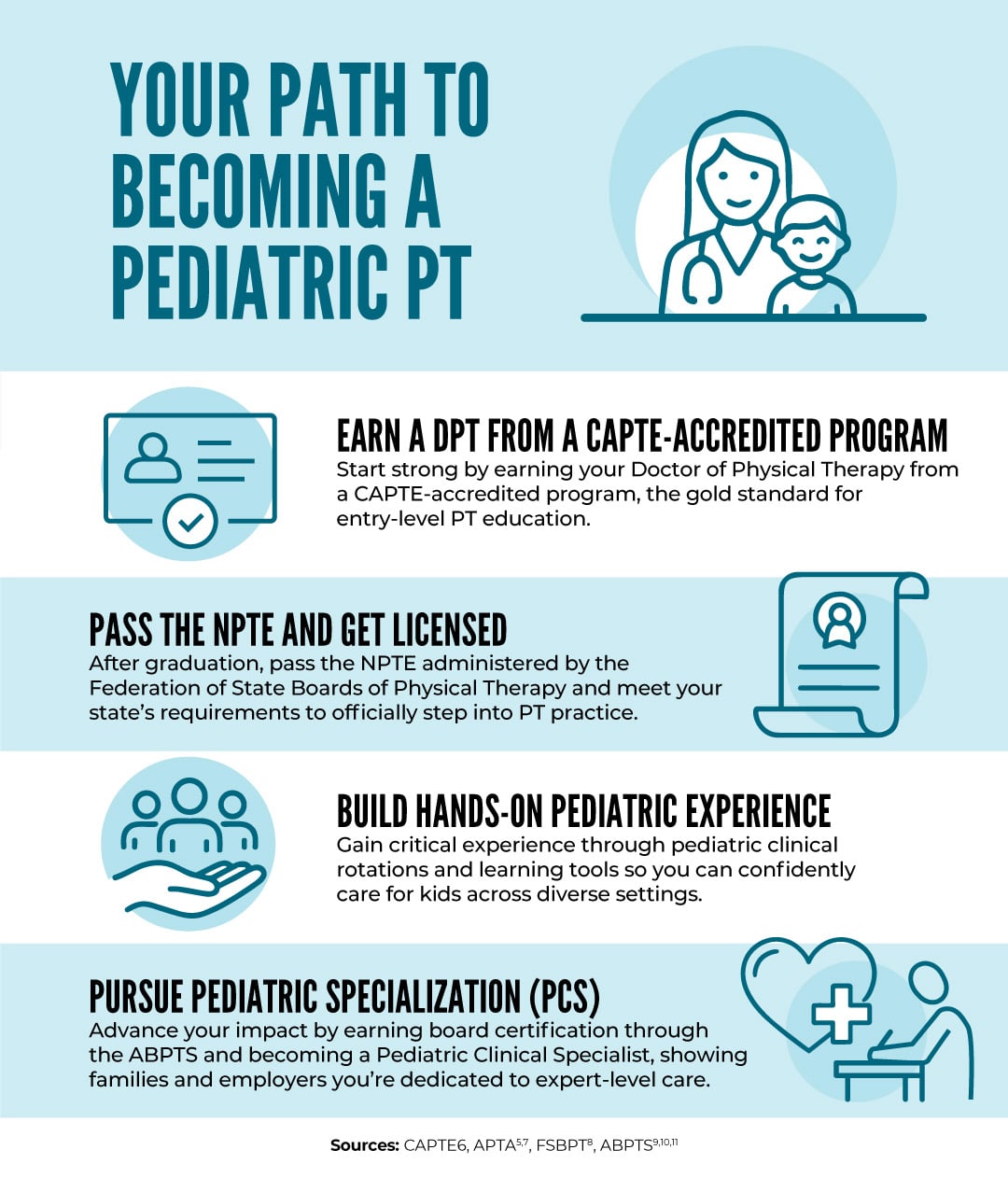
How To Become a Pediatric Physical Therapist
If you are interested in a career in pediatric physical therapy, explore the next steps to pursue this path.
Earn a DPT From a CAPTE-Accredited Program
The Commission on Accreditation in Physical Therapy Education (CAPTE) is a nationally recognized agency that accredits entry-level physical therapy education programs. To become a pediatric PT, you’ll need to earn a Doctor of Physical Therapy (DPT) from a CAPTE-accredited program.6
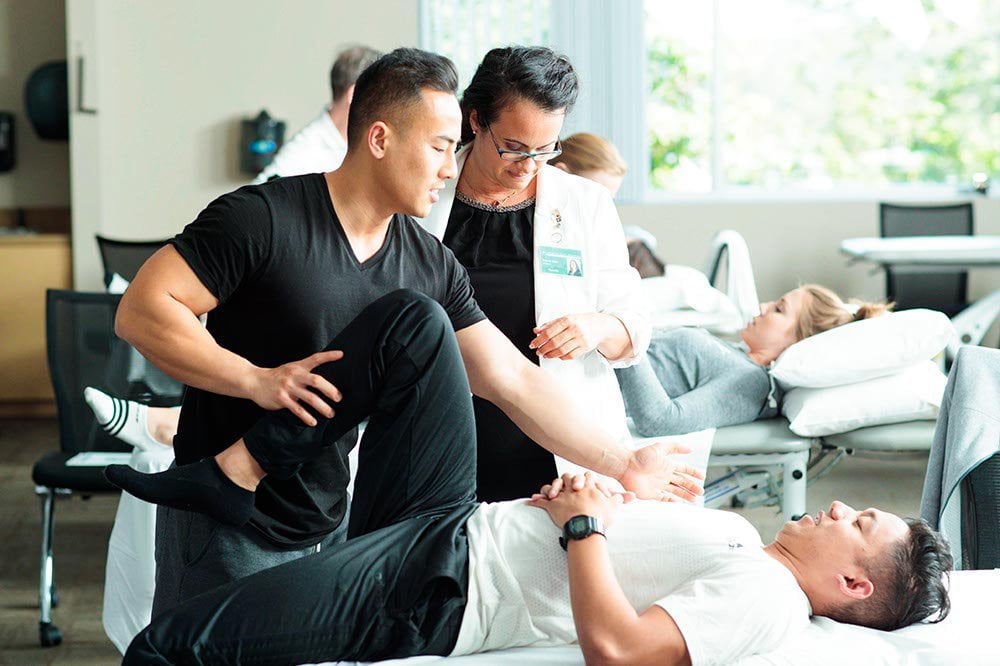
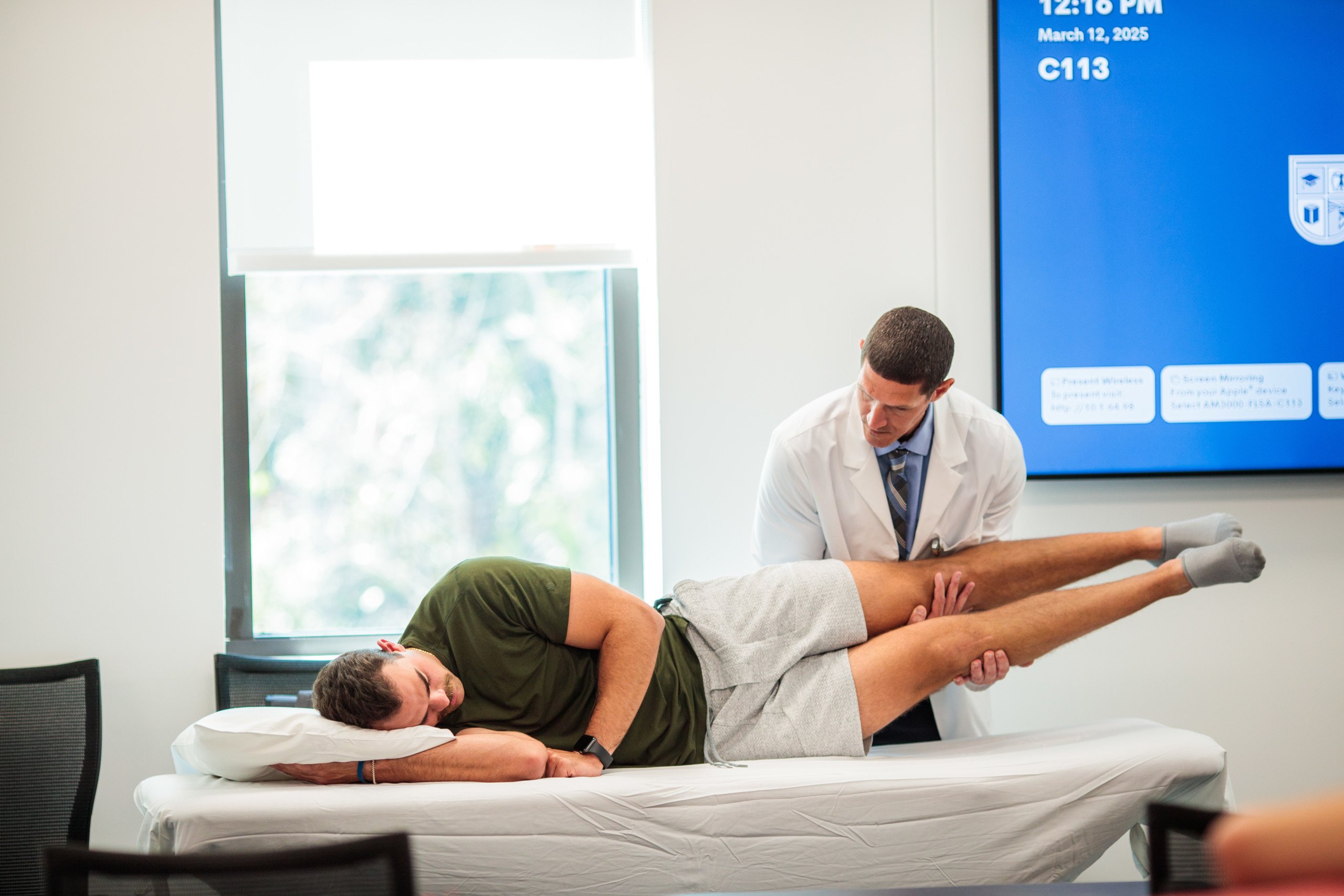
At the University of St. Augustine for Health Sciences (USAHS), we designed our DPT program around hands-on learning and flexible pathways. You will build real clinical confidence while balancing school and life. Students start practicing skills early through experiential learning in our Centers for Innovative Clinical Practice (CICPs), where simulated clinical environments help you develop practical techniques, clinical reasoning and readiness for full-time patient care.
We also offer multiple ways to earn your DPT degree. You can choose from Residential, Hybrid Immersion and Flex formats depending on the schedule and learning style that aligns with your lifestyle. With campus options in San Marcos, California; St. Augustine, Florida; Miami, Florida; Austin, Texas and Dallas, Texas, you can select a location that aligns with where you want to live, learn and complete clinical education.
CAPTE standards set expectations for clinical education and program requirements, which help ensure a consistent baseline for entry-level PT preparation.6
Pass the NPTE and Obtain Licensure
After graduation, you’ll need to pass the National Physical Therapy Examination (NPTE), an essential step for aspiring PTs in the United States. The Federation of State Boards of Physical Therapy (FSBPT) administers the NPTE and state boards use it to measure competence.7,8
You’ll also need to meet any additional requirements, like a jurisprudence assessment module, if your jurisdiction requires it.8 Requirements may vary by state.
Gain Pediatric Experience
During your DPT education and early in your career, pursue pediatric-focused clinical rotations when possible. These might include a role at a children’s hospital or in outpatient pediatrics. Clinical rotations are a crucial part of PT education.5
Pursue Pediatric Specialization (PCS)
The American Board of Physical Therapy Specialties (ABPTS) oversees certification across ten board-certified clinical specialties, including pediatrics. Board certification in pediatrics is commonly referred to as the Pediatric Clinical Specialist (PCS) credential.
Eligibility requirements for PCS certification include a PT license, documented pediatric patient care hours, or completion of an accredited pediatric residency, and passing a pediatric specialty exam based on the Description of Specialty Practice (DSP).9,10
ABPTS also uses the Maintenance of Specialist Certification (MOSC) process to maintain certification.11
Breaking into Pediatric Physical Therapy
The BLS projects 11% employment growth from 2024 to 2034, and an average of about 13,200 openings each year.2 Physical therapy, along with a pediatric specialty, may be a promising career option.
At USAHS, our DPT pathways are designed for different lifestyles and prepare students to pursue their dream careers. To better understand student achievement, check out our DPT student outcomes and achievement data.
If you are looking to break into physical therapy, our DPT program is one key step along the way.
FAQs
Is pediatric physical therapy a good career?
Yes, for the right person. Pediatric physical therapy gives you a chance to work closely with kids and families, while focusing on function and participation in real-life settings.1,4 It’s also within the broader PT profession, which the BLS notes has strong median pay and ongoing demand across healthcare settings.2
BLS reports a median annual wage of $101,020 for physical therapists.†2 PayScale estimates an average pediatric physical therapist salary of $74,577 per year, but it uses self-reported data, so this isn’t a guarantee.*†3
How long does it take to become a pediatric physical therapist, from undergrad to DPT and licensure?
In most cases, you can expect a timeline of several years.** You typically complete your bachelor’s degree, then earn a DPT from a CAPTE-accredited program.6 After that, you need to pass the NPTE and complete state licensure requirements.7,8
For pediatric PTs, you’ll also need to build pediatric experience through clinical rotations and job experience, and then you may decide to pursue advanced specialization.9
What is the Pediatric Clinical Specialist (PCS) credential, and does it affect salary?
The PCS credential is a board certification in pediatric PT through ABPTS.9 Eligibility requirements typically include a PT license, documented pediatric patient care hours, or completion of an accredited pediatric residency, and passing a pediatric specialty exam based on the DSP.9,10
The PCS may affect pay, with the advanced credential potentially making a candidate stand out for a higher position. However, salary depends on many factors, such as location, work setting, employer and experience.
*The information provided on this website is based on self-reported data and is intended for general informational purposes only. PayScale is a limited data source that relies on voluntary submissions from individuals and employers. Please be aware that the accuracy, completeness and reliability of the data may vary due to its voluntary nature and limited scope. While efforts are made to maintain the data’s accuracy, we cannot guarantee its absolute correctness or currency.
**Time to completion may vary by student, depending on individual progress, credits transferred and other factors.
†This data represents national figures, is not based on school-specific data and represents national median annual wages, not starting pay for recent grads. Conditions in your area may vary. USAHS does not guarantee salary levels.
References:
- “What Is Pediatric Physical Therapy?,” American Physical Therapy Association (APTA) ChoosePT, July 9, 2024, https://www.choosept.com/why-physical-therapy/specialty-areas-physical-therapy/pediatric-physical-therapy.
- “Occupational Outlook Handbook: Physical Therapists,.”, U.S. Bureau of Labor Statistics (BLS), August 28, 2025, https://www.bls.gov/ooh/healthcare/physical-therapists.htm.
- “Pediatric Physical Therapist Salary,” PayScale, March 4, 2026, https://www.payscale.com/research/US/Job=Pediatric_Physical_Therapist/Salary.
- “Fact Sheet: Pediatric Physical Therapists as the Practitioner of Choice, ” American Physical Therapy Association (APTA) Academy of Pediatric Physical Therapy, July 2020, https://pediatricapta.org/includes/fact-sheets/pdfs/FactSheet_PhysicalTherapistsPractitionerofChoice_2020.pdf?v=2.
- “Becoming a Physical Therapist,” American Physical Therapy Association, https://www.apta.org/your-career/careers-in-physical-therapy/becoming-a-pt
- “Commission on Accreditation in Physical Therapy Education,” Commission on Accreditation in Physical Therapy Education (CAPTE), https://www.capteonline.org/.
- “About the National Physical Therapy Examination,” American Physical Therapy Association (APTA), 2025, https://www.apta.org/your-practice/licensure/national-physical-therapy-examination.
- “Exam Candidates: Launch Your Physical Therapy Career,” The Federation of State Boards of Physical Therapy (FSBPT), 2023, “https://www.fsbpt.org/Secondary-Pages/Exam-Candidates/National-Physical-Therapy-Examination-%28NPTE%29.
- “Become a Board-Certified Pediatric Clinical Specialist,” The American Board of Physical Therapy Specialties (ABPTS), 2025, https://epiprod.specialization.apta.org/become-a-specialist/pediatrics.
- “Minimum Eligibility Requirements and General Information for All Physical Therapist Specialist Certification,” The American Board of Physical Therapy Specialties (ABPTS), 2025, https://epiprod.specialization.apta.org/become-a-specialist/minimum-requirements.
- “Maintain Your Certification,” The American Board of Physical Therapy Specialties (ABPTS), 2025, https://epiprod.specialization.apta.org/maintain-certification.