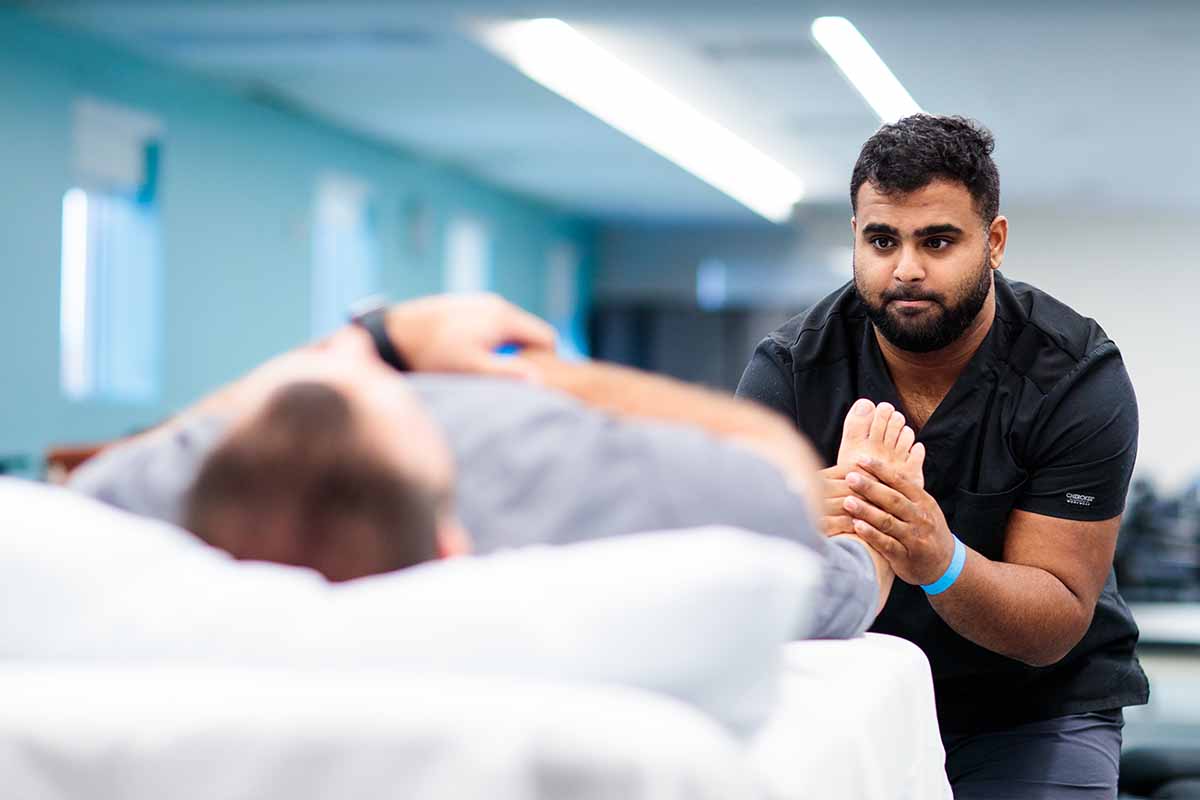


When your clinical rotations begin, so does one of the most exciting phases of your Doctor of Physical Therapy (DPT) program. So, what are clinical rotations?
They are a chance to bring your classroom knowledge in health sciences to life, learn how clinics function and work with patients in a clinical setting. The first few weeks can also be nerve-wracking as you navigate the challenges of working with a mentor and applying new skills.
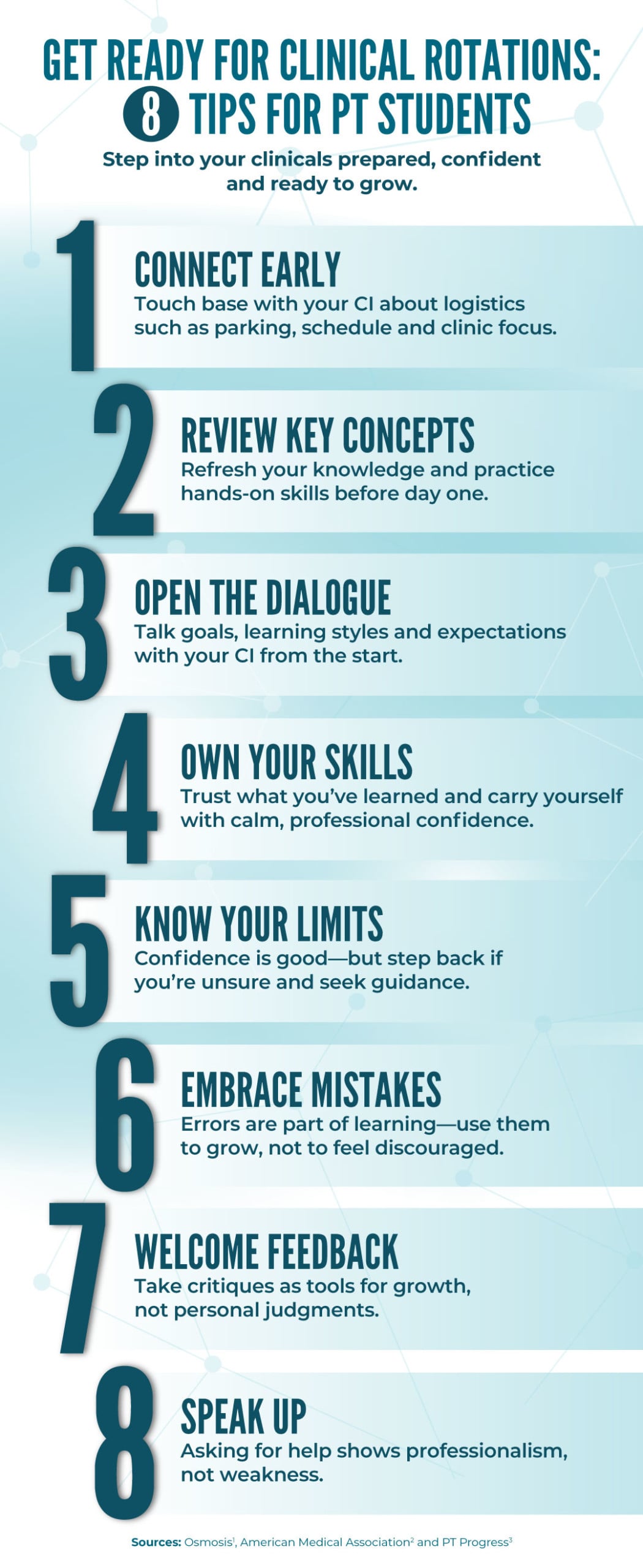
If you’re still unsure about the clinical rotation meaning or what to expect during this pivotal experience in your career, keep reading. Consider these eight tips on how to prepare for clinical rotations and work with your clinical instructor (CI):
1. Reach Out to Your CI Regarding Logistics
Before your first day, ask your clinical instructor about logistics such as parking, dress code and your clinical rotation schedule. How many clients will you be seeing per day? What is their age range, and what are some typical diagnoses? Will you be working on an interprofessional team of therapists? Does the clinic emphasize any specific techniques or skills? It’s also a great opportunity to ask what types of clinical rotations are offered at your facility (orthopedics, acute care, etc.) so you can prepare accordingly. This information will give you an idea of what to expect and will help you narrow your focus as you move to the next step.1
2. Brush Up on the Basics
Hit the books the week before you start clinical rotations, reviewing diagnoses, basic exam techniques and therapeutic interventions. Practice hands-on skills like vitals, reflexes, goniometer measurements and common tests. You’ll go into your first day with more confidence. You’ll also avoid needing to review basic skills with your CI, freeing up time to discuss advanced theories and techniques.2
3. Communicate With Your CI Now and Throughout the Experience
Early on, have a conversation with your CI about your goals for this clinical experience and your CI’s expectations for your learning and performance. Do some self-reflection on your learning style and communicate about this with your CI. Also, ask your CI what their learning and teaching style is, and discuss how you both can adjust for differences. Check-in often about your performance (see #7 below) and keep the channels of communication open throughout the clinical rotation experience. Find out how the patient documentation process works at this clinic. Ask if you can receive handouts that explain what’s needed and why.1,3
4. Have Confidence in Your Abilities
You’ve already learned a lot in your physical therapy courses and labs, and you’re more prepared for clinical rotations than you may realize. Even if you’re nervous, try to project an appropriate level of confidence, which is reassuring to patients.1
5. Don’t Overcompensate
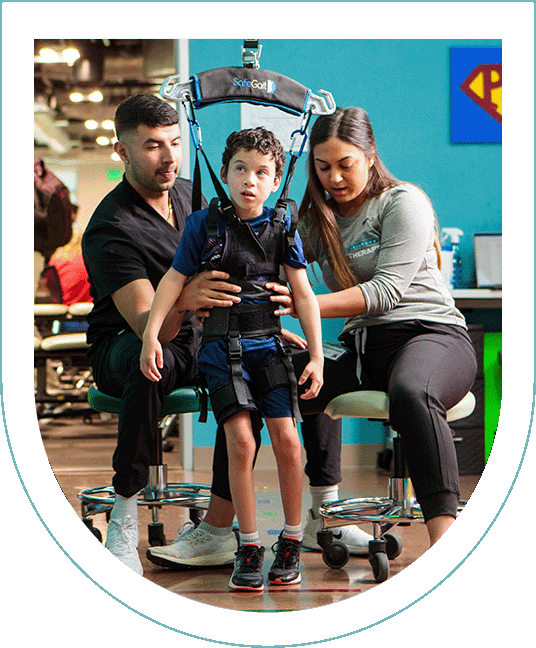
If your go-to feeling is confidence even in new situations, that’s great—but make sure you know what you’re doing when you’re treating patients. If a situation arises that you aren’t sure about, it’s better to hang back and follow the advice in Tip 6.3
6. Accept the Fact That You Will Make Mistakes
What are clinical rotations designed for? In short, learning. There’s no shame in making the inevitable mistakes. It’s better to do so in this structured environment where you can receive guidance from your CI and analyze the situation with them so you can handle it differently next time. Your CI will expect this as part of their job.2
7. Prepare to Receive Feedback
Another key aspect of your CI’s role is to offer constructive criticism of your work. It can be challenging to receive such feedback without getting defensive—but keep in mind that its purpose is to help you improve as a practitioner. After all, what are clinical rotations without the challenge? Try to avoid getting upset, blaming someone or something else, debating the validity of the feedback, or dismissing the comments. Instead, try to listen carefully to the concerns and ask clarifying questions. Work on the issues and follow up with your CI a few weeks later to check your progress.3
8. Ask for Help When You Need It
If you don’t ask, your CI and colleagues will assume you are fine. If you do ask, they will most likely be happy to help. Remember that asking for help during clinical rotations isn’t a sign of weakness or ignorance—rather, it demonstrates your professionalism, desire to improve and commitment to patient care. Eventually, you will be in a position to mentor others—but for now, accept the valuable opportunity to be mentored and to grow.3
Once you finish your clinical rotations, graduate from your degree program and pass the licensure exam, you will be ready to launch your career in physical therapy. You may want to start your own PT clinic. It’s a good idea to find a PT mentor who can advise you through these beginning stages. Onward to an exciting career helping patients improve their health and movement!
The largest PT school in the United States,* the University of St. Augustine for Health Sciences (USAHS) offers a hands-on Doctor of Physical Therapy (DPT) degree. Practice with mock and real patients in our state-of-the-art simulation centers and learn anatomy with our high-tech tools. Prepare for clinical practice with a wide range of patients, as well as advanced roles in research, practice leadership and policymaking.
*Based on total DPT degrees conferred, as reported by the Integrated Postsecondary Education Data System (IPEDS). Data is captured by IPEDS through interrelated surveys conducted annually by the U.S. Department of Education’s National Center for Education Statistics (NCES). https://nces.ed.gov/ipeds/
Sources
- “The Osmosis Ultimate Guide to Thriving in Clinical Rotations,” Osmosis, May 8, 2025, https://www.osmosis.org/blog/the-osmosis-ultimate-guide-to-thriving-in-clinical-rotations.
- Murphy, B., “What I wish I knew in medical school about clinical rotations,” American Medical Association, July 12, 2023, https://www.ama-assn.org/medical-students/clinical-rotations/what-i-wish-i-knew-medical-school-about-clinical-rotations.
- Fraticelli, T., “5 Things to Know About a PT Clinical Rotation,” PT Progress, April 21, 2024, https://www.ptprogress.com/5-things-about-pt-clinical-rotation/.