
Claribell Bayona — OTD, OTR/L — OT Faculty Profile, USAHS
Claribell Bayona, OTD, OTR/L, teaches occupational therapy at the University of St. Augustine for Health Sciences (USAHS) campus in Miami, Florida. For Claribell, occupational therapy is about getting people back to their everyday activities as independently as possible, whether that means returning to work, being a mom or keeping up in school after an injury or diagnosis.
At an outpatient clinic, Claribell worked with neuro patients, including a man recovering from a stroke whose one goal was getting back to work. Rebuilding coordination and strength in his arm meant he could use a computer and play with his kids again, and he would arrive at sessions proud to report wins like buttoning an entire shirt.
Preparing the next generation of occupational therapists to help people like him is what drives Claribell’s teaching at USAHS, and it’s a clear example of client-centered goal setting.
Transcript
Claribell Bayona — OTD, OTR_L — OT Faculty Profile, USAHS
[00:00:00] Claribell Bayona (OT Faculty): So as an occupational therapist what we do is we help people get back to their everyday activities. So get them back to being as independent as possible with their occupations, and that could be the type of work that they do, that could be being a mom, that could be you know, being in school, being a graduate student or an elementary student, depending on the type of injury they have or the diagnosis that they get. Our goal is to get everybody to be as independent as possible. [00:00:27] I love teaching, so I… What I like the most about teaching is that I get to prepare the next generation of occupational therapists to go out there and help people. So that’s really what drives me in my teaching here. [00:00:41] In the outpatient clinic, the last outpatient clinic that I worked at, I worked with all the neuro patients. So for example, I had a patient who had a stroke and his sole goal was to get back to work. Well, he was able to use his arm, but his coordination was impaired, his strength was less than his other arm. So we worked a lot on getting his coordination, his strength back to, you know, as, as normal as possible so he can use a computer, so he can, you know, play with his kids. And so when he really became more independent, it was really a joy to see him, you know, come through the door for the sessions and tell me, “I did this yesterday,” you know. “I was able to button my entire shirt yesterday.” Those really positive moments of him becoming more independent were one of my favorites when I was working in the outpatient clinic.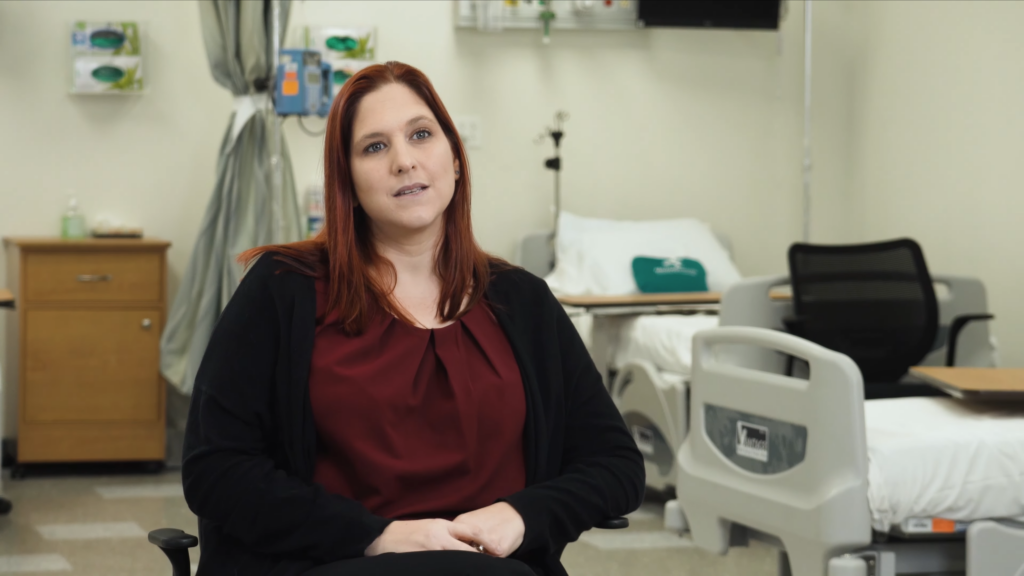
Kristin Domville – OTD, MOT, OTR/L – OT Faculty Profiles, USAHS
Meet Our OT Faculty
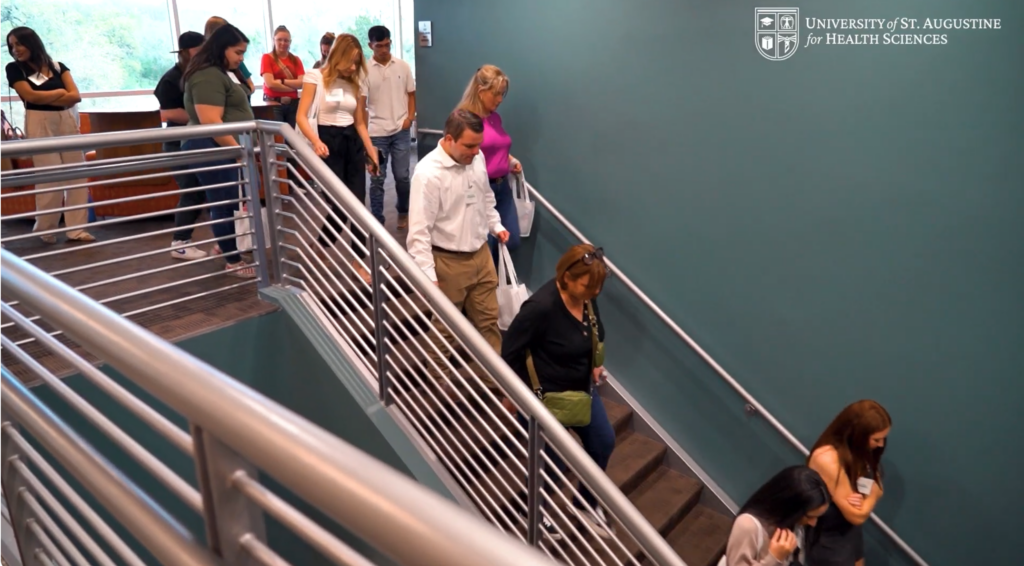
Enrollment Services – The Journey to Clinical Excellence, USAHS Occupational Therapy Programs
Students and staff discuss the enrollment process and student services.
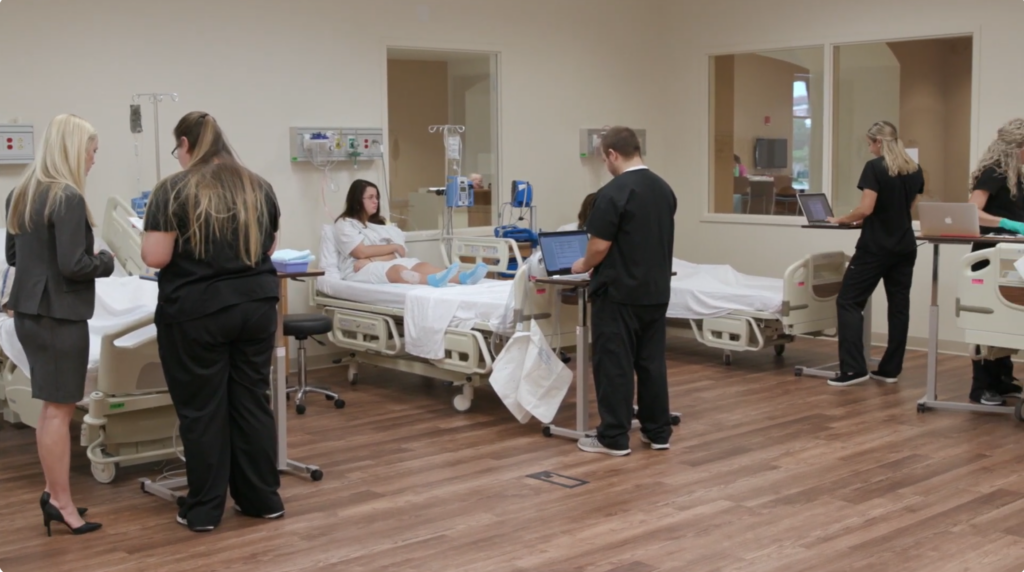
Center for Innovative Clinical Practice (CICP)—University of St. Augustine for Health Sciences
Students and faculty discuss learning in state-of-the-art simulation facilities.