Gwen Morris – OTD, OTR, CHT, CLT – OT Faculty Profiles, USAHS
Roughly 7,000 certified hand therapists practice worldwide, and Gwen Morris, OTD, OTR, CHT, CLT, is one of them. Gwen teaches occupational therapy at the University of St. Augustine for Health Sciences (USAHS) campus in Dallas, Texas.
In class, Gwen built a multi-trauma simulation of a car accident patient with a brain injury and broken bones, so students have to manage everything they’ve learned at once. With in-house high-fidelity simulation and a library that lends walkers, wheelchairs and bones, the goal is for fieldwork sites to be glad a USAHS student is coming.
Transcript
Gwen Morris – OTD, OTR, CHT, CLT – OT Faculty Profiles, USAHS
[00:00:00] Gwen Morris (OT Faculty): So I’m a certified hand therapist. There are about 7,000 or so of us worldwide that treat upper extremity trauma. So everything from the arm transplant to the sprained pinky finger is my wheelhouse. And then in 2017, I certified as a lymphedema therapist. [00:00:13] The one was actually injured while he was going through the fire academy, and he’s a fire chief now, so he made it back and he’s, he’s living his best life at the moment with his new family and was able to fulfill those roles. But he was really injured and in a lot of pain for a long time, and being a part of that journey for him was, was a big why for me. Um, the other I saw for almost three straight years on and off, but he fell 36 feet from a roof working as an HVAC guy. Crushed his pelvis. He could not have done more damage to his elbow if he had a map, and his big thing is, “I want to be able to put in my own contacts.” So that we made that a goal, and that was something very functional that we worked on. And the, the day that that was able to happen, we cried. We cried together because that was an… part of the amazing journey, and it took him over a year. [00:00:55] One of my favorite labs with them is a simulation that I created, and it’s multi-trauma. So this is a patient that came in after, after a car accident, and he has a traumatic brain injury, but he also has a broken wrist. He has a broken ankle. So he is having trouble remembering things, but he’s kind of confused, but still will reorient back to you, and having the students kind of navigate all of the pieces of what they’ve already learned but in one simulation. [00:01:21] I have never seen in another university you can check out walkers and wheelchairs and mat tables, bones, you name it, from the library. That’s not a thing that happens. And this is also the only university I’ve ever had that had true high-fidelity simulation that’s in-house. And having the classes that I’ve been able to take to create my own sims, and I’d be like, “Okay, I like this. I like this, but I want to create something that’s more this because this is real life from my practice domain.” And I was the only hand therapist on campus for a while, so that was important to me as well. You don’t find that other places as frequently, so having the resources to be able to create these situations so students are more prepared going out on field work. Our goal is for people to go, “Oh, St. Augustine student, yes. Let me take that student,” as opposed to, “Uh, I guess I’ll make time.” We want them to be excited about our students.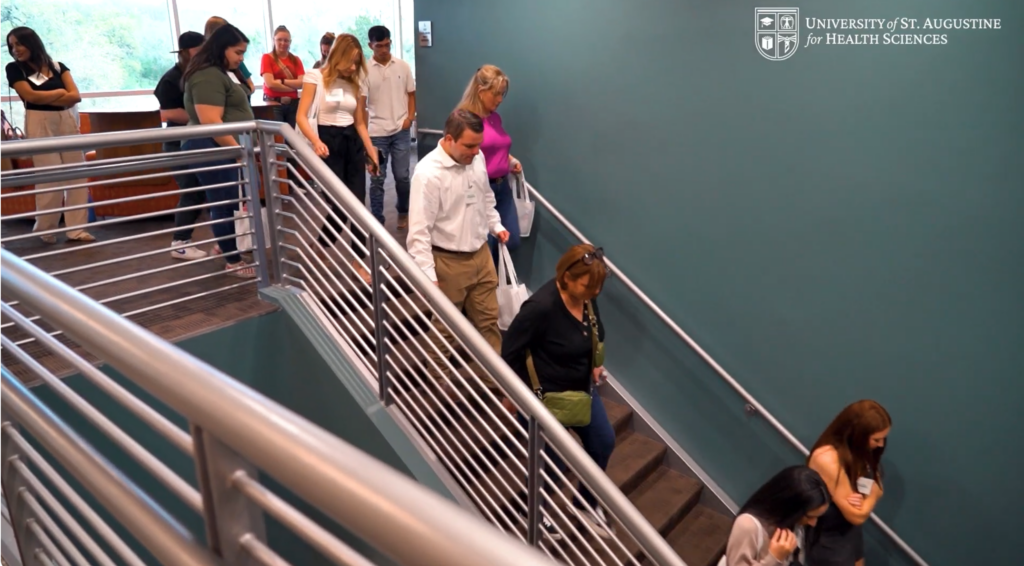
Enrollment Services – The Journey to Clinical Excellence, USAHS Occupational Therapy Programs
Students and staff discuss the enrollment process and student services.
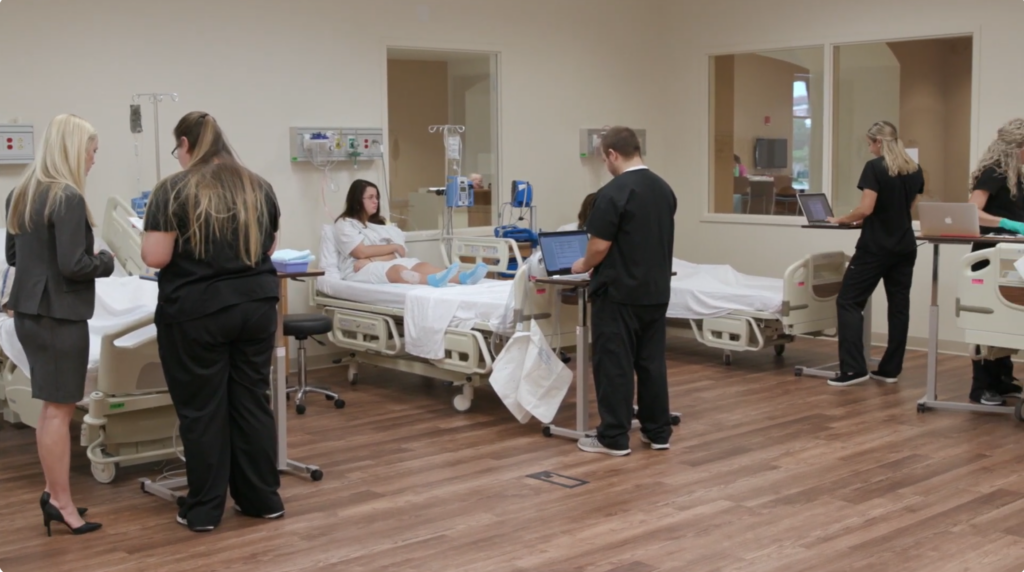
Center for Innovative Clinical Practice (CICP)—University of St. Augustine for Health Sciences
Students and faculty discuss learning in state-of-the-art simulation facilities.
Testimonial – Kaylee Saenz, Post-Professional OT Student
Hear from a student in the USAHS PPOTD program.