Innovation at USAHS – Endoscopy: F.E.E.S. and Videostroboscopy
Speech-language pathology students at the University of St. Augustine for Health Sciences (USAHS) practice endoscopy long before a real patient is involved. Faculty member Nickole Hines-Staples requires students to pass a washcloth simulation 20 times, learning to place and maneuver the scope, before moving on. On screen, tiny hand movements look huge, so students quickly learn finesse.
From there, students carry out parts of a voice assessment using videostroboscopy, with a laryngeal microphone capturing pitch to assess the fine movements of the vocal folds. Jody also helps with fiberoptic endoscopic evaluation of swallowing (FEES), a test used to assess dysphagia. Reading about these procedures is one thing, and placing the scope is another.
Experience with videostroboscopy and nasopharyngoscopy for FEES can set graduates apart during clinical fellowship interviews.
Transcript
Innovation at USAHS – Endoscopy_ F.E.E.S. and Videostroboscopy
[00:00:00] Nickole Hines-Staples (SLP Faculty): Learning the hands-on with the endoscopy, it can really help to set you apart when you go and interview for your clinical fellowship. [00:00:13] SLP Student: It’s one thing to have that knowledge, but then to have that experience and to really feel comfortable doing something. [00:00:17] So it’s one thing to read the book. Right. But it’s an entirely different thing to actually be able to practice and push the buttons and put it into the nose. [00:00:25] Nickole Hines-Staples (SLP Faculty): They’re not ready to go into someone else’s nose yet. The simulation that they were doing on the washcloth, they need to pass 20 times so they could learn how to place the scope and how to maneuver to make it go where they want. [00:00:39] They noticed those little tiny movements that I was asking them to make looked so large, actually, on the screen as they were seeing them. So they were learning some finesse. They did a really awesome job. I was impressed. I had them do parts of a voice assessment. The scopees hold up a laryngeal microphone that captures the pitch, so we can see those finite movements of the vocal folds and make our assessment. [00:01:06] And then, Jody was able to help with some FEES, which is fiberoptic endoscopic evaluation of swallowing, and that’s a test that we do to assess for dysphagia or a disordered swallow. That you have some hands-on with videostroboscopy and the nasopharyngoscopy for FEES could really set you, set you apart, just give you an upper, an upper edge that not everybody’s going to have from every program.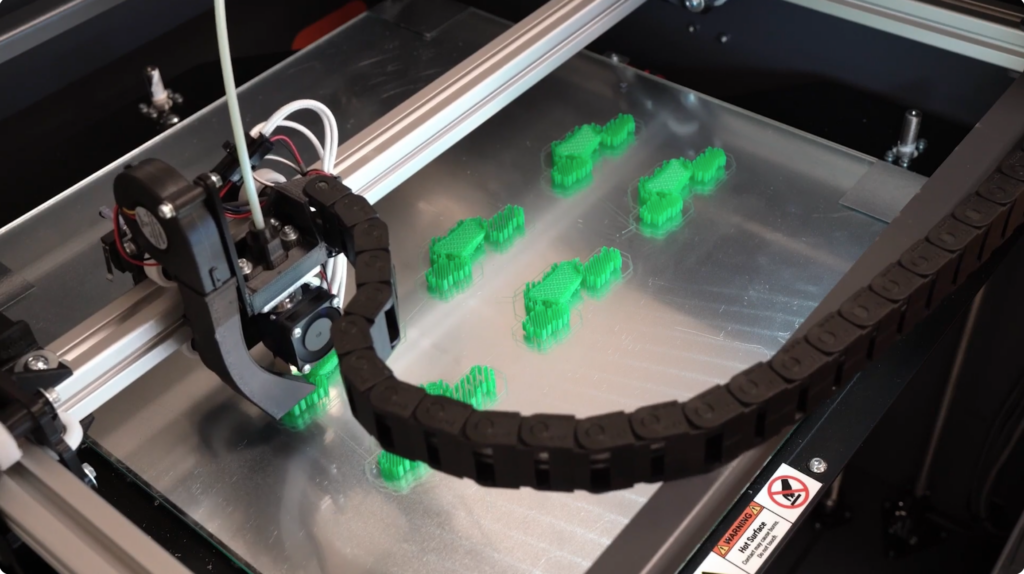
3D Printer and Scanner
A look at innovative learning technology at USAHS.
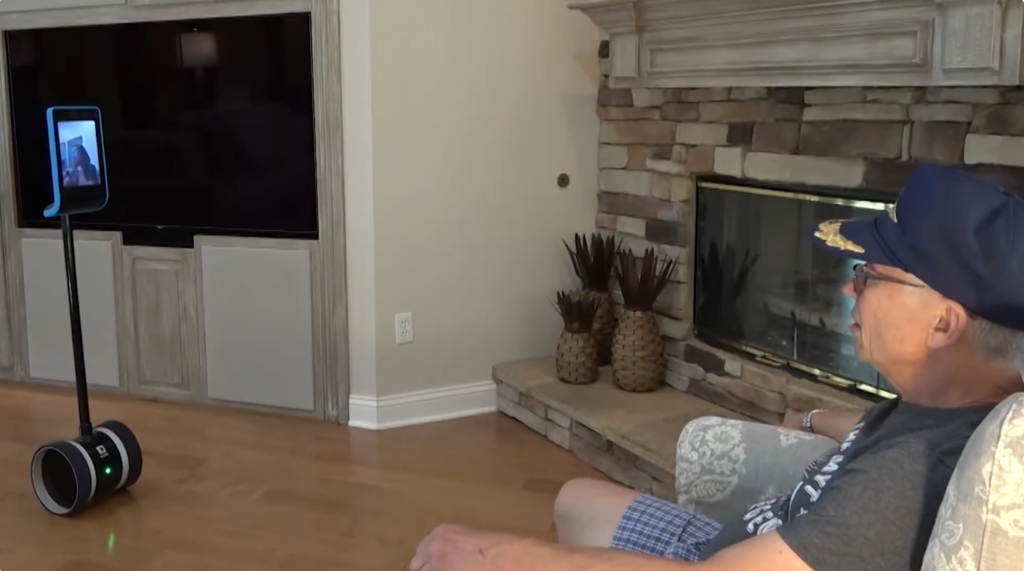
Double Robot Technology at USAHS
A look at innovative learning technology at USAHS.
Creating Prosthetics Using a 3D Scanner — USAHS St. Augustine Campus
Faculty at the St. Augustine campus build 3D printed prosthetics for clients.