

What is Fieldwork in Occupational Therapy?
For many students, fieldwork is the moment occupational therapy (OT) really comes to life. This may be the first time what you’ve studied in class meets real clients and complex situations. It’s where confidence is built, mistakes become lessons and you begin to see yourself not just as a student, but as a future occupational therapist (OT).
Why Fieldwork Matters for Your OT Education
At the University of St. Augustine for Health Sciences (USAHS), fieldwork isn’t an add-on to the curriculum. It’s a core aspect of our Master of Occupational Therapy (MOT) and Doctor of Occupational Therapy (OTD) programs, and one of the reasons graduates feel ready to step into practice.
However, you may have several questions: Where will I go? Will I be prepared? How do clinical placements work? Let’s review what OT fieldwork is, what to expect in Level I and Level II fieldwork experiences and how USAHS supports students every step of the way.
What Fieldwork Looks Like
So, what is fieldwork in occupational therapy? OT fieldwork is a required part of occupational therapy education that allows you to apply what you’ve learned to real clinical and community-based settings. It’s where classroom learning meets real-world clinical experiences. It’s intentionally woven throughout our graduate occupational therapy (OT) programs. Through OT fieldwork, students gain hands-on experience and build clinical competence and confidence.
According to the Accreditation Council for Occupational Therapy Education (ACOTE), fieldwork isn’t optional; it’s a core part of becoming an occupational therapist and is built directly into the curriculum.1 The American Occupational Therapy Association (AOTA) emphasizes that Level II fieldwork is designed to provide students with in-depth, evidence-based clinical experiences that are integral to the curriculum, helping them develop the skills and professional identity to become competent, entry-level occupational therapists.2
There are two stages of fieldwork, Level I and Level II, each with a distinct purpose and timeline.
Level I: Your First Steps into the OT Profession
Level I fieldwork occupational therapy begins early in the program and is designed to introduce you to the field of OT while you are building your foundational knowledge. These part-time experiences occur alongside coursework, creating a safe space to apply your OT fieldwork project ideas and connect what you’ve learned to real practice.
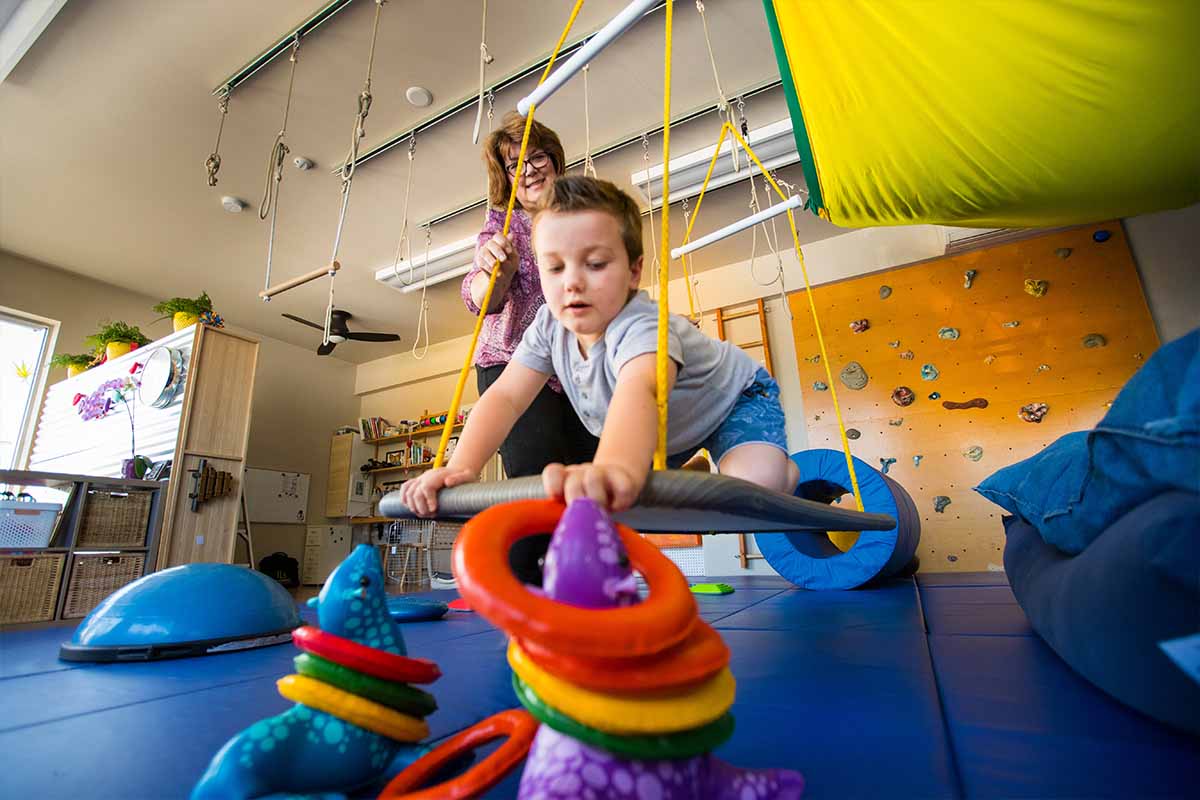
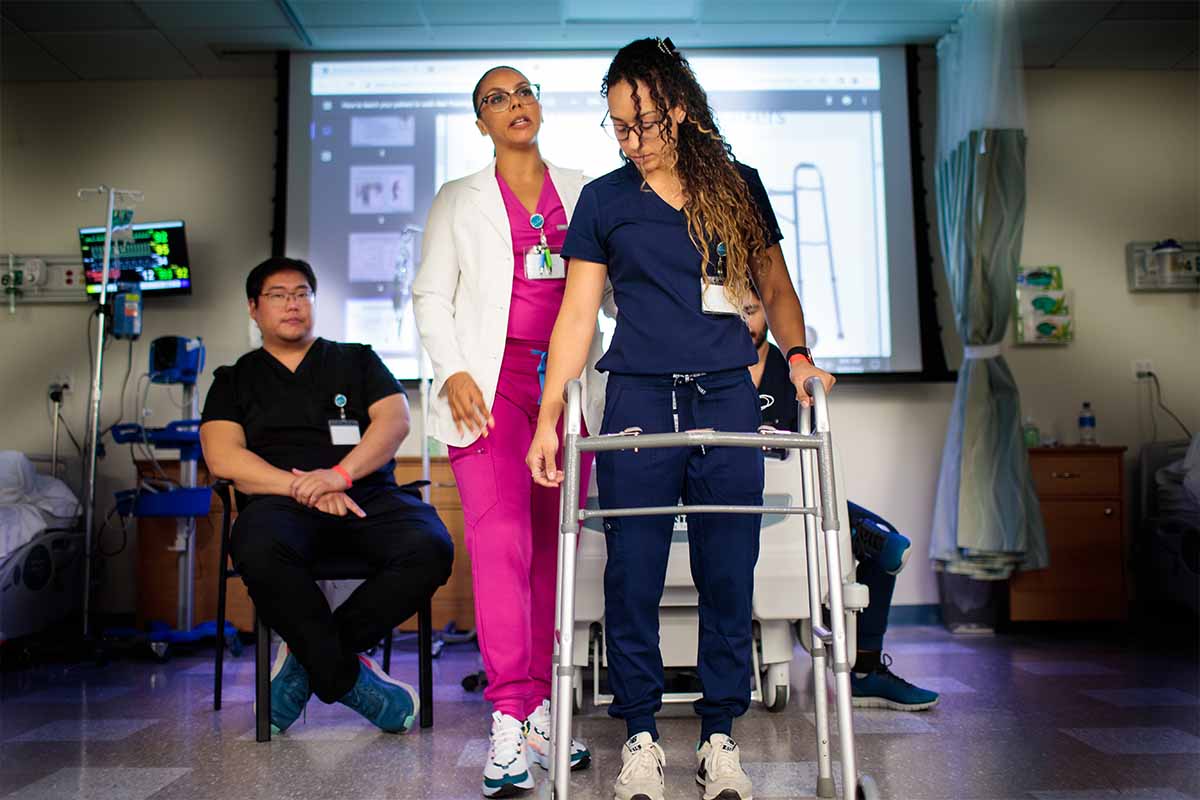
At USAHS, Level I experiences are intentionally diverse. You may participate in simulations at one of our Centers for Innovative Clinical Practice (CICPs), serve the community through USAHS Pro Bono Clinics, or observe OT practice in multiple settings.
The emphasis is on observation and foundational skill development, helping you understand what client-centered care means and offering early opportunities to apply OT knowledge in meaningful, real-world contexts.
Level II: Growing in Your OT Role
Level II fieldwork occupational therapy is where everything comes together. These are full-time, immersive clinical experiences that occur near the end of the program, once you have completed core coursework.
Under ACOTE requirements, students in MOT and OTD programs complete at least 24 weeks of full-time Level II fieldwork.3
During this stage, students take on the role of occupational therapist in training under the supervision of a licensed occupational therapist. Over the course of two 12-week placements, students gradually assume more responsibility, from planning interventions to managing caseloads. As their experience grows, they take on a direct client-care caseload and work toward near-independent practice under supervision.4
The goal is to strengthen your clinical reasoning, teach you to plan and deliver interventions using evidence-based practice and equip you to meet professional expectations.4
By the end of Level II, you are ready for entry-level practice.
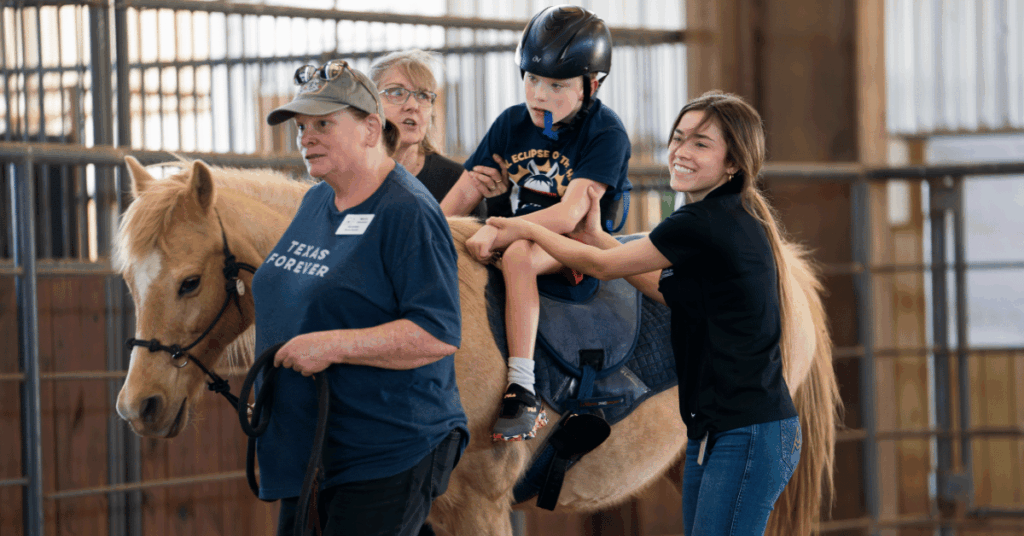
“The students consistently arrive well-prepared, engaged and eager to learn…they not only meet our expectations but often exceed them. USAHS clearly emphasizes hands-on readiness, and that shows in how confident and capable the students become as they progress through fieldwork.” —Elisabeth Nerhus, Bit-by-Bit Medical Therapeutic Riding Center in Davie, Florida
What to Expect: Timing, Structure and Support at USAHS
Fieldwork isn’t just another class; it’s your bridge to professional practice.
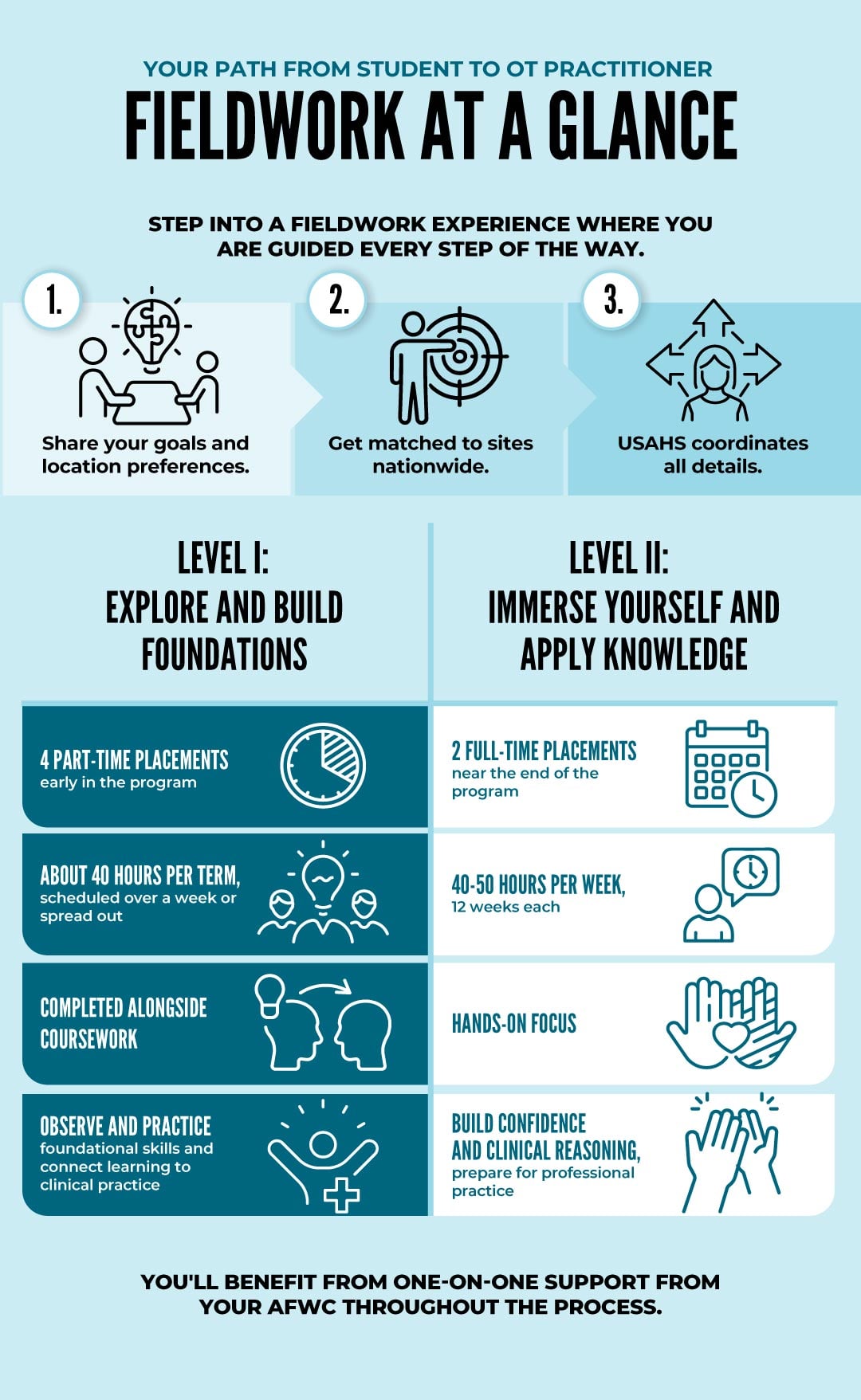
Level I Fieldwork:
- Four placements across two trimesters early in the program
- About 40 hours per trimester, part-time, over one week or spread across several weeks
- Completed alongside coursework, with guidance on professionalism, ethics and communication
- Observation could be with an OT or other licensed professional in any particular setting aligning with your courses
Level I fieldwork occupational therapy is a part of a course. While some students may have the opportunity to work limited hours outside of fieldwork, scheduling flexibility varies.
Level II Fieldwork:
- Two placements across two trimesters at or near the end of the program
- Full-time according to each site’s specific requirements for 12 weeks each within a 15-week trimester3
- Minimal coursework outside of fieldwork so students can fully immerse themselves
As Level II fieldwork occupational therapy is a full-time commitment, students are strongly encouraged not to work during this period. It happens after most coursework is completed, allowing you to focus on clinical learning.
USAHS OT Flex students should note that fieldwork may occur on weekdays beyond weekend lab sessions.
USAHS OT Hybrid students should note that fieldwork will occur on weekdays when not in labs.
How Clinical Fieldwork Placements Happen
One of the most common concerns prospective students have, besides “what is fieldwork in occupational therapy,” is clinical fieldwork placement. They often consider placement locations, alignment with their interests and proximity to home.
According to ACOTE and AOTA, fieldwork can occur in a variety of settings, including traditional, non-traditional and emerging practice areas, as long as it aligns with the program’s curriculum and the OT scope of practice. At least one experience must specifically address mental health, behavioral health or psychosocial aspects of client performance to support engagement in occupations.3,4
At USAHS, you’ll receive one-on-one guidance throughout your OT journey. You’ll be supported by a dedicated Academic Fieldwork Coordinator (AFWC) whose role is to guide you through the entire placement process. Early on, you’ll discuss your interests, goals and location preferences. From there, the AFWC works with you and clinical site partners to find the right fit for you, drawing on established and new relationships. They will secure a placement that aligns as closely as possible with your interests. The goal is to find placements that ensure students get what they need to progress through their program and graduate on time. Field locations can be near your home, in proximity to a campus, or in another location that may require travel or relocation.
Here’s how it works:
- Share your placement preferences.
- AFWCs match you with sites (USAHS has partners nationwide).
- USAHS coordinates all logistics.
- You will be guided through a structured, collaborative placement process.
Planning starts early, and most students are notified of their placements within 8 to 12 weeks before they begin OT fieldwork. This timeline allows students time to plan their OT fieldwork project ideas.
You’ll Be Prepared on Day One
Ask USAHS’ OT fieldwork partners, expert OT practitioners, what stands out about the students, and one word comes up again and again: prepared.
“The students arrive well-prepared, with a solid foundation of knowledge and a readiness to apply their skills from day one.” —Janellis Socarras, Exceptional Speech Therapy in Doral, Florida
By the time you begin your first fieldwork placement, you’ll have practiced and refined the skills you’ll be using daily.
From the first term of the program, USAHS students are paired with a faculty mentor and an Academic Fieldwork Coordinator (AFWC) for guidance and feedback throughout the program. Coursework is aligned with fieldwork expectations. And just before Level II placements, students complete a Culminating Practice course*, using simulations and competency demonstrations to help them feel ready for the next step.
In the final term, students complete a Preparation for Professional Practice course* that centers on translating fieldwork experience and other elements of their program into success on the National Board for Certification in Occupational Therapy (NBCOT) certification exam.5,6
“The University clearly instills a solid foundation that translates seamlessly into real-world practice.” —Jill Flores-Beraldo, Crystal Academy in Coral Gables, Florida

Growing into the OT Practitioner You Are Meant to Be
Fieldwork is more than clinical skills. It’s about professionalism, communication, self-reflection and supporting clients, all of which are critical when exploring various practice areas.4
“Pediatrics can be a particularly challenging field for students as it requires adaptability and the ability to build rapport with young patients. She [a USAHS student] excelled in both areas—showing great flexibility and forming meaningful connections with the children.”
—Samantha Perez, Fieldwork Mentor
You will be encouraged to take initiative, ask questions and reflect on your growth. Many fieldwork partners note that USAHS students don’t just participate, they contribute.
“They [USAHS students] integrate seamlessly into our programs, engage meaningfully with our members and bring fresh perspectives that strengthen our mission.”
—Jose Martinez, Able Faith in Farmers Branch, Texas
From Fieldwork to First Job
By the time graduation arrives, fieldwork is no longer just something you completed; it’s something you take pride in. It’s the moment you realize you are not just learning about occupational therapy but are closer to becoming a licensed OT.
“I have personally hired several past students… and cannot be more proud of their growth and how they have come to represent the field.” —Jill Flores-Beraldo, Crystal Academy in Coral Gables, Florida
At USAHS, study alongside expert faculty-practitioners and benefit from state-of-the-art simulation centers where you can leverage our high-tech tools and practice with mock clients. Once you graduate, you’ll join the largest community of practicing OT alumni.**
Are you ready to launch your OT Journey to Clinical Excellence? Explore USAHS graduate occupational therapy programs and connect with an enrollment advisor to learn more.
*This curriculum applies to students entering the program in fall 2025 or after.
**Based on total MOT and OTD degrees conferred during 2020-2023, as reported by the Integrated Postsecondary Education Data System (IPEDS); data is captured by IPEDs through interrelated surveys conducted annually by the Department of Education’s National Center for Educational Statistics (NCES), and from USAHS’ internal graduation data.
Sources:
- “2023 ACOTE Standards,” Accreditation Council for Occupational Therapy Education (ACOTE), January 23, 2026, https://acoteonline.org/accreditation-explained/standards/.
- “Importance of Level II Fieldwork,” American Occupational Therapy Association (AOTA), 2026, https://www.aota.org/education/fieldwork/level-ii-fieldwork.
- “C Standards FAQ: Fieldwork—ACOTE Section C Standards,” Accreditation Council for Occupational Therapy Education (ACOTE), 2026, https://acoteonline.org/frequently-asked-questions/.
- “Commission on Education (COE) Guidelines for Occupational Therapy Fieldwork Education,” American Occupational Therapy Association (AOTA), May 2024, https://www.aota.org/education/fieldwork/-/media/7f01a105e1eb4e7b80d379ab42e3b6f4.ashx.
- “Everything You Need to Know About Getting Certified,” National Board for Certification in Occupational Therapy (NBCOT), 2026, https://www.nbcot.org/exam.
- “Am I eligible to take the NBCOT exam?”, National Board for Certification in Occupational Therapy (NBCOT), 2026, https://www.nbcot.org/get-certified/eligibility.