US Open Adaptive Surfing Championships, Sponsored by USAHS – Short Documentary
The US Open Adaptive Surfing Championships in Oceanside, California, bring together professional adaptive surfers from around the world, including athletes living with amputations, spinal cord injuries and cerebral palsy. Sponsored by the University of St. Augustine for Health Sciences (USAHS), the event also draws students and faculty from the San Marcos campus, who volunteer alongside the nonprofit Stoke for Life.
For the athletes, the water means freedom, therapy and community. Adaptive surfing is a collective effort, a “team stoke,” and many surfers need a pusher and a catcher to get in and out of the waves, which is why volunteers matter so much. Charles Webb started Stoke for Life after an adaptive paddleboard brought Charles back to the water years after a 1986 injury.
Occupational therapy faculty member Maureen Johnson brings students here so the skills practiced on campus meet athletes doing what they love, a reminder of what rehabilitation is for.
Transcript
Stoke for Life Mini Doc 2023
[00:00:00] Fellipe Kizu Lima: That means life to me. You know, I think the best life we can have is out there in the water. [00:00:12] Quinn Waitley: When I’m out in the water surfing, there’s nothing like just being free. I like flying down the line, and going as fast as I can. [00:00:20] Surfer: It is healthy. It is therapy. It is everything for me. When I go to the water, immediately I lost everything. Problems, health problem, illness, pain, everything is gone. [00:00:31] Shawnie Whitaker: The bills, the relationships, the negativity. It’s just you and God and the water, man. You know, it’s it’s so freeing. [00:00:39] Claudio Morales: Man, you should see me. The comparison of my face before going into the water to after. The smile is I can’t describe. My soul’s on fire after going out. [00:00:51] Maureen Johnson (OT Faculty): I am Dr. Maureen Johnson. They call me Dr. Mo. I am in the occupational therapy program at the University of St. Augustine for Health Sciences. So we’re here in Oceanside, California for the US Open Adaptive Surfing Contest. Adaptive surfing are for professional surfers who want to surf again at the high competitive level, but they have a situation. So they may have a spinal cord injury, an amputation, they may have cerebral palsy or congenital limbs, and they can’t enter into an able-bodied surf contest because of their situation. [00:01:29] Charles Webb (Stoke for Life): For me, I lost touch with the water because I got injured in ’86. So 1986, there was no Life Rolls On, or you know, there was no Stoke for Life or Access Surf. I was unable to get in the water for a long time on the capacity where, you know, yeah, I could go swim in the water and I could go get beat up by the surf on a boogie board or something. [00:01:48] Charles Webb (Stoke for Life): But to actually get on a, on a board that’s made for a disabled person and to really enjoy the surf was life-changing for me. And, and it’s often life-changing for those people. Inspiration for Stoke for Life, um, you know, I got lucky and found a, a adaptive paddleboard that helped me get on the water, and that technology wasn’t widely known. [00:02:08] Charles Webb (Stoke for Life): So a lot of people just started reaching out to me saying, “Hey, you know what? How can I do that? How can I get on one of those? How can I make one of those?” At some point it became a lot of people from different countries, and so how do I help these people? The way that we can help them is to start a nonprofit. Stoke for Life came about that way. [00:02:25] Shawnie Whitaker: Well, my name is Shawnie Whittaker. I’m from Orlando, Florida. I’ve been surfing since 1985. I’m now 50 years of age. I lost my leg back in 1989 in a car accident. Um, I was in a coma for 28 days, hospital three and a half months. Took my spleen out, some liver out. My left femur broke in half. [00:02:46] Shawnie Whitaker: Phew. Ah. I get … Phew. Phew. Get emotional, you know. You look at where I … It’s like I, at 16 years of age I lose my leg. I’m thinking life’s over. Growing up as a little kid, your, your dream is to be a professional surfer, right? And all of a sudden, you know, then you know, I lost this leg and life shows on up, you know, and you get older. [00:03:03] Shawnie Whitaker: You realize becoming a professional surfer is, is a lot tougher than it is now. Through the, you know, through my friends and the therapists, I’m walking and I started surfing again. And fast-forward, you know, it, it’s a, it’s a dream. It’s like, again, fast-forward and think 36 years ago to have me traveling the world as a professional surfer, adaptive surfer, it’s unique, man. I, I pinch myself, you know. When you sit there, you’re catching a wave, you know, and you’re standing up on one leg and you’re going down on the wave and you’re just surfing, you know. It’s an unreal feeling. [00:03:36] Shawnie Whitaker: “That was amazing. Oh, I can’t believe it, man. Oh. It’s emotional, man. Oh.” [00:03:40] Shawnie Whitaker: We’ve learned through our disabilities that we get abilities. It’s special. [00:03:47] Quinn Waitley: I’m Quinn Whaley. I surf for the US Prone Assist Women’s Division, and I’ve been competing since 2017. I was born with cerebral palsy, so it affects all my four limbs, so I’m a quadriplegic. And I still can feel, like, every inch of my body. I just can’t walk, and I use a chair to get around. And- [00:04:10] Announcer: Quinn, dropping in … [00:04:12] Quinn Waitley: I just like to have fun and surf. [00:04:14] Announcer: Quinn Whaley ladies and gentlemen. Quinn out there in the water doing her thing. [00:04:21] Quinn Waitley: I come from a big athletic family. I’m one of seven girls, and I’m also an identical quadruplet. We always grew up swimming in the pool, and surfing just came naturally. [00:04:32] Quinn Waitley: This event, you know, and just to be able to surf with my loved ones, I can’t even describe it. [00:04:40] Quinn Waitley: “Let’s go!” [00:04:44] Quinn Waitley: It’s family. It’s priceless. I wouldn’t change anything in my life, so I’m just so thankful to be here. My disability is the reason why I surf and, you know, I wouldn’t trade anything for it. [00:04:59] Fellipe Kizu Lima: My name is Felipe Kizu Lima. I’m from Brazil. I was born in Belo Horizonte, and I surf since I was a little kid. I got hurt when I was 18 years old, and I fell down from a balcony and broke my back, and I start surfing again two years after my injury. [00:05:17] Fellipe Kizu Lima: I think it’s the only place that I forget that I have a disability. You know, it’s just pure fun. It’s me and the nature. Sometimes it puts me on my place, you know, it puts me down and hit me on the face. But we always come back and stronger than before. It’s just a big community from all around the world. Everybody love each other, everybody helps each other, and this is the best thing in the contests, you know. Uh, if you want to find good waves and all these things, you go free surf and find good waves, but you never can find a community like this anywhere else. [00:05:54] Claudio Morales: This is the beautiful thing about adaptive surfing, is that in regular surfing, it’s super individualistic. Adaptive surfing takes a collective effort, and so it’s not just one person is surfing by themselves or being stoked by themselves. This is more like a team stoke. It’s a collective stoke shared with the people, with the friends that you’re with, and that just makes it that much more special. [00:06:19] Charles Webb (Stoke for Life): A lot of these guys that are higher level than me, the quads, the guys that have multiple sclerosis and CP, those guys that need a catcher and a pusher, that’s even more of a team. So that’s why we need all the volunteers, because people need help in and out of the water. [00:06:34] Fellipe Kizu Lima: The volunteers are the most important people in the, in adaptive surf contests, ’cause we really need them, and they do it with heart. This is so beautiful and essential for the contest. [00:06:48] Maureen Johnson (OT Faculty): Then I started recognizing I’m teaching the students in, at the University of St. Augustine, how to roll a patient over in bed, how to transfer them into a wheelchair, how to show them how to use a wheelchair, how to walk with different assistive devices to get them back to doing the occupations that they love and want to do. And what I recognize is we have this controlled environment in our CICP at the university, and I felt, wow, you should really see people who are actually living their passion. [00:07:14] Maureen Johnson (OT Faculty): And so our students at the University of St. Augustine get to have that experience. They get hands-on training how to use the beach chairs, how all the wheelchairs here and all the adaptive equipment has empowered the athletes and made the athletes better. [00:07:26] Maddie D. (Student): I have been transferring our surfers out onto little wheelchairs that are beach bound. We put them in the water, and then we help assist them onto their board, and then they push them out, and then we come take them back onto the beach so that they can get there nice and safe. [00:07:41] Kirsten S. (Student): So this is my first time volunteering. I had no idea what I was getting myself into. They put me to work. I’ve been sprinting up and down this beach like there’s no tomorrow. [00:07:50] Rachael A. (Student): This event specifically is great experience because We do get to meet a lot of new people, and as well as you get to put the skills that you’ve learned basically to the test here. [00:08:01] Maureen Johnson (OT Faculty): They learn transferring in the classroom, in the CICP, and then here at the beach. And then they get to realize, “Wow, I can start teaching my patients and clients how to move around in different environments so they can do whatever they want to do.” And that’s the ultimate goal, is to get back to living your life to the fullest. Not just living, but living your life to the fullest and doing the things that you love and want to do. [00:08:21] Theo L. (Student): Just from first-term PCM to assisted technology, learning about where to grab them, how to lift them, not tugging on limbs and stuff that we’re not supposed to. So definitely learning from the courses to now, I’m very prepared for what today was. [00:08:37] Announcer: “Let’s hear it. Way to go!” [00:08:39] Kirsten S. (Student): One of the individuals who participates in this quite often, she was telling us that, like, we are the competition as well as, as the surfers, because we are the legs on land for them. And so just kind of having that, like, background of like we are here for them was just an amazing experience. And once you get going, you’re, you’re doing it for them. You’re not doing it for yourself. [00:09:01] Charles Webb (Stoke for Life): Our success has been built on the relationship that we have with the University of St. Augustine, and that’s on our surf camps, that’s at the US Open Adaptive Surfing Championships. [00:09:12] Kirsten S. (Student): I knew that the school provided opportunities, but I never thought it was going to be anything like this. This event in general is just reassuring that this is where I’m supposed to be, and, like, this is what I’m going to be doing for the rest of my life. [00:09:23] Charles Webb (Stoke for Life): Everybody’s got kind of a story and a product to sell, you know, and, and our product, I guess, is inspiration and, you know, the ability to overcome obstacles. [00:09:32] Shawnie Whitaker: You got the community, the team efforts, you know, the PTs, you know, friends and family, your practitioners. You can’t lose, it’s nice. It’s amazing. It’s a family effort, right? [00:09:44] Claudio Morales: Pictures, videos don’t do justice to the energy and the vibe of this place. It’s something that can only be felt when you are in it, and I hope that it continue growing. The more people get involved and the people that are already in and continue to allow the sport to progress. [00:10:00] Shawnie Whitaker: We’re a very small percentage of of the world who surf. You see people here who are quadriplegics, blind, missing arms, all surfing. It’s crazy. It’s beautiful, you know?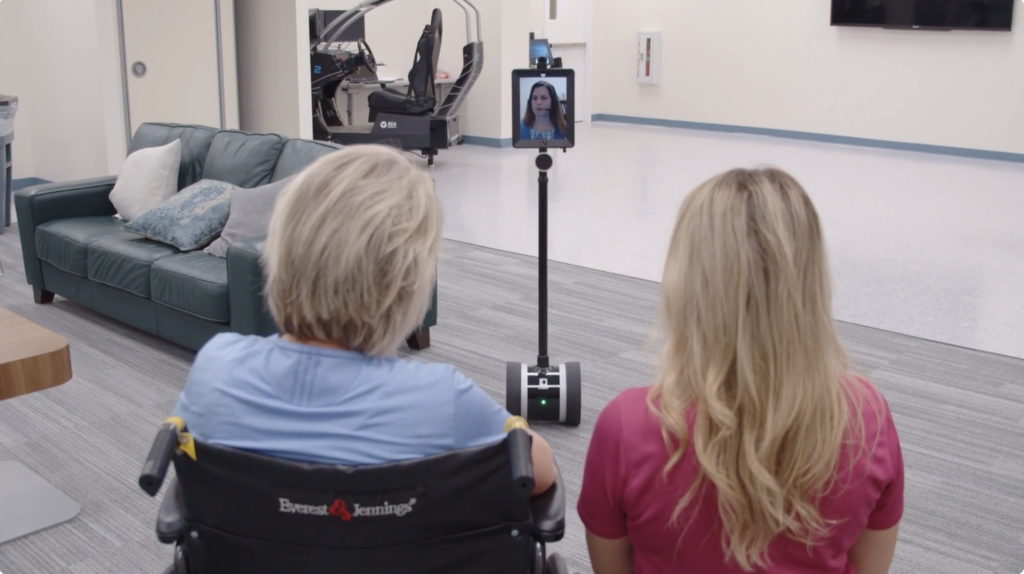
Introducing the Double Robot & Telehealth at the University of St. Augustine
A look at innovative learning technology at USAHS.
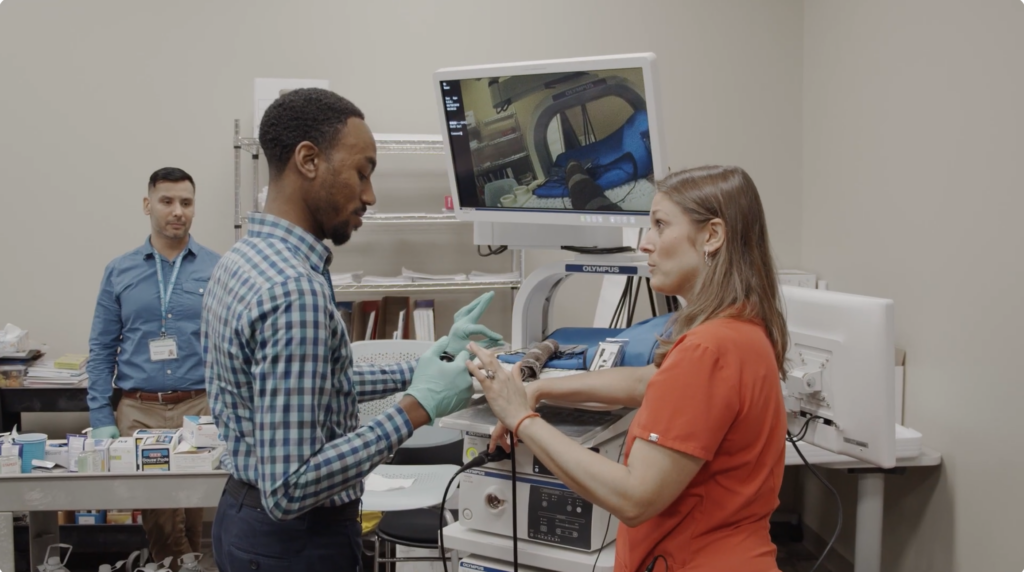
Innovation at USAHS – Endoscopy: F.E.E.S. and Videostroboscopy
A look at innovative learning technology at USAHS.
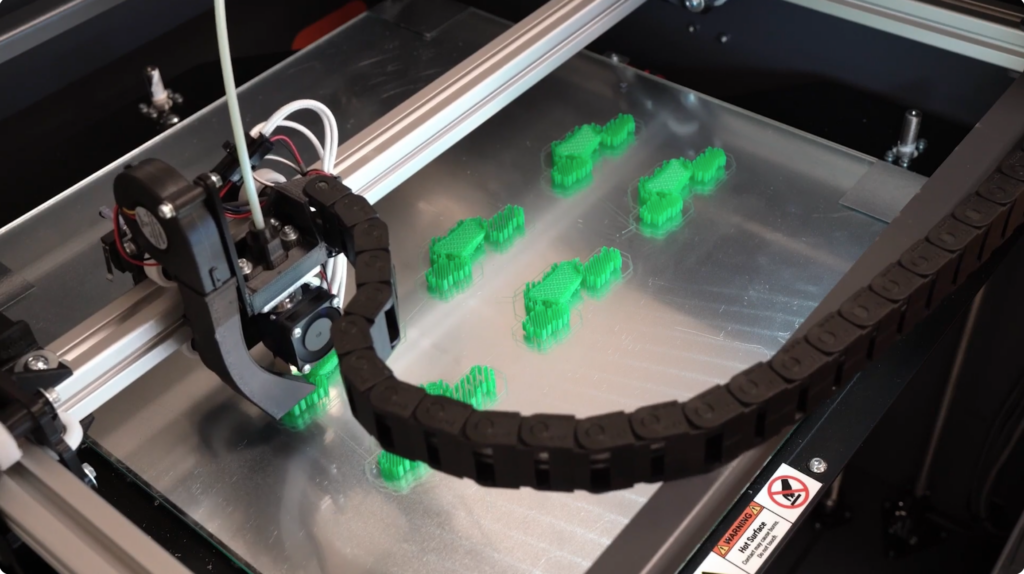
3D Printer and Scanner
A look at innovative learning technology at USAHS.