Lesley Khan-Farooqi — PHD, OTD, OTR/L — OT Faculty Profile, USAHS
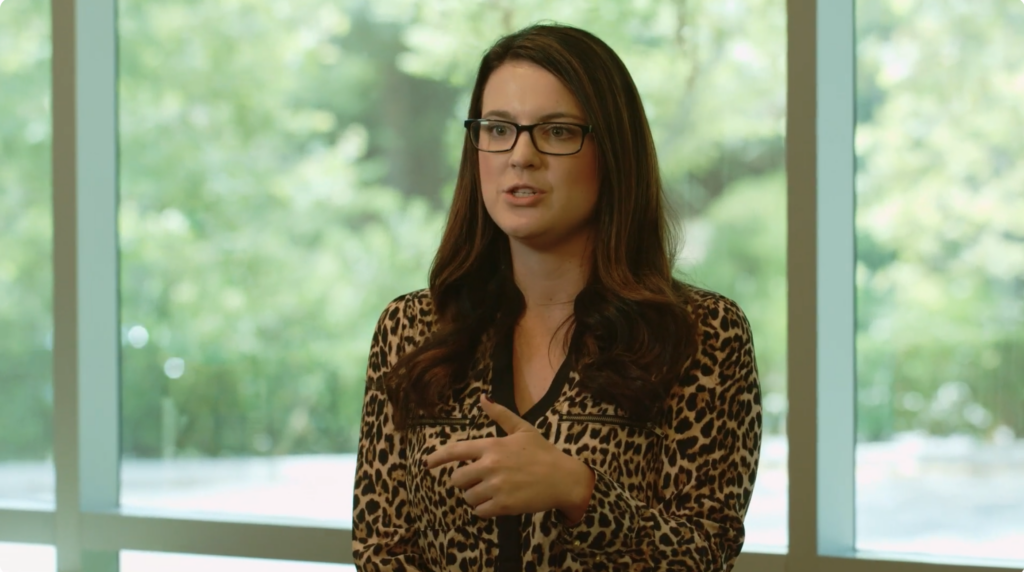
Get to know Lesley Khan-Farooqi, an occupational therapy faculty member at the University of St. Augustine for Health Sciences (USAHS), as she shares her clinical background, teaching experience, and perspective on the occupational therapy profession.
Lesley discusses the broad scope of occupational therapy and how practitioners help individuals return to meaningful daily activities by addressing physical abilities, mental health, and environmental factors. She also highlights her clinical experience in outpatient therapy and hand therapy, specializing in upper extremity rehabilitation and helping patients recover from injuries and surgeries.
The video also explores Lesley’s approach to occupational therapy education and the value of interdisciplinary collaboration. She shares her passion for mentoring students and highlights the connections between occupational therapy, physical therapy, speech-language pathology, and other healthcare disciplines at USAHS. She also discusses the role of simulation centers, hands-on lab experiences, and specialized learning resources in preparing future occupational therapists for clinical practice.
Transcript
Lesley Khan-Farooqi — PHD, OTD, OTR_L — OT Faculty Profile, USAHS
[00:00:00] Lesley Khan-Farooqi (OT Faculty): Occupational therapy is really an expansive field. Our goal is to work with an individual or a population to help them get back to doing or reengage in the- their daily activities or the things they like to participate in that. And sometimes we look at multiple aspects of the person and their environment, so it may be their physical ability, their mental ability other, you know, things that could be involved in the environment too to allow them to be successful to engage in the activities that they enjoy. [00:00:25] I’ve been, primarily been an outpatient therapist and I had a, had a certification in hand therapy, and that’s primarily the area that I worked with. So upper extremity rehab, it could be a broken bone or a cut tendon or nerve and helping people get back to their daily activities or back to work is a big thing after having surgery or injury. [00:00:43] Honestly, like, the, the students. I love teaching them. I love seeing them develop over time. We have amazing, like, faculty teams not just on the OT team, but interdisciplinary with physical therapy and speech and nursing on many campuses and SLP and soon to be PA. So it’s really, really a unique aspect of our program that we’re so interdisciplinary and we have those relationships with other health disciplines. So I think that is a huge advantage. Also think we have really, really nice facilities. We have an amazing IP simulation center. We have supplies necessary to do anything that we need to do in lab and really offer some unique experiences to our students as well as they’re going through the curriculum.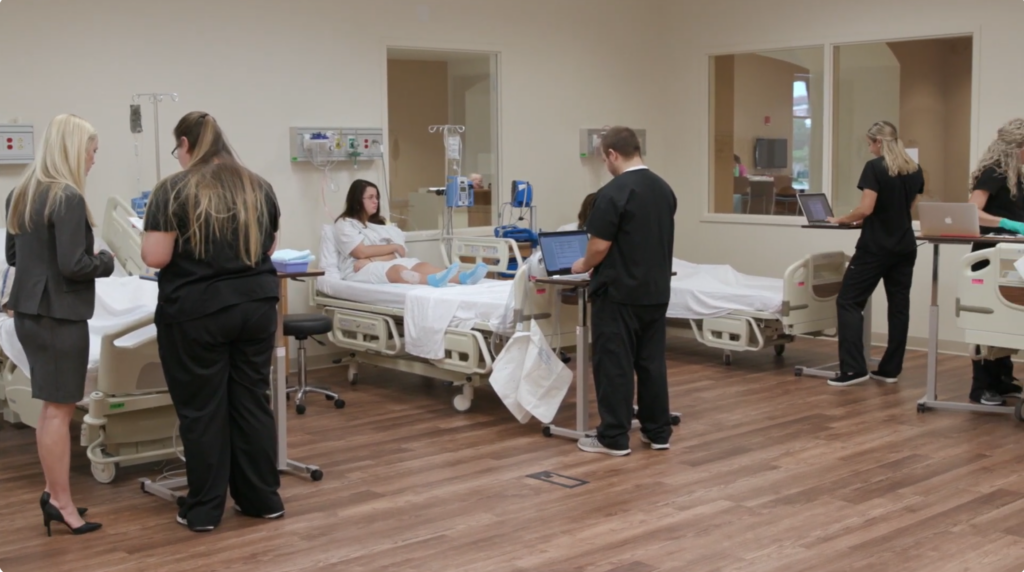
Center for Innovative Clinical Practice (CICP)—University of St. Augustine for Health Sciences
Students and faculty discuss learning in state-of-the-art simulation facilities.
Testimonial – Kaylee Saenz, Post-Professional OT Student
Hear from a student in the USAHS PPOTD program.
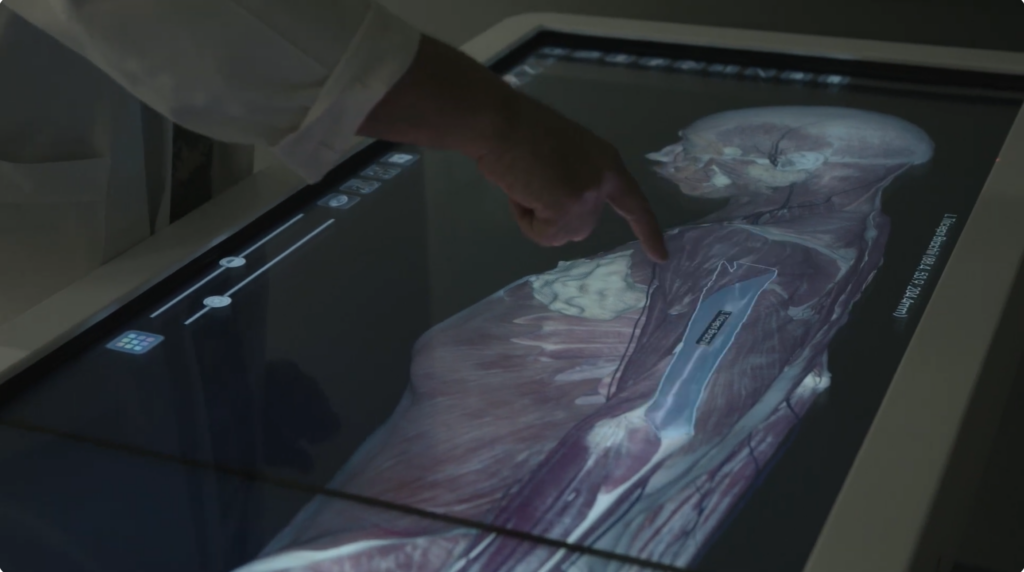
Innovation at the University of St. Augustine for Health Sciences – Anatomage Table
A look at innovative learning technology at USAHS.