
Creating Prosthetics Using a 3D Scanner — USAHS St. Augustine Campus
On a service mission trip to El Salvador, physical therapy faculty member Todd Bourgeois met a man with an amputation who needed a prosthetic limb to get back to work and support his family. Back at the University of St. Augustine for Health Sciences (USAHS) campus in St. Augustine, Florida, a team took on the project, using a 3D scanner and printer to create a custom socket.
Bremer Orthotics and Prosthetics, whose team includes Dr. Rick Coleman, who helps teach prosthetics courses on campus, reinforced the 3D-printed nylon socket with fiberglass for rural use, and a high-end prosthetic foot, connector plates and pylon were donated. The same scanner and printer already produce trach plates, bone models and full knee structures for simulation.
Transcript
Creating Prosthetics Using a 3D Scanner — USAHS St. Augustine Campus
[00:00:00] Todd Bourgeois (PT Faculty): Hi, my name is Todd Bourgeois, and I am a faculty member at the University of St. Augustine for Health Sciences. I’ve been doing service mission trips for about 10 years now, and this past year I went to El Salvador and came across an individual who had an amputation and needed some help. So we wanted to get him a prosthetic limb, and that’s not an easy thing to do. So reached out to the University of St. Augustine, which we have an awesome team here, and we decided to take this on as an awesome project. And well, here we are today, and we have now made a device, and we are planning to bring this to this individual in El Salvador to get him back into his community so that he can work and provide for his family where he is in this third world country. [00:00:59] Scott Love (PT Faculty): As the local prosthetic company named Bremer Orthotics and Prosthetics, they have a member of their team named Dr. Rick Coleman, who actually helps teach our prosthetic courses here at the campus. They reinforced the 3D-printed nylon socket that Michelle Roy played with some fiberglass material just to make it stronger due to the fact that we’re going to be a rural location in El Salvador, that we wanted to make sure that the socket was as strong as possible. They were kind enough between me and them, we donated a very high-end foot that might be cost like $5,000 in the public. This is donated, and they donated the connector plates and the pylon. So when Dr. Bourgeois goes down, all he’ll have to do is to cut the pylon to length for the patient, and we will have a gentleman who otherwise could not work and support his family to be able to now go back to work with the help of this socket. We hope to do this more in the future and hopefully open it up to other campuses and faculty members. [00:01:59] Mauricia Viana (USAHS): With the scanner, with the 3D scanner, you can get an a real life object, and you basically scan around the object. It creates … It takes pictures of that object and puts them together in the software so it creates a 3D model of the obj- the real life object that you’re scanning. [00:02:16] Michelle Roy (USAHS): We’ve printed so many unique objects across our campuses. Typically we print things such as task trainers like trach plates, which our standardized patients and students use when they’re simulating that they’ve been on a vent. We’ve 3D-printed metatarsals that go inside fingers and toes so that they can feel, you know, the areas and the markers that they need for digital blocks. We’ve printed actual full knees, knee bones, the entire bone structure that goes inside of knees. And then now our latest project is this 3D-printed socket, so that’s opening up a whole new world of adaptive equipment that we can, you know, start looking at providing and helping our students provide to clients. [00:03:00] Todd Bourgeois (PT Faculty): Okay, if we develop some maker space for the students this would give a lot of autonomy for the students to be creative and actually create their own projects. It’s actually really important for the process of learning, especially adult learning. I’m a big advocate for transformational leadership. I think that we should give people the power and resources to, to be who they need to be, to be who they need to be, to create what they need to create. And if someone doesn’t have the space or resources to do something, then they’re kind of limited by that. So if we provide them space, resources, and then fuel them with the energy and, and, you know, the, the problem-solving skills that we are teaching them on a current basis, and they have these devices that they can now provide a service to individuals out there that they may be bumping across in the community or, you know, coming across in any type of school-related project that we do community outreach, and I can see it helping quite a bit for pro bono clinic. [00:03:55] Then it won’t take, you know, a whole initiative of the university to, to actually make this happen. The students take the initiative to step into this space and, you know, solve a problem, create something that can be useful in the clinic for the patients, for the community. And I can tell you that I am the SPTA liaison, and they are always asking to do more projects. [00:04:17] They want to do more. They want to create more. They want to provide a service to the community on a regular basis, and sometimes I just don’t have anything to provide them to give them the tools to do it, and I think that this would be a fantastic opportunity for them to take that bull by the horns, no pun intended, but I’m a cowboy. That is what we do. It would be a fantastic opportunity for them to just take the initiative upon themself as an adult learner, which is what we strive to teach them at the University of St. Augustine, and let them create this on their own.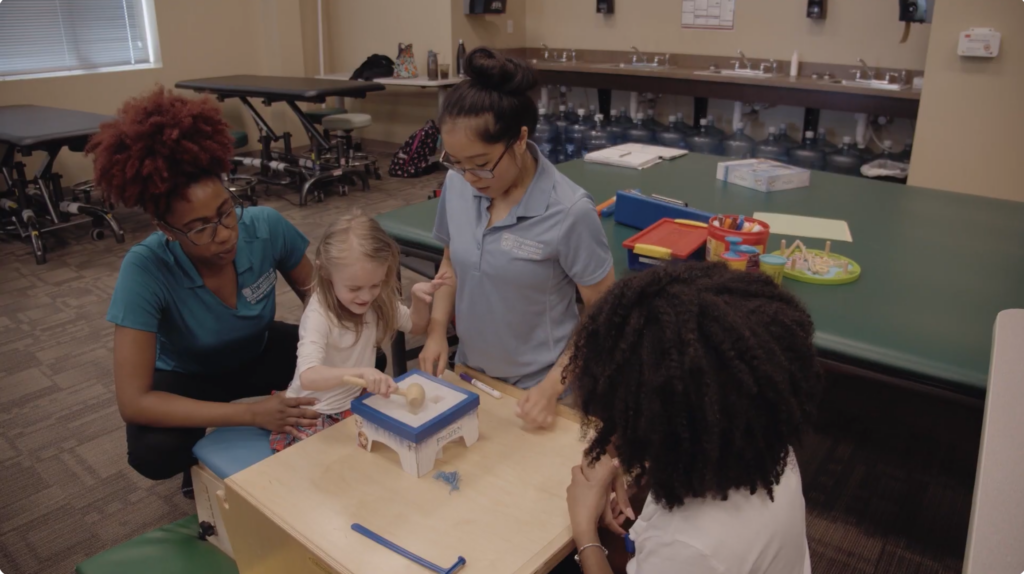
Pediatrics at the University for St. Augustine for Health Sciences
Learn how faculty prepare students for pediatric care.
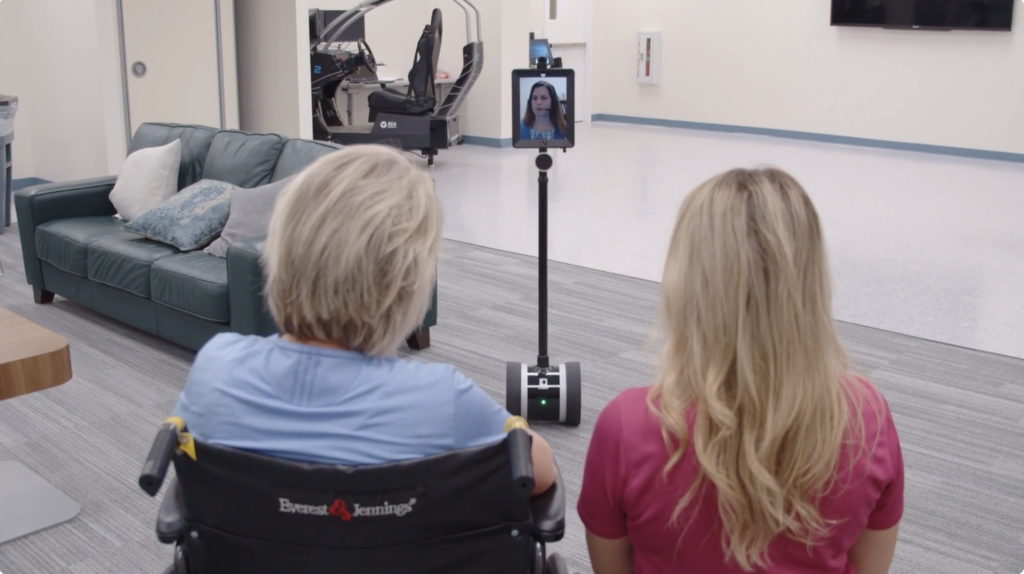
Introducing the Double Robot & Telehealth at the University of St. Augustine
A look at innovative learning technology at USAHS.
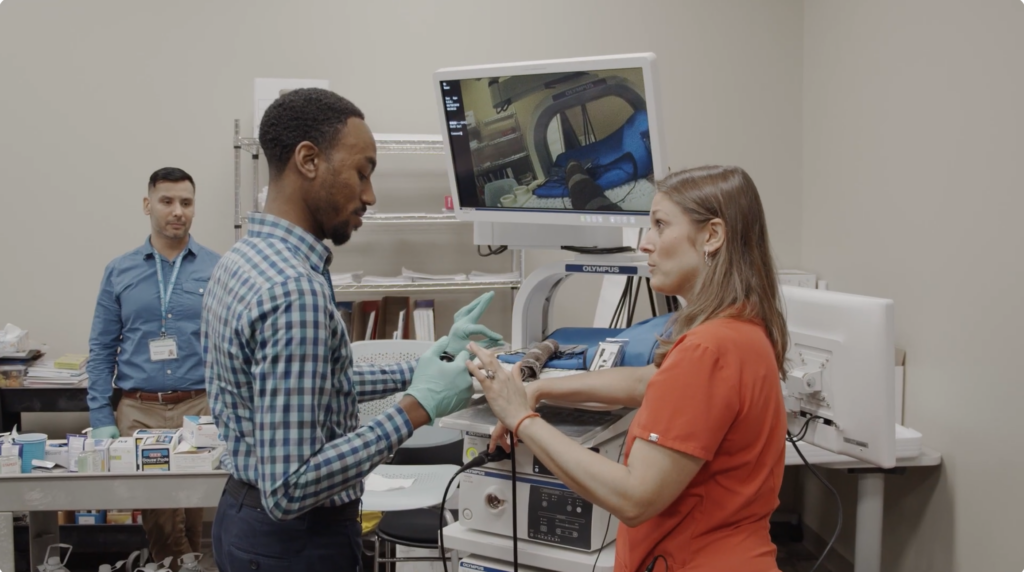
Innovation at USAHS – Endoscopy: F.E.E.S. and Videostroboscopy
A look at innovative learning technology at USAHS.