Introducing the Double Robot & Telehealth at the University of St. Augustine
Telehealth is an emerging area of practice, and the University of St. Augustine for Health Sciences (USAHS) uses the Double robot to bring it into simulation. Through the robot, remote practitioners, such as doctors, nurses or an occupational therapist from another country, can join a shared simulation space from any location.
The remote participant stays in control. The robot can be adjusted to meet at eye level, build rapport, and move around to watch how someone moves. For faculty like Deborah Ruediger, that means seeing students in action and feeling part of the interaction. OT student Natalie sees a patient benefit, too, since experts can see more patients and shorten waitlists.
Practicing with remote experts now prepares students for care teams that don’t always share a room and for a more global education.
Transcript
Introducing the Double Robot & Telehealth at the University of St. Augustine
[00:00:00] Natalie (OT Student): Telehealth is a really big emerging practice. [00:00:02] Kelly Lane (OT Faculty): Telehealth is a very emerging niche. We see the Double robot coming into play in several different ways. [00:00:06] Elisabeth McGee (USAHS): We are able to have a telepresence within simulations now, bringing in remote healthcare practitioners such as doctors, nurses, an OT from a different country. [00:00:17] Natalie (OT Student): Experts can come in and see more patients so no one’s on a wait list, as well as offer direct patient care in their expert field. [00:00:24] Kelly Lane (OT Faculty): And we want our students to be prepared and be on that cutting edge of technology where they’re comfortable interacting with someone who is remoting in. [00:00:32] Elisabeth McGee (USAHS): You can remote into the robot from any location, and they’re able to come into a shared simulation space and participate. [00:00:40] Kelly Lane (OT Faculty): Using the robot actually allows the person who’s consulting to be in control. I can drive up, I can look in front of you, I can talk to you and form a rapport. I can move the robot up and down so that we’re on the same level. And then if I want to see how you move, I can move around to the side of you and ask you to move your arms or your legs or do different motions. [00:00:58] Deborah Ruediger (OT Faculty): And truly see the student in action, and really see the environment and actually feel part of that, that interaction. [00:01:06] Kelly Lane (OT Faculty): Having this innovative piece of interactive technology will allow students to collaborate with experts in the field that may not be there with them. [00:01:14] Deborah Ruediger (OT Faculty): And actually provide a more global education for our students. [00:01:19] Natalie (OT Student): Having those international professionals come in will actually help treat our patients a little bit better. [00:01:24] Deborah Ruediger (OT Faculty): I really see the potential in every aspect of healthcare and education.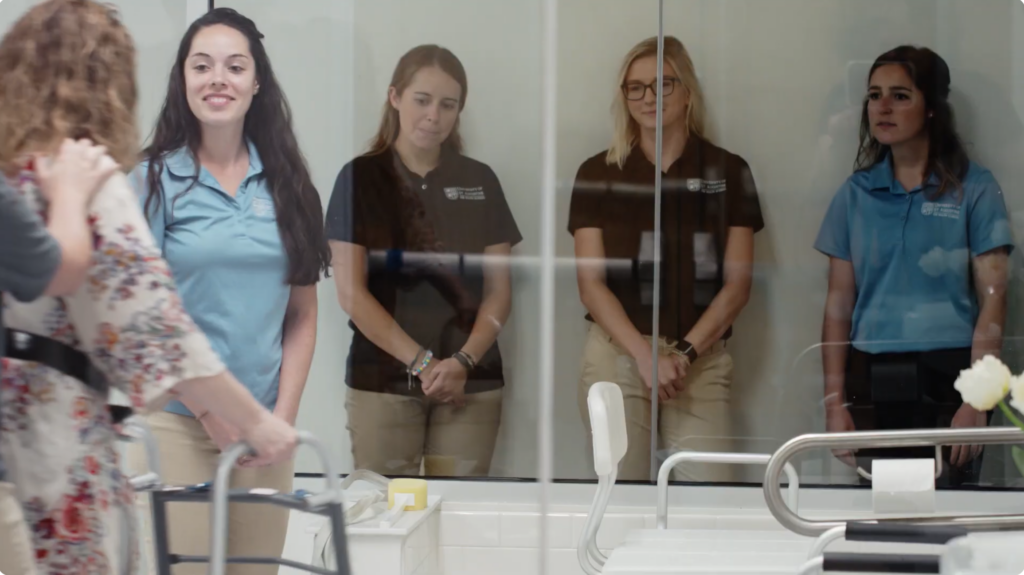
OT Students Practice ADL Skills with Mock Patients in Simulated Home — USAHS
Students and faculty discuss learning through realistic OT simulations.
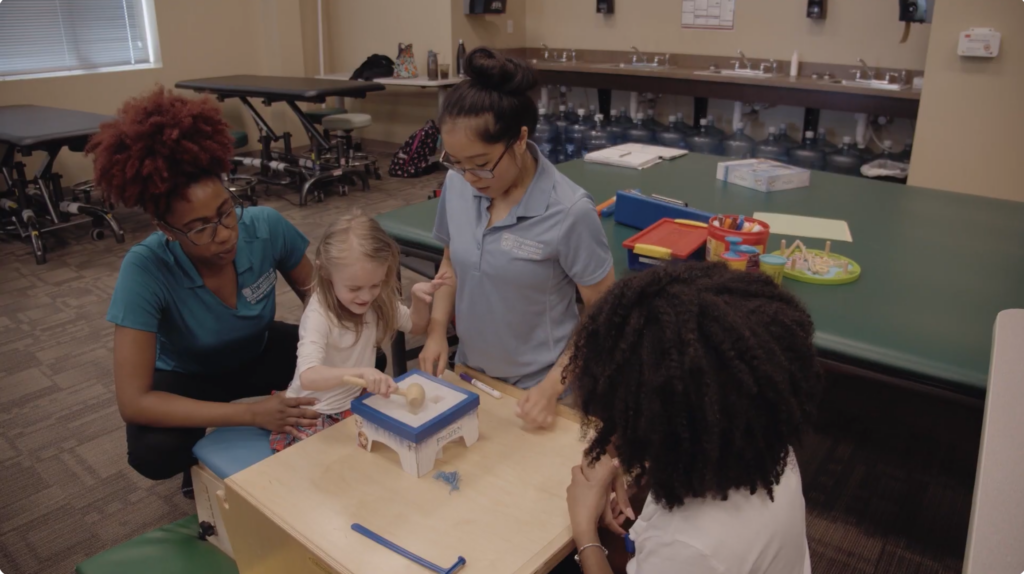
Pediatrics at the University for St. Augustine for Health Sciences
Learn how faculty prepare students for pediatric care.
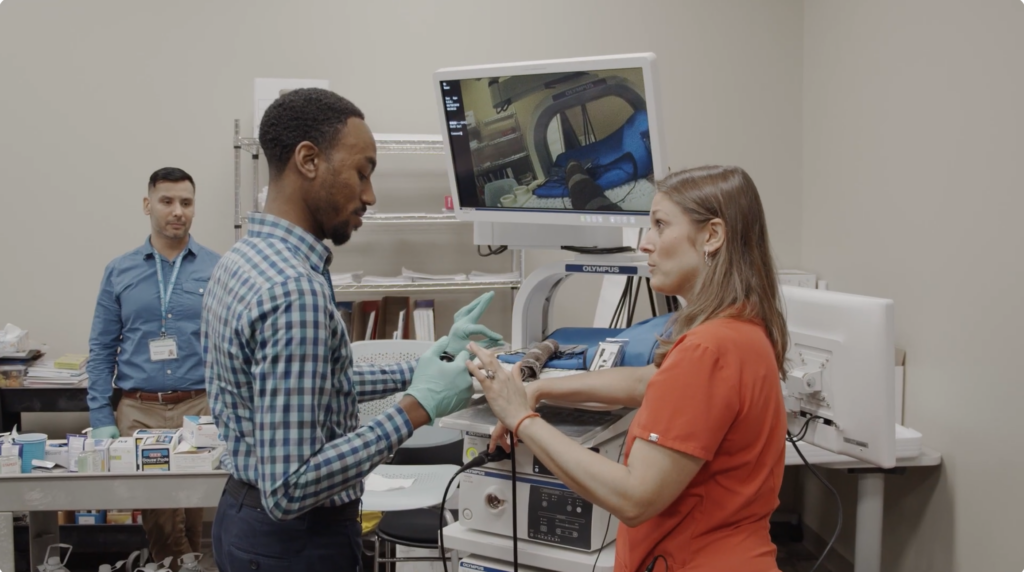
Innovation at USAHS – Endoscopy: F.E.E.S. and Videostroboscopy
A look at innovative learning technology at USAHS.