Pediatrics at the University for St. Augustine for Health Sciences
Explore how the University of St. Augustine for Health Sciences (USAHS) incorporates pediatric occupational therapy experiences into its occupational therapy curriculum. Faculty members share how students gain practical experience working with children and families through a campus-based pediatric clinic, where they learn to evaluate individual needs, develop intervention plans, and implement therapeutic activities under faculty supervision. These experiences provide students with opportunities to apply classroom concepts while making a meaningful impact in the community.
The video also highlights the role of play in pediatric occupational therapy and how therapeutic activities help children develop important skills related to independence, learning, physical development, and social participation. Faculty discuss the value of combining hands-on instruction and simulation to prepare occupational therapy students for working with pediatric populations in clinical settings.
Transcript
Pediatrics at the University for St. Augustine for Health Sciences
[00:00:00] Gina Benavente (OT Faculty): It’s a give back for sure. And we have families that have come to us now for years where they just loop in and they come to every single one of our sessions every trimester, and we’ve seen their children grow. Many of them no longer have insurance, so they don’t have occupational therapy options in the community. So we provide that missing piece for them. What I’ve done on this campus is create a mock clinic. So we created an outpatient clinic. [00:00:32] Angela Blackwell (OT Faculty): Families volunteer to bring their children in, children that have some identified need, occupational therapy need, and the students have a opportunity to evaluate the children, interview the parent, and then develop an intervention plan, and then they implement that intervention plan over the course of several weeks. And as their mentor, it’s really gratifying to see them accomplish what they, what they set out to do. [00:00:58] Gina Benavente (OT Faculty): That is part of my pediatric interventions course, and we not only have to instruct all the content for peds interventions for occupational therapy, but we now have to embed their level one fieldwork experience within that. I think we’re straddling between pro bono and simulation, and we have a very unique approach here. We really place high value on that student experience. [00:01:22] Angela Blackwell (OT Faculty): This is, you know, real people that they can have an impact on. One little boy learned to tie his shoes, and his mom left, left to say goodbye to us and said, “Next pair of shoes I buy for him, you know, I’m going to buy shoes with ties.” And, you know, he was a little bit of an older boy. I looked at the students and we gave a high five, like, “Yes, you know, you guys did that. You know, that wasn’t something that he could do before he came, and now he can.” It becomes very real for them from sitting in the classroom and us teaching them things to now this is actually happening and I’ve gotta put together the pieces of the puzzle. [00:01:55] Gina Benavente (OT Faculty): I’m a pediatric clinical specialist, so for me the occupation of a child is to play, is to learn, is to physically grow and develop, and to be independent with their own ability to care for themselves, and to socially participate and engage in their world. Most people look at an OT session and they think, “Oh, you’re just playing.” Well, we are, and that’s beautiful. If you think we’re just playing, then we’re doing our jobs. Because in the context of what should be natural and typical and the primary occupation of a child, play, we are therapeutically very methodical in how we introduce those activities, how we transition to new activities, what we’re asking of that child, the demands. And so really if you think we’re just playing with that child, we know we’ve done our job. [00:02:40] Angela Blackwell (OT Faculty): It’s one of my favorite parts. [00:02:42] Gina Benavente (OT Faculty): It’s been amazing. It’s actually been amazing.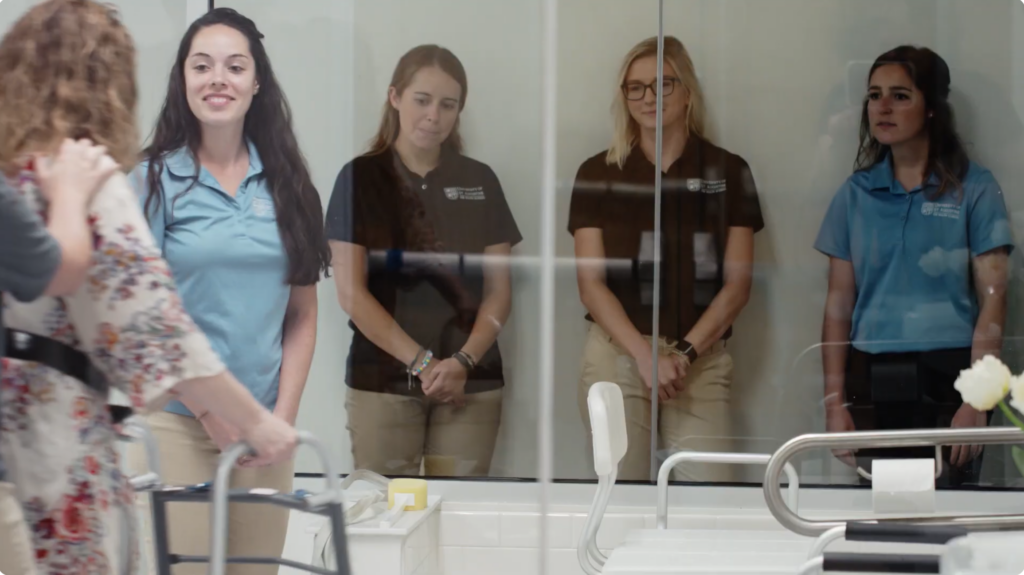
OT Students Practice ADL Skills with Mock Patients in Simulated Home — USAHS
Students and faculty discuss learning through realistic OT simulations.
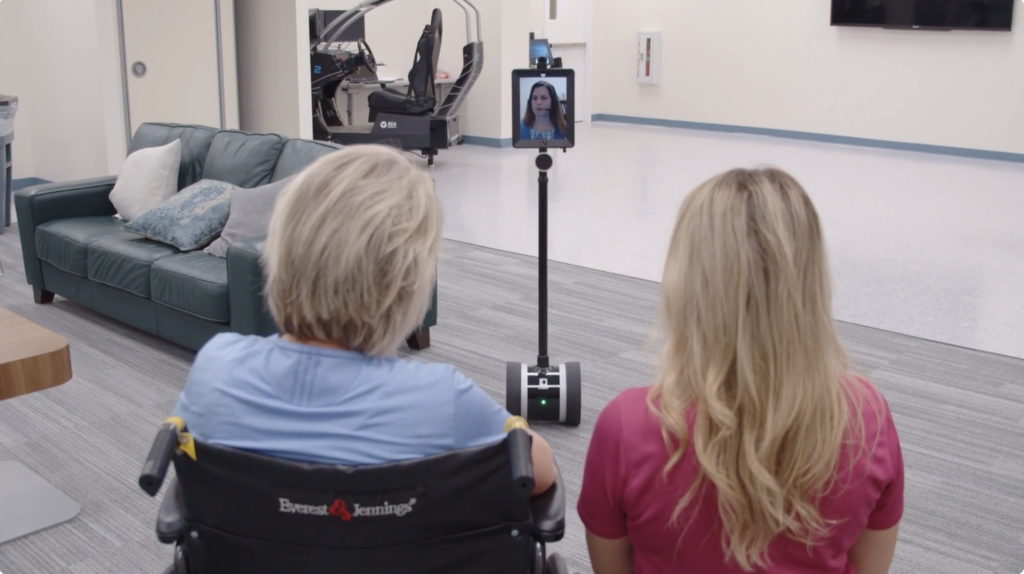
Introducing the Double Robot & Telehealth at the University of St. Augustine
A look at innovative learning technology at USAHS.
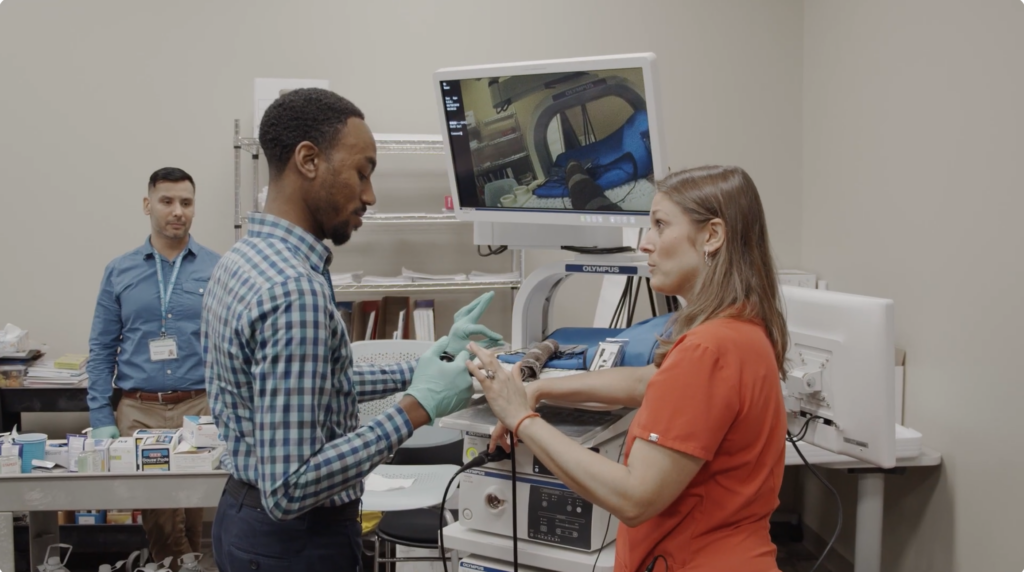
Innovation at USAHS – Endoscopy: F.E.E.S. and Videostroboscopy
A look at innovative learning technology at USAHS.