Innovation at the University of St. Augustine for Health Sciences – Anatomage Table
The Anatomage table gives occupational therapy students at the University of St. Augustine for Health Sciences (USAHS) a new way to learn anatomy, and Jose Rafols, program director of the OT program at one of the university’s newer campuses, sees uses well beyond that. The table serves as a teaching and reference tool, from muscles and soft tissues to bony anatomy.
Students can tag structures, quiz themselves, save their work to a USB drive and practice again at home, which should speed the transition to the wet lab. Just as important, the table lets the program give Flex students the same experience as those on campus, supporting a hybrid, blended curriculum where on-ground learning carries over to students in remote areas.
Jose Rafols sees it as technology that will grow with the program’s needs rather than a one-time addition, useful context for anyone weighing a Flex format.
Transcript
Innovation at the University of St. Augustine for Health Sciences – Anatomage Table
[00:00:00] Jose Rafols (USAHS): I’m Jose Rafols, the program director of the occupational therapy program here at the University of St. Augustine in Miami. We’re a new campus to its listing of campuses, and I’m here to talk a little bit about the anatomage table and what this capability can give us in terms of, uh, giving a new experience to our students. [00:00:31] This particular anatomage table is going to help us integrate a lot of information into our curricula. Not just anatomy, mind you, but just about everything that we have here. And the way we envision using it is as a teaching tool, so as a good reference tool for people to learn, you know, what the muscles are, what the soft tissues are, all the way down to the bony osseous anatomy, um, and translate that knowledge to the wet lab. [00:01:01] We feel that this particular table is going to allow them to make that transition much quicker. The table gives us the ability to tag structures so they can go and query themselves and learn about these structures and then save it in a USB thumb drive, and take it home and practice again. And then most importantly, we feel that this table is going to allow us to provide the same experience to our flex-based students a-and, and allow them to learn in the same format. [00:01:31] And certainly, our high-level connectivity and our use of these educational platforms will get us there. We are proud to say that we have a hybrid or blended curricula. To be able to really put teeth into that is to allow all the things that we do here on ground to translate seamlessly to our folks that are in remote areas. I see tremendous latitude with this table. It’s not a one-and-done technology. It will grow with our needs, and certainly I see great things coming from this.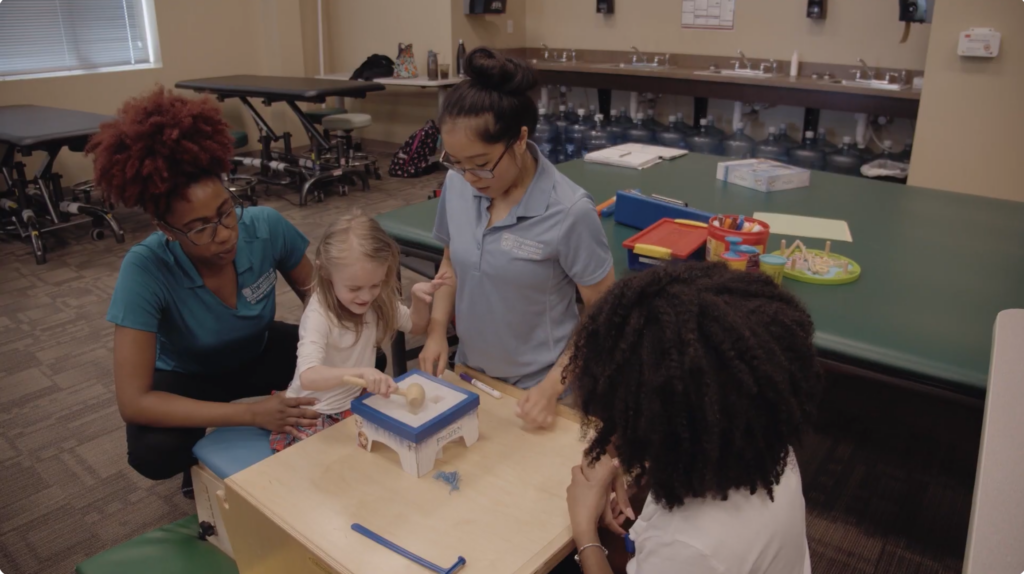
Pediatrics at the University for St. Augustine for Health Sciences
Learn how faculty prepare students for pediatric care.
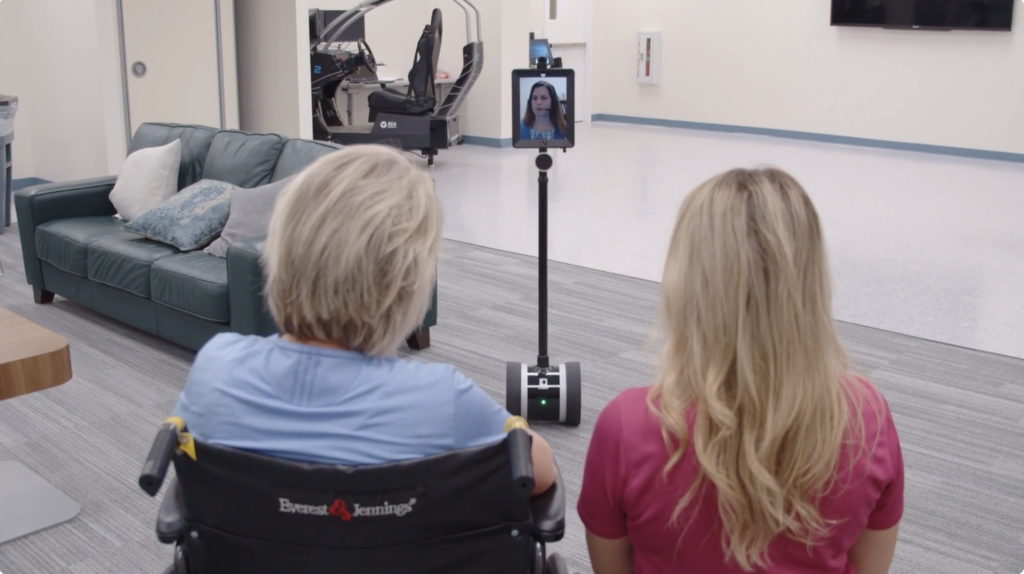
Introducing the Double Robot & Telehealth at the University of St. Augustine
A look at innovative learning technology at USAHS.
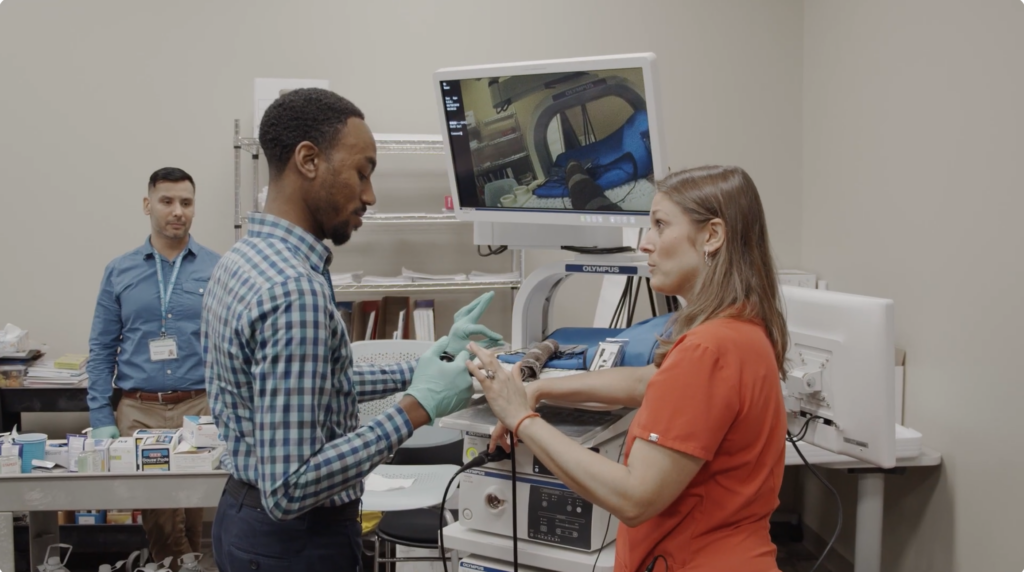
Innovation at USAHS – Endoscopy: F.E.E.S. and Videostroboscopy
A look at innovative learning technology at USAHS.