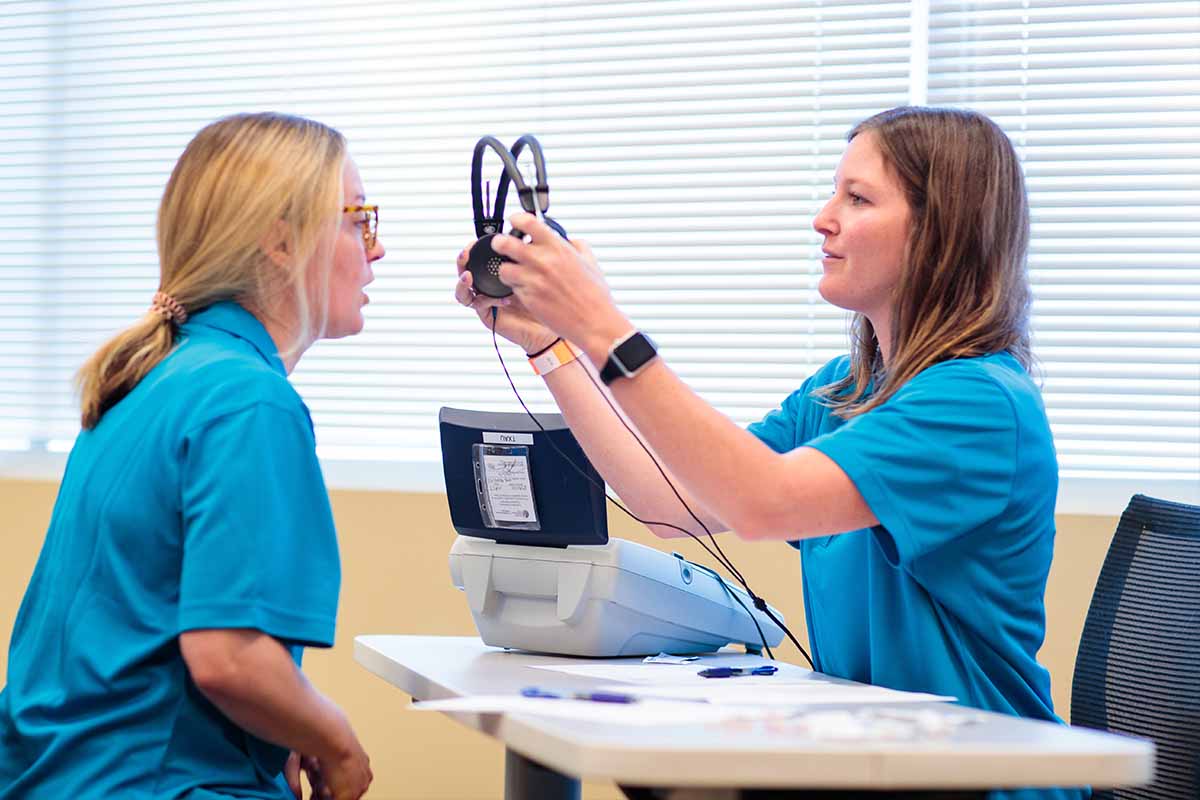


In your rewarding career as an occupational therapist (OT), you will help people get back to doing the activities that give their lives meaning. With a wide range of occupational therapy specialties, job opportunities span a variety of work environments. It’s a thriving profession, with 11% growth projected from 2023 to 2033.1
When interviewing for your first occupational therapy (OT) position, you will describe your education, clinical experience and skills. Occupational therapy interview questions can be nerve-wracking, so it’s important to prepare well. Let’s review common occupational therapy job interview questions and tips to help you answer them with confidence. For those applying to entry-level graduate programs, we’ve included OT interview questions that admissions staff might ask in the interview.*
How to Prepare for Your OT Interview
Whether you are applying for a job position or promotion or are pursuing a degree program, preparation is key. Ask about the interview format—will it be one-on-one or panel style? This will give you an idea of the conversational structure. Consider making a list of key points when faced with occupational therapy school interview questions.
Although occupational therapists work with patients across a range of demographics and conditions, focus on the qualities and skills you have that best align with the patients you would serve in this position. Ask a friend or colleague to role-play occupational therapy interview questions and answers with you. Performing a mock interview beforehand can help you relax and practice answering the occupational therapist interview questions with clear, strong responses.
General Occupational Therapy Job Interview Questions2
While most job interviews consist of standard questions about character and work ethic, it’s a good idea to research common occupational therapy interview questions you might encounter for OT positions. Here are the most common interview questions for occupational therapist jobs, sample answers and tips for talking points.
1. Why are you interested in pursuing a career in OT?
You will likely be asked occupational therapy interview questions like this to determine your seriousness and commitment to this position. An OT candidate may ultimately envision a creative career in the industry and may see the immediate position as just a stepping stone.
When answering, explain what you most enjoy about occupational therapy and describe the emotional connection that draws you to the field. Recount an experience that shows your desire to help others—one that showcases the skills, knowledge and professionalism you bring to the role.
2. What qualities and skills do you possess that will make you a good occupational therapist?
Since you probably will have listed your skills on your resume and cover letter, managers will ask OT interview questions like this to gain more insight. A good rule of thumb is to tailor your response to the requirements in the job description. You might describe the unique strengths or skills you offer for this role, as well as areas where you anticipate needing additional support or development.
For example, if you were working with people with disabilities, you might share an experience when you improvised an assistive device for a patient. This would show the hiring manager your creative problem-solving abilities. Or if your clients are children, you might share an experience that showcases your capacity to communicate with and engage young people.

3. How would you handle a situation with a difficult patient or their family member?
Once you’re hired, you will represent your employer, so it’s not unusual to get occupational therapist interview questions like this. First, reassure the hiring manager that you will follow the facility’s training and guidelines. You might share how you would advocate for the value of occupational therapy, including how you would approach the conversation and effectively communicate your message.
Then, try to frame your response in positive terms. Explain how you would handle the situation, such as:
- Assessing the patient’s emotional and physical state
- Maintaining clear communication and relaxed body language
- Sharing your willingness to help the patient
- Encouraging conversation to help defuse the situation
4. How do you deal with an overwhelming workload?
In this case, the interviewer will want to see how you manage a high patient caseload or a hectic day on the job.
When answering occupational therapist interview questions like this, assure the interviewer that you can remain professional and calm during stressful situations. Give examples of times when you’ve handled heavy workloads, such as taking on the work of an absent colleague and your coping mechanisms for stress during busy days.
5. Tell me about a time you needed to advocate for occupational therapy.
This is one of the common occupational therapy questions interviewers ask to better understand your passion for the profession and enthusiasm for the position.
There are many ways to advocate for occupational therapy. For example, during your clinical rotations, you may have encountered a patient receiving physical therapy to help them regain mobility following an injury—but who also needed occupational therapy interventions to help them resume the activities that give their life meaning. If you recommended OT in this or a similar situation, that is advocacy.
6. Tell us about a time you made a difference in someone’s life.
This is another one of the most common OT interview questions managers ask to get a sense of your passion for the job. Having empathy for patients is an important aspect of the OT profession, and your response can exude that quality.
In your answer, reflect upon a patient or colleague with whom you made a strong personal connection or who left a lasting impression.
7. What is your greatest strength, and your greatest weakness?
When interviewers ask this question, they want to see your transparency and openness to growth and improvement. Discussing a weakness may take some thought, as you don’t want to dissuade the interviewer from hiring you.
Your response is an opportunity to highlight your achievements as an OT and how you’ll be an asset to the team. You can frame your weakness in terms of certain clinical skills you would like to further develop, such as skills you would need to practice occupational therapy in acute care or the setting relevant to this job.
8. What is your experience in this type of setting?
With interview questions for occupational therapist jobs such as this, the employer wants to gauge your ability to hit the ground running in their work environment.
In your answer, demonstrate your readiness to perform in that setting and your willingness to adapt. You can list examples of when and how you worked in similar settings. Also consider related experiences that highlight your capabilities, such as volunteering or caregiving.
9. How would you establish goals for a patient?
Interviewers may ask OT interview questions like this to explore how you will set goals for each patient and monitor their progress.
Explain the steps you would take to set appropriate treatment goals, offer support when needed and keep the patient engaged.

10. Tell me about a time when you felt proud to be an OT.
Interview questions for an occupational therapist often include this topic to gauge your passion for the profession.
Tell the interviewer about a situation that gave you a sense of accomplishment, such as when you advocated for occupational therapy, created an adaptive device or helped a patient overcome a challenge.
11. Do you have any questions for us?
At the end of your interview, you’ll often get this question. It’s one of the most common occupational therapist interview questions because it turns the tables: it gives you a chance to learn more about the position and show your desire to be a team member.
It’s a good idea to prepare at least a few OT interview questions to ask the interviewer, to ensure the job aligns with your career goals.
Occupational Therapy Graduate School Interview Questions3
If you’re applying to an OT graduate program, such as a Master of Occupational Therapy (MOT) or Doctor of Occupational Therapy (OTD) degree program, interview preparation is equally important.* You should also know how to write a statement of purpose, as this is a part of the application process. Below are OT interview questions and answers you can expect during the admissions process.
12. How would you define occupational therapy to someone who has never heard of it before?
Program directors may ask occupational therapy interview questions such as this to gauge your basic knowledge of a field that is often misunderstood.
In your answer, consider using examples of how OTs can help patients return to the activities that are meaningful to them and that are necessary for independent living. Convey the value you see in the profession.
13. What are your most meaningful occupations?
The interview may ask this as a follow-up question to make sure you can define occupation.
When preparing for occupational therapy interview questions and answers, talk about hobbies, art practices, sports and other activities that are important to you. Consider mentioning activities of daily living (ADLs) that are meaningful to you, as well.
14. What is the difference between occupational and physical therapy?
While some skills and responsibilities overlap, there are distinct differences between the job descriptions of physical therapists and occupational therapists.
In your answer, describe the types of patient problems that each professional works with, the interventions they provide and the differing treatment goals they have. Explain why OT best aligns with your personal interests and career aspirations.
15. Do you have any experience with OT fieldwork? If so, what did you learn?

Some candidates may have completed fieldwork in an associate or bachelor’s degree program in OT. If you have fieldwork experience, recount a story about helping a client or learning from a mentor or peer when preparing for OT interview questions and answers in your admissions process.
16. What is your biggest accomplishment?
The interviewer may ask occupational therapist interview questions like this to get a sense of your personality and values.
Your answer is an opportunity to showcase your discipline, perseverance and dedication to your goals. Graduate school is challenging, and you want to show the program director you can excel.
17. Why have you chosen this school and program?
Many interviewers check if candidates have researched the school and OT program. If the program has a limited number of seats, they want to make sure they’re filling spots with students who are genuinely interested in the school and earnest about attending.
In terms of occupational therapy interview questions and answers, think about what sets this OT program apart from others. Consider mentioning a few facts you’ve learned about the program throughout the interview and what most impresses you.

Additional Interview Tips and Resources
Now that you’re familiar with common OT interview questions and answers, consider the following tips:
- Study the occupational therapy interview questions and rehearse your responses with a friend or trusted colleague who can provide honest feedback.
- Prepare professional attire for the interview. You can check with the recruiter about the company dress code to help plan your outfit.
- Arrive at the interview location a half hour early to compensate for any traffic delays. Try to relax and get adjusted to the environment.
- Send a thank-you email to your interviewer within 24 hours after the interview. Mention insightful talking points and reiterate your interest in the position.
You can also check out career advice websites like The Muse and Indeed for additional tips on interview preparation and job resources.4, 5
Occupational therapy is a rewarding profession where you can make a positive impact on patients of all ages. For more information about launching your career in OT, explore our occupational therapy degree programs.
*The University of St. Augustine for Health Sciences’ (USAHS) OT programs do not require interviews as part of the admissions process.
The University of St. Augustine for Health Sciences (USAHS) offers hands-on Master of Occupational Therapy (MOT) and Doctor of Occupational Therapy (OTD) degrees. Join a collaborative cohort of peers who learn under the mentorship of expert faculty-practitioners. Practice with mock patients in our state-of-the-art simulation centers and learn anatomy with our high-tech tools. Prepare for clinical practice with patients across the lifespan, as well as advanced roles in research, practice leadership, and policymaking. Residential (online coursework + in-person labs on weekdays), Hybrid Immersion** (online coursework + on-campus labs held periodically during the trimester) and Flex (online coursework + in-person labs on weekends) formats are available.
**The Hybrid Immersion format for the MOT program is offered on the San Marcos, CA; St. Augustine; FL, Miami, FL and Dallas, TX campuses.
Sources
- U.S.Bureau of Labor Statistics, “Occupational Therapists,” BLS, April 18, 2025: https://www.bls.gov/ooh/healthcare/occupational-therapists.htm.
- “Mock Interview Questions,” Career Center, AOTA, 2025, https://www.aota.org/career/career-center/mock-interview-questions.
- Curtis, K. “OT School Admissions Interviews: How to Impress,” EduMed, April 12, 2023, https://www.edumed.org/resources/how-to-ace-the-ot-admissions-interview/.
- The Muse Editors, “30+ Best Tips on How to Prepare for a Job Interview,” The Muse, May 1, 2025, https://www.themuse.com/advice/the-ultimate-interview-guide-30-prep-tips-for-job-interview-success.
- Indeed Editorial Team, “Tips to Writing a Thank You Email After an Interview (With Examples),” Indeed, February 20, 2025, https://www.indeed.com/career-advice/finding-a-job/thank-you-email-after-interview.