
At the University of St. Augustine for Health Sciences (USAHS), we are constantly reimagining healthcare education. By integrating cutting-edge technologies that enhance learning, we prepare students of all disciplines for the ever-evolving future of healthcare. From high-fidelity simulation centers to virtual reality (VR) experiences, we are shaping the next generation of healthcare professionals through innovative, hands-on learning methods.
Simulation Centers: Preparing Students for Real-World Scenarios
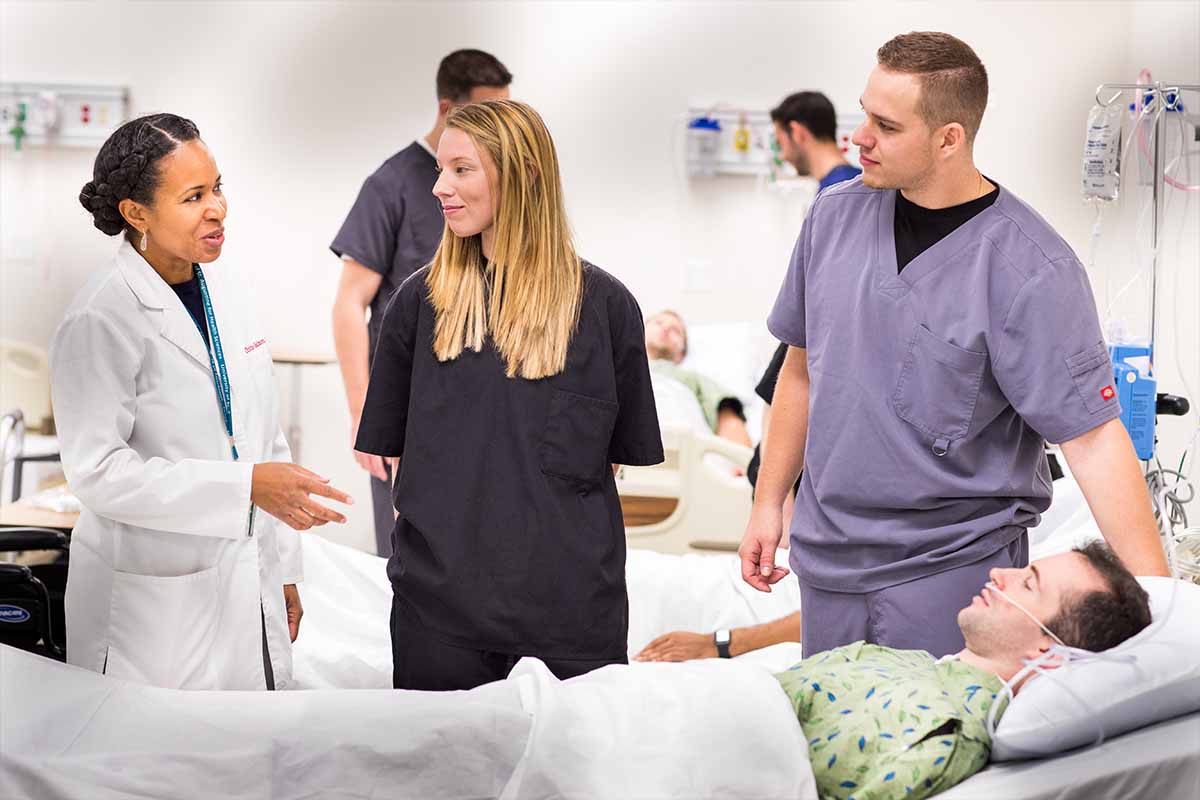
One of the cornerstones of our technological advancements is the Clinical Integrated Learning and Practice (CICP) spaces on each campus. These high-fidelity simulation centers provide students with life-like clinical environments where they can interact with patient actors, assess vital signs, and make critical decisions in real time—all while receiving immediate feedback from faculty.
For example, students may assess a patient in a hospital bed, monitor their heart rate and oxygen saturation levels, and respond to various clinical scenarios. These simulated environments allow students to practice high-pressure situations, such as those they may encounter during fieldwork, in a safe and controlled environment. “This innovative space is critical to ensuring the success of our students,” says Elisabeth McGee, PhD, DPT, Senior Director of Clinical Learning and Innovation.
The simulation centers have streaming and recording technology, allowing faculty to review sessions in fine detail. This enables students to reflect on their performance, improve, and fine-tune their skills for future real-world encounters.
Generative AI and Virtual Simulations: Bridging Communication Gaps
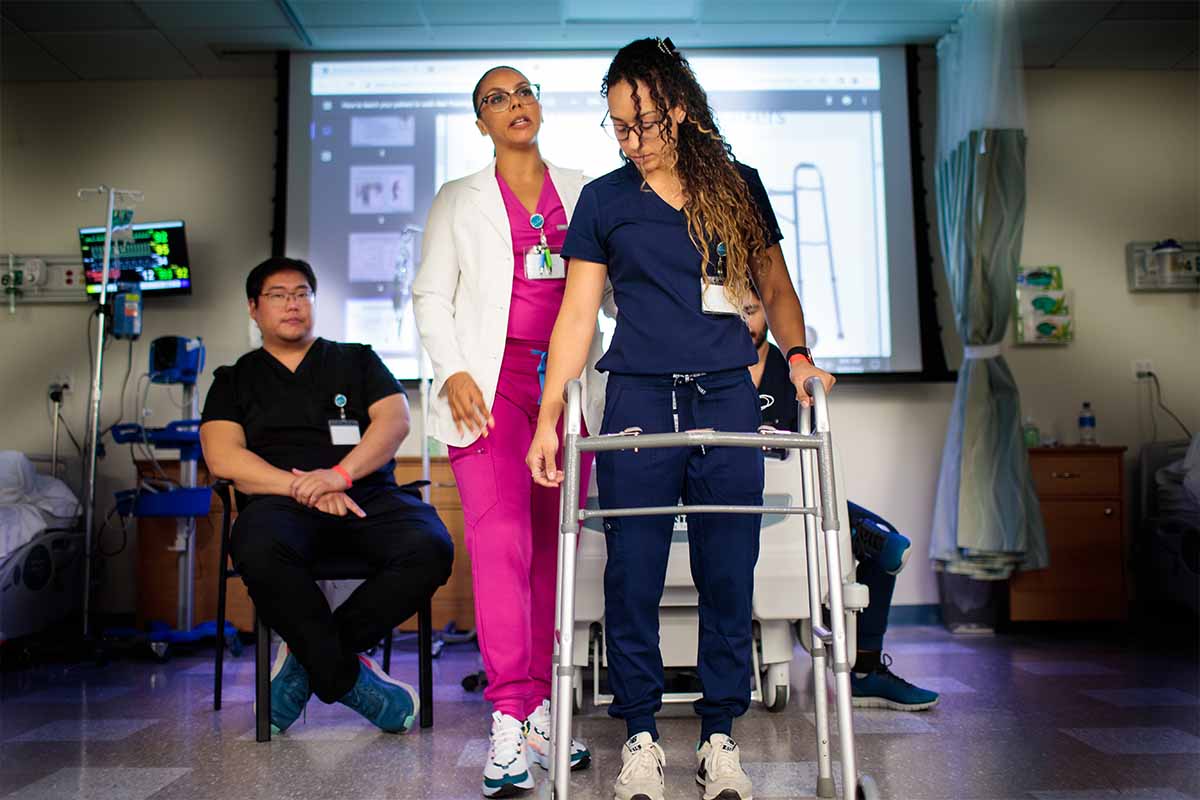
In addition to in-person simulations, USAHS is pioneering virtual simulation powered by generative AI. This innovative approach helps students develop essential communication skills, especially in challenging situations. For instance, healthcare students can engage with AI chatbots in clinical scenarios where they must explain complex procedures to a patient, such as assisting someone with limited mobility in getting out of bed.
The AI system adapts based on the student’s response, providing real-time feedback and allowing the student to practice positive listening and goal-setting. “Leveraging AI allows us to create realistic, personalized scenarios that help students navigate the nuances of patient communication,” explains Dr. McGee.
Telehealth and Electronic Health Records: Real-World Experience in Pro Bono Clinics
In our pro bono clinical experiences, students gain hands-on experience in providing patient care and familiarize themselves with essential healthcare technologies such as telehealth platforms, electronic medical records, and home exercise portals. These tools allow students to practice remote patient monitoring, documentation, and facilitate telehealth sessions, which are becoming increasingly vital in today’s healthcare landscape.
USAHS is also piloting augmented reality (AR) technology in clinics on its Florida campuses. This cutting-edge technology supports motion analysis, remote patient monitoring, and gamification, allowing students to enhance patient engagement through immersive experiences.

Innovation Hubs: Fostering Creativity and Problem-Solving
Our Innovation and Creation Hubs are a testament to our commitment to innovation. Equipped with 3D printers and virtual reality systems, these hubs allow students to design and create solutions that meet the needs of real-world patients. Recently, USAHS launched the Student Innovators Competition, where students use their newfound skills in 3D printing to develop innovative medical devices or technology solutions.
The competition encourages students to apply their knowledge to problem-solving, patient-centered solutions, and optimizing health outcomes. It also fosters creativity and critical thinking.
Virtual Reality for Neurological Rehabilitation: Enhancing Patient Outcomes
One of the most exciting applications of VR at USAHS has been its integration into neuro-rehabilitation. Assistant Professor Amie Marie Jasper, PT, DPT, PhD and her students introduced VR into treatment sessions for DeDe, a patient recovering from a spinal cord injury. With the help of VR, students could simulate horseback riding, an activity DeDe was passionate about before her injury.
“Virtual reality is an evidence-based intervention for spinal cord injury patients, and we encourage our students to become evidence-based practitioners,” says Dr. Jasper. Using VR, students could gradually introduce DeDe to new movements, helping her overcome dizziness and build confidence in her recovery. DeDe has shown significant progress each semester, and the students have gained invaluable experience in adapting technology for real-world patient care.
Shaping the Future of Healthcare
Integrating technology into the classroom and clinic at USAHS is not just about enhancing student experiences—it’s about preparing them to be leaders in the future of healthcare. From virtual simulations to 3D printing, our students are learning to leverage technology to solve complex healthcare challenges and deliver patient-centered care. By embracing innovation, we ensure that our graduates are equipped to meet the ever-evolving healthcare industry needs.