We recognize that returning to school isn’t about learning how to care for patients for the first time. You’ve already earned your nursing degree, passed your registered nurse (RN) licensure exam and built a career providing direct patient care.
Now, you’re ready for what’s next. At the University of St. Augustine for Health Sciences (USAHS), you don’t have to figure it out alone.
Whether you’re pursuing a Master of Science in Nursing (MSN) or Doctor of Nursing Practice (DNP) to become a nurse practitioner (NP) or nurse executive (NE), clinical practicums, also known as clinical hours for nursing, are where your graduate nursing education comes to life. It’s where advanced clinical reasoning is strengthened, confidence grows and classroom learning is applied in healthcare settings.1
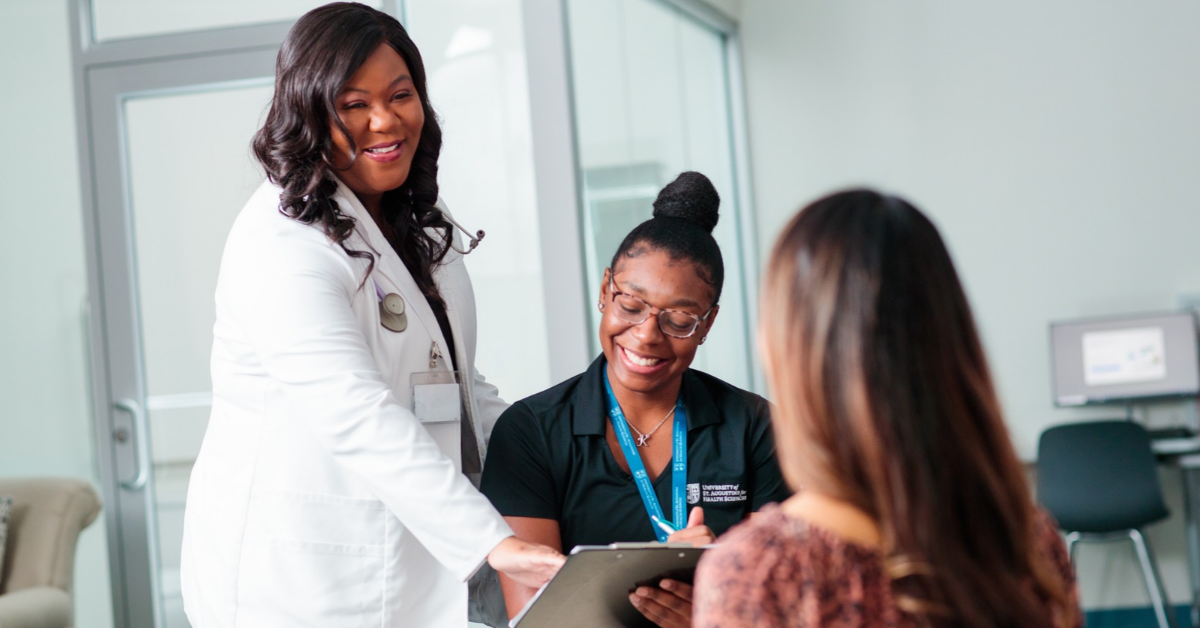
During nursing school practicums, you’ll hone your skills and build competencies rooted in evidence-based practice under the supervision of qualified preceptors, licensed healthcare practitioners.2
This helps bridge the gap between theory and practice and enables you to apply your knowledge with diverse populations, learn in fast-paced settings and foster communication strategies with patients and other healthcare professionals.3
When Do Nursing Students Start Clinical Placements?
Across all pathways, clinical experiences begin after foundational courses, allowing students to gain practical expertise in a real-world healthcare environment.
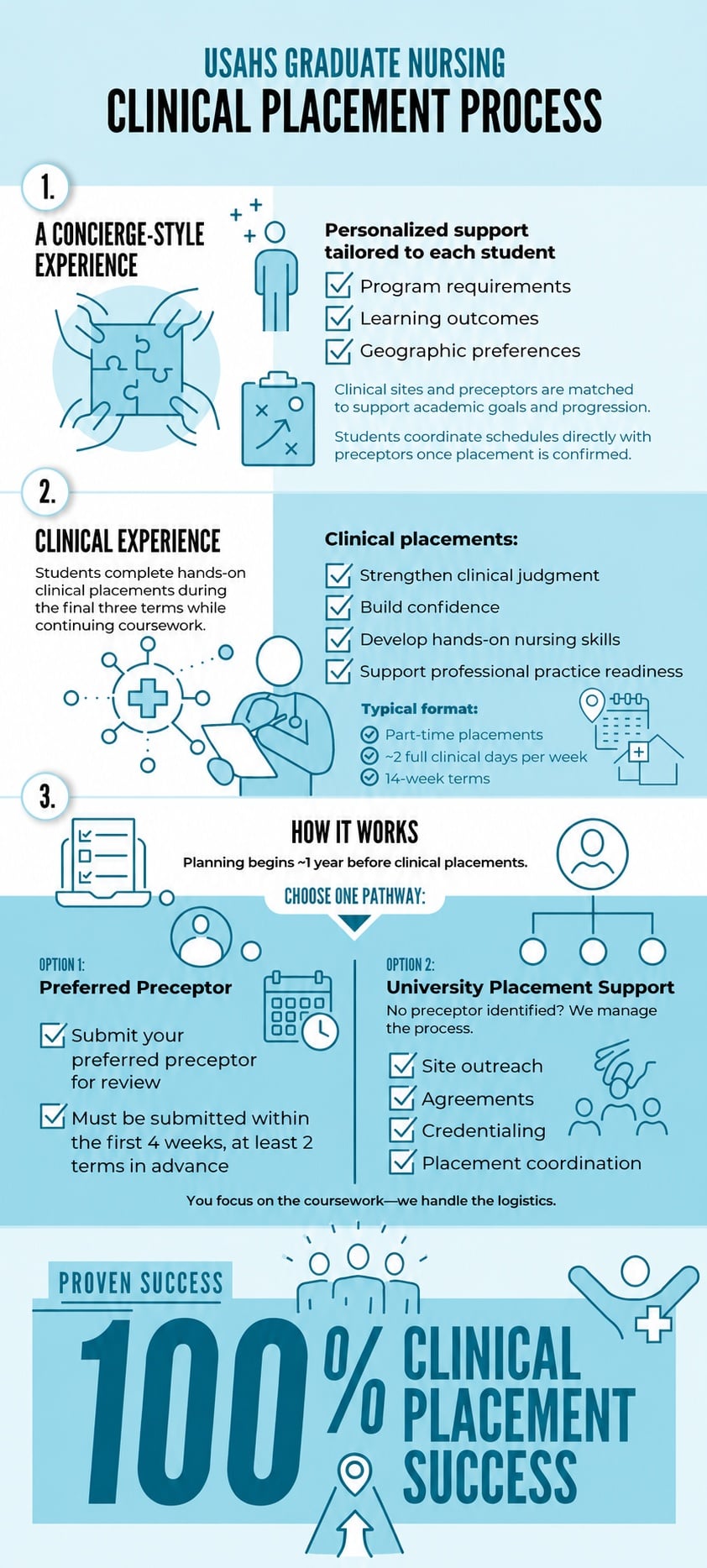
Students typically complete hands-on clinical experiences over three terms while continuing coursework. Clinical placements are generally part-time, averaging two full clinical days per week over a 14-week term.
How Many Clinical Hours for Nursing School Are Required?
The overall clinical hours for nursing school can vary based on program requirements, nursing role specialties, state regulations and regulatory standards for licensure.4
Review USAHS’ clinical practicum hour requirements by program and role specialty here.
Why Clinical Practica Matter in Graduate Nursing Education
Clinical practica are a required component of graduate nursing programs.5 They provide opportunities for students to apply advanced concepts and work toward the competencies required for their chosen role specialty.
At USAHS, students pursuing Family Nurse Practitioner (FNP) or Psychiatric Mental Health Nurse Practitioner (PMHNP) role specialties* complete nursing clinical experiences focused on patient assessment, diagnosis and care management. Students pursuing the Nurse Executive (NE) role specialty complete clinical experiences centered on nursing leadership, healthcare operations and organizational development.
Across all specialties, clinical practica help students strengthen clinical judgment, increase confidence and grow practical skills that enhance professional nursing practice.3
A Personalized Clinical Placement Experience
Our nursing clinical placement process is designed as a collaborative, personalized clinical placement support process. Placement specialists work closely with each student and locate clinical placements, so students meet program requirements and learning outcomes within defined geographic locations.
Based on these factors, the placement team identifies clinical sites and preceptors aligned with each student’s academic journey.
Once a placement is confirmed, students coordinate directly with their assigned preceptors to determine clinical days and schedules that fit their lifestyle.
How the Clinical Placement Process Works
Planning begins early. In fact, USAHS starts preparing for student placements approximately one year before clinical practicums begin.
You’ll choose between two pathways at USAHS:
Option 1: Submit a Preferred Preceptor
Students who already have a preferred preceptor may submit that information for review. The preferred preceptor may be a professional mentor or colleague.
Option 2: USAHS Secures the Placement
If a student does not identify a preferred preceptor, the clinical placement team manages the entire placement process. Students may submit a preferred preceptor, but not a preferred clinical site. USAHS coordinates outreach, agreements, credentialing requirements and placement logistics so students can remain focused on their coursework and professional responsibilities. The result? USAHS has a 100% clinical placement success rate among eligible students.**
Focused on Convenience Without Compromising Quality
Location matters, especially for working professionals. The USAHS clinical placement team works to secure clinical placements as close to home as possible while ensuring students meet required learning outcomes.
The goal is to place students within 50 miles of their residence, including those in rural and geographically isolated areas.
Once a placement is secured, faculty, preceptors and students collaborate to establish goals, review expectations and ensure clinical practicums align with program outcomes.
A Network Built for Student Achievement
We have a nationwide network of more than 4,000 clinical partners and continue to expand those relationships, adding an average of 40 new partnerships each month.***
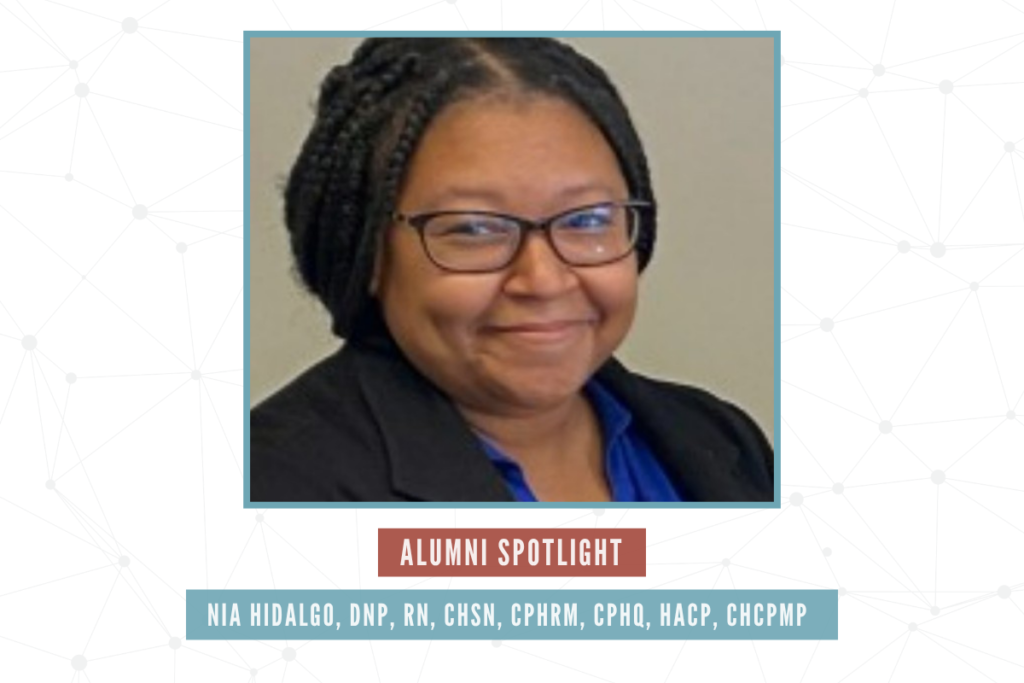
Some USAHS alumni, like Nia Hidalgo (USAHS DNP 2020), return to mentor future generations of nursing students by serving as clinical preceptors and sharing professional expertise as they progress through their programs.
This expansive network allows students to work in a variety of settings alongside interdisciplinary healthcare teams.
Rather than limiting students to a narrow clinical focus, placements are designed to provide broad exposure to diverse patient populations, evolving healthcare challenges and practice environments.
Students gain experience working with/in:
- Patients across the lifespan.
- Rural and urban healthcare settings.
- Diverse medical conditions.
- Interprofessional care teams.
This well-rounded approach creates a broader nursing perspective and helps prepare graduates for the realities of advanced nursing practice.
What Makes USAHS’ Approach Different?
A key difference is that the University manages placement coordination, preceptor matching and logistics to facilitate student success.
Throughout the program, students are guided by expert faculty-practitioners who help connect coursework to clinical practice and drive professional growth.
This integrated model includes:
- Dedicated placement planning.
- Assistance securing qualified preceptors.
- Alignment of clinical hours with program outcomes.
- Ongoing faculty mentorship.
- Assistance to help students progress through their program on time.
The focus remains on helping students become confident, competent, advanced practice professionals. Our students have achieved a 97% first-time FNP certification pass rate.****
Preparing for Advanced Practice
The journey to advanced practice nurse requires dedication, perseverance and support. Clinical practica are where that transformation accelerates. They’re where students strengthen decision-making, develop confidence and prepare for the next phase of their careers.3
NP student clinical placement also helps prepare aspiring NPs for certification and licensure requirements for advanced nursing roles. In most states, becoming an advanced practice registered nurse (APRN) and assuming a role such as NP requires passing a national certification exam after earning your graduate nursing degree.6 Following certification, nurses must apply for APRN licensure through their state board of nursing. Certifications are available across a variety of nursing specialties through nationally recognized credentialing organizations. Learn more through the American Nurses Credentialing Center.7
Nurse executives must hold an active RN license, along with advanced education and national certification demonstrating expertise in healthcare leadership, finance and system-wide operations.8
Ready to advance your nursing career? Connect with an enrollment advisor to learn more about our graduate nursing programs.
*Sometimes our available role specialties change. Please call for availability.
**Clinical placement success rate reflects eligible graduate nursing students requiring clinical placements between Fall 2021 and Fall 2025. Future clinical education placement experiences will vary based on individual student specialty and academic needs, as well as site availability for assignments from term to term.
***Future clinical education placement experiences will vary based on individual student specialty and academic needs, as well as site availability for assignments from term to term.
****Based on 2023 USAHS MSN-FNP, DNP-FNP and PGC (FNP) graduates who took the ANCC or AANP certification exam. The 2023 AANPCB national first-time certification exam pass rate was 73%. First-time licensure pass rates are reported two years post-graduation; rates for 2024 graduates expected in early 2027.
Sources:
- Deering, M., “Nursing Internships and Practicums,” NurseJournal, April 1, 2024, https://nursejournal.org/resources/nursing-internships-and-practicums/.
- “ACEN Position Statement Related to Clinical/Practicum Learning Experiences,” Accreditation Commission for Education in Nursing (ACEN), April 2025, https://www.acenursing.org/position-statement/acen-position-statement-related-to-clinical-practicum-learning-.
- “What to Expect During Nursing Clinicals,” American Nurses Association (ANA) Nursing Resources Hub, November 15, 2023, https://www.nursingworld.org/content-hub/resources/becoming-a-nurse/what-to-expect-during-clinicals/.
- “Frequently Asked Questions,” American Association of Colleges of Nursing (AACN), 2026, https://www.aacnnursing.org/essentials/tool-kit/faqs.
- Zhang, J., et al., “The clinical learning environment, supervision and future intention to work as a nurse in nursing students: a cross-sectional and descriptive study,” BMC Medical Education, July 15, 2022, https://pmc.ncbi.nlm.nih.gov/articles/PMC9284732/.
- “Advanced Practice Registered Nurse (APRN) Career Guide, Nursing License Map, 2026,” https://nursinglicensemap.com/advanced-practice-nursing/.
- “Our Certifications,” American Nurses Credentialing Center (ANCC), https://www.nursingworld.org/our-certifications/.
- “Nurse Executive Certification (NE-BC®),” American Nurses Credentialing Center (ANCC), 2026, https://www.nursingworld.org/our-certifications/nurse-executive/.