
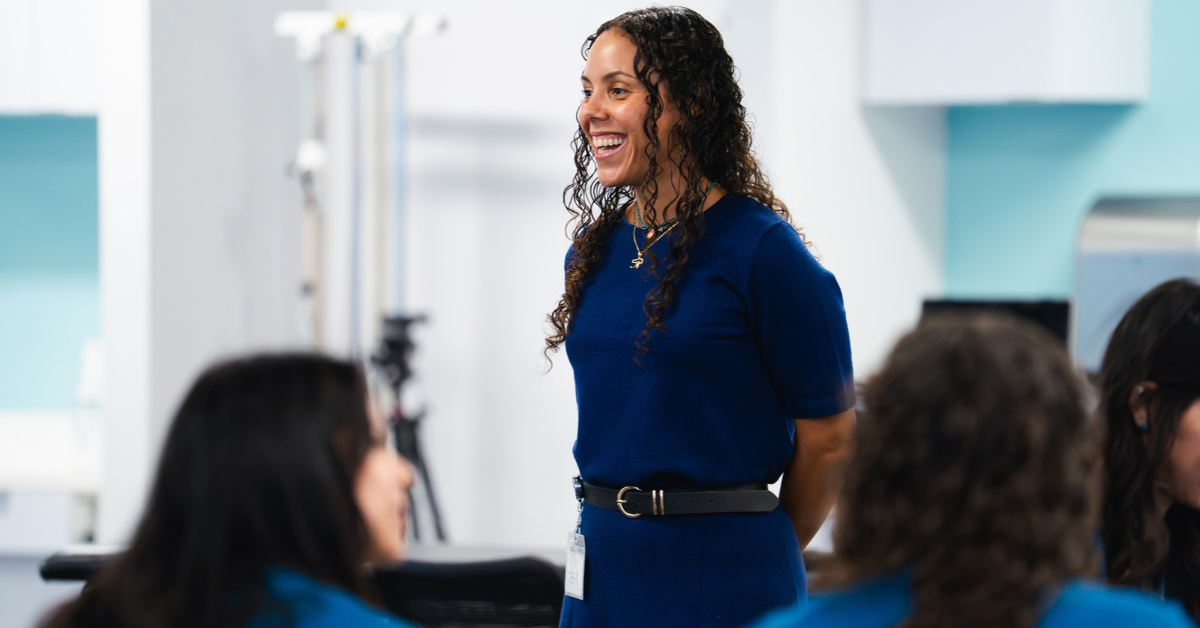
For aspiring occupational therapists (OTs), much of the focus is on developing clinical skills, learning to work with clients and preparing for fieldwork. But becoming an OT also means joining a professional community—one that influences healthcare policy, advocates for the field and helps shape the future of occupational therapy (OT).
At the University of St. Augustine for Health Sciences (USAHS), OT faculty are actively involved in that work. Across the University’s campuses, faculty-practitioners hold elected and appointed positions, bringing students firsthand perspectives on the issues shaping the profession.
Their leadership also gives Master of Occupational Therapy (MOT) and Doctor of Occupational Therapy (OTD) students a broader perspective on the field. They’re not just learning how to practice today. They’re learning how to contribute to its future.
As Erin Schwier, EdD, OTD, OTR/L, senior program director, OT programs, USAHS San Marcos, CA, explains, “We’re not just preparing students to be clinically ready. We’re equipping them with the tools to be on the front lines of the current and future issues facing our profession.”
Leading at the state and national levels
Professional organizations play an important role in supporting OT practitioners and creating opportunities for advancement, education and collaboration.
Among the USAHS faculty contributing to state-level leadership are three individuals serving in leadership positions with OT associations in Florida, Texas and California:
- Antonette Fernandez, DrOT, OTR/L, C/NDT, CSRS, academic fieldwork coordinator, assistant professor, OT programs at USAHS Miami, FL, serves as president of the Florida Occupational Therapy Association (FOTA) and as an on-site evaluator for the Accreditation Council for Occupational Therapy Education (ACOTE), the accrediting body associated with the American Occupational Therapy Association (AOTA).
- Kersten Laughlin, OTD, OTR/L, instructor, OT programs at USAHS San Marcos, serves as vice president of the Occupational Therapy Association of California (OTAC).
- Keegan McKay, OTD, MOT, OTR, assistant professor, OT programs at USAHS Dallas, TX, serves as vice president of the Texas Occupational Therapy Association (TOTA).
“Faculty aren’t just attending meetings or conferences. They’re hosting, influencing and helping guide these organizations,” Dr. Schwier says. “That’s a significant commitment and an opportunity to contribute to the profession.”
Turning professional passion into action
For these faculty members, their leadership journeys began not with formal titles, but with a desire to make a difference.
Dr. McKay first became involved with TOTA nearly 15 years ago. After graduation, he allowed his student memberships to lapse, a decision he later regretted. Recognizing the importance of staying connected to his professional organizations, he eventually rejoined both TOTA and AOTA and began volunteering with his local TOTA district. Since then, he has progressed from district treasurer to district chair and eventually vice president, where he supports organizational leadership, development and team building.
Today, he is grateful to be back with TOTA as a volunteer leader and to remain an active member of AOTA.
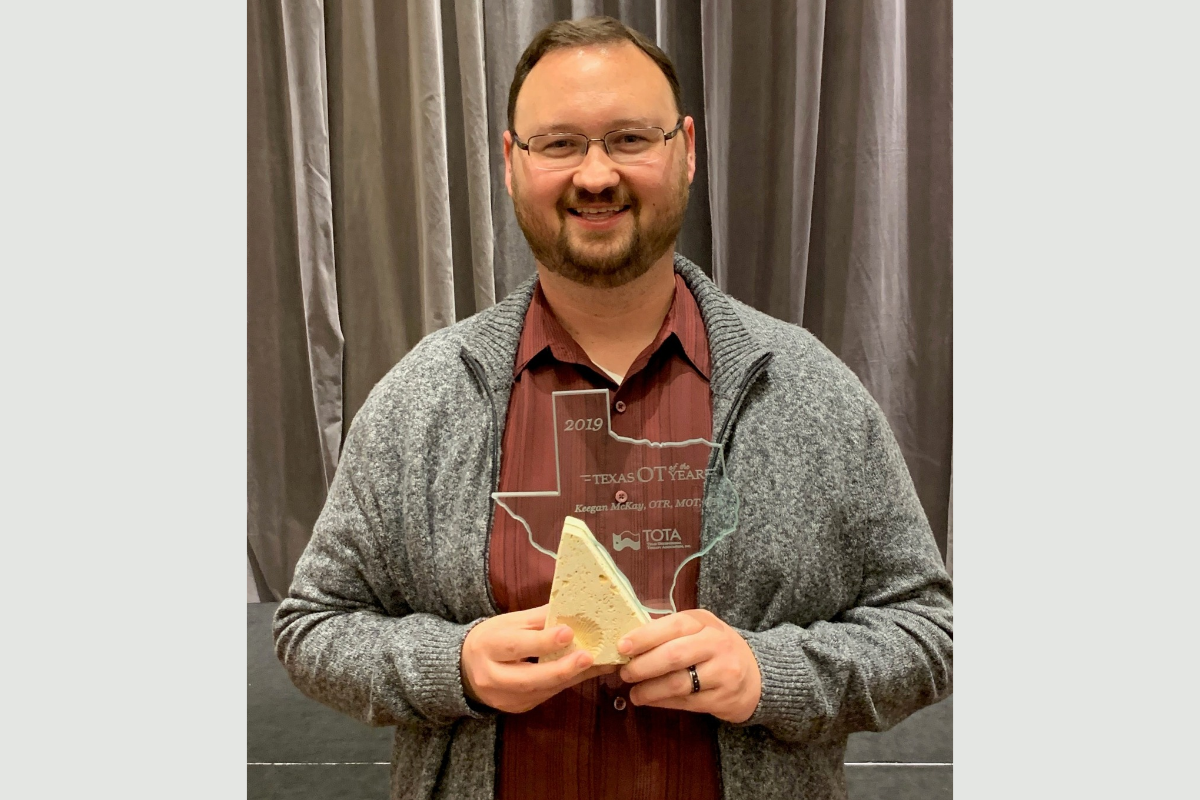
“I cannot reiterate enough how fulfilling these leadership roles have been,” Dr. McKay says. “I truly feel like I’ve ‘made my mark’ in some way. I feel satisfied that I contributed to the profession and have improved the ways I advocate for OT.”
Dr. Laughlin’s path into OTAC began on its Advocacy and Government Affairs Committee, fueled by her interest in politics and public policy. She later served as regional director before becoming vice president, where she helps guide the organization’s priorities and long-term direction.
“Whether we choose to engage in politics or not, we operate within a political environment,” she explains. “Decisions made by administrations, legislators and regulatory agencies influence how occupational therapy is practiced, funded, recognized and accessed by the public.”
Dr. Fernandez also began by volunteering with FOTA, eventually serving as vice president for four years before being elected president. She now guides the association’s strategic direction, supports member communication and initiatives and ensures practitioners’ perspectives help shape its priorities.
“When practitioners are connected and supported, the profession is stronger,” she says.
Her national role grew through years of engagement with AOTA communities and continuing education before she became an ACOTE evaluator.
Preparing students for the realities of OT practice
Faculty involvement gives OT students firsthand insight into policies, standards and emerging issues shaping the healthcare landscape and OT practice.
Dr. Schwier emphasizes that being informed and engaged is essential to ensuring graduates are practice-ready.
“Healthcare is political,” she says. “We need to understand the impact and role of advocacy in sustaining the things we need at all levels of our profession.”
Through her work with ACOTE, Dr. Fernandez gains a national perspective on the accreditation standards used to evaluate OT education programs. “The goal is to ensure every accredited program prepares students to enter the field ready to deliver safe, effective and high-quality care,” she says. She brings those insights into her teaching and fieldwork coordination.
Dr. Laughlin highlights issues that students may encounter as practitioners, including productivity expectations, reimbursement, compensation and workplace conditions.
“We need to do more to protect practitioners and address the systems contributing to burnout and dissatisfaction, rather than placing the responsibility entirely on individuals to become more resilient or find ways to cope,” she says.
She speaks with OT students at universities about the importance of professional organizations. “For me, advocacy isn’t just about lobbying or policy; it’s also about helping practitioners feel supported, informed and empowered to shape their profession,” Dr. Laughlin says.

Connecting students to OT issues and opportunities
Dr. Laughlin argues, “Students are entering a profession with tremendous potential, but they also need to understand the realities of the field and the importance of having a collective voice.”
USAHS encourages students to join professional organizations early in their academic experience, creating opportunities to network with practitioners, access educational resources and learn how to stay involved throughout their careers.
“It’s neat for students to come in and realize they’re surrounded by people who are making an impact and have an influence,” she says. “It helps them see how accessible these opportunities are.”
Through faculty involvement, students witness advocacy in action. For example, Dr. Laughlin has helped take students to Washington, D.C., for AOTA’s annual Hill Day, where they experienced firsthand how occupational therapy practitioners engage with policymakers and stand up for the field.
Dr. McKay hopes to help guide future generations of practitioners to get involved in professional organizations, continue important work and become OT change agents.
“I think it is so important to show students what it looks like to be active in their organizations and to demonstrate how the leadership skills you develop in these roles really help you in your career.”
Dr. Fernandez offers similar advice to students and practitioners: “You do not need a title to make a difference. My own leadership journey started with volunteering, and I would love to see others take that first step.”
Investing in the future of occupational therapy
USAHS supports faculty roles in professional organizations through the time, resources and encouragement needed to take on leadership roles. According to Dr. Schwier, this support reflects the University’s commitment to the profession and the broader healthcare system.
“The University’s support speaks to our mission to be a force for good and shows our commitment to the greater healthcare system and the future of the profession.”
As OT continues to evolve, Dr. Laughlin hopes to empower practitioners to speak up about working conditions and the quality of care they provide. Dr. Fernandez is focused on expanding OT’s presence in Florida, particularly in mental health, while Dr. McKay hopes to encourage more practitioners to remain involved in their professional organizations.
Dr. Schwier sees that engagement as essential to becoming an OT. “It’s important to be involved in your profession and develop a sense of empowerment toward the profession you’re entering. It’s not just a job you’re doing. You influence the future of it.”
For future OTs, professional involvement and advocacy are part of the field they’re preparing to enter, and USAHS faculty are helping shape the path forward.