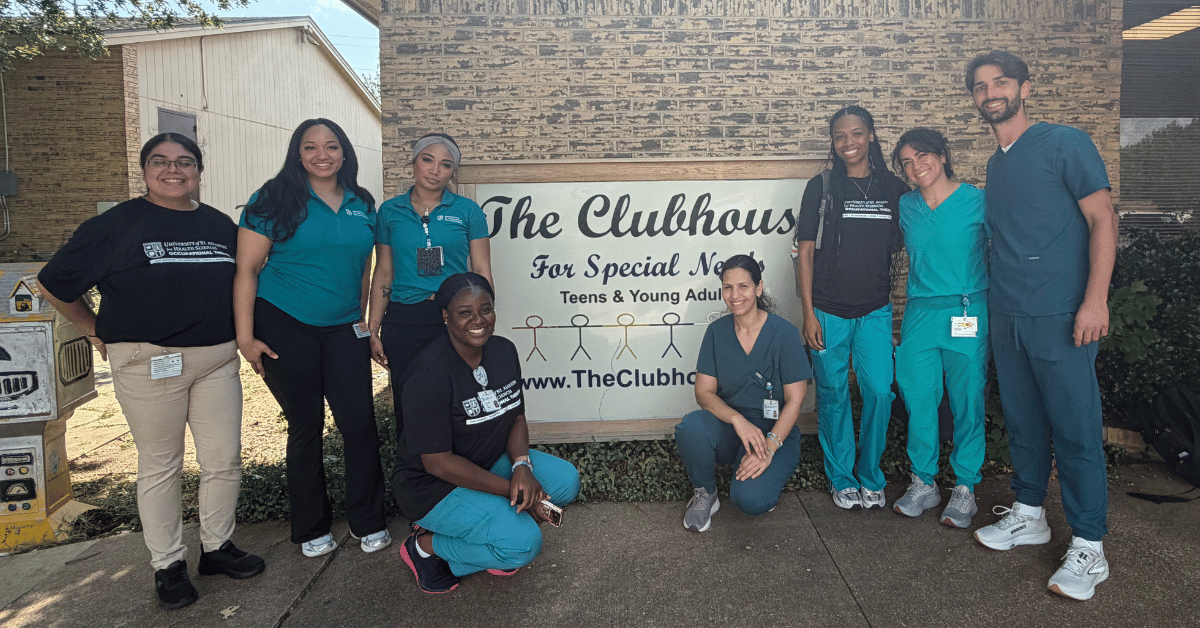
During a recent two-day immersion weekend in Dallas, Texas, 58 occupational therapy (OT) students participated in faculty-guided fieldwork across 17 sites, exploring how the profession supports people in a variety of settings.
Students evaluated homes in South Dallas, visited programs serving adults with intellectual and developmental disabilities (IDD) and engaged with older adults living with dementia, gaining firsthand insight into the range of needs occupational therapists (OTs) address.
“I am really proud to say that we are highlighting nontraditional and underserved communities through our fieldwork,” says Jenny Williams, OTR/L, OTD, CAPS, academic fieldwork coordinator, OT programs at USAHS Dallas.
Learning where life happens
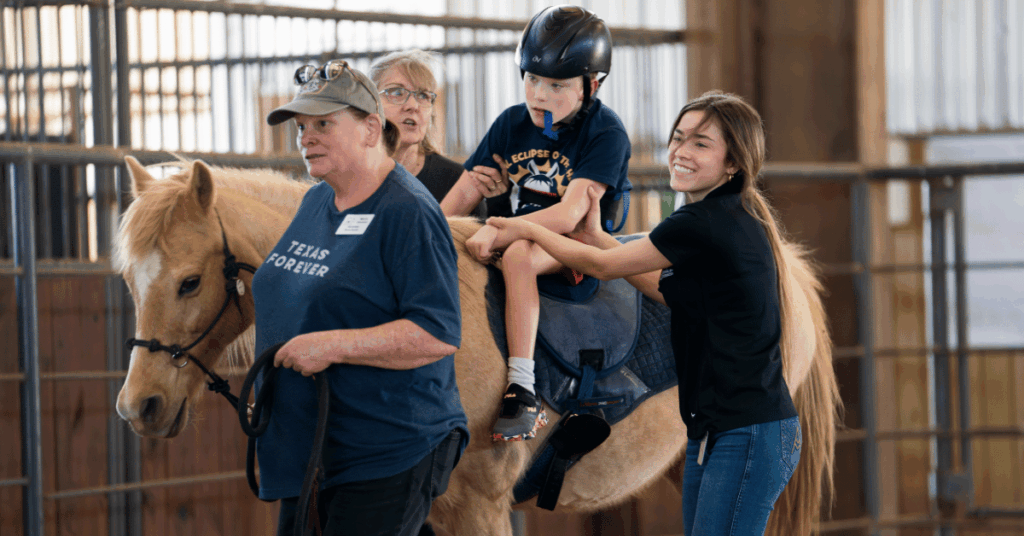
Students visited community organizations, including Rebuilding Together North Texas, Hugs Cafe, My Possibilities, Friends Place Adult Day Services and Roots Renewal Ranch. They also participated in iCan Dance camp for children with Down syndrome and visited the Clubhouse for Special Needs.
At Rebuilding Together North Texas, students helped complete nine home evaluations in South Dallas. These assessments identify home modification needs and support efforts to secure grant funding for improvements that make homes safer and more accessible.
The activity highlighted how a person’s environment can shape their health, independence and ability to participate in daily life. Limited transportation, unsafe sidewalks or a lack of nearby parks can create barriers to everyday activities long before someone enters a therapy clinic.
Through this opportunity, students connected frameworks like Healthy People 2030 to occupational therapy practice. They saw how social determinants of health, including economic stability, access to quality health care and neighborhood and built environments, can influence a person’s ability to engage in meaningful activities.
“It’s really important to instill in students the idea that they can go anywhere, recognize a need and find a way to serve that need through occupational therapy,” Dr. Williams advocates.
Connecting coursework to the community
Level I fieldwork experiences introduce students to different populations and practice environments, complementing what they learn in the classroom. During immersion weekends, students visit community sites in small groups with faculty members who guide observations, encourage reflection and support students as they apply academic concepts to what they see.
“If we’re not exposing our students to the realities of what clients face on a day-to-day basis, they may lack an understanding of how to help them progress through a therapy program,” Dr. Williams explains.
At sites serving individuals with IDD or mental health needs, for example, students can observe functional abilities they have previously discussed in class.
“It’s fun for students to see it and realize, ‘That’s what we talked about,’” Dr. Williams elaborates.
Group work also encourages students to compare observations, exchange ideas and consider different approaches to supporting one another’s participation.
Finding creative ways to make an impact
Not every community site has an occupational therapist on staff. For students, that can be an invitation to think critically about where their skills could make a difference.
At Friends Place Adult Day Services, which serves older adults with dementia and other memory-related conditions, students can develop activities, environmental modifications and consultation. At Hugs Cafe, which provides job training and competitive employment for adults with IDD, they can explore how OT supports participation, independence and meaningful roles.
These experiences encourage students to look beyond established treatment and ask a different question: What could OT make possible here?
Dr. Williams recalls students practicing cognitive screenings at Brookdale Eden Estates and brainstorming potential interventions. As they worked through challenges, one student began suggesting practical strategies, including visual scheduling, demonstrating how students were encouraged to draw on their knowledge and contribute their ideas.
“It was really fun to see her come alive in that environment,” Dr. Williams says.
These hands-on learning opportunities enable students to recognize their strengths, build confidence and envision new ways to apply OT in unfamiliar settings.
Building partnerships that benefit students and clients
Community-based fieldwork can positively impact students and the organizations that host them. Students can contribute ideas and enthusiasm, while community partners share their expertise and help future OTs understand the needs and priorities of the people they serve.
For Dr. Williams, experiences like these allow students to imagine the kind of practitioners they want to become. By exploring settings beyond traditional clinical environments, students begin to recognize how their skills and interests could translate into a variety of career paths.
The immersion weekend gave students a broader view of where occupational therapy can make a difference and the many ways that they can encourage participation in everyday life. For future practitioners, those lessons may shape not only how they approach client care but also where they envision taking their careers.