For aspiring speech-language pathologists (SLPs), some of the most impactful learning happens when they can see clinical decision-making unfold in real time. That was the focus of a clinical immersion designed to give students an inside look at the pace, complexity and client-centered decision-making that shape dysphagia care.
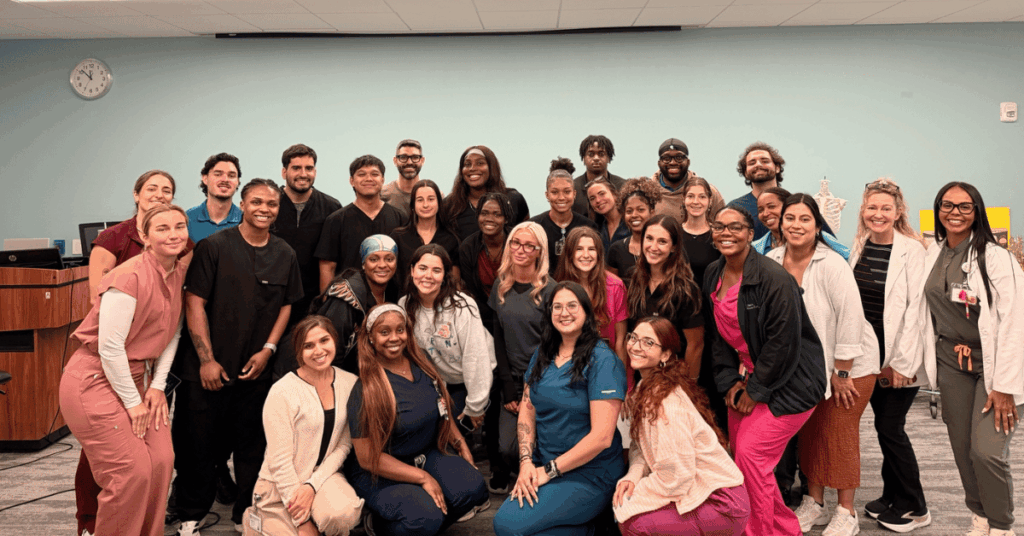
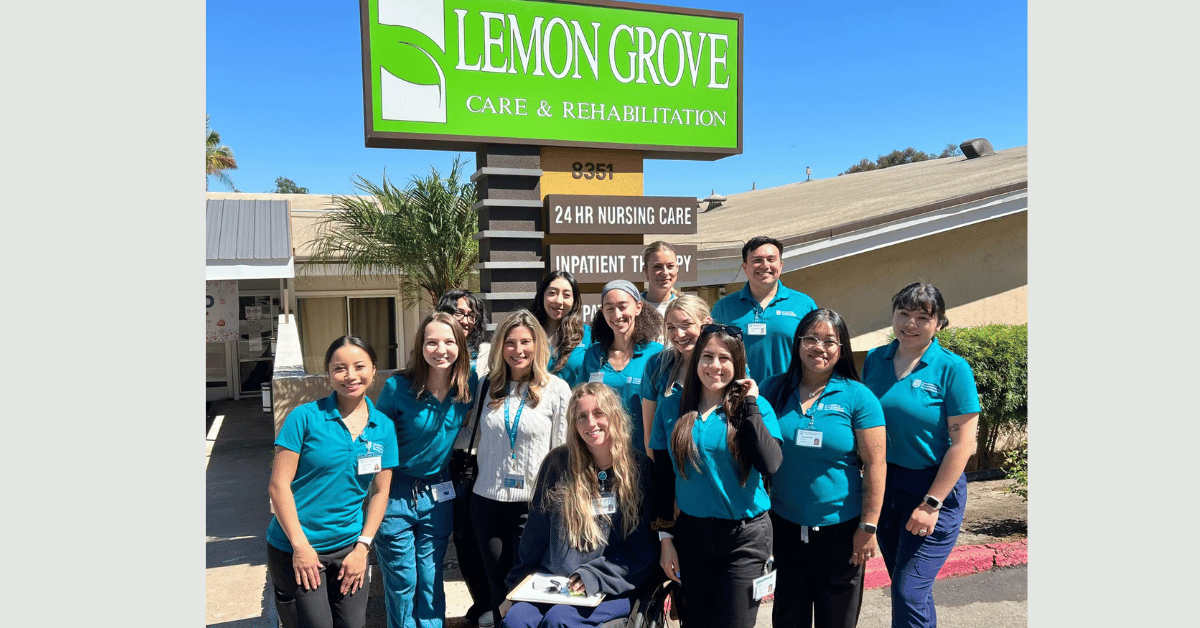
In June, 12 Master of Science in Speech-Language Pathology (MS-SLP) students from the University of St. Augustine for Health Sciences (USAHS) San Marcos, California, participated in a one-day Dysphagia Boot Camp at Lemon Grove Care and Rehabilitation Center.
Held in partnership with the Ensign Group, the experience allowed students to step into a skilled nursing facility (SNF) and observe SLPs evaluating and treating clients with dysphagia, or difficulty swallowing.
A look at SLP practice in skilled nursing
The event was developed in collaboration with Amy Cocanour, MS, EdD, CCC-SLP, USAHS contributing faculty and senior externship coordinator and Ashley Bourque Meaux, PhD, CCC-SLP, associate professor, campus director, USAHS Dallas, and director, SLP Clinical Education Placement Team. Amanda Eaton, PhD, CCC-SLP, associate professor, MS-SLP, USAHS San Marcos, served as the faculty representative.
For Dr. Eaton, one of the day’s most meaningful moments was watching students make connections between what they have learned and what they were seeing in practice. “They’re not just getting a high-level view. They’re seeing it applied with real clients and clinicians,” she explains.
That real-time insight is particularly important in dysphagia care, where knowing the steps of an assessment or treatment approach is only part of the job. SLPs must interpret information, make clinical decisions and continually adapt their approach as a client’s needs change.
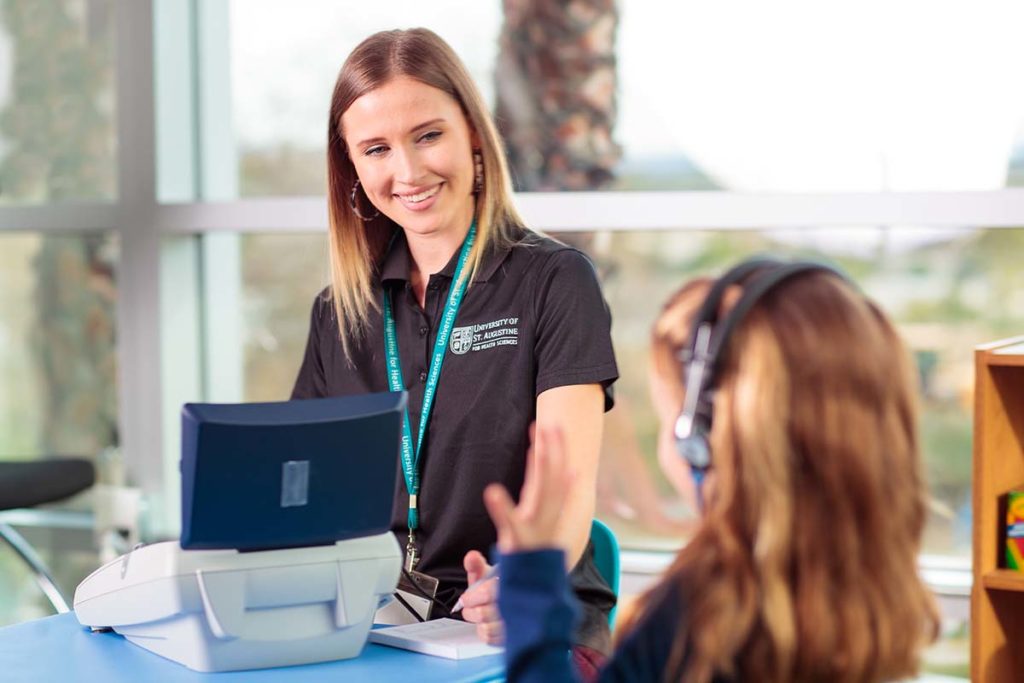
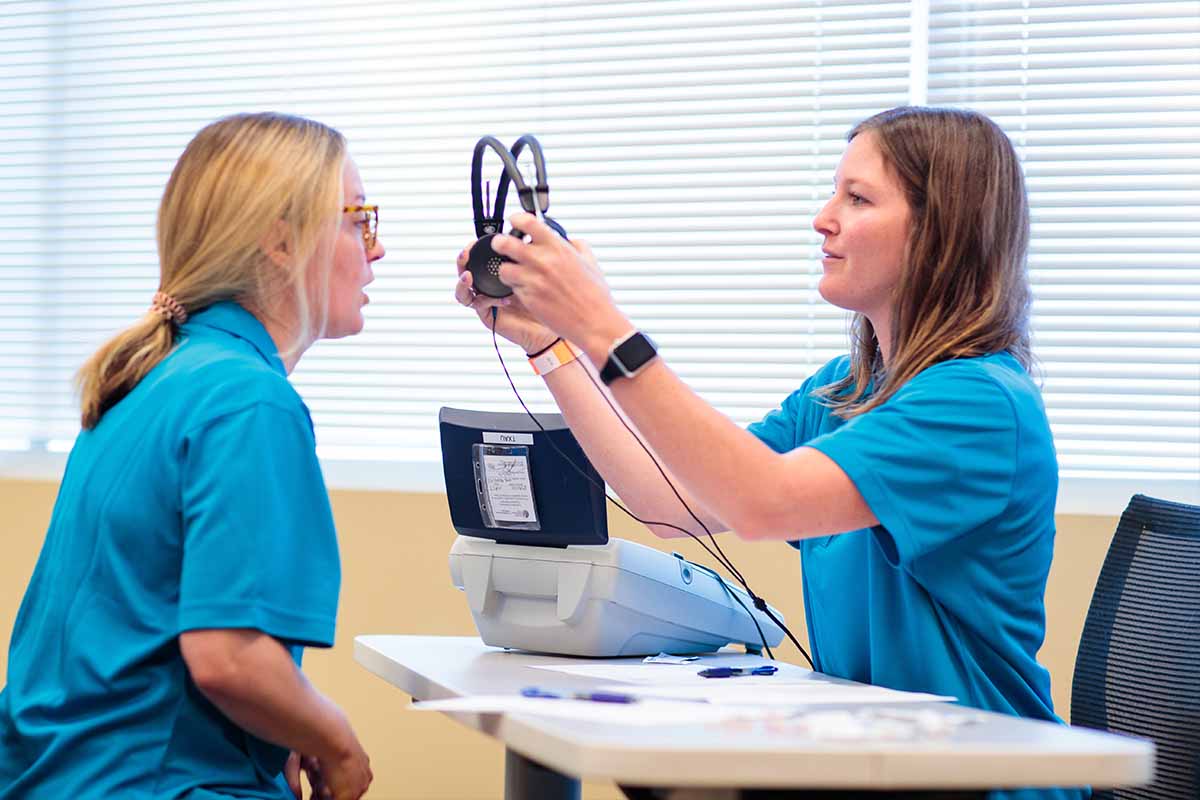
During the boot camp, students followed experienced clinicians through their daily workflows and observed dysphagia evaluations, treatment sessions and interdisciplinary collaboration. They discussed evaluation findings with clinicians and each other, considered recommendations and the documentation process.
“They got a sense of how they have to think on their feet. There’s no cookbook recipe to address individual client issues. You have to apply problem-solving, critical thinking and clinical reasoning in the moment,” says Dr. Eaton.
A highlight of the boot camp was observing Fiberoptic Endoscopic Evaluation of Swallowing (FEES) procedures conducted by on-site SLPs. Seeing these advanced diagnostic tools used with real clients gave students a more nuanced understanding of dysphagia assessment and management, building on concepts they may have encountered during coursework and clinical residencies.
Bringing clinical practice to life
The experience also gave students a valuable look at the day-to-day work of an SLP, something that can be difficult to gain before beginning a full-time practicum.
That distinction matters for students approaching the transition from graduate school to professional practice. Dr. Eaton says she saw students begin to picture themselves as treating clinicians.
She says, “It gave students the chance to shadow SLPs and see a day in the life. It’s not a far jump from where they are now to graduation and work. They were confident and competent in trying on that role.”
The day went beyond shadowing and clinical skills. During an end-of-day Q&A session, students had candid conversations with practicing SLPs about clinical fellowships, employment, interviews, resumes and career advancement. They also discussed leadership opportunities and how to advocate for themselves in the workplace.
For Dr. Eaton, those conversations brought an important balance to clinical education. “Students had the ear of many SLPs in one room. They could have an open dialogue about employment, negotiations and workload,” she says.
Students also explored the diverse opportunities available within the profession. The conversations were relevant and direct, with clinicians sharing both the opportunities and challenges of the profession. “They were honest and gave practical tools for entering as a clinical fellow or beyond,” Dr. Eaton explains.
Students also walked away with a deeper perspective on the people they may eventually serve. Several reflected on what they observed about long-term life in a skilled nursing facility. “It hit home for them. They saw the struggles that clients deal with and how they fit into their larger life or circumstances,” Dr. Eaton reflects.
Preparing for what comes next
Experiences like the boot camp are designed to complement classroom instruction. Students test their knowledge in context, ask questions and begin the transition from student to practitioner.
“Partnerships like this are so important. They give clinical practice and also create a pathway for future employment for our students,” Dr. Eaton advocates.
By bringing students, faculty and practicing clinicians together, the boot camp offered a firsthand look at the realities of SLP practice and a clearer sense of what comes next. For one day, students stepped into the role of the SLP, putting their skills into practice and exploring the possibilities ahead in speech-language pathology.
Learn more about our hybrid MS-SLP program and request information today.