

When we reference attention-deficit/hyperactivity disorder (ADHD), we’re talking about an experience that may affect individuals across the lifespan. Symptoms often show up early, shaping how a child learns, plays and connects with others, and may continue into adolescence and adulthood, influencing school performance, career paths, relationships and daily routines.1
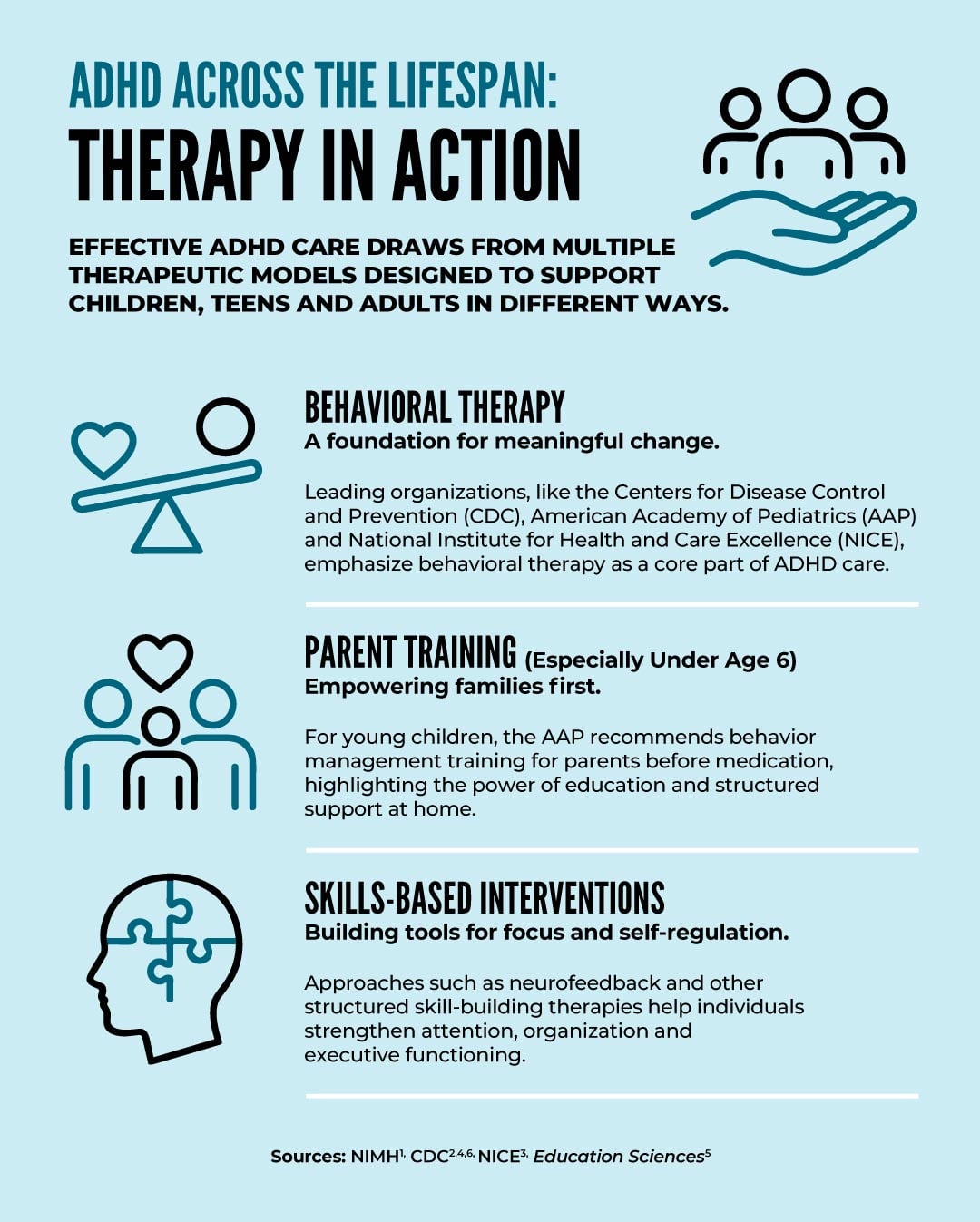
Organizations such as the Centers for Disease Control and Prevention (CDC), the American Academy of Pediatrics (AAP) and the National Institute for Health and Care Excellence (NICE) consistently emphasize the value of behavioral therapy for ADHD, parent training and skills-based interventions, like neurofeedback therapy for ADHD, as core components of care.1,2,3
In fact, for children under age six, AAP recommends behavior management training for parents before turning to medication, reinforcing how powerful education and structured support can be.2
For future healthcare professionals, this underscores a key lesson: effective ADHD care isn’t one-size-fits-all; it’s developmentally informed, family-centered and grounded in evidence-based therapeutic approaches.
ADHD is a neurodevelopmental disorder that affects attention, impulsivity and activity level. ADHD symptoms often begin in childhood and can continue into adolescence and adulthood. This typically affects school, work, relationships and daily routines.1
Let’s explore the main types of therapy for ADHD in kids and adults, and how the University of St. Augustine for Health Sciences can help you pursue a related career path.
ADHD Treatment Approaches
With ADHD therapy for kids who are younger than six years old, the AAP recommends behavior management training for parents before medication.2 For children six years and older, a combination of medication and behavior therapy is often recommended. Parent training is important up to age 12, and adolescents may benefit from additional skill-based therapies, like neurofeedback therapy for ADHD.1
Schools can also be part of the treatment plan when possible, with behavioral interventions in the classroom playing a meaningful role.2
Does occupational therapy help with ADHD? Occupational therapy for ADHD and speech-language pathology each focus on daily routines, executive functioning and communication skills across home, school and community settings.
Core Types of Therapy for Children with ADHD
Let’s take a look at the main types of therapy for children dealing with ADHD, and how each one might be helpful.
Parent Training Programs
For young children, behavior therapy through parent training is recommended before any other treatment.4 These programs focus on coaching parents along with the child. Therapists teach practical strategies parents can use daily, like positive reinforcement, appropriate consequences and building predictable routines.
Experts recommend that healthcare providers refer parents of children younger than 12 years old for behavior therapy training.4 For children younger than six years old, behavior management training for parents should be tried before prescribing ADHD medication.4
The goals of parent training programs are to reduce disruptive behaviors, improve attention and self-control and strengthen parent-child relationships.4 Over time, parents often feel more confident managing symptoms that come with ADHD, and children benefit from clearer expectations and more consistent support at home.
Child-Focused Behavior Therapy and Classroom Interventions
For school-age children, behavioral classroom interventions and other school-based support are an important part of ADHD therapy for kids.2 Both help children succeed in structured learning environments where attention, organization and impulse control matter.
Common classroom-based approaches include reward systems, daily report cards, structured seating, breaking tasks into smaller steps and setting clear rules and routines.5 These interventions generally work best when teachers, school psychologists, counselors and families communicate openly and regularly.
Research and guidance from education and healthcare organizations show that consistent behavioral strategies across school and home settings lead to better outcomes for children who have ADHD.5,6 With this approach, children get more opportunities to practice self-regulation skills throughout the day.
Cognitive Behavioral Therapy (CBT) for Kids and Teens
Cognitive behavioral therapy (CBT) adapts to a child or teen’s developmental level. For children and adolescents with ADHD, cognitive behavioral therapy for ADHD typically focuses on managing frustration, addressing negative thinking patterns and building problem-solving skills.3
Cognitive behavioral therapy for ADHD may also help with organization, time management and coping with academic or peer-related stress. NICE highlights CBT-style interventions as part of psychological treatment packages for children and other young people with ADHD, especially when anxiety or mood symptoms occur along with the disorder.3
For teens, CBT can be helpful as academic and social pressures increase. Learning practical coping skills can help with emotional regulation and reduce stress related to the need to perform well in school and maintain relationships.
Occupational Therapy and Allied Health Support for Children
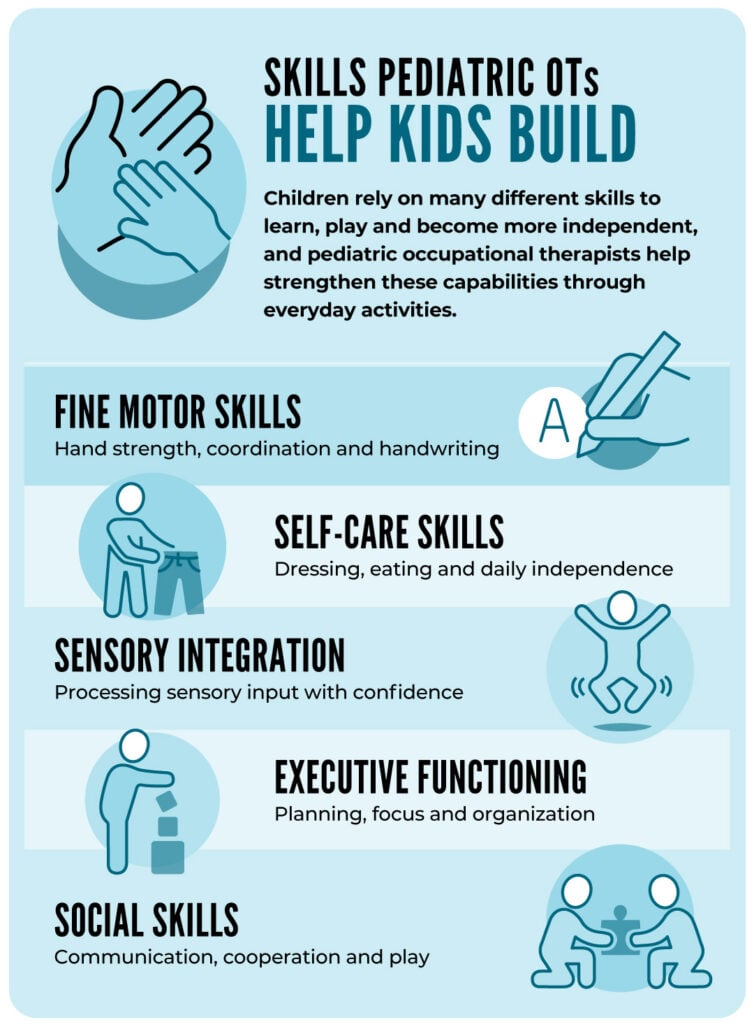
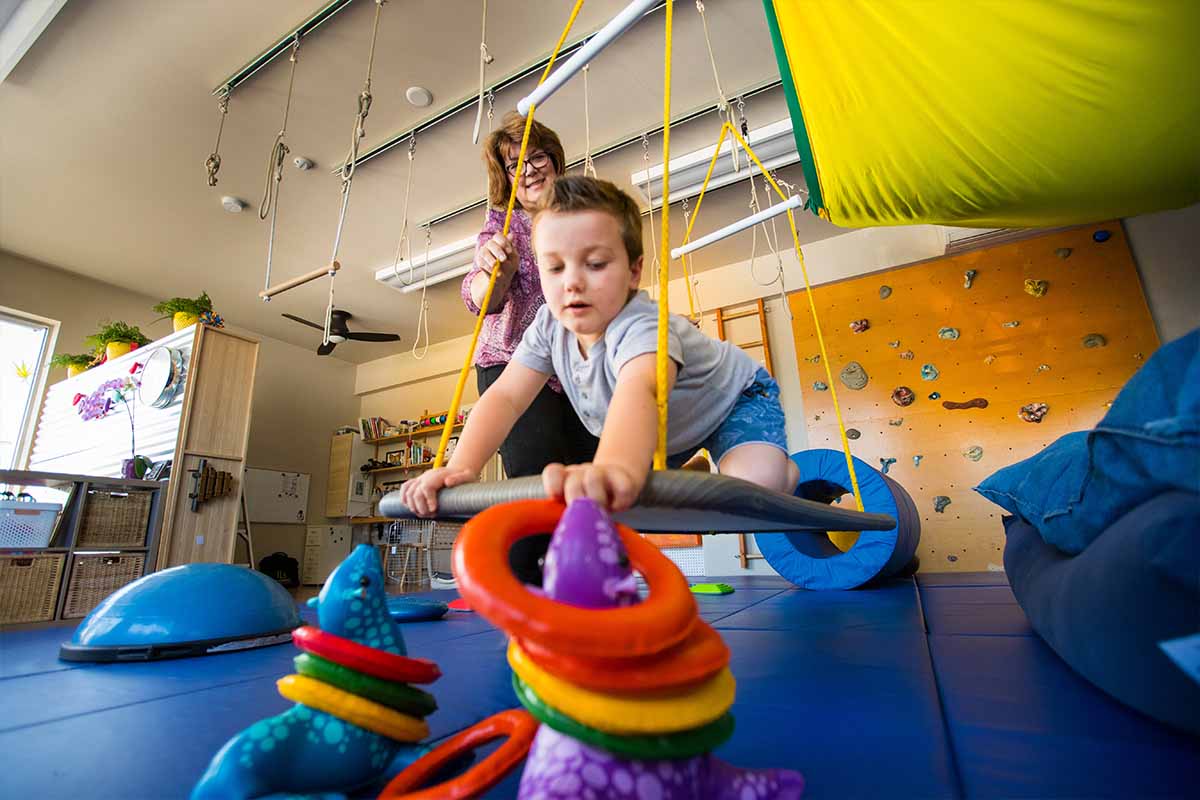
Occupational therapists (OTs) work with children who have ADHD to develop skills that improve executive functioning, sensory processing, motor coordination and daily routines, including school tasks, self-care and play.7 OT interventions focus on helping children adapt to their environments and routines so they can more readily participate in everyday activities.
Speech-language pathologists (SLPs) support children with ADHD who experience verbal challenges, language difficulties or other social concerns that may be associated with ADHD. Struggling with these skills can often affect classroom participation and peer connections.
USAHS Programs to Prepare You to Support Individuals with ADHD
At the University of St. Augustine for Health Sciences (USAHS), our Master of Occupational Therapy (MOT), Doctor of Occupational Therapy (OTD) and Master of Science in Speech-Language Pathology (MS-SLP) programs are designed to help you build the clinical skills, professional confidence and real-world experience to support children with neurodevelopmental conditions across school, clinic and community settings:
- Master of Occupational Therapy (MOT): In the MOT program, you’ll develop a strong foundation in evidence-informed occupational therapy practice, with an emphasis on helping individuals participate more fully in everyday routines. You’ll learn how to evaluate a person’s strengths and needs, collaborate with families and educators and design interventions that translate to real life.
- Doctor of Occupational Therapy (OTD): The OTD program builds on occupational therapy practice with deeper clinical reasoning, leadership development and advanced training in designing and implementing programs that improve outcomes.
- Master of Science in Speech-Language Pathology (MS-SLP): In the MS-SLP program, you’ll prepare to assess and treat communication and language challenges that can co-occur with neurodevelopmental conditions, including barriers to attention, learning and social communication.
Across USAHS’ programs, you’ll be prepared to deliver client-centered care, collaborate on interdisciplinary teams and meet clients or patients where they are.
Key Types of Therapy for Adults with ADHD
For adults working to manage ADHD, there are several recommended therapy approaches.
CBT for Adult ADHD
CBT, when adapted for ADHD, can help adults facing challenges like time management, organization, procrastination and emotional dysregulation.1,3 Unlike child-focused approaches, adult CBT often focuses on practical skills related to work, relationships and independent living.
NICE and the National Institute of Mental Health (NIMH) note that CBT can help adults eliminate unhelpful thinking patterns and develop strategies to better manage daily responsibilities.1,3 Therapy sessions may include goal setting, planning tools and stress management techniques.
Group Therapy and Psychotherapy Programs
Group therapy and psychotherapy programs offer valuable support for adults with ADHD, especially when paired with other types of treatment.8,9 These groups educate members about ADHD, teach coping strategies and create problem-solving opportunities.
Many adults find comfort in knowing they’re not alone. Group settings can help people with ADHD see that their experiences are more common than they think. Also, peer support often helps participants stay engaged and motivated as they practice new skills.10
Professional organizations and healthcare providers often recommend group programs as part of a broader ADHD care plan because they combine education, social connection and practical application.8,9
Another type of intervention for individuals with ADHD who are musically inclined is ADHD music therapy. This research-supported therapy uses rhythm, sound and active music-making to build attention, emotional regulation and executive function skills. Boosting dopamine activity and activating both sides of the brain, it helps curb impulsivity and hyperactivity while enhancing focus and social connection.11
Occupational and Vocational Interventions for Adults
Occupational therapy (OT) and vocational rehabilitation can play an important role in helping adults with ADHD succeed at work, in school and in everyday life. Rather than taking a one-size-fits-all approach, OT practitioners consider the person, the task and the environment, and then develop practical strategies that make day-to-day demands feel more manageable.
That might include adjusting the environment to reduce distractions, using assistive technology, setting reminders, establishing routines and breaking large projects into smaller, more manageable steps. Many interventions focus on task initiation, time management and organization, helping clients develop systems they can commit to.
If you are interested in helping clients with ADHD build skills for daily life, explore our occupational therapy programs at USAHS to learn how you can turn that passion into a career.
How USAHS Programs Connect to ADHD Care
USAHS programs prepare healthcare professionals to serve on ADHD care teams through evidence-informed practice and interprofessional collaboration.
Occupational therapy (MOT/OTD) programs prepare practitioners to help children, adolescents and adults with ADHD by focusing on daily routines, sensory processing and executive functioning across home, school and work environments.
Speech-Language Pathology (MS-SLP) programs train SLPs to support language development, social and literacy skills that often show up along with ADHD in children. Graduates may work in schools, clinics and community settings as part of larger care teams.
Graduate nursing programs, like USAHS’ Master of Science in Nursing (MSN) and Doctor of Nursing Practice (DNP) degree paths, prepare nurses to work in primary care and mental health settings. Nurses often help identify ADHD, provide education, coordinate care and support individuals and families as they consider treatment options.
Across our programs, USAHS emphasizes evidence-informed practice, hands-on learning and interprofessional education so that students graduate ready to practice.
By learning to communicate across disciplines and apply research to practice, USAHS students are equipped to contribute to collaborative, evidence-informed care that helps people with ADHD build skills, reduce daily challenges and move through life with more support and confidence.
FAQs
What is ADHD?
ADHD is a neurodevelopmental condition defined by inattention, hyperactivity and impulsivity that interfere with regular functioning or development.1 Symptoms typically begin in childhood and can continue into adulthood, affecting learning, work performance and relationships.
ADHD shows up differently from person to person. Some individuals struggle with attention and organization, while others may experience more hyperactivity or impulsivity. Many people experience a mix of symptoms that change over time.
Can therapy treat ADHD without medication?
Sometimes. For young children, especially those under six years old, experts recommend behavior therapy and parent training before medication.2 For older children, teens and adults, therapy alone may help manage symptoms for some, particularly when symptoms are mild or when medication isn’t a favorable option.
Many experts describe ADHD care as multimodal. This means therapy, education and environmental support often work best together and medication may be part of the plan for some.2,3 Recommended treatment can vary.
References:
- “Attention-Deficit/Hyperactivity Disorder (ADHD),” National Institute of Mental Health (NIMH), December 2024, https://www.nimh.nih.gov/health/topics/attention-deficit-hyperactivity-disorder-adhd.
- “Treatment of ADHD,” Centers for Disease Control and Prevention (CDC), May 16, 2024, https://www.cdc.gov/adhd/treatment/index.html.
- “Attention Deficit Hyperactivity Disorder: Diagnosis and Management,” National Institute for Health and Care Excellence (NICE), May 7, 2025, https://www.nice.org.uk/guidance/ng87.
- “Parent Training in Behavior Management for ADHD,” Centers for Disease Control and Prevention (CDC), May 15, 2024, https://www.cdc.gov/adhd/treatment/behavior-therapy.html.
- DuPaul, George J., et al, “School-Based Interventions for Attention-Deficit/Hyperactivity Disorder (ADHD) in Middle Schools: A Review of the Literature,” Education Sciences, September 16, 2025, https://www.mdpi.com/2227-7102/15/9/1225.
- “ADHD in the Classroom: Helping Children Succeed in School,” Centers for Disease Control and Prevention (CDC), October 22, 2024, https://www.cdc.gov/adhd/treatment/classroom.html.
- Pfeiffer, B., et al, “Comprehensive Effects of Occupational Therapy Using Ayres Sensory Integration® in Children With ADHD: A Randomized Controlled Trial,” The American Journal of Occupational Therapy, December 4, 2025,https://research.aota.org/ajot/article-abstract/80/1/8001185020/28488.
- “ADHD: The Facts,” Children and Adults with Attention-Deficit/Hyperactivity Disorder (CHADD), 2026, https://chadd.org/about-adhd/adhd-quick-facts-about-adhd/.
- “ADHD in Adults,” American Psychiatric Association, 2024, https://www.psychiatry.org/patients-families/adhd/adhd-in-adults.
- Mayo Clinic Staff, “Support groups: Make connections, get help,” Mayo Clinic, March 27, 2025, https://www.mayoclinic.org/healthy-lifestyle/stress-management/in-depth/support-groups/art-20044655.
- “Effects of Music on Attention-Deficit/Hyperactivity Disorder (ADHD) and Potential Application in Serious Video Games: Systematic Review,” Journal of Medical Internet Research, May 12, 2023, https://pmc.ncbi.nlm.nih.gov/articles/PMC10221503.