
What Is a Pediatric Occupational Therapist and What Do They Do?
Quick Answer
So, what is a pediatric occupational therapist? A pediatric occupational therapist (OT) is a licensed healthcare professional who works with infants, children and adolescents to develop the skills needed for everyday activities. By using individualized, play-based interventions, they help children improve the motor, sensory, cognitive and self-care abilities required for daily occupations such as playing, learning, dressing, eating and participating successfully at home, school and in the community.1
When a child learns to button a coat for the first time, writes their name without frustration or joins classmates on the playground with confidence, those moments often represent more than everyday milestones. Behind many of those victories is a pediatric occupational therapist (OT) who has helped the child build the skills needed to participate more fully in daily life.
If you are considering a career in occupational therapy (OT), pediatric practice offers the opportunity to make a difference during some of the most important years of a person’s development. Every session combines clinical knowledge with creativity, problem-solving and relationship-building. One day you might help a toddler strengthen hand muscles through play. Next, you could work with a teenager recovering from an injury so they can return to school, sports or other activities they enjoy.
For aspiring OTs, pediatric practice is also one of the field’s most dynamic specialty areas. You have the opportunity to work alongside families, educators, physicians and other healthcare professionals while helping young children become more independent and confident in their everyday lives.
Through individualized, evidence-based pediatric occupational therapy, these professionals support children’s ability to participate in daily activities.
What Conditions Do Pediatric Occupational Therapists Treat?
Students may be drawn to pediatric OT due to the variety of the profession. No two children have the same strengths, challenges or goals. So, what do pediatric occupational therapists do? Pediatric OTs create individualized treatment plans based on each child’s unique needs, abilities and environment.1
Although every child is different, there are several conditions and developmental challenges that they commonly address.1
Autism Spectrum Disorder (ASD) and Attention-Deficit/Hyperactivity Disorder (ADHD)
Children who are on the autism spectrum or who experience ADHD may face challenges with communication, emotional regulation, attention, executive functioning or sensory processing that affect daily activities.
OTs help children develop practical strategies for participating in school, home and community life. Therapy might focus on improving routines, managing transitions, increasing independence with daily tasks or developing coping strategies for overwhelming environments.
Behavioral challenges are often connected to underlying sensory, communication or executive functioning needs. Pediatric OTs work to identify those contributing factors and teach skills that support more successful participation rather than simply addressing behaviors themselves.
Sensory Processing Disorders
Some children experience the world differently. Everyday sensations such as bright lights, loud sounds, clothing textures or movement may feel overwhelming, while others may seek additional sensory input throughout the day.
Pediatric OTs evaluate how sensory experiences affect participation in everyday activities. They develop personalized strategies that help children regulate their responses, improve attention and participate more fully in school, play and family routines.
Developmental Delays and Cerebral Palsy
Developmental delays can affect movement, coordination, communication and self-care skills. Children with cerebral palsy may also experience challenges related to muscle control, balance and motor development.
Occupational therapists help children build functional skills by adapting activities, strengthening motor abilities and finding new ways to complete everyday tasks. Therapy is centered on increasing independence while supporting each child’s developmental progress.
Down Syndrome
Children with Down syndrome often benefit from occupational therapy that supports muscle strength, coordination, fine motor development and activities of daily living (ADLs).
Therapists create engaging activities that encourage children to practice dressing, feeding themselves, writing, playing and participating in school while building confidence alongside functional abilities.
Fine and Gross Motor Delays
Motor development influences nearly every part of childhood, from holding a crayon to climbing playground equipment.
When children experience delays in fine motor or gross motor skills, OTs design activities that strengthen coordination, balance, hand function and body awareness. Each activity is carefully chosen to support developmental goals.
Feeding and Swallowing Difficulties
Eating involves more than nutrition. It also requires coordination, sensory processing, oral motor control and comfort with different textures and foods.
Some pediatric OTs work with children who have feeding challenges related to developmental conditions, sensory differences or medical diagnoses. Therapy may focus on improving mealtime preparation, expanding food acceptance or developing the motor skills for safe eating.
Depending on the child’s needs and practice setting, OTs may collaborate with speech-language pathologists (SLPs) and other healthcare professionals when addressing feeding and swallowing concerns.
Inquiries Regarding Adaptive Equipment or Rehabilitation
Some children may need short-term rehabilitation after an injury, surgery or illness. Pediatric OTs help children regain independence while recovering from various injuries or orthopedic procedures.2 They may recommend adaptive equipment, modified activities or teaching new ways to complete daily tasks until healing happens.
What Skills Do Pediatric Occupational Therapists Help Kids Build?
You might still be wondering, ‘What do pediatric occupational therapists do?’ At its core, pediatric OT focuses on helping children participate in the occupations of childhood. According to the American Occupational Therapy Association (AOTA), an occupation refers to the meaningful activities people do every day, not simply a job or a career.3
For children, those occupations include learning, playing, making friends, dressing, eating, writing, exploring and becoming more independent over time.
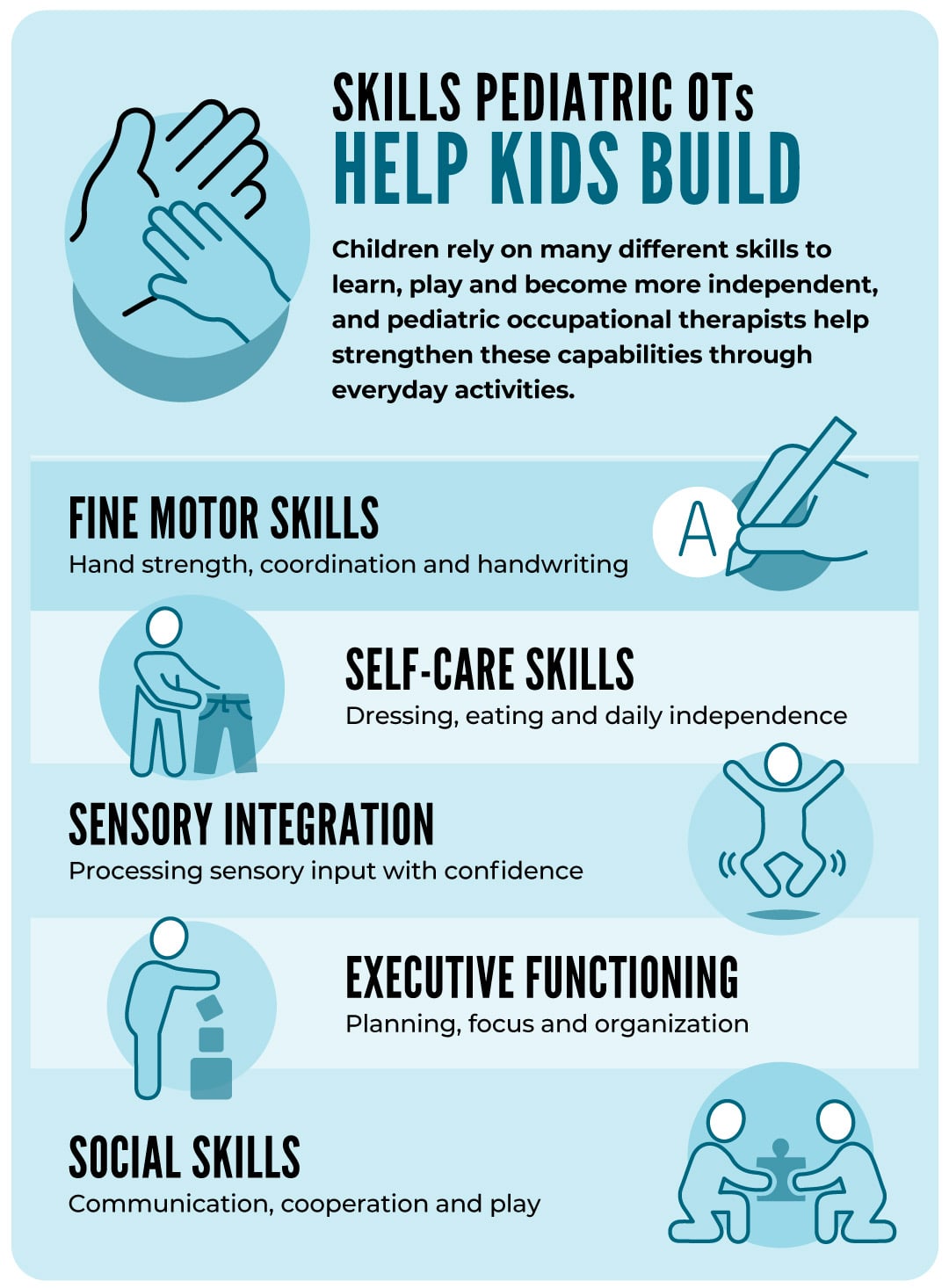
The following are skills that pediatric OTs help kids build:1
Fine Motor Control
Fine motor skills involve the small muscles of the hands and fingers that allow children to complete precise movements.
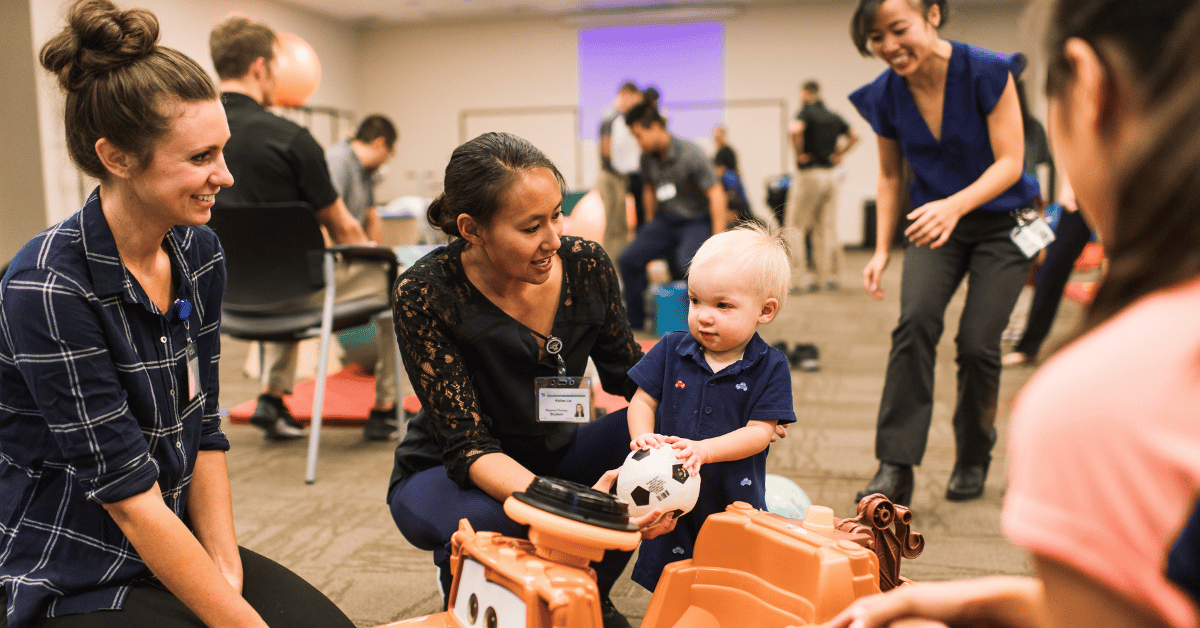
A pediatric OT may lead clients in activities such as threading beads, building with small blocks, cutting paper with scissors or creating art projects to improve hand strength, coordination and dexterity. These playful exercises help children develop the skills needed for handwriting, fastening buttons, using utensils and managing classroom tasks.
Self-Care Skills
Everyday routines such as brushing teeth, getting dressed, using the bathroom, eating independently and organizing personal belongings make up self-care skills.
Rather than practicing these tasks in isolation, occupational therapists break activities into manageable steps and adapt them to match a child’s abilities. For example, a therapist might use visual schedules, modified clothing fasteners or playful dressing games to help a young child master putting on a jacket independently.
For many families, gaining independence with self-care routines can improve confidence while making daily life less stressful.
Sensory Integration
The brain’s ability to organize and respond appropriately to information received through the senses is referred to as sensory integration.
Children who struggle with sensory integration may become overwhelmed by everyday environments or seek constant movement and sensory input. OTs create individualized activities that help children process sensory experiences more effectively.
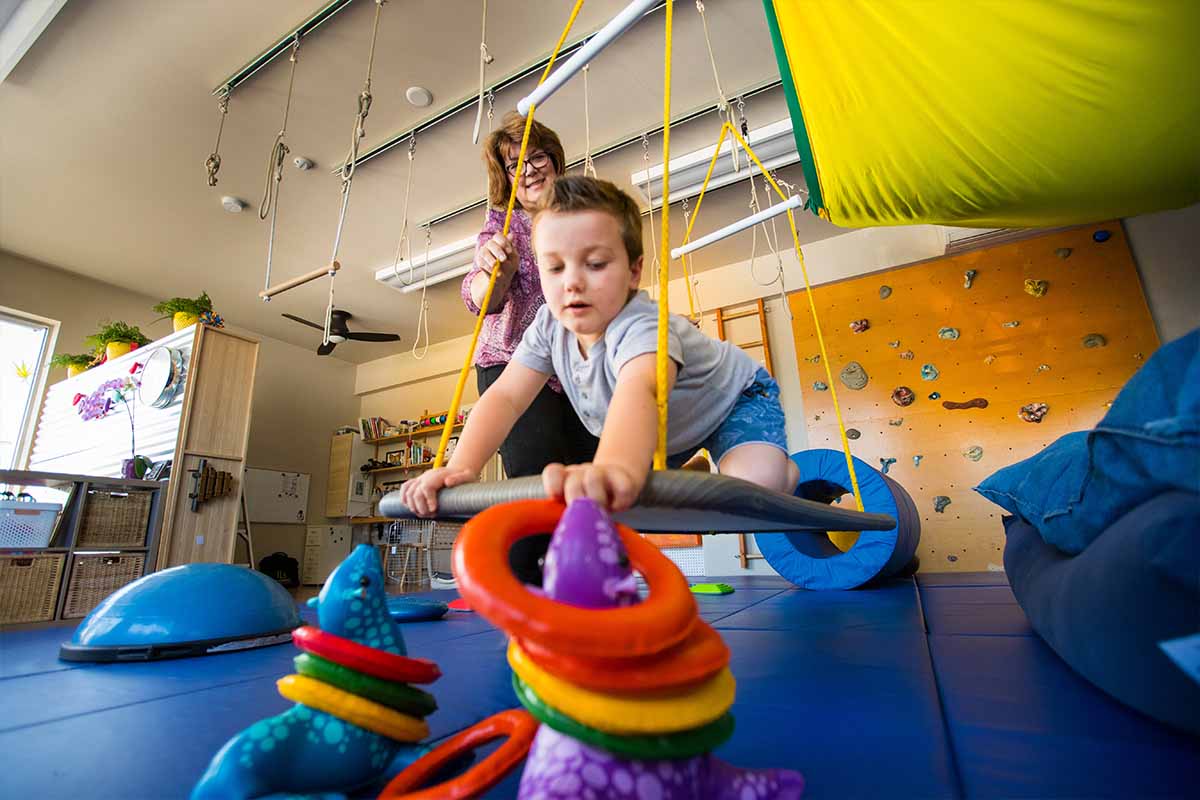
A therapy session might include swinging, climbing an obstacle course, exploring different textures or practicing calming strategies designed around the child’s sensory profile. While the activities often look like play, each one supports specific therapy goals.
Faculty research highlights the value of animal-assisted interventions in pediatric occupational therapy. Research co-authored by Macy Burr, OTD, OTR/L, ATP, CAS, assistant professor, OT programs, at USAHS San Marcos, CA, found that incorporating animals into pediatric OT telehealth interventions can enhance engagement and therapeutic outcomes.
Executive Functioning and Social Skills
The mental skills needed to plan, organize, focus attention, manage emotions and complete tasks are called executive functioning.4 These abilities play an important role in school success and everyday independence.
Occupational therapists help children strengthen executive functioning through structured games, visual supports, sequencing activities and real-world routines. They may also facilitate cooperative play, role-playing exercises or group activities that encourage communication, turn-taking, problem-solving and social participation.
Pediatric OT Techniques and Methods
While play is often a part of treatment, every activity in OT has a purpose. Pediatric OTs choose evidence-based techniques that align with a child’s goals, developmental level and environment.
You may encounter some of these approaches during clinical practice:
Sensory Integration Therapy
This type of therapy helps children process and respond to sensory information more effectively so they can participate in everyday activities with greater comfort and confidence.5
Common activities include:
- Swings and suspended equipment
- Balance and climbing exercises
- Tactile play with different textures
- Movement-based sensory activities
Goals:
- Improve responses to sensory input
- Increase participation at home, school and in the community
- Build confidence during everyday tasks
Adaptive Equipment Training
Pediatric OTs recommend and teach children how to use tools that promote greater independence.
Adaptive equipment may include:6
- Specialized seating
- Adapted pencils and writing tools
- Dressing aids
- Communication devices
- Classroom accommodations
Therapists also:
- Train parents and caregivers
- Educate teachers on proper use
- Help ensure equipment is used consistently across settings
DIR/Floortime®
DIR/Floortime is a relationship-based approach that follows a child’s interests to support communication, emotional development and social interaction.7
During therapy, the OT may:
- Join the child in play rather than direct every activity
- Encourage shared attention and engagement
- Build increasingly complex social interactions
- Support emotional regulation through intentional play
Commonly used for:
- Children with ASD or other developmental differences
Applied Behavior Analysis (ABA) Collaboration
OT and Applied Behavior Analysis (ABA) are separate disciplines that often work together when children receive services from multiple providers.8
| ABA Focus | OT Focus |
| Behavior and learning strategies | Sensory processing |
| Skill acquisition | Fine and gross motor skills |
| Behavior supports | Self-care and daily living skills |
| Reinforcement techniques | Functional participation in everyday activities |
Together, providers can coordinate treatment goals, create consistent strategies across environments and improve communication with families and caregivers.
Play-Based Interventions
Play is one of the primary ways pediatric OTs help children build developmental skills.1
Examples of therapeutic play include:
- Obstacle courses for balance and coordination
- Sensory bins for tactile exploration
- Pretend-play activities for communication and social skills
- Building with blocks to strengthen fine motor skills
- Scavenger hunts for planning and problem-solving
- Cooperative board games to practice turn-taking and executive functioning
This type of play therapy targets motor coordination, sensory processing, communication and more.
Where Do Pediatric Occupational Therapists Work?
One of the advantages of becoming a pediatric OT is the variety of settings where you can build your career.9 You might spend your entire career in one specialty area or explore multiple practice settings as your interests evolve.
Children’s Hospitals
Children’s hospitals care for infants, children and adolescents with acute illnesses, injuries and complex medical conditions.
OTs collaborate with physicians, nurses, physical therapists (PTs), SLPs and other healthcare practitioners to help young patients regain function, adapt to new challenges and prepare for life after the hospital.
Outpatient Rehabilitation and Pediatric Clinics
Many pediatric OTs work in outpatient rehabilitation centers or pediatric therapy clinics.
Children typically attend weekly appointments to work on individualized goals related to motor development, sensory processing, self-care, feeding or school readiness. As therapists may see the same families over months or years, they can build relationships and celebrate developmental milestones together.
Public and Private Schools and Early Intervention Programs
Schools are among the largest employers of pediatric OTs.
School-based OTs help students participate successfully in the classroom by supporting handwriting, classroom organization, sensory regulation and other skills that contribute to learning. They also collaborate with teachers and families to recommend accommodations and strategies that promote student success.
For younger children, early intervention programs provide therapy during the critical first years of development, often working closely with parents and caregivers to build skills through everyday routines.
Home Health Settings
Some children may benefit from receiving therapy where they spend much of their time at home.
Home health OTs evaluate how children navigate their environments and develop practical strategies that fit naturally into family routines. Working in the home also allows therapists to identify environmental barriers and coach caregivers using real-life situations.
What Does a Typical Pediatric OT Evaluation and Treatment Process Look Like?
Each child begins OT with a unique story. A comprehensive evaluation helps therapists understand not only the child’s challenges but also their strengths, interests and goals.
The process generally follows several key steps.10
Initial Evaluation
The first appointment focuses on gathering information about the child’s development, medical history, daily routines and current concerns.
The OT may observe how the child plays, moves, communicates or completes age-appropriate tasks. Standardized assessments and clinical observations help identify areas where additional support may be beneficial.
OTs also listen to parents and caregivers to understand what success looks like for the family.
Individualized Treatment Planning
Following the evaluation, the therapist develops a treatment plan tailored to the child’s specific needs.
Goals are functional and meaningful. Rather than focusing only on improving hand strength, for example, a goal might be to help a child independently zip a backpack before school or participate more comfortably in classroom activities.
Treatment plans also consider the child’s interests because engagement often leads to better outcomes.
Ongoing Process Monitoring
As children grow and develop, OTs continually evaluate progress and adjust interventions. Goals may change as new skills emerge, developmental milestones are reached or family priorities shift.
Regular communication among therapists, families and other providers helps ensure treatment remains aligned with the child’s evolving needs.
Family and Caregiver Involvement
Parents play an essential role in pediatric OT.
As children spend more time at home and school than they do in therapy sessions, OTs teach families strategies they can incorporate into everyday routines. Small adjustments during meals, playtime, homework or bedtime can reinforce skills between appointments and help children apply what they have learned in rewarding ways.

Is a Pediatric Occupational Therapist a Doctor?
So, what is a pediatric occupational therapist—are they doctors?
Some OTs earn a Doctor of Occupational Therapy (OTD) degree, a professional doctorate that prepares graduates for advanced clinical practice, leadership and research. Others enter the profession through a Master of Occupational Therapy (MOT) degree.11
An OTD is different from a Doctor of Medicine (MD). Pediatric OTs do not attend medical school or practice medicine. Instead, they are licensed rehabilitation professionals who evaluate functional abilities, develop treatment plans and help children participate more fully in everyday life.
What Age Range Do Pediatric Occupational Therapists Work With?
Pediatric OTs work with children across a wide range of developmental stages. Depending on the practice setting, they may serve patients from infancy through adolescence and, in some cases, young adults up to age 21. 12
For example, an early intervention specialist may work primarily with infants and toddlers, while a school-based OT supports students from preschool through high school. Children’s hospitals and outpatient clinics often care for patients across multiple age groups, allowing therapists to follow children through different stages of development.
How to Become a Pediatric Occupational Therapist
If you are inspired by the opportunity to help children build confidence and independence, becoming a pediatric occupational therapist begins with a strong educational foundation.
Most aspiring OTs first earn a bachelor’s degree before enrolling in an accredited graduate occupational therapy program. During graduate school, students develop clinical knowledge through coursework and hands-on fieldwork experiences that prepare them to work with clients across the lifespan, including children.13
After graduation, they must pass the National Board for Certification in Occupational Therapy (NBCOT) certification exam and meet their state’s licensure requirements before beginning clinical practice. OTs interested in pediatrics may seek fieldwork placements or early-career positions in children’s hospitals, schools, outpatient clinics or early intervention programs to gain specialized experience. Some later pursue board certification in pediatrics.
Learn more about how to become a pediatric occupational therapist.
Pediatric Occupational Therapist Salary
You may be wondering what you can expect to earn for a pediatric occupational therapist salary.
The U.S. Bureau of Labor Statistics (BLS) does not report salary data by specialty area. Instead, it publishes wage information for occupational therapists. That means pediatric-specific salary figures are limited, and the BLS data serves as the most reliable benchmark for understanding earning potential.
According to BLS, OTs earned a median annual salary of $100,330 as of May 2025.14† Earnings vary based on factors such as geographic location, years of experience, employer, education level and practice setting.
Frequently Asked Questions (FAQ)
How many years of college does it take to become a pediatric occupational therapist?
The timeline varies depending on your educational path, but most students spend about six to seven years completing a bachelor’s degree followed by an accredited occupational therapy graduate program.13 After graduation, you must pass the NBCOT certification exam and meet your state’s licensure requirements before practicing as an occupational therapist.
Where can I find a pediatric occupational therapy program near me?
When comparing graduate programs, look for accredited occupational therapy programs that offer strong pediatric fieldwork experiences, experienced faculty and opportunities to collaborate with other healthcare disciplines. If you are interested in becoming a pediatric occupational therapist, exploring programs with dedicated pediatric clinical placements can help you build specialized skills before graduation.
What’s the difference between a pediatric occupational therapist and a physical therapist?
Both PT and OT professions help children develop functional skills, but their focus differs. Pediatric occupational therapists support self-care, fine motor skills, sensory processing and school participation, while physical therapists focus on strength, balance, mobility, posture and gross motor development. They often work together as part of a child’s care team.
Faculty research highlights the benefits of interprofessional occupational therapy care teams. Research co-authored by Caitlyn Boyd, OTR, MOT, CBIS, former academic fieldwork coordinator and instructor at USAHS Dallas, TX, demonstrated that communication and collaboration can support improved client outcomes, with significant functional benefits from this collaborative approach.
Can a pediatric occupational therapist diagnose conditions?
No. Pediatric occupational therapists do not diagnose conditions like autism, cerebral palsy or ADHD.15 Instead, they evaluate how a child’s challenges affect daily activities and create individualized treatment plans, often collaborating with physicians and other healthcare professionals.
Helping Children Thrive Starts with the Right OT Education
So, what is a pediatric occupational therapist? It’s a healthcare practitioner who helps children overcome challenges and reach everyday milestones. If you are looking for a career that combines rehabilitative sciences, creativity and compassion, pediatric OT offers the opportunity to make a lasting impact on children and families.
A graduate OT education can help you build the clinical knowledge, hands-on practice and professional confidence to pursue this profession.
Learn more about the University of St. Augustine for Health Sciences (USAHS) Journey to Clinical Excellence™ and discover how you can help children thrive.
†This data represents national figures, is not based on school-specific data and represents national median annual wages, not starting pay for recent grads. Conditions in your area may vary. USAHS does not guarantee salary levels.
Sources
- “Pediatric Occupational Therapy,” Cleveland Clinic, June 21, 2023, https://my.clevelandclinic.org/health/treatments/25094-pediatric-occupational-therapy.
- Sutton, A., “Role of Occupational Therapy,” Kinetic Rehab & Spine, September 10, 2024, https://kineticrehabspine.com/the-comprehensive-role-of-occupational-therapy/.
- “Occupations & everyday activities,” The American Occupational Therapy Association (AOTA), 2026, https://www.aota.org/practice/domain-and-process/occupations-everyday-activities.
- “Executive Function,” Cleveland Clinic, March 15, 2024, https://my.clevelandclinic.org/health/articles/executive-function.
- Guardado, K. and Sergent, S., “Sensory Integration,” StatPearls, July 31, 2023, https://www.ncbi.nlm.nih.gov/books/NBK559155/.
- Chandler, M., “Our List of “Must-Know” Adaptive Equipment for OT Practitioners,” My OT Spot, July 31, 2023, https://www.myotspot.com/adaptive-equipment/.
- “What is DIR®?, ”The International Council on Development and Learning (ICDL), 2026, https://www.icdl.com/dir.
- Quinn, N., “How ABA Complements Occupational Therapy in Autism Treatment,” appliedbehavioranalysisedu.org, March 5, 2026, https://www.appliedbehavioranalysisedu.org/occupational-therapy/.
- “Occupational Outlook Handbook: Occupational Therapists: Work Environment,” U.S. Bureau of Labor Statistics (BLS), August 28, 2025, https://www.bls.gov/ooh/healthcare/occupational-therapists.htm#tab-3.
- Shreckler, J., “A Day in the Life of a Pediatric Outpatient OT,” My OT Spot, https://www.myotspot.com/day-in-the-life-of-a-pediatric-outpatient-ot/.
- Hoyt, C., “Which OT Degree? (MSOT, OTD, PPOTD, & More!)”, OT Potential, July 4, 2025, https://otpotential.com/blog/occupational-therapy-degree.
- Lyon, S. and Woolley, A., “Pediatric Occupational Therapy (Guide & Directory),” OT Potential, May 28, 2026, https://otpotential.com/blog/pediatric-occupational-therapy.
- Indeed Editorial Team, “How to Become a Pediatric Occupational Therapist (With Job Details),” Indeed, June 15, 2026, https://www.indeed.com/career-advice/finding-a-job/how-to-become-pediatric-occupational-therapist.
- “Occupational Outlook Handbook: Occupational Therapists,” U.S. Bureau of Labor Statistics (BLS), August 27, 2026, https://www.bls.gov/ooh/healthcare/occupational-therapists.htm.
- Kaskavage, K., “What Does a Pediatric Occupational Therapist Do?,” Kids Care Home Health, October 1, 2024, https://kidscarehomehealth.com/what-does-a-pediatric-occupational-therapist-do/.