Lee Ann Hoffman – OTD, ATP/SMS – OT Faculty Profiles, USAHS
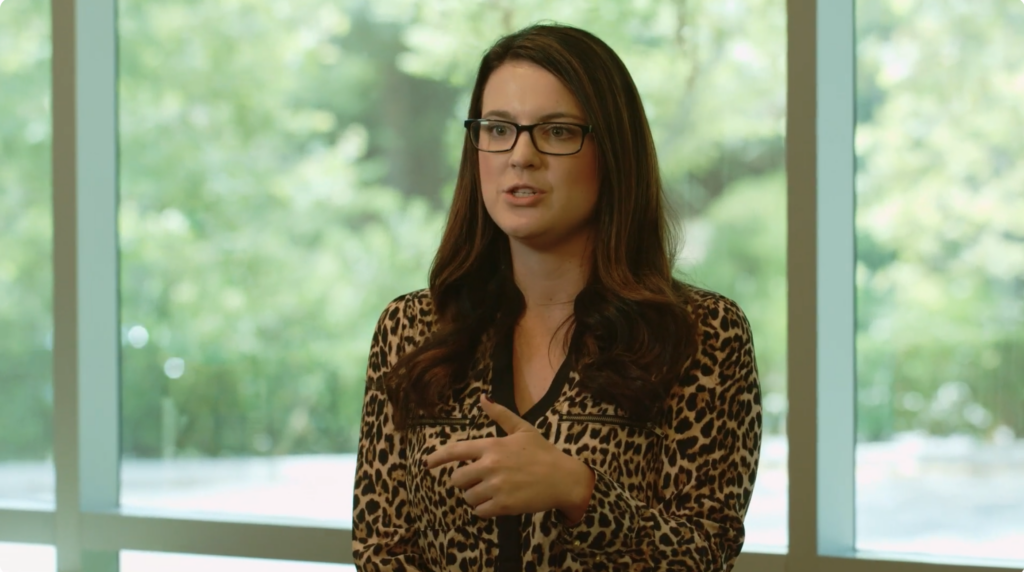
Get to know Lee Ann Hoffman, an occupational therapy faculty member at the University of St. Augustine for Health Sciences (USAHS), as she shares her experiences as a clinician, educator, and occupational therapy practitioner.
Lee Ann reflects on the impact of occupational therapy in helping individuals regain independence and participate in meaningful life experiences. She shares a powerful clinical story about working with an individual who had been confined to bed for 20 years, highlighting how customized wheelchair seating, collaboration, and patient-centered care helped him regain mobility and reconnect with his community.
The video also explores Lee Ann’s perspective on occupational therapy education and the development of future practitioners. She discusses the transformation students experience throughout their education, the importance of faculty mentorship, and the support available across both entry-level and post-professional occupational therapy programs at USAHS. Through her experiences as both a faculty member and post-professional student, Lee Ann offers insight into the university’s approach to supporting student growth and success.
Transcript
Lee Ann Hoffman – OTD, ATP_SMS – OT Faculty Profiles, USAHS
[00:00:00] Lee Ann Hoffman (OT Faculty): Our students are incredibly special. I think they’re part of that occupational therapy family, so everyone’s got a specific something that brings them to OT, and I see that in the very early stages of when they come into the program. The most magical thing is when you watch a student from semester one all the way through to their final semester, that process of, and that transformation they go through. That new identity they take on is incredible. So to watch them be successful, to watch them understand occupational therapy like I understand it, and to also see occupational therapy through their eyes, it’s an incredible gift. I mean, I can’t speak more highly of our students here. [00:00:41] I think it was going with my gut, so taking all the things I had learnt and putting it into practice, that moment of, “Aha, this actually works,” and it is impactful, not just for the client themselves, but for the family. So I had a client who was in bed for 20 years and I got the phone call, “Can you come and help provide this gentleman with a wheelchair?” And I arrived at the appointment all ready to do, to do the things, and realized that he had been in bed for 20 years, and that came with a whole layer of complexity. So educating others around about what the focus was and the pathway, and it really takes a village, so getting everyone on board was the first stage of success. And then time, so having time to implement and time to support this person, getting them up from the bed and into a specific wheelchair for them that they could actually access the community and go to their niece’s wedding and enjoy going to the seafront and having those really annoying seagulls come and eat your ice cream. So allowing that person to have the same opportunities we have, where he would’ve just been in bed and with four walls in the room, so that was my aha. [00:02:01] So what this university offers, I think, is a holistic experience. So if you’re entry level or you’re post-professional, the university caters for students. If you’re the new student or the mature student, this university supports you, and I can speak to both. So as an instructor in the entry level program, I see how much support is given to our students, and how much we care about their success. As a student myself in the post-professional program, I know and I receive that same level of support. The instructors are incredible in the post-professional program, and I see the same qualities mirrored across both the programs. So that’s what this university does differently, is support students. They take away the barriers so the student can be successful.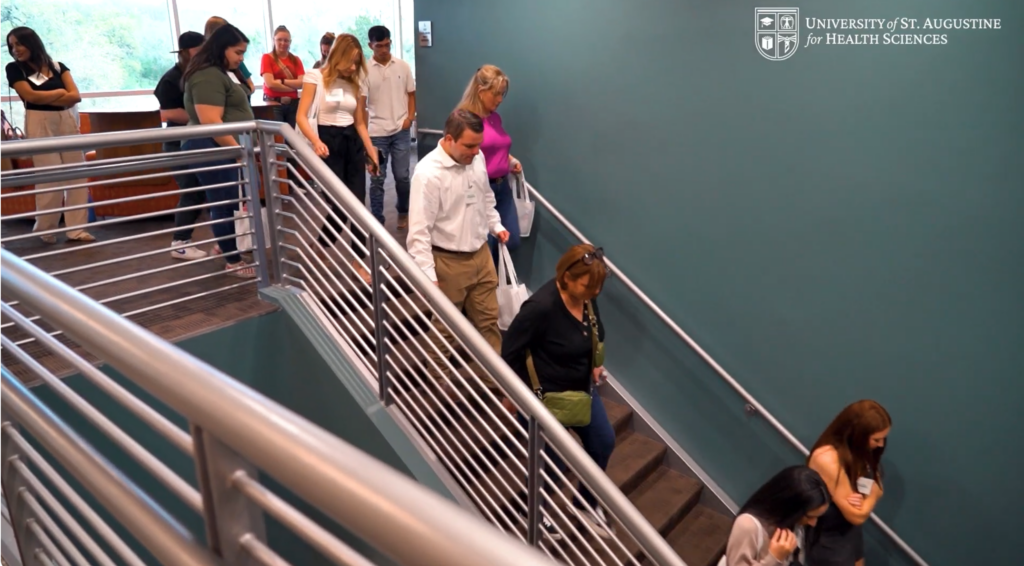
Enrollment Services – The Journey to Clinical Excellence, USAHS Occupational Therapy Programs
Students and staff discuss the enrollment process and student services.
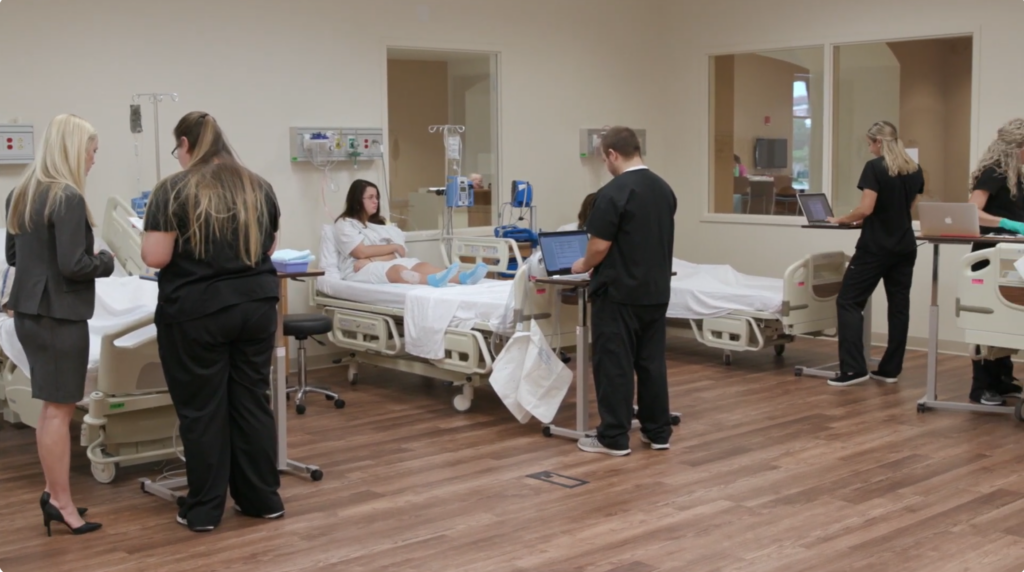
Center for Innovative Clinical Practice (CICP)—University of St. Augustine for Health Sciences
Students and faculty discuss learning in state-of-the-art simulation facilities.
Testimonial – Kaylee Saenz, Post-Professional OT Student
Hear from a student in the USAHS PPOTD program.