
Khalil Mrabe – OTD, OTR/L, MED – OT Faculty Profiles, USAHS
Get to know Khalil Mrabe, an occupational therapy faculty member at the University of St. Augustine for Health Sciences (USAHS), as he shares his perspective on the profession, his clinical experiences, and his passion for teaching future occupational therapists.
Khalil discusses the rehabilitative nature of occupational therapy and the importance of recognizing each individual’s unique needs, experiences, and opportunities for growth. He also shares a clinical experience working with a pediatric patient, highlighting how occupational therapy interventions can support emotional regulation, coping skills, and greater independence in everyday environments.
The video also explores Khalil’s approach to occupational therapy education and the rewarding experience of watching students develop into future practitioners. He reflects on the growth of his students throughout the curriculum and the transition from classroom learning to clinical fieldwork. Through his experiences as both a clinician and educator, Khalil shares the impact occupational therapy can have on individuals, families, and the broader community.
Transcript
Khalil Mrabe – OTD, OTR_L, MED – OT Faculty Profiles, USAHS
[00:00:00] Khalil Mrabe (OT Faculty): It’s a rehabilitative process. It’s taking the opportunities that people present by who they are and the uniqueness that they provide, not just to the sessions, but to their experiences, and it utilizes that information so that we give them the best opportunity to grow within themselves and become the best version of themselves. [00:00:16] What I love most about teaching in OT is really seeing the future of occupational therapy come to pass. So we’re able to see how students receive and process information and grow as time goes on in terms of how, what, and why they think about occupational therapy and what we’re doing as a profession to move forward and grow together, not just as individuals, but as a population and group to help support society as a whole. [00:00:41] I had a young child who was about seven or eight years old, and he had been coming into the clinic that I started working at where he was receiving pediatric OT, he was receiving speech, and he was receiving physical therapy as well. In addition, he was receiving behavioral health, and there just wasn’t any progression that was being made over time. He was receiving a lot of flak from therapists, from parents, from kids. He wasn’t able to go to school regularly like most kids. He was kind of stuck in the clinic all day trying to receive his education and his care. But when I came, we started working on some coping mechanisms. We started working on some of his emotional impulsivity and trying to help him grow in terms of how he reacts. We want to make him a less impulsive person so that he can take a moment and think about what he’s going to do, why he’s going to do it, how he might perform some of these actions. And so over time… I was there for about three months, and within that three months, we got him to the point where he could actually attend traditional school settings, where he was able to go into a classroom and participate over a six- to eight-hour period without having breakdowns. [00:01:48] And if he did have breakdowns, he was able to cope and deal with some of those obstacles that he was being challenged with over time. My second proudest moment was in academia, and it was my first group of students that ended up heading out into fieldwork. They had finished their pinning. They were a larger group, but they were my first group. They had grown from the first time I saw them in their anatomy class to where they had ended up in their older adults class that I had also assisted on. And so being able to see that growth and that progression, not just as individuals, but as professionals moving out into this great big world that they have, I think that that was one of my proudest moments as an occupational therapist.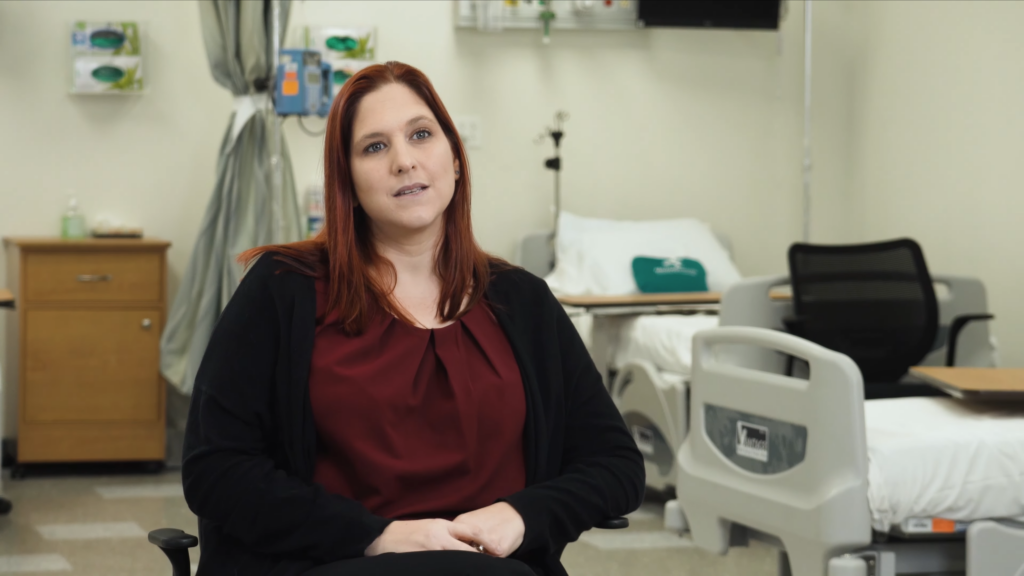
Kristin Domville – OTD, MOT, OTR/L – OT Faculty Profiles, USAHS
Meet Our OT Faculty
Enrollment Services – The Journey to Clinical Excellence, USAHS Occupational Therapy Programs
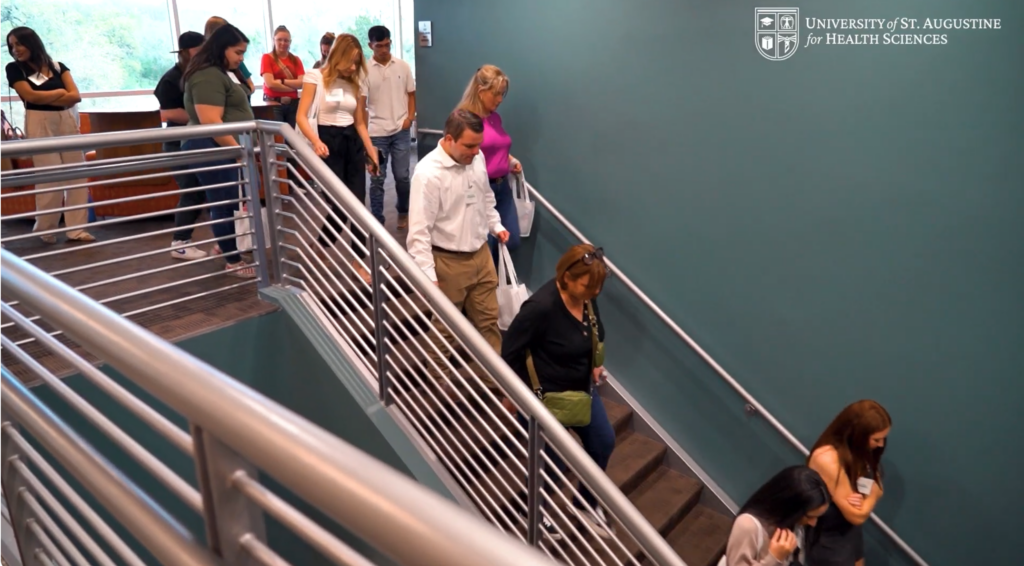
Students and staff discuss the enrollment process and student services.
Center for Innovative Clinical Practice (CICP)—University of St. Augustine for Health Sciences
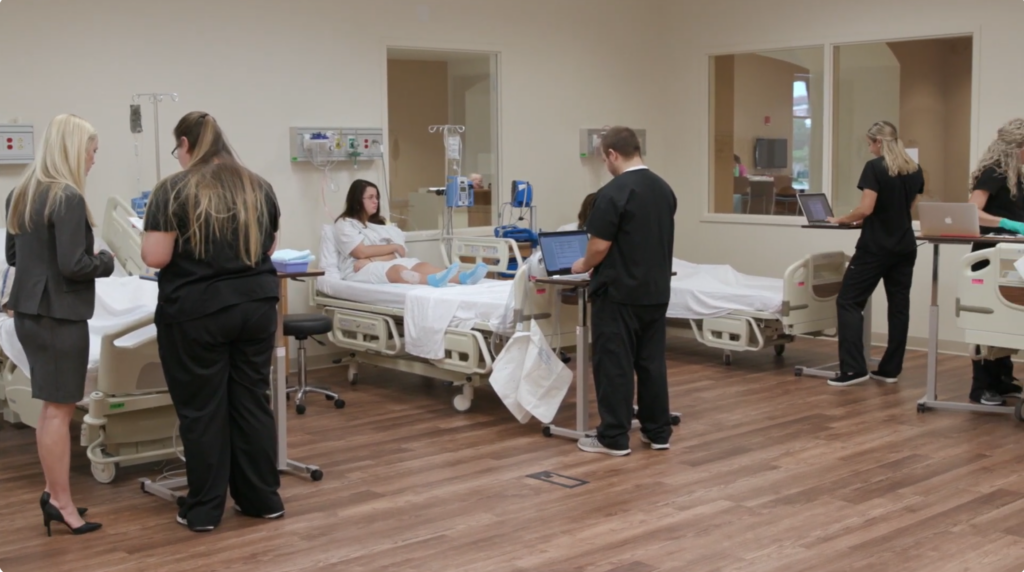
Students and faculty discuss learning in state-of-the-art simulation facilities.