
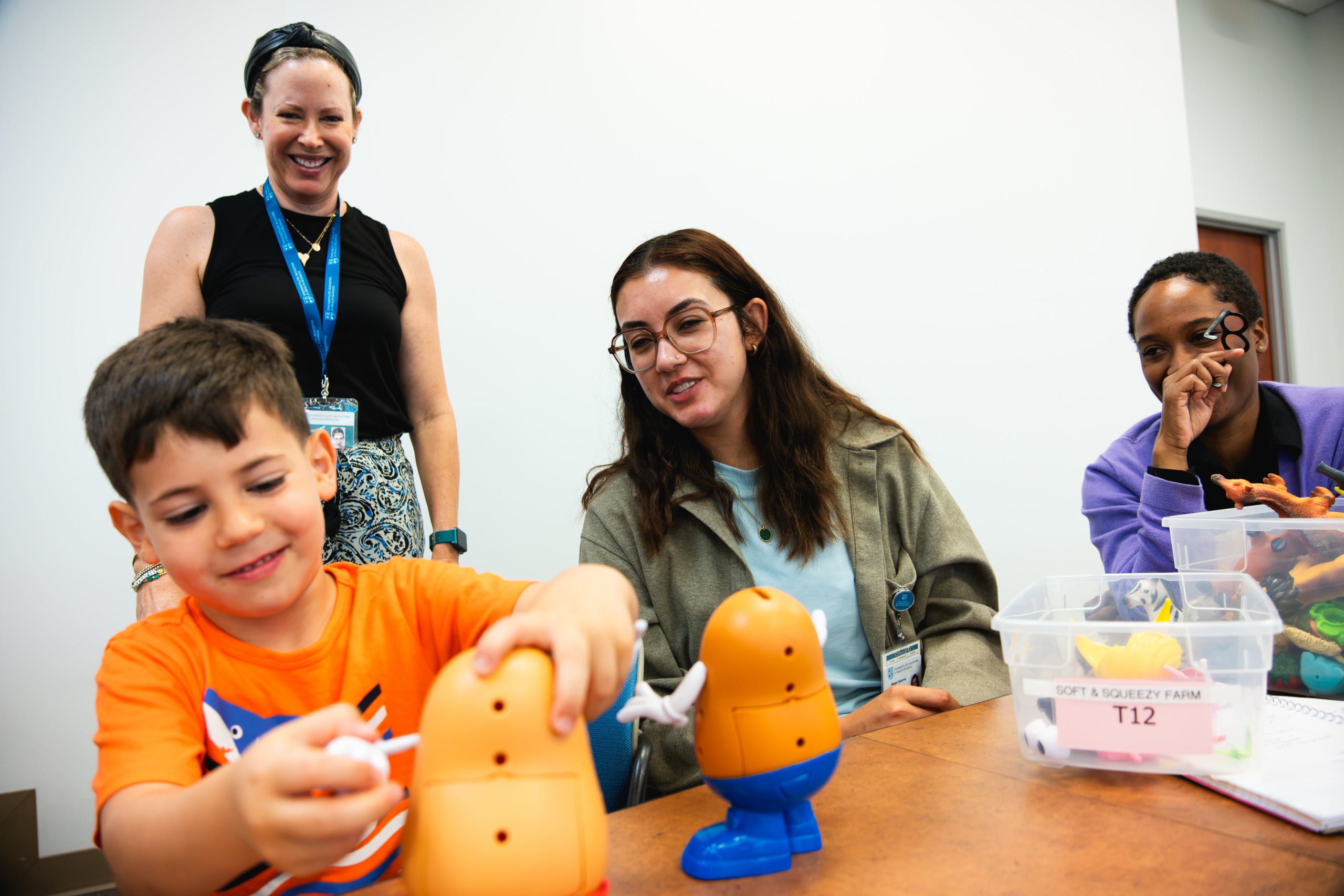
Maybe you love kids but want to pursue a career path other than teaching or caregiving. You may consider becoming a pediatric speech pathologist.
Pediatric speech therapy focuses on helping infants, children and teens develop communication, language, feeding and swallowing skills. Pediatric speech-language pathologists (SLPs) perform the same duties as SLPs but specialize in working with children who have speech sound disorders, language delays, social-communication challenges, autism-related communication needs or feeding and swallowing difficulties.1
If you’re considering a career in pediatric speech-language pathology, you are on the path to a rewarding career. We’ll discuss what pediatric SLPs do, how the career outlook is trending and how much you can expect to earn as a pediatric SLP. We’ll also talk about how graduate education, like the University of St. Augustine for Health Sciences (USAHS) Master of Science in Speech-Language Pathology (MS-SLP) program, can help prepare you for this path.
What Do Pediatric Speech-Language Pathologists Do?
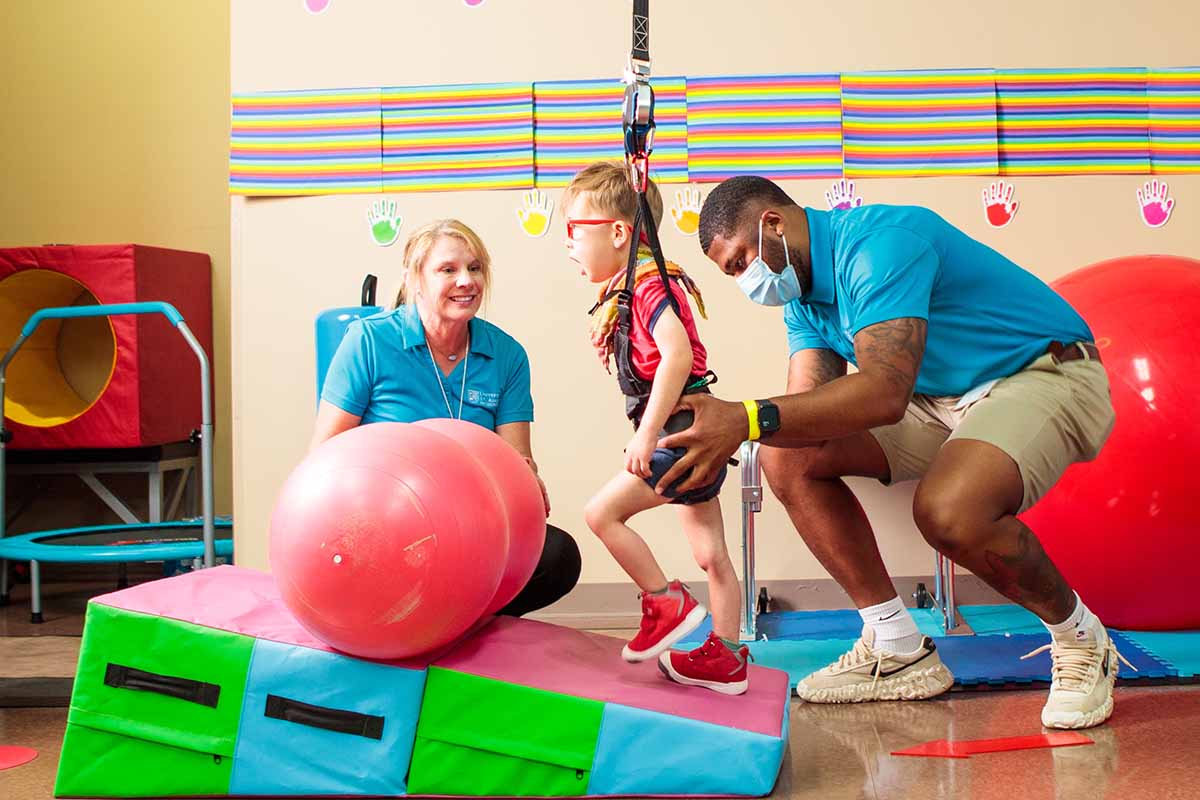
Pediatric speech pathologists, like all SLPs, prevent, assess, diagnose and treat a wide range of communication and feeding disorders.2 They work with children, from birth through adolescence. Pediatric speech therapy jobs support children’s ability to communicate effectively, participate in learning environments and safely eat and drink when feeding challenges are present.
Common areas of pediatric speech therapy include:3
- Speech sound and articulation disorders
- Receptive and expressive language delays
- Social communication and pragmatic language skills
- Autism spectrum-related communication differences
- Fluency disorders such as stuttering
- Pediatric feeding and swallowing disorders
Collaboration and Family-Centered Care
Pediatric speech-language pathologists rarely work alone. Many collaborate closely with parents, caregivers, teachers, special educators, psychologists, occupational therapists and physicians to improve a child’s well-being. In school settings, speech-language pathologists are often part of interdisciplinary teams that support students’ academic and social participation.4
This collaborative approach is a defining feature of pediatric speech therapy and a reason professionals may be drawn to the field.
Pediatric Speech Therapist Salary Overview
The average annual pediatric speech-language pathologist salary is $73,402.*†5 Pediatric SLPs may work in school-based, pediatric hospitals, outpatient and home health settings. Wages typically fall between the lower and upper figures reported by the U.S. Bureau of Labor Statistics (BLS), based on location, setting and experience.6
Geographic regions and metropolitan areas can influence earnings, and you’ll likely make more money in certain states and urban areas.
School-Based Pediatric SLP Salaries
Many pediatric speech therapists work in schools. According to ASHA’s 2024 Schools Survey:7
- The median full-time academic-year (9 to 10 months) salary for school-based SLPs was $74,849†.
- Median academic year salaries for clinical service providers were around $74,000†, with higher medians in some regions and secondary school settings.
- For SLPs on 11 to 12-month contracts, the reported median calendar-year salary was $86,000†.
Taking on a school-based role may also mean you’ll get benefits like predictable schedules, breaks and alignment with academic calendars.
Job Outlook for Pediatric Speech Therapists
If you’re considering becoming a pediatric speech therapist, it’s a great time to pursue this path. The career outlook for speech-language pathologists, including those working in pediatric settings, is strong. The BLS projects 15% employment growth for speech-language pathologists over the next decade, which is much faster than the average for all occupations.8
The BLS also estimates approximately 13,300 job openings per year over the decade, which includes new positions and workplace turnover.8
Factors Driving Demand
So, what’s causing the demand for speech pathologists? Several long-term trends contribute, including the following:9
- A continued need for school-based services under the Individuals with Disabilities Education Act (IDEA)
- An increased emphasis on early identification and early intervention
- Improved survival rates among premature infants
- Ongoing demand for services related to pediatric feeding and swallowing needs
ASHA workforce data also point to supply-and-demand imbalances in some settings. Recent surveys show that more than half of healthcare SLPs report having more job openings than available candidates, especially in high-demand areas such as home health, where professionals provide pediatric in-home speech therapy services.10 These findings span multiple age groups and may apply to pediatric specialists.
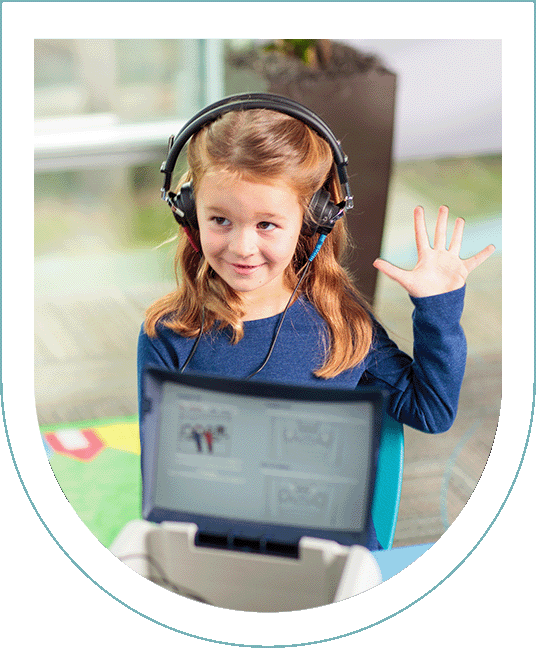
How to Become a Pediatric Speech Therapist
Now that you know the current trends in the pediatric SLP job market, you need to know how to become a pediatric speech therapist. At USAHS, we’ve made it easy for you with post-graduate education that aligns with your schedule.
Complete the Required Education
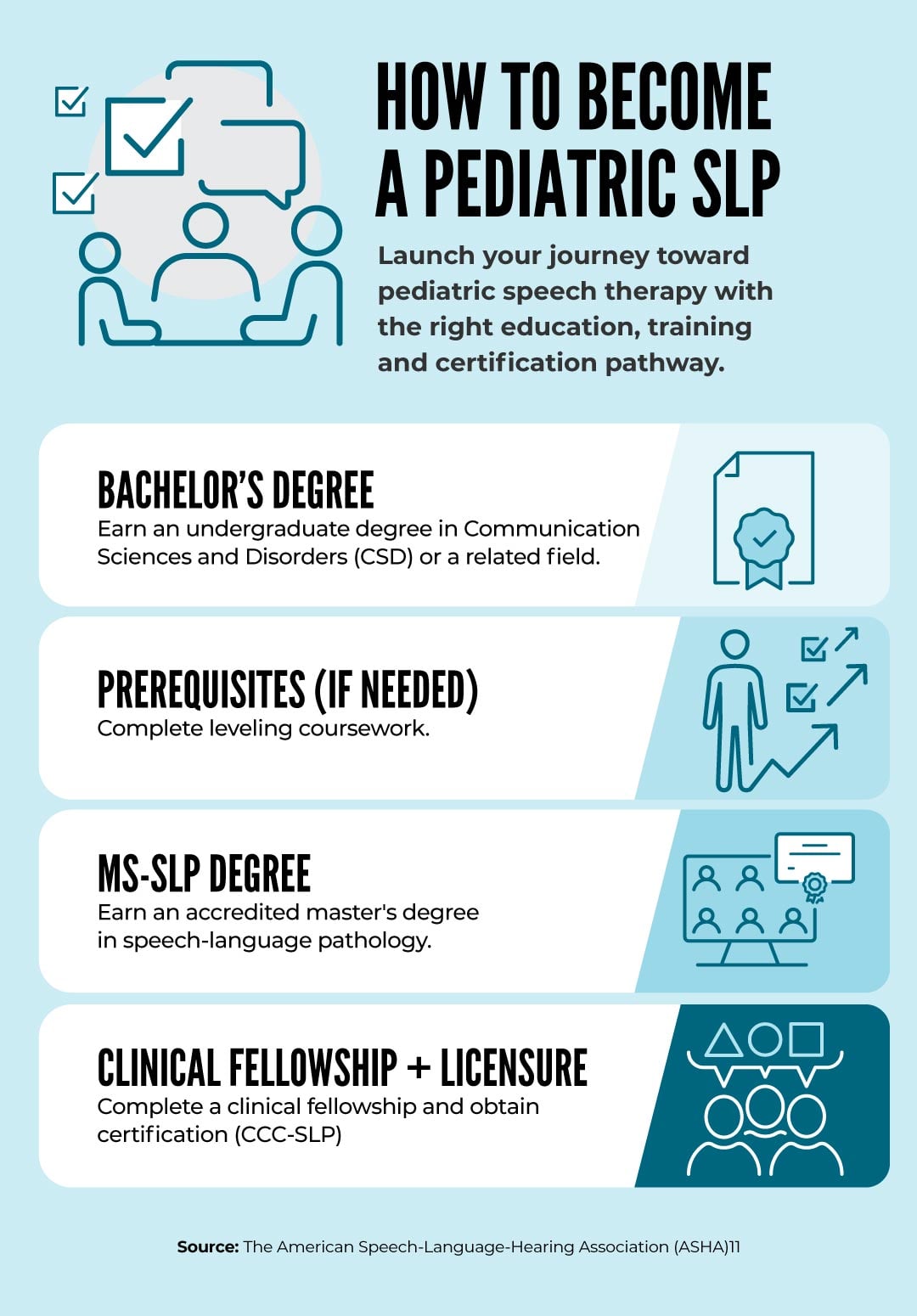
The pathway to pediatric speech therapy begins with the education and training required to become a speech-language pathologist. Most pediatric speech-language pathologists follow these steps:
- Earn a bachelor’s degree, often in communication sciences and disorders or a related field such as psychology, linguistics or education.
- Complete any required prerequisite or leveling coursework if the undergraduate program is not CSD or a related degree.
- Earn an accredited master’s degree in speech-language pathology (MS-SLP).
Graduate programs must be accredited by the Council on Academic Accreditation in Audiology and Speech-Language Pathology (CAA) to qualify graduates for certification and licensure.
The USAHS MS-SLP Program
The University of St. Augustine for Health Sciences MS-SLP program is designed to prepare you for professional practice across the lifespan, including pediatric-focused roles.
Our program highlights include:
- Hybrid formats. Online coursework combined with three-day, on-campus residencies in multiple terms.
- Accelerated structure. Students may complete the program in about one year and eight months (five trimesters).**
- Clinical preparation. Students complete 400 clinical contact hours, including experiences with pediatric and school-age populations.
- Curriculum depth. Coursework includes topics such as Early Language Disorders, School Age Language Disorders, Autism and Social Communication Disorders and Augmentative and Alternative Communication (AAC).
- Cultural and linguistic diversity certificate. Designed to support work with bilingual and multicultural pediatric populations.
Complete Your Clinical Fellowship and Certification
After earning an MS-SLP, you must complete a Clinical Fellowship (CF) under supervision to qualify for the ASHA Certificate of Clinical Competence in Speech-Language Pathology (CCC-SLP). 11 Most candidates must also pass the Praxis Examination in Speech-Language Pathology.
Once the degree, practicum, CF and Praxis requirements are met, candidates may apply for:
- ASHA certification (CCC-SLP)
- State licensure, which is required to practice and varies by state
Ready to Pursue an MS-SLP?
With an accredited MS-SLP, ASHA certification and pediatric-focused clinical experience, speech-language pathologists may pursue a wide range of pediatric roles. Programs like the USAHS hybrid MS-SLP provide a flexible, clinically rich pathway designed to prepare graduates for professional practice across the lifespan, including work with children.
FAQs
How much do pediatric speech therapists make?
Earnings vary by location, experience and setting. The average annual pediatric speech-language pathologist salary is $73,402.*†5
Do pediatric SLPs in schools earn less than those in hospitals?
School-based and hospital-based salaries can differ based on contract length, benefits and region. Some clinicians value school schedules and benefits, while others prioritize clinical or medical settings.
How can a graduate program like the USAHS MS-SLP help me focus on pediatric practice?
Programs such as the USAHS MS-SLP offer pediatric-focused coursework, supervised clinical experiences with children and service-learning opportunities that help students build foundational skills for pediatric speech therapy roles.
*The information provided on this website is based on self-reported data and is intended for informational purposes only. Payscale is a limited data source that relies on voluntary submissions from individuals and employers. The accuracy, completeness and reliability of the data presented may vary due to its voluntary nature and limited scope. While efforts are made to maintain the data’s accuracy, we cannot guarantee its absolute correctness or currency.
†This data represents national figures, is not based on school-specific data and represents national median annual wages, not starting pay for recent grads. Conditions in your area may vary. USAHS does not guarantee salary levels.
**Time to completion may vary by student, depending on individual progress, credits transferred, and other factors.
References:
- “Speech-Language Pathologists,” The American Speech-Language-Hearing Association (ASHA), 2026, https://www.asha.org/students/speech-language-pathologists/.
- “Scope of Practice in Speech-Language Pathology,” The American Speech-Language-Hearing Association (ASHA), 2026, https://www.asha.org/policy/SP2016-00343/.
- American Speech-Language-Hearing Association. “Speech-Language Pathologists.” 2015. https://www.asha.org/students/speech-language-pathologists/
- “Roles and Responsibilities of Speech-Language Pathologists in Schools,” The American Speech-Language-Hearing Association (ASHA), 2026, https://www.asha.org/policy/ps2010-00318/.
- “Average Pediatric Speech-Language Pathologist Salary,” Payscale, 2026, https://www.payscale.com/research/US/Job=Pediatric_Speech-Language_Pathologist/Salary.
- “Occupational Employment and Wage Statistics,” U.S. Bureau of Labor Statistics (BLS), April 3, 2024, https://www.bls.gov/oes/2023/may/oes291127.htm.
- “ASHA 2024 Schools Survey: Annual Salaries and Hourly Wages,” The American Speech-Language-Hearing Association (ASHA), March 10, 2025, https://www.asha.org/siteassets/surveys/2024-schools-slp-salaries.pdf.
- “Occupational Outlook Handbook: Speech-Language Pathologists: Job Outlook,” U.S. Bureau of Labor Statistics (BLS), August 28, 2025, https://www.bls.gov/ooh/healthcare/speech-language-pathologists.htm#tab-6.
- “What’s Driving the Demand for Speech-Language Pathologists?,” AMN Healthcare, October 18, 2022, https://www.amnhealthcare.com/amn-insights/news/speech-language-pathologists/.
- “SLP Health Care 2025 Survey: Workforce,” The American Speech-Language-Hearing Association (ASHA), July 22, 2025, https://www.asha.org/siteassets/surveys/2025-slp-hc-survey-workforce.pdf.
- American Speech-Language-Hearing Association. “Apply for Certification in Speech-Language Pathology,” The American Speech-Language-Hearing Association (ASHA), 2026, https://www.asha.org/certification/SLPCertification/.