
According to the National Institute on Deafness and Other Communication Disorders (NIDCD), more than three million Americans stutter. In one survey study, nearly 18 million adults reported experiencing a problem with their voice in the preceding 12 months. Also, 1 in 14 children ages 3 to 17 had experienced a disorder related to voice, speech, or language within the previous year, with boys affected more often than girls.1
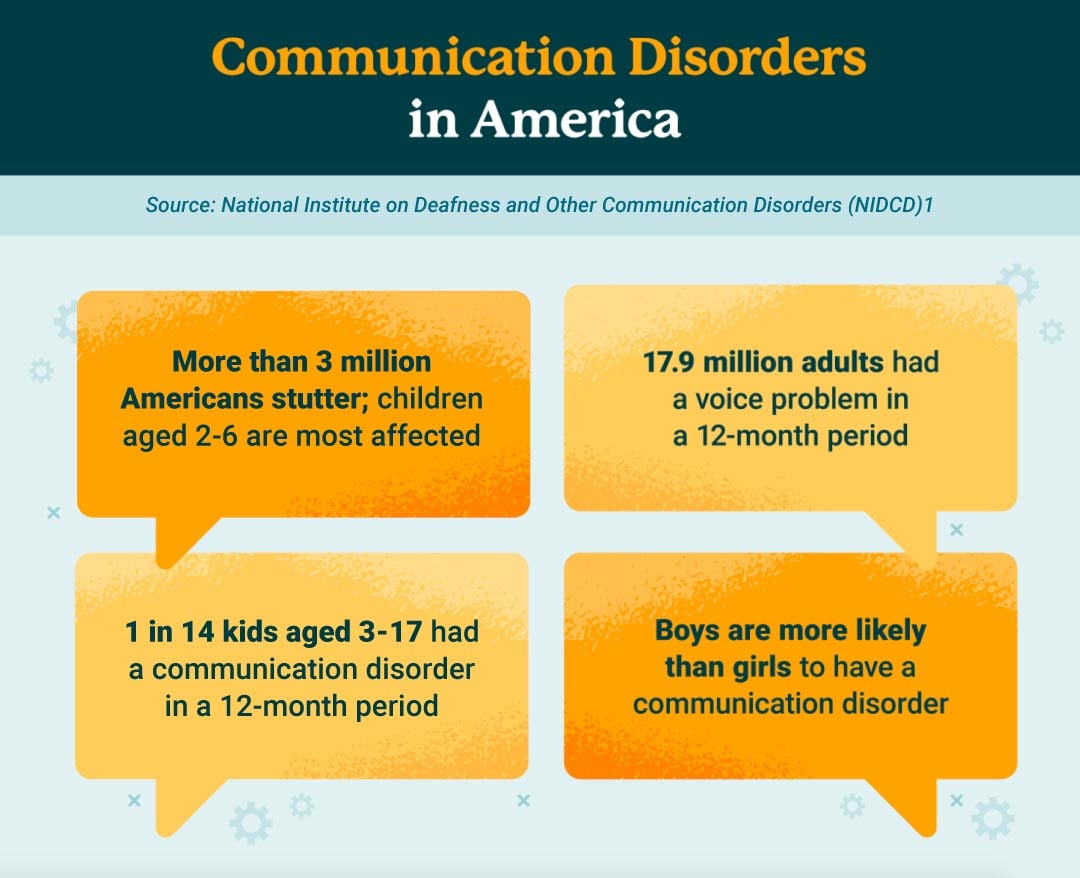
These are just a few statistics on communication disorders, which affect people of all ages worldwide. Speech-language pathologists (SLPs) work with clients and families to diagnose conditions and develop holistic treatment plans, ultimately helping clients improve communication skills and lead more fulfilling lives. Let’s explore an important role in that process—that of the speech-language pathology assistant (SLPA). We’ll discuss how to become a speech-language pathologist assistant and what the role involves.
What Is an SLPA?
So, what is SLPA? Speech-language pathology assistants (SLPAs) function as support staff for certified speech-language pathologists (SLPs). Typical work environments for SLPAs include clinics, schools, hospitals, private practices, healthcare facilities and more.2
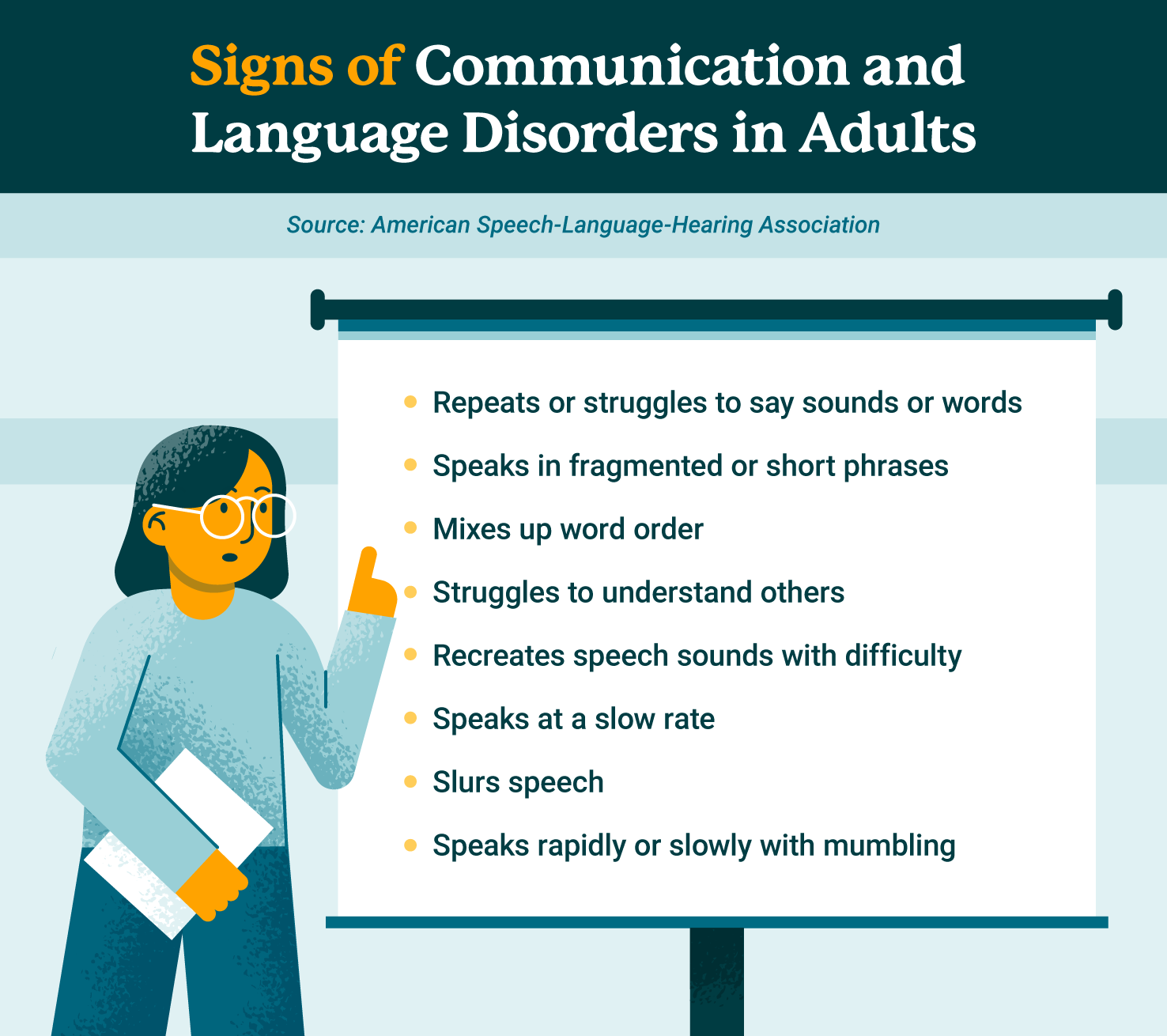
Communication disorders affect a person’s ability to process and produce language, one of our most important human abilities. Communication difficulties can affect an individual’s confidence level, school and job opportunities and personal relationships. They can range in severity from a complete inability to understand speech to relatively minor issues with pronouncing sounds incorrectly.3 Improving and overcoming these issues can make a difference in a client’s life, and speech-language pathologists may find their work meaningful and rewarding.
The SLP assesses the client, provides a diagnosis and determines their rehabilitation needs. Next, they create a care plan incorporating therapeutic exercises and other interventions. During treatment, the SLP works with the client to address language and literacy, fluency, articulation, voice, cognition, social communication, augmentative and alternative communication, feeding and swallowing and hearing.4
What Does a Speech-Language Pathologist Assistant Do?
The day-to-day job of an SLPA may take many forms. SLPA requirements include working under the supervision of a licensed SLP. They assist SLPs in their daily practice and research, but are not trained to provide clinical interpretation of assessments. As outlined by the American Speech-Language-Hearing Association (ASHA), the SLPA certifying organization, the job responsibilities of SLPAs may include:5
- Assist with speech, language and hearing screenings
- Provide treatment following documented protocols or treatment plans developed by the SLP
- Track and document client performance and report this information to the SLP
- Train clients on the use of augmentative and alternative communication (AAC) technology
- Manage clerical duties such as scheduling and educational supports
- Set up testing equipment
- Present educational information about prevention to those who may be at risk for speech, language and swallowing disorders
- Support the supervising SLP in their research projects, community outreach efforts and in-service training
How to Become a Speech-Language Pathologist Assistant
Since 2017, ASHA has established detailed speech-language pathology assistant education requirements for the training and certification of skilled practitioners.6
5 Benefits of Becoming an SLPA
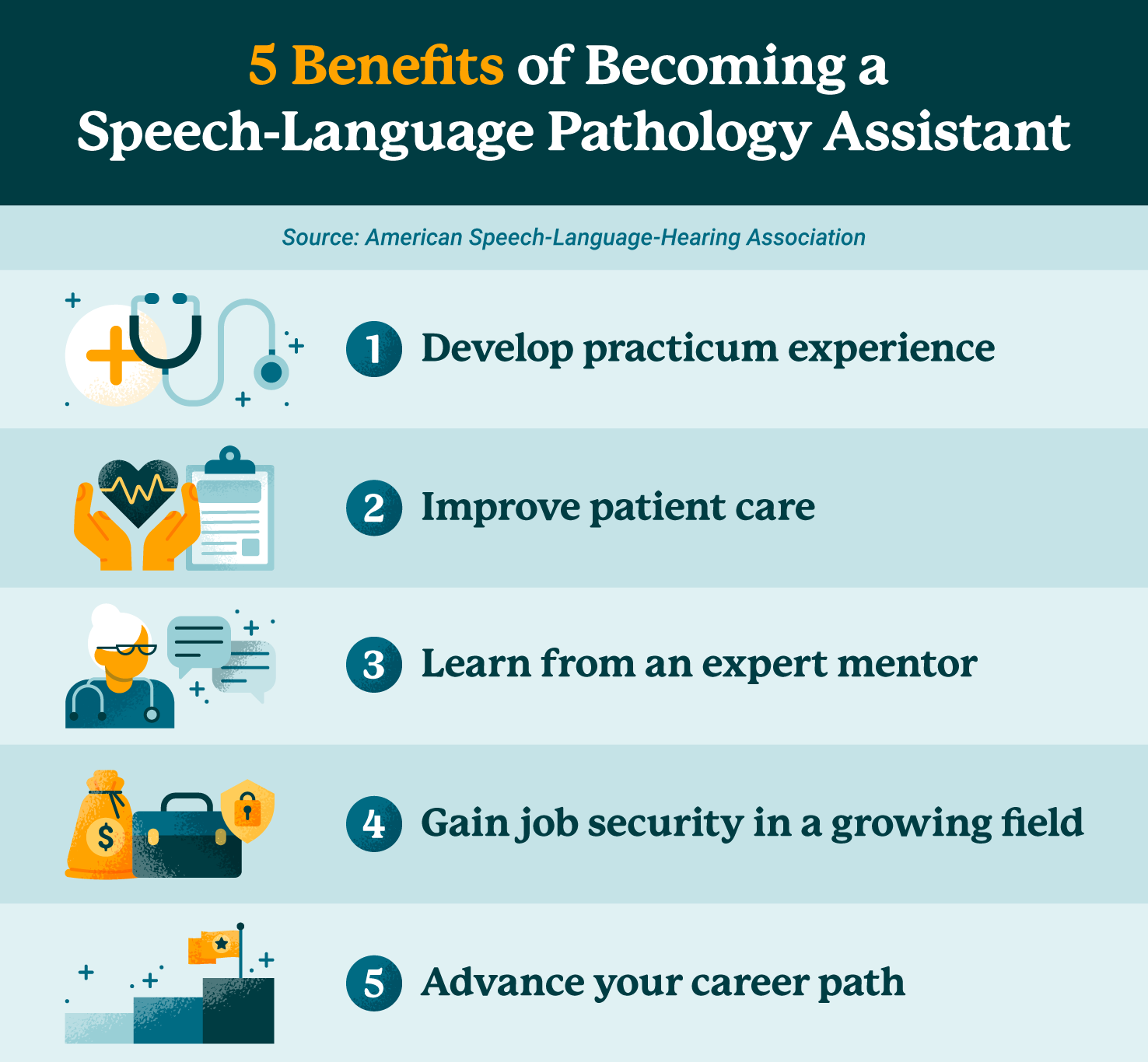
If you are considering a career in speech-language pathology, becoming a speech-language pathologist assistant has advantages.
#1: Develop Practicum Experience with Clients
Becoming a speech-language pathologist assistant requires extensive training and certification. You must meet SLPA certification requirements to advance to each step in the certification process. Speech-language pathology assistant education requirements include completion of specific courses and a minimum number of supervised clinical practicum hours in the field.7
The hands-on clinical practicum experience you gain as an SLPA allows you to hone your client interaction skills and potentially apply those clinical hours toward becoming a speech-language pathologist assistant. Not all states have the same guidelines and prerequisites, so research your location’s certification and licensure information on ASHA’s State-by-State page.7
#2: Create Opportunities for Better Client Care
Studies note that client care suffers when healthcare professionals are overwhelmed by heavy workloads.8 As a strategy to manage the workloads facing speech-language pathologists, ASHA recommends integrating SLPAs to deliver some of the required services.9 By learning how to become a speech-language pathologist assistant, your efforts can reduce the burdens on an SLP, allowing them more time to dedicate to improving client care and outcomes.
#3: Learn from an Expert
The positive impact of mentorship is well-proven. Mentorship helps mentees build connections, learn from others’ experiences, strengthen their clinical and non-clinical knowledge and become more engaged learners who are better prepared to mentor others in the future.10 For those exploring how to become an SLPA, mentoring is built into the work experience, as ASHA requires licensed SLPs to supervise their assistants.5
#4: Join a Growing Field of Work
Along with a rapidly increasing population of seniors, the United States is experiencing a shortage of healthcare workers. One study found that, due largely to pandemic-related burnout, 30% of healthcare workers are considering leaving their profession.11
Speech-language pathology jobs are readily available. The Bureau of Labor Statistics (BLS) projects a 15% growth rate between 2024 and 2034 for SLP careers, faster than the average for all occupations.12 By learning how to become a speech-language pathologist assistant, diverse job opportunities enable you to seek out the position that’s the best fit for you, which increases the chances that you’ll feel satisfied and stable in your job.
#5: Advance Your Career Path
Becoming a speech-language pathologist assistant may be your end goal. Or, it could be an early step along your career trajectory. Many people who are inspired to help people communicate start as SLPAs to gain experience and see if the field is a good fit. If you like it and want to increase your responsibilities, expertise and impact, you can move on to the next step: becoming an SLP.
To pursue the SLP path, you will need a Master of Science in Speech-Language Pathology (MS-SLP). The role of SLP was named by U.S. News & World Report as the third-best healthcare job in America.13 Whether you are thinking about how to become an SLPA or want to advance your career, gaining job experience as an SLPA creates opportunities for industry networking and skill development through real-world practice.5

How Long Does It Take to Become an SLPA?
Getting an education from a quality SLPA program is the first step in becoming an SLPA. Per ASHA’s speech-language pathology assistant education requirements and standards, a certification candidate must typically earn either an associate degree in an accredited SLPA program or a bachelor’s degree in a related field, such as SLP, communication disorders or communication sciences and disorders.
When considering how to become an SLPA, pick a degree program that includes clinical experience. Speech-language pathologist assistant education requirements include the completion of a minimum of 100 hours of clinical experience or fieldwork under the supervision of an ASHA-certified or licensed practitioner.7
SLPA Licensing Guidelines Vary by State
State licensure boards often regulate SLPA requirements for training candidates in their states. The list of requirements can vary significantly from state to state. Research the licensure standards in your state to understand your options.
Another important step is speech-language pathologist assistant certification. Once speech-language pathology assistant education requirements by ASHA are satisfied, prospective SLPAs must apply to take the certification exam. If accepted, the candidate has 365 days to schedule and take the exam. Successfully passing this test grants the graduate an official ASHA certification as a C-SLPA.14
Speech-language pathologists and SLPAs serve as a lifeline for the millions of Americans struggling with communication disorders. As the list of benefits shows, becoming a speech-language pathologist assistant can be a good first step along your career path.
SLPA Licensing Guidelines for California
In California, the path to a SLPA license California starts with completing approved coursework and clinical fieldwork, followed by registering with the state board.15 While California does not require ASHA certification to practice, employers may still value it as a mark of readiness and professionalism.16 Staying current with supervision and continuing education requirements is key to maintaining your eligibility.
SLPA Licensing Guidelines for Florida
If you are exploring a Florida speech pathology license, you’ll find that Florida requires formal registration as a speech-language pathology assistant through the state, along with a bachelor’s degree from an accredited institution.17 Students may find that understanding Florida’s guidelines early helps them align their graduate journey with licensure expectations.
SLPA Licensing Guidelines for Texas
For those wondering how to become an SLPA in Texas, the process includes earning a bachelor’s degree, ideally in a related field, completing clinical hours and applying for licensure through the state board. Applicants must provide proof of successfully completing the Texas Jurisprudence Examination and submit fingerprints for a national criminal history record review.18 Planning ensures you meet every requirement without delays as you begin your SLPA career.
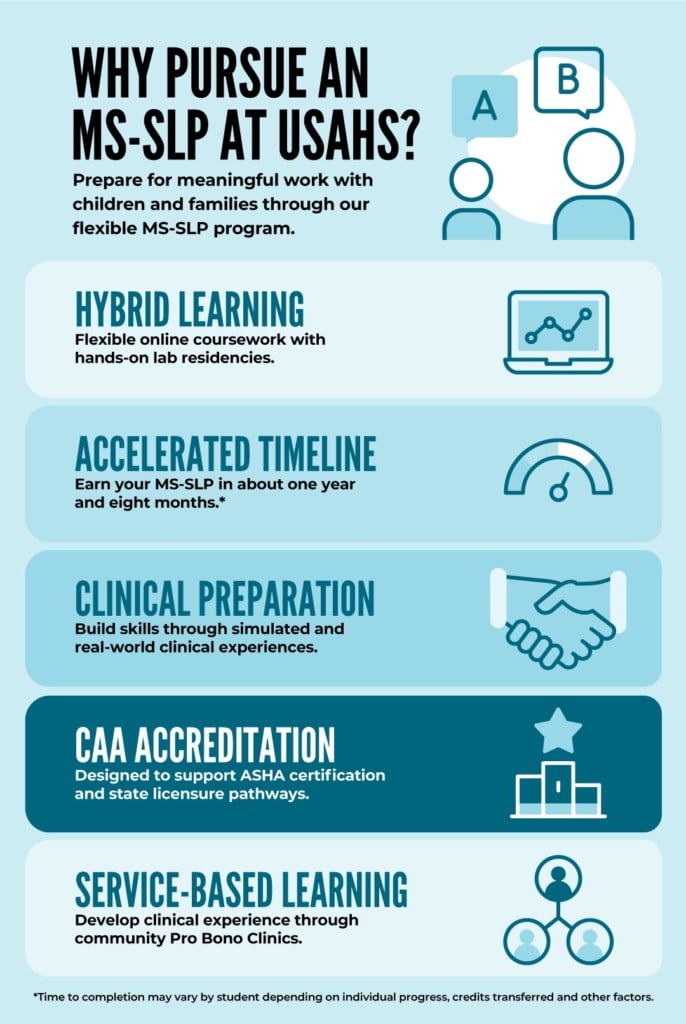
The University of St. Augustine for Health Sciences (USAHS) offers a Master of Science in Speech-Language Pathology (MS-SLP). The MS-SLP is an online program with residency experiences that happen four out of five trimesters at four USAHS campuses (San Marcos, St. Augustine, Austin and Dallas). The program offers three start dates per year, in September, January and May. Prepare to make a difference in the lives of clients across the lifespan with a meaningful career in speech-language pathology.
Sources
- National Institute on Deafness and Other Communication Disorders, “Quick Statistics About Voice, Speech, Language,” National Institutes of Health (NIH), March 11, 2025, https://www.nidcd.nih.gov/health/statistics/quick-statistics-voice-speech-language.
- “About Speech-Language Pathology Careers,” American Speech-Language-Hearing Association (ASHA), 2026, https://www.asha.org/students/about-speech-language-pathology-careers/.
- “Speech and Language Disorders,” American Speech-Language-Hearing Association (ASHA), 2026, https://www.asha.org/public/speech/disorders/.
- Rowden, A., “What to know about speech therapy,” Medical News Today, January 6, 2021, https://www.medicalnewstoday.com/articles/speech-therapy.
- “Frequently Asked Questions: Speech-Language Pathology Assistants (SLPAs),” American Speech-Language-Hearing Association (ASHA), 2026, https://www.asha.org/assistants-certification-program/slpa-faqs/.
- “ASHA Assistants Program,” American Speech-Language-Hearing Association (ASHA), 2026, https://www.asha.org/assistants-certification-program/.
- “Become a Certified Speech-Language Pathology Assistant,” American Speech-Language-Hearing Association (ASHA), 2025, https://www.ashaassistants.org/pathways-speech-language-pathology-assistant/.
- “Healthcare Workers, Risk Factors for Stress and Burnout,” Centers for Disease Control and Prevention (CDC) National Institute for Occupational Safety and Health (NIOSH), April 23, 2024, https://www.cdc.gov/niosh/healthcare/risk-factors/stress-burnout.html.
- “Caseload and Workload: Approaches to Managing Existing Workload,” American Speech-Language-Hearing Association (ASHA), 2026, https://www.asha.org/practice-portal/professional-issues/caseload-and-workload/#collapse_4.
- Wu, J. and Toyin Olagunju, A., “Mentorship in medical education: reflections on the importance of both unofficial and official mentorship programs,” BMC Medical Education, October 29, 2024, https://pmc.ncbi.nlm.nih.gov/articles/PMC11523898/.
- “Fact Sheet: Strengthening the Health Care Workforce,” American Hospital Association (AHA), 2025, https://www.aha.org/fact-sheets/2021-05-26-fact-sheet-strengthening-health-care-workforce.
- “Speech-Language Pathologists,” Bureau of Labor Statistics, Occupational Outlook Handbook, August 28, 2025, https://www.bls.gov/ooh/healthcare/speech-language-pathologists.htm.
- Bratcher, E., “Speech-Language Pathologist: Overview,” U.S. News and World Report, 2026, https://careers.usnews.com/best-jobs/speech-language-pathologist.
- American Speech-Language-Hearing Association, “Apply for Speech-Language Pathology Assistants Certification (C-SLPA),” 2025, https://www.asha.org/certification/apply-for-slp-assistants-certification/.
- “Qualifications for Registration as a Speech-Language Pathology Assistant,” The California Speech-Language Pathology and Audiology and Hearing Aid Dispensers Board, 2026, https://www.speechandhearing.ca.gov/applicants/app_pack_slp_assist.shtml.
- “California State Information,” American Speech-Language-Hearing Association (ASHA), 2026, https://www.asha.org/advocacy/state/california-state-information/.
- “Speech-Language Pathology Assistant,” Florida Board of Speech-Language Pathology & Audiology, 2025, https://floridasspeechaudiology.gov/speech-language-pathology-assistant/.
- “Speech-Language Pathologists and Audiologists: How to Apply for a New Assistant in Speech-Language Pathology License,” Texas Department of Licensing & Regulation (TDLR), https://www.tdlr.texas.gov/slpa/slp-assistant-apply.htm.