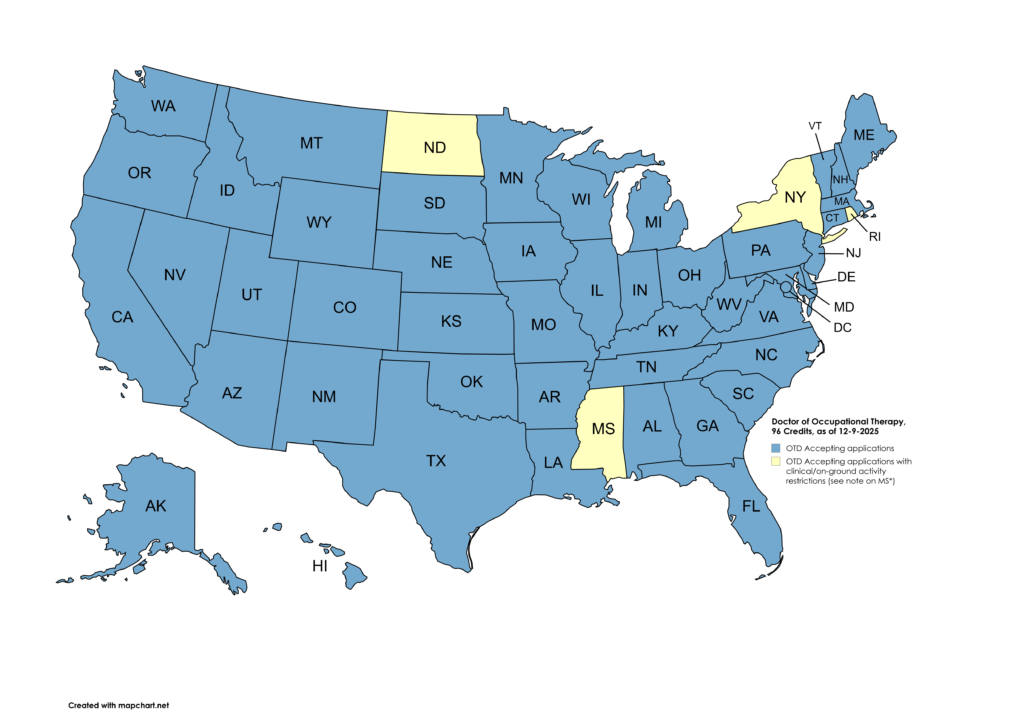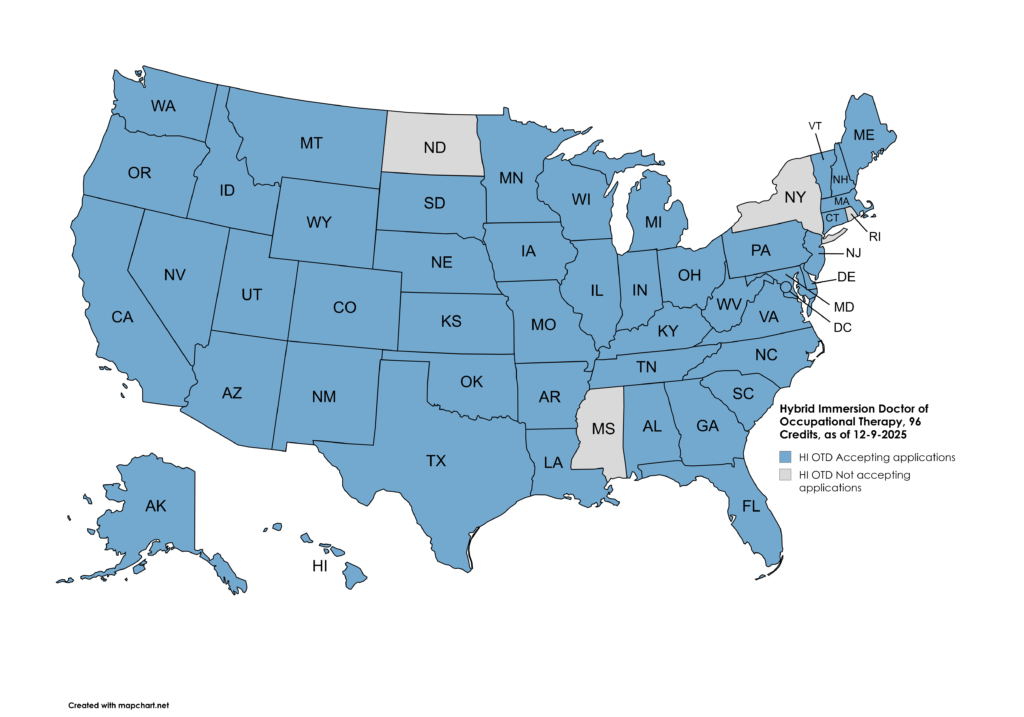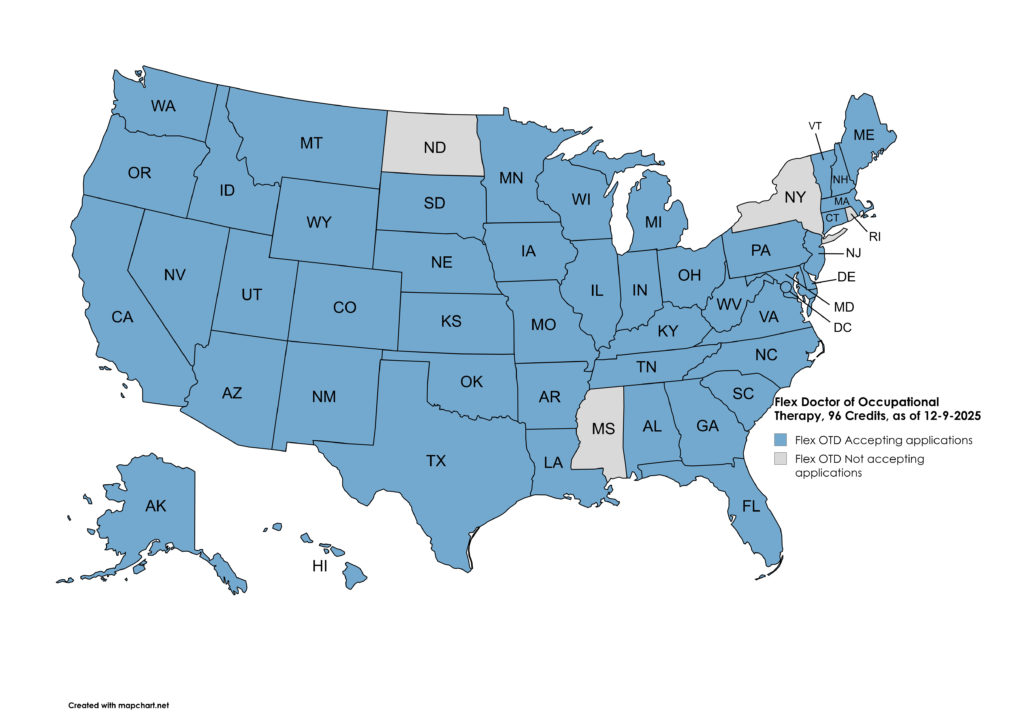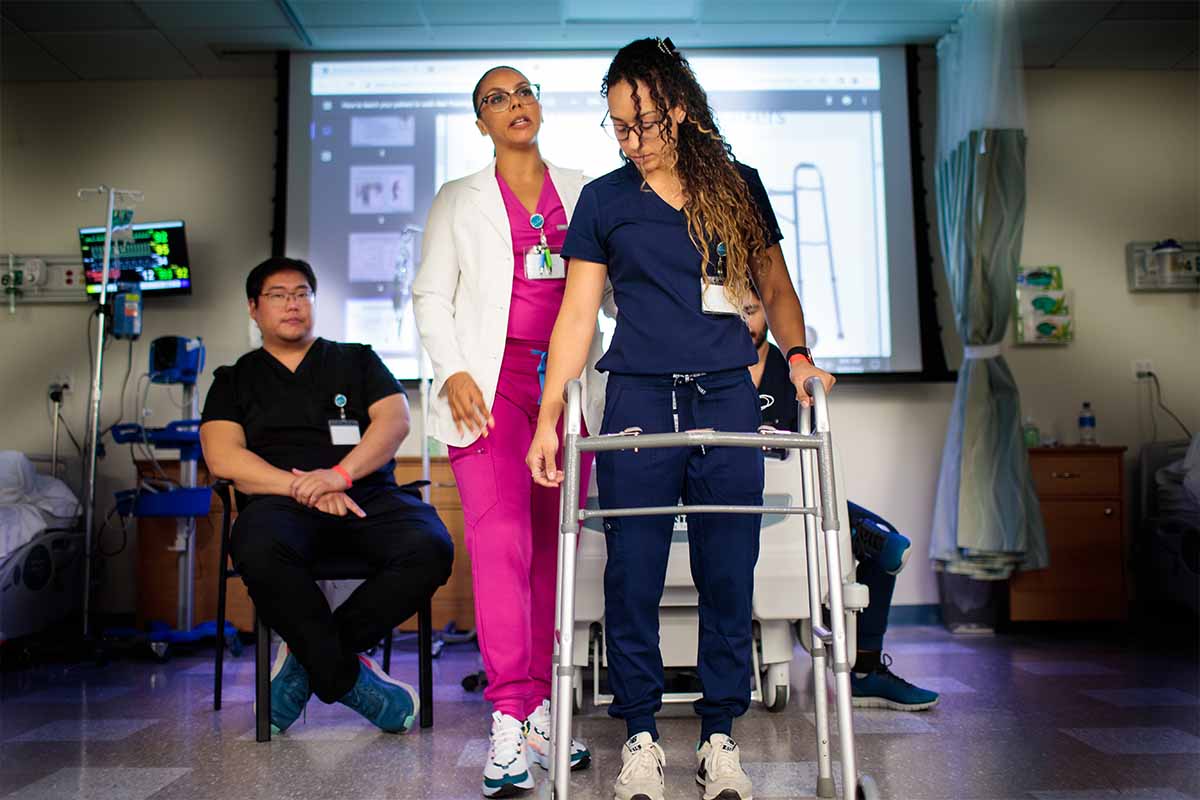




The Residential OTD format and the Hybrid Immersion OTD format can be completed in six trimesters (2 years), while the Flex OTD format can be completed in 9 trimesters (3 years).
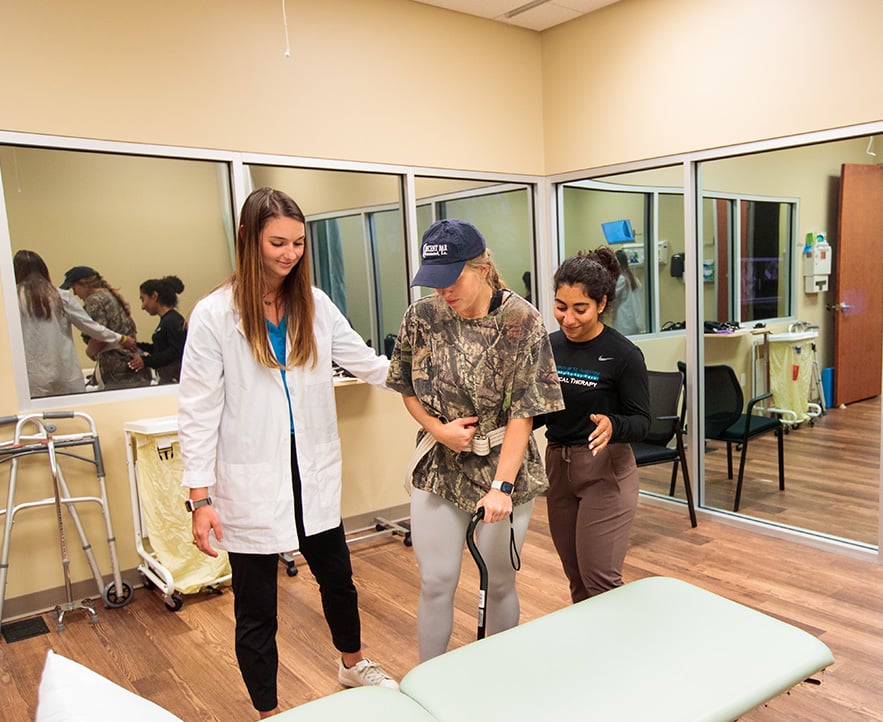
For all formats of the Doctor of Occupational Therapy Program, students must complete 96 credit hours with virtual didactic coursework, hands-on clinical labs, Level I and Level II fieldwork, and a capstone project.
Degree Requirements
Students must meet the following program requirements to complete the OTD degree and be eligible for graduation. These are located in the USAHS Catalog/Handbook. Instructions for how to locate each can be found below each requirement.
Students must meet the following program requirements to complete the OTD degree and be eligible for graduation:
- Meet all requirements of the University’s Satisfactory Academic Progress policy. Locate by visiting catalog.usa.edu > Academic Policies > Satisfactory Academic Progress Policy.
- Satisfactorily complete all program curricular requirements.
- Fulfill the requirements of the University’s Professional Conference Attendance policy. Locate by visiting catalog.usa.edu > Academic Policies > Professional Conference Attendance Policy.
Students must submit an application for graduation by the deadline for the term in which they anticipate completing all degree requirements. Students should review Commencement Ceremony and Graduation for information on University graduation requirements, participation in commencement, and degree conferral. Locate by visiting catalog.usa.edu > Admissions, Records, and Registration > Degree Completion/Graduation.
Residential and Hybrid Immersion OTD Curriculum
| Courses | Hours |
|---|---|
| Curriculum - For Students Entering Fall 2025 or After | |
| Trimester I | |
OCT 5101 - Introduction to Occupational TherapyThis course examines the domain of occupational therapy, including its historical foundation and philosophical base. It covers essential content, including core values, the code of ethics, models, frames of reference, and the Occupational Therapy Practice Framework for persons, groups, and populations. Occupational balance, therapeutic use of self, intraprofessional and interprofessional relationships, licensure, credentialing, and associations are also covered. | 3 |
OCT 5127C - Occupational Analysis and Professional ReasoningThis course explores activity analysis with motor control principles and kinesiology. Students learn to perform detailed, occupational-based activity analyses and understand the biomechanical and neuromuscular factors influencing human movement. The course also addresses the occupational therapy process, including professional reasoning and the techniques of grading and adapting activities to meet the needs of diverse client populations. Emphasis is placed on integrating theoretical knowledge with practical skills to enhance occupational performance and promote client-centered care. | 4 |
OCT 5133C - Evaluation and AssessmentThis course provides a comprehensive exploration of evaluation and assessment principles across persons, groups, and populations. Students gain the knowledge, skills, and professional reasoning necessary to select, administer, and interpret assessments across various client populations, including, but not limited to pediatric, adult, and geriatric populations and across diverse practice settings. Effective and culturally aware written and verbal communication methods for documenting and disseminating evaluation findings are also covered. | 4 |
OCT 5142C - Human FunctionThis course provides an in-depth exploration of human function from the perspective of occupational therapy, integrating cognitive, psychological, and physical aspects. Students develop a comprehensive understanding of the interplay between these dimensions and their impact on an individual's ability to engage in meaningful occupations and daily activities. | 4 |
OCT 5151 - ConditionsThis course introduces common mental health, neurological, orthopedic, and genetic conditions across the lifespan, linking the condition to physiology, neuroscience, and anatomy, the impact of cultural and socioeconomic elements on persons, groups, and populations. Students learn about basic screening assessments, understand the effects of various conditions across their lifespan, and gain foundational knowledge of pharmacological intervention. | 5 |
OCT 6111 - OTD Capstone FoundationStudents establish the foundation for the capstone process by exploring occupational therapy trends in various practice settings, social determinants of health, social-political climates, and their effect on occupational and social justice within persons, groups, and populations. Students begin examining literature to understand the occupational needs of persons, groups, and populations of interest to develop a problem, purpose, and significance for the capstone project. | 1 |
| Total Hours 21 | |
| Trimester II | |
OCT 5205 - Process of Occupational TherapyThis course examines the Occupational Therapy Practice Framework, focusing on the elements of evaluation, intervention, and outcomes for persons, groups, and populations. It emphasizes documenting the occupational therapy process. | 3 |
OCT 5224 - Professional ScholarshipThis course familiarizes students with scholarship of practice in occupational therapy. Students learn to become critical consumers of research by evaluating research methodologies, designs, and analyses. Ethical issues and the integration of research principles into evidence-based clinical practice are explored. Interprofessional collaboration is introduced and applied to evidence-informed research and practice. | 2 |
OCT 5238C - Group Process and Therapeutic Use of SelfThis course covers the characteristics and elements of various group dynamics, emphasizing how these factors influence therapeutic outcomes. Students learn about group models, protocols, characteristics, and the OT role within groups and apply these concepts to different populations. Additionally, students explore therapeutic use of self as it pertains to oneself and how it applies to the group process. | 2 |
OCT 5240C - Mental Health InterventionsThis course prepares students to critically appraise and deliver occupational therapy interventions in mental health practice settings to persons, groups, and populations across the lifespan who are labeled with or at risk of experiencing mental illness with the goal of facilitating the recovery process. Trauma-informed care perspectives are presented as foundational elements that inform mental health practice across settings and populations. The course integrates opportunities for developing reflective practice skills, therapeutic use of self, and advocacy while considering the impact of sanism and stigma in mental health practice. | 5 |
OCT 5251C - Adult Interventions IThis course addresses occupational therapy interventions for adults with a variety of physical conditions, guided by but not limited to the biomechanical and rehabilitative frames of reference. Students learn to critically appraise and deliver evidence-based occupational therapy interventions to enhance independence in basic or instrumental activities of daily living as it applies to persons, groups, and populations across various settings. Conditions addressed may include orthopedic, amputations, burns, cardiopulmonary, oncology, and other physical conditions. Students focus on addressing these conditions with orthotics and physical agent modalities and how they enhance occupational performance. Other topics for discussion include referral, consultation, discharge, transition of care, inter- and intraprofessional collaboration, and cultural considerations. | 5 |
OCT 5263C - Innovations in Occupational TherapyThis course addresses occupational therapy interventions for adults with a variety of physical conditions, guided by but not limited to the biomechanical and rehabilitative frames of reference. Students learn to critically appraise and deliver evidence-based occupational therapy interventions to enhance independence in basic or instrumental activities of daily living as it applies to persons, groups, and populations across various settings. Conditions addressed may include orthopedic, amputations, burns, cardiopulmonary, oncology, and other physical conditions. Students focus on addressing these conditions with orthotics and physical agent modalities and how they enhance occupational performance. Other topics for discussion include referral, consultation, discharge, transition of care, inter- and intraprofessional collaboration, and cultural considerations. | 2 |
OCT 5271 - Fieldwork I-AFieldwork Level I experiences enable students to integrate and apply course content from the Mental Health Interventions and Adult Interventions I courses through guided participation and observation. Students must demonstrate professional and clinical skills to engage in Fieldwork I-A successfully.Course is pass/fail graded. | 1 |
OCT 6222 - Capstone Literature ReviewStudents examine various theoretical frameworks to identify a theory-driven approach to the capstone process. Utilizing literature and theory, students develop the literature review for the capstone project based on critical analysis and synthesizes of the literature. Students establish a list of potential mentors and capstone experience sites for their capstone topic. | 1 |
| Total Hours 21 | |
| Trimester III | |
OCT 6333 - Scholarly Capstone DesignBuilding on the established capstone project premise, students develop their capstone project and experience plan utilizing advanced scholarly skills to outline the timeline and objectives. Students design, develop, and implement a scholarly activity focused on collection and evaluation of data related to research design and methodology. In preparation for the capstone project and experience, students understand ethical considerations that can impact the capstone project and experience. Students provide status updates of their capstone experiential site and finalize mentorship. | 2 |
OCT 5347C - Culminating PracticeThis course is designed to integrate and apply theoretical knowledge and practical skills acquired throughout the courses in the occupational therapy program. Through simulations, practicals, and demonstration of competencies, this course serves as a bridge between academic learning and professional practice. The students become equipped to embark on Level II fieldwork with confidence in their continued pathway to clinical excellence. | 2 |
OCT 5352C - Adult Interventions IIThis course addresses occupational therapy interventions for adults with a variety of neurological conditions, guided by but not limited to the neurorehabilitation frames of reference. Students learn to critically appraise and deliver evidence-based occupational therapy interventions to enhance independence in basic or instrumental activities of daily living as it applies to persons, groups, and populations across various settings. Conditions addressed may include traumatic brain injury, CVA, neurodegenerative, spinal cord injury and other neurological conditions. Students learn how orthotics and physical agent modalities address these conditions and how they enhance occupational performance. Other topics for discussion include referral, consultation, discharge, transition of care, inter- and intra-professional collaboration, and cultural considerations. | 5 |
OCT 5371 - Fieldwork I-BFieldwork Level I experiences enable students to integrate and apply course content from the Children and Youth interventions and Adult Interventions II courses through guided participation and observation. Students must demonstrate professional and clinical skills to engage in FW I successfully. | 1 |
OCT 5313 - Leadership and AdministrationThis course includes assessing leadership skills and promoting professional development and self-reflection. Additional content includes supervision, mentorship, service, entrepreneurial opportunities, and operational responsibilities, including strategic planning, reimbursement, business planning, and billing. Students acquire skills including advocacy, interprofessional collaboration and communication, and representing OT in state and local organizations. | 2 |
OCT 5320C - Children and Youth InterventionsThis course prepares students to critically appraise and deliver occupational therapy interventions for children and youth in various settings as they apply to persons, groups, and populations. Topics include common diagnoses, funding, equipment, evidence-based interventions, referral, consultation, discharge, transition of care, inter- and intra-professional collaboration and cultural considerations of the individual, and cultural considerations of the individual's family or community. This course provides opportunities for developing occupation-based practice skills while considering children and youth, families/caregivers, and their communities across a variety of practice settings and levels of care. | 5 |
OCT 5338 - Program DevelopmentStudents learn the importance of generating knowledge that enhances occupational performance and participation and is responsive to society's and consumers' priorities. The primary focus is on implementing knowledge, including programmatic theory, logic models, and needs assessment, to develop innovative programs and advance occupational therapy practice. | 2 |
| Total Hours 19 | |
| Trimester IV | |
OCT 5442 - Fieldwork II-AThis is the first of two off-campus fieldwork experiences, with an emphasis on applying occupational therapy theory and skills acquired in didactic coursework to a clinical setting. Students demonstrate entry-level competency and standards of practice within this practice area. Students interact online with faculty to facilitate student learning through reflective practice. | 12 |
OCT 6444 - Capstone Progress and ReviewIn preparation for the capstone project and experience, students review and edit the capstone plan, check in on an established capstone experiential site, and begin developing an evidence-based proposal to be presented during Capstone Project which integrates clinical knowledge and theoretical reasoning. | 1 |
| Total Hours 13 | |
| Trimester V | |
OCT 5552 - Fieldwork II-BThis is the second of two off-campus fieldwork experiences, with an emphasis on applying occupational therapy theory and skills mastered in IIA in a different clinical setting. Students demonstrate entry-level competency and standards of practice within this second practice area. Students interact with faculty online to facilitate student learning through reflective practice. | 12 |
OCT 6555 - Capstone ProjectThe student presents a finalized capstone project and experience plan approved by the Doctoral Capstone Coordinator (DCC). In collaboration with the DCC, students finalize all the administrative requirements before beginning the capstone experience. | 1 |
| Total Hours 13 | |
| Trimester VI | |
OCT 5512 - Preparation for Professional PracticeThis course is designed to equip occupational therapy students with the essential skills and knowledge required to transition smoothly into professional practice. The course integrates preparation for the NBCOT exam, interviewing skills, crafting effective cover letters, developing professional profiles, and managing the transition to practice. | 1 |
OCT 6601 - Capstone ExperienceThe capstone experience provides the students with an in-depth learning opportunity centralized around their individualized capstone objectives that are related to the capstone project's area of interest. At the completion of the doctoral capstone experience, students disseminate their individual capstone project and its relation to the capstone experience. | 8 |
| Total Hours 9 | |
| Degree Credit Hours | 96 |
Flex OTD Curriculum
| Courses | Hours |
|---|---|
| Curriculum - For Students Entering Fall 2025 Term or After | |
| Trimester I | |
OCT 5101 - Introduction to Occupational TherapyThis course examines the domain of occupational therapy, including its historical foundation and philosophical base. It covers essential content, including core values, the code of ethics, models, frames of reference, and the Occupational Therapy Practice Framework for persons, groups, and populations. Occupational balance, therapeutic use of self, intraprofessional and interprofessional relationships, licensure, credentialing, and associations are also covered. | 3 |
OCT 5142C - Human FunctionThis course provides an in-depth exploration of human function from the perspective of occupational therapy, integrating cognitive, psychological, and physical aspects. Students develop a comprehensive understanding of the interplay between these dimensions and their impact on an individual's ability to engage in meaningful occupations and daily activities. | 4 |
OCT 5151 - ConditionsThis course introduces common mental health, neurological, orthopedic, and genetic conditions across the lifespan, linking the condition to physiology, neuroscience, and anatomy, the impact of cultural and socioeconomic elements on persons, groups, and populations. Students learn about basic screening assessments, understand the effects of various conditions across their lifespan, and gain foundational knowledge of pharmacological intervention. | 5 |
| Total Hours 12 | |
| Trimester II | |
OCT 5127C - Occupational Analysis and Professional ReasoningThis course explores activity analysis with motor control principles and kinesiology. Students learn to perform detailed, occupational-based activity analyses and understand the biomechanical and neuromuscular factors influencing human movement. The course also addresses the occupational therapy process, including professional reasoning and the techniques of grading and adapting activities to meet the needs of diverse client populations. Emphasis is placed on integrating theoretical knowledge with practical skills to enhance occupational performance and promote client-centered care. | 4 |
OCT 5133C - Evaluation and AssessmentThis course provides a comprehensive exploration of evaluation and assessment principles across persons, groups, and populations. Students gain the knowledge, skills, and professional reasoning necessary to select, administer, and interpret assessments across various client populations, including, but not limited to pediatric, adult, and geriatric populations and across diverse practice settings. Effective and culturally aware written and verbal communication methods for documenting and disseminating evaluation findings are also covered. | 4 |
OCT 6111 - OTD Capstone FoundationStudents establish the foundation for the capstone process by exploring occupational therapy trends in various practice settings, social determinants of health, social-political climates, and their effect on occupational and social justice within persons, groups, and populations. Students begin examining literature to understand the occupational needs of persons, groups, and populations of interest to develop a problem, purpose, and significance for the capstone project. | 1 |
| Total Hours 9 | |
| Trimester III | |
OCT 5205 - Process of Occupational TherapyThis course examines the Occupational Therapy Practice Framework, focusing on the elements of evaluation, intervention, and outcomes for persons, groups, and populations. It emphasizes documenting the occupational therapy process. | 3 |
OCT 5224 - Professional ScholarshipThis course familiarizes students with scholarship of practice in occupational therapy. Students learn to become critical consumers of research by evaluating research methodologies, designs, and analyses. Ethical issues and the integration of research principles into evidence-based clinical practice are explored. Interprofessional collaboration is introduced and applied to evidence-informed research and practice. | 2 |
OCT 5238C - Group Process and Therapeutic Use of SelfThis course covers the characteristics and elements of various group dynamics, emphasizing how these factors influence therapeutic outcomes. Students learn about group models, protocols, characteristics, and the OT role within groups and apply these concepts to different populations. Additionally, students explore therapeutic use of self as it pertains to oneself and how it applies to the group process. | 2 |
OCT 5263C - Innovations in Occupational TherapyThis course addresses occupational therapy interventions for adults with a variety of physical conditions, guided by but not limited to the biomechanical and rehabilitative frames of reference. Students learn to critically appraise and deliver evidence-based occupational therapy interventions to enhance independence in basic or instrumental activities of daily living as it applies to persons, groups, and populations across various settings. Conditions addressed may include orthopedic, amputations, burns, cardiopulmonary, oncology, and other physical conditions. Students focus on addressing these conditions with orthotics and physical agent modalities and how they enhance occupational performance. Other topics for discussion include referral, consultation, discharge, transition of care, inter- and intraprofessional collaboration, and cultural considerations. | 2 |
| Total Hours 7 | |
| Trimester IV | |
OCT 5240C - Mental Health InterventionsThis course prepares students to critically appraise and deliver occupational therapy interventions in mental health practice settings to persons, groups, and populations across the lifespan who are labeled with or at risk of experiencing mental illness with the goal of facilitating the recovery process. Trauma-informed care perspectives are presented as foundational elements that inform mental health practice across settings and populations. The course integrates opportunities for developing reflective practice skills, therapeutic use of self, and advocacy while considering the impact of sanism and stigma in mental health practice. | 5 |
OCT 5251C - Adult Interventions IThis course addresses occupational therapy interventions for adults with a variety of physical conditions, guided by but not limited to the biomechanical and rehabilitative frames of reference. Students learn to critically appraise and deliver evidence-based occupational therapy interventions to enhance independence in basic or instrumental activities of daily living as it applies to persons, groups, and populations across various settings. Conditions addressed may include orthopedic, amputations, burns, cardiopulmonary, oncology, and other physical conditions. Students focus on addressing these conditions with orthotics and physical agent modalities and how they enhance occupational performance. Other topics for discussion include referral, consultation, discharge, transition of care, inter- and intraprofessional collaboration, and cultural considerations. | 5 |
OCT 5271 - Fieldwork I-AFieldwork Level I experiences enable students to integrate and apply course content from the Mental Health Interventions and Adult Interventions I courses through guided participation and observation. Students must demonstrate professional and clinical skills to engage in Fieldwork I-A successfully.Course is pass/fail graded. | 1 |
| Total Hours 13 | |
| Trimester V | |
OCT 5320C - Children and Youth InterventionsThis course prepares students to critically appraise and deliver occupational therapy interventions for children and youth in various settings as they apply to persons, groups, and populations. Topics include common diagnoses, funding, equipment, evidence-based interventions, referral, consultation, discharge, transition of care, inter- and intra-professional collaboration and cultural considerations of the individual, and cultural considerations of the individual's family or community. This course provides opportunities for developing occupation-based practice skills while considering children and youth, families/caregivers, and their communities across a variety of practice settings and levels of care. | 5 |
OCT 5352C - Adult Interventions IIThis course addresses occupational therapy interventions for adults with a variety of neurological conditions, guided by but not limited to the neurorehabilitation frames of reference. Students learn to critically appraise and deliver evidence-based occupational therapy interventions to enhance independence in basic or instrumental activities of daily living as it applies to persons, groups, and populations across various settings. Conditions addressed may include traumatic brain injury, CVA, neurodegenerative, spinal cord injury and other neurological conditions. Students learn how orthotics and physical agent modalities address these conditions and how they enhance occupational performance. Other topics for discussion include referral, consultation, discharge, transition of care, inter- and intra-professional collaboration, and cultural considerations. | 5 |
OCT 5371 - Fieldwork I-BFieldwork Level I experiences enable students to integrate and apply course content from the Children and Youth interventions and Adult Interventions II courses through guided participation and observation. Students must demonstrate professional and clinical skills to engage in FW I successfully. | 1 |
OCT 6222 - Capstone Literature ReviewStudents examine various theoretical frameworks to identify a theory-driven approach to the capstone process. Utilizing literature and theory, students develop the literature review for the capstone project based on critical analysis and synthesizes of the literature. Students establish a list of potential mentors and capstone experience sites for their capstone topic. | 1 |
| Total Hours 12 | |
| Trimester VI | |
OCT 5313 - Leadership and AdministrationThis course includes assessing leadership skills and promoting professional development and self-reflection. Additional content includes supervision, mentorship, service, entrepreneurial opportunities, and operational responsibilities, including strategic planning, reimbursement, business planning, and billing. Students acquire skills including advocacy, interprofessional collaboration and communication, and representing OT in state and local organizations. | 2 |
OCT 5338 - Program DevelopmentStudents learn the importance of generating knowledge that enhances occupational performance and participation and is responsive to society's and consumers' priorities. The primary focus is on implementing knowledge, including programmatic theory, logic models, and needs assessment, to develop innovative programs and advance occupational therapy practice. | 2 |
OCT 5347C - Culminating PracticeThis course is designed to integrate and apply theoretical knowledge and practical skills acquired throughout the courses in the occupational therapy program. Through simulations, practicals, and demonstration of competencies, this course serves as a bridge between academic learning and professional practice. The students become equipped to embark on Level II fieldwork with confidence in their continued pathway to clinical excellence. | 2 |
OCT 6333 - Scholarly Capstone DesignBuilding on the established capstone project premise, students develop their capstone project and experience plan utilizing advanced scholarly skills to outline the timeline and objectives. Students design, develop, and implement a scholarly activity focused on collection and evaluation of data related to research design and methodology. In preparation for the capstone project and experience, students understand ethical considerations that can impact the capstone project and experience. Students provide status updates of their capstone experiential site and finalize mentorship. | 2 |
| Total Hours 8 | |
| Trimester VII | |
OCT 5442 - Fieldwork II-AThis is the first of two off-campus fieldwork experiences, with an emphasis on applying occupational therapy theory and skills acquired in didactic coursework to a clinical setting. Students demonstrate entry-level competency and standards of practice within this practice area. Students interact online with faculty to facilitate student learning through reflective practice. | 12 |
OCT 6444 - Capstone Progress and ReviewIn preparation for the capstone project and experience, students review and edit the capstone plan, check in on an established capstone experiential site, and begin developing an evidence-based proposal to be presented during Capstone Project which integrates clinical knowledge and theoretical reasoning. | 1 |
| Total Hours 13 | |
| Trimester VIII | |
OCT 5552 - Fieldwork II-BThis is the second of two off-campus fieldwork experiences, with an emphasis on applying occupational therapy theory and skills mastered in IIA in a different clinical setting. Students demonstrate entry-level competency and standards of practice within this second practice area. Students interact with faculty online to facilitate student learning through reflective practice. | 12 |
OCT 6555 - Capstone ProjectThe student presents a finalized capstone project and experience plan approved by the Doctoral Capstone Coordinator (DCC). In collaboration with the DCC, students finalize all the administrative requirements before beginning the capstone experience. | 1 |
| Total Hours 13 | |
| Trimester IX | |
OCT 5512 - Preparation for Professional PracticeThis course is designed to equip occupational therapy students with the essential skills and knowledge required to transition smoothly into professional practice. The course integrates preparation for the NBCOT exam, interviewing skills, crafting effective cover letters, developing professional profiles, and managing the transition to practice. | 1 |
OCT 6601 - Capstone ExperienceThe capstone experience provides the students with an in-depth learning opportunity centralized around their individualized capstone objectives that are related to the capstone project's area of interest. At the completion of the doctoral capstone experience, students disseminate their individual capstone project and its relation to the capstone experience. | 8 |
| Total Hours 9 | |
| Degree Credit Hours | 96 |
View OTD Curriculum prior to Fall 2025 here.