
Do you need a doctorate to be an occupational therapist (OT)?
No, a doctoral-level degree is not required to be a licensed OT in the United States. A Master of Occupational Therapy (MOT) meets minimum education requirements. Learn more about whether an MOT or OTD is the right path for you.
If you choose the OTD path, a Doctor of Occupational Therapy (OTD) can prepare you to become a licensed occupational therapist, while a Post-Professional Doctor of Occupational Therapy (PPOTD) can help licensed OTs advance their careers as post-professional practitioners. Depending on the program, the OTD can serve as an entry-level degree for those new to the profession and the PPOTD can serve as a post-professional degree for licensed OTs – both degrees are for those seeking advanced skills in leadership, research, education and program development.1
Several schools across the U.S., including the University of St. Augustine for Health Sciences (USAHS), offer entry-level OTD programs that meet Accreditation Council for Occupational Therapy Education (ACOTE®) standards.
We’ll discuss the entry-level occupational therapy doctorate requirements, including coursework and clinical experience, and review our flexible degree pathways.
Difference Between Entry-Level and Post-Professional OTD
USAHS offers entry-level Doctor of Occupational Therapy (OTD) and Post-Professional Doctor of Occupational Therapy (PPOTD)* programs, allowing students to choose the pathway that best fits their current level of experience and meet the occupational therapy doctorate requirement.
Entry-Level OTD
The entry-level Doctor of Occupational Therapy program is designed for students who are not yet licensed occupational therapists. Successful completion of this program qualifies graduates to take the National Board for Certification in Occupational Therapy (NBCOT) exam, obtain the Occupational Therapist Registered® (OTR) credential and enter practice at the doctoral level. Students gain foundational knowledge, clinical skills and exposure to advanced practice concepts in leadership and research.
Post-Professional OTD
The Post-Professional Doctor of Occupational Therapy (PPOTD) degree is for licensed OTs who already hold a Master of Occupational Therapy (MOT) or equivalent. This path emphasizes advanced practice, leadership, research, teaching or program development, allowing practicing OTs to expand their expertise while maintaining licensure.
Admissions Requirements for Entry-Level OTD
If you are thinking about pursuing an OTD, consider the following admissions requirements for OT doctorate programs.
Bachelor’s Degree and Prerequisites
According to the American Occupational Therapy Association (AOTA), the first step in pursuing an entry-level OTD is earning a bachelor’s degree.1 Undergraduate degree requirements may vary by program, and some applicants may need to complete prerequisite or leveling courses to meet admissions requirements.
At USAHS, our OTD admissions requirements include:
- Bachelor’s degree from an accredited institution with a minimum overall cumulative GPA (typically 3.0 on a 4.0 scale)
- Completion of prerequisite courses with a grade of C or higher
At USAHS, we do not require the GRE.
Observation or volunteer hours are not required to apply for our graduate programs; however, it is highly recommended that all applicants observe occupational therapy in at least two areas of practice. This will not only support your submission essay; it will also help to ensure that you are well-suited for this field of study.
Application Materials
Before you apply, gather the necessary documentation to complete your application. This includes:
- Online application (through OTCAS or school-specific system)
- Official transcripts from all colleges/universities attended
- A current résumé or CV
- Statement of purpose explaining your motivation for OT and why a doctoral degree aligns with your goals
- Responses to six OT supplemental questions
- An OTD essay
Building a complete application ensures your application receives the attention it deserves and isn’t returned for missing pieces of information. Check out the OTD admission requirements at USAHS.

Choose an ACOTE®-Accredited OTD Program
Graduating from an ACOTE-accredited program is required for eligibility to sit for the NBCOT exam.2 ACOTE sets national standards for OT education, including curricular content, fieldwork requirements and competencies across practice areas.3
At USAHS, we offer three convenient options for our OTD students so they can choose the pathway that best fits their lifestyle.
Residential OTD
The Residential OTD pathway includes coursework and immersive weekday lab experiences held on campus and online each week. The typical completion time for this degree pathway is about two years, or six trimesters.*
Hybrid Immersion OTD
The Hybrid Immersion OTD pathway consists of online coursework, live weekday sessions held virtually and two immersive in-person lab experiences per term held on campus over extended weekends. Students usually complete the degree pathway in about two years, or six trimesters.*
Flex OTD
The Flex OTD pathway is designed for students who want to take more time to earn their degree. It includes online coursework, live evening and weekend sessions held virtually, plus immersive on-campus labs during select weekends. This degree pathway can be completed in about three years, or nine trimesters.*
Didactic Coursework
ACOTE standards require OTD programs to include coursework across multiple areas:4
- Foundational content: A strong foundation in the biological, physical, social and behavioral sciences
- OT theory and process across the lifespan
- Evaluation and intervention for physical, neurological, mental health, pediatric, geriatric and community-based needs
- Evidence-based practice, research literacy and data-driven clinical decision-making
- Professionalism, ethics, interprofessional collaboration and cultural humility
USAHS integrates these areas into a science-driven, evidence-based curriculum to ensure graduates can promote occupational engagement and quality of life for diverse clients.
Fieldwork Requirements
ACOTE requires Level I and Level II fieldwork to ensure students gain practical, supervised experience.
Level I Fieldwork
Level I fieldwork consists of short, observational placements across multiple practice settings, such as hospitals, schools and community programs. These experiences introduce students to diverse client populations, interprofessional collaboration and real-world occupational therapy workflows, helping them connect classroom theory to practice.
Level II Fieldwork
Level II fieldwork requires at least 24 weeks of full-time, in-depth clinical experience under supervision, often split into two 12-week rotations. These placements provide hands-on responsibility for client evaluation, treatment planning and intervention delivery, with mentorship from licensed occupational therapists to refine clinical reasoning, professional judgment and patient-centered care skills.
USAHS adheres to these standards, offering fieldwork placements in hospitals, outpatient clinics, schools and community agencies across multiple regions through our network of clinical partners. Our students gain exposure to pediatric, adult and geriatric populations, as well as specialized areas such as neurological rehabilitation, mental health and community-based programs.
As a graduate of the USAHS OTD program, you’ll develop a well-rounded skill set, preparing you to meet the needs of a wide range of clients as you enter the workforce.
Additionally, USAHS supports you with faculty guidance during placement selection and supervision, helping you align fieldwork experiences with career interests, whether that’s pediatric practice, school-based therapy or hospital-based care.
Completion of these fieldwork requirements is also necessary for NBCOT eligibility, ensuring graduates meet all national standards to become licensed occupational therapists.
OTD Capstone Experience and Project
The OTD capstone is a hallmark of the doctoral degree. ACOTE requires:5
- A doctoral capstone experience of at least 14 weeks (minimum of 32 hours per week)
- A doctoral capstone project that relates to the doctoral capstone experience and demonstrates synthesis of in-depth knowledge in the focused area of study
At USAHS, our students select a capstone that reflects their professional interests, such as innovation in OT practice, leadership, population health or community engagement, culminating in a doctoral project that demonstrates mastery of OTD competencies.
Graduate and Pass the NBCOT® Exam
Graduates must complete the NBCOT exam to become licensed occupational therapists. The exam evaluates professional competence in public safety, ethical conduct standards and more.6
USAHS graduates meet ACOTE educational and fieldwork requirements and receive guidance on exam preparation and timelines, helping ensure readiness for licensure.
Your OTD Path with USAHS
The USAHS OTD program equips you with doctoral-level skills to implement evidence-based interventions, promote occupational engagement and support quality of life for diverse populations.
Program features include:
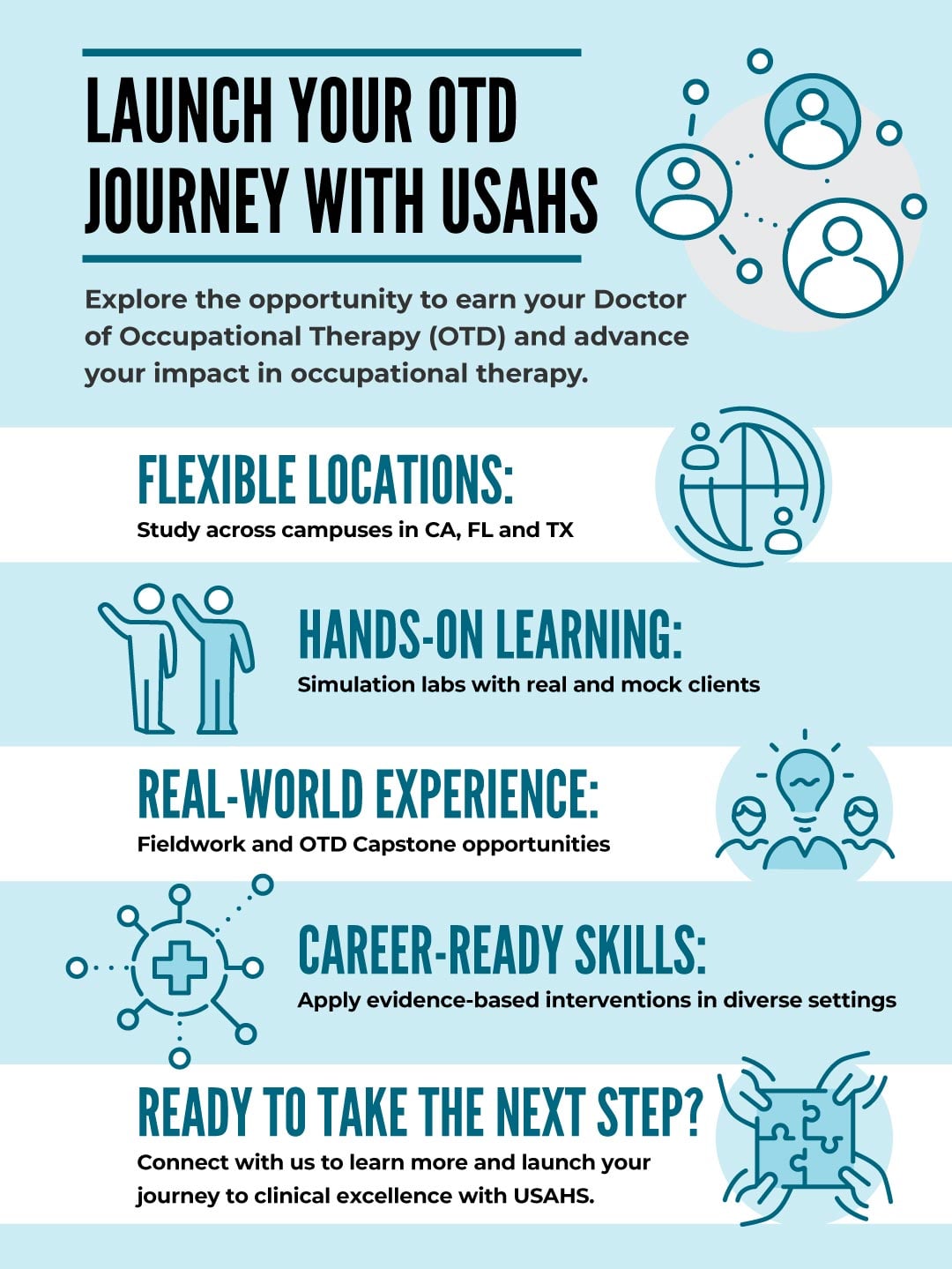
- Multiple learning pathways across campuses in California, Florida and Texas
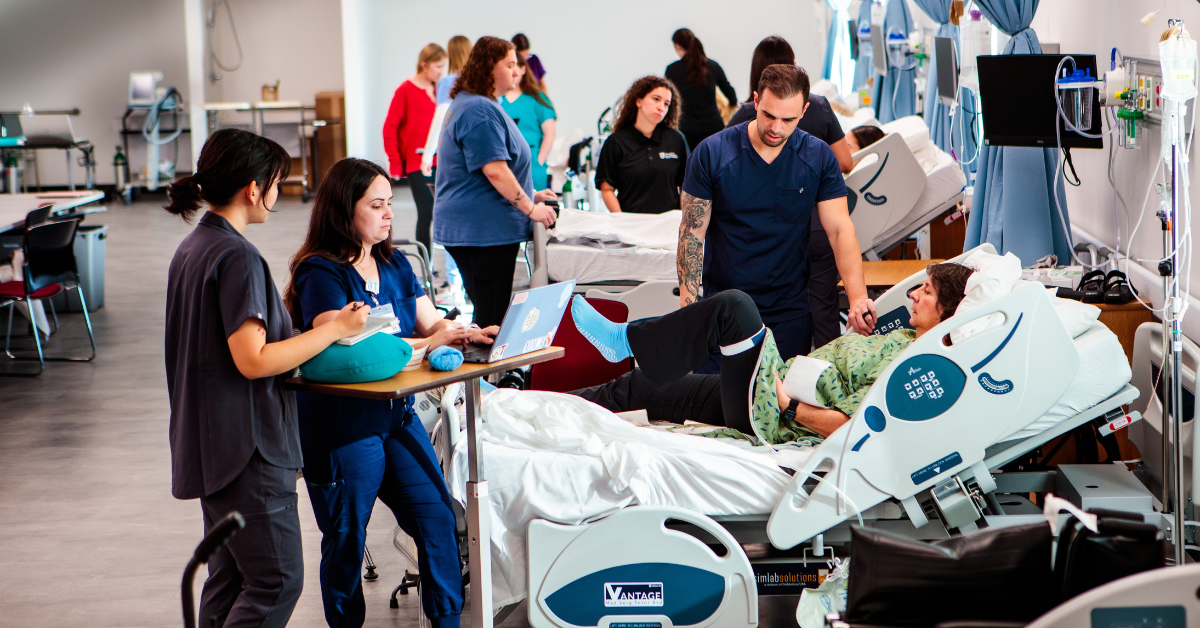
- Simulation and lab experiences with real or mock clients
- Dynamic fieldwork and OTD capstone opportunities to apply competencies in real-world contexts
When you are ready to move forward with your career as an occupational therapist, USAHS is ready. We support your goals to continue your education, whether you are currently working or a recent undergraduate. Contact us today to learn more.
*The PPOTD is not subject to accreditation by ACOTE.
**Time to completion may vary by student, depending on individual progress, credits transferred, and other factors.
FAQs
Do I need a doctorate to be an occupational therapist?
No. Currently, a master’s degree (MOT) is sufficient for entry-level practice in the U.S. However, entry-level OTD programs prepare students with doctoral-level skills and may offer additional leadership, research or advanced clinical opportunities.
What’s the difference between OTD and MOT requirements?
The OTD includes the same core competencies as the MOT plus doctoral-level coursework, an OTD capstone experience and emphasis on leadership, research and program development.
Where can I find official OTD requirements and accredited programs?
Visit ACOTE®, the NBCOT and individual accredited program websites. USAHS programs are ACOTE accredited and designed to meet all standards for NBCOT eligibility.
References:
- “Become an Occupational Therapy Practitioner,” American Occupational Therapy Association (AOTA), 2026 https://www.aota.org/career/become-an-ot-ota.
- “Am I eligible to take the NBCOT exam?,” National Board for Certification in Occupational Therapy (NBCOT), 2026, https://www.nbcot.org/get-certified/eligibility.
- “About ACOTE,” Accreditation Council for Occupational Therapy Education (ACOTE), 2026, https://acoteonline.org/about/.
- “2023 Accreditation Council for Occupational Therapy Education (ACOTE®) Standards and Interpretive Guide (effective July 31, 2025),” Accreditation Council for Occupational Therapy Education (ACOTE), https://dhhs.ne.gov/licensure/Credentialing%20Review%20Docs/CR-OT2023ACOTEStandards.pdf.
- “2023 Accreditation Council for Occupational Therapy Education (ACOTE®) Standards and Interpretive Guide,” Accreditation Council for Occupational Therapy Education (ACOTE), 2023, https://acoteonline.org/accreditation-explained/standards/.
- “We certify the knowledge of occupational therapy professionals,” National Board for Certification in Occupational Therapy (NBCOT), 2026, https://www.nbcot.org/.