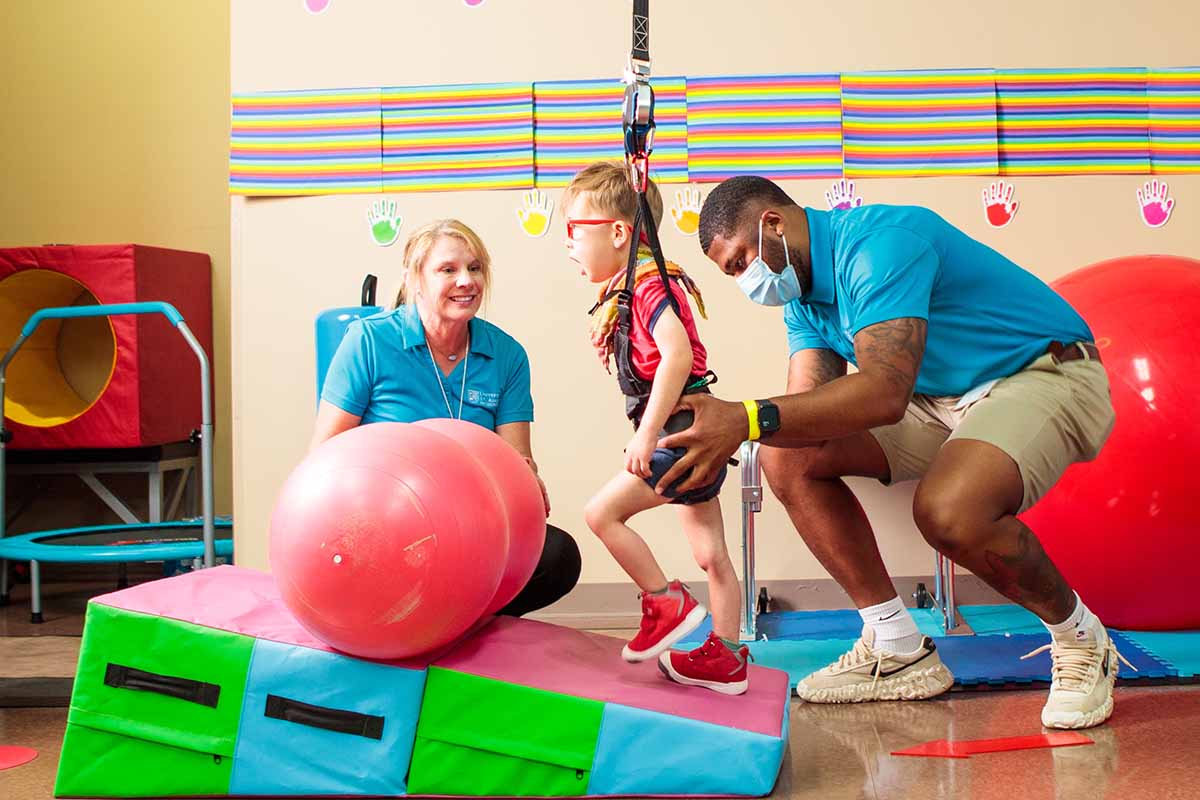

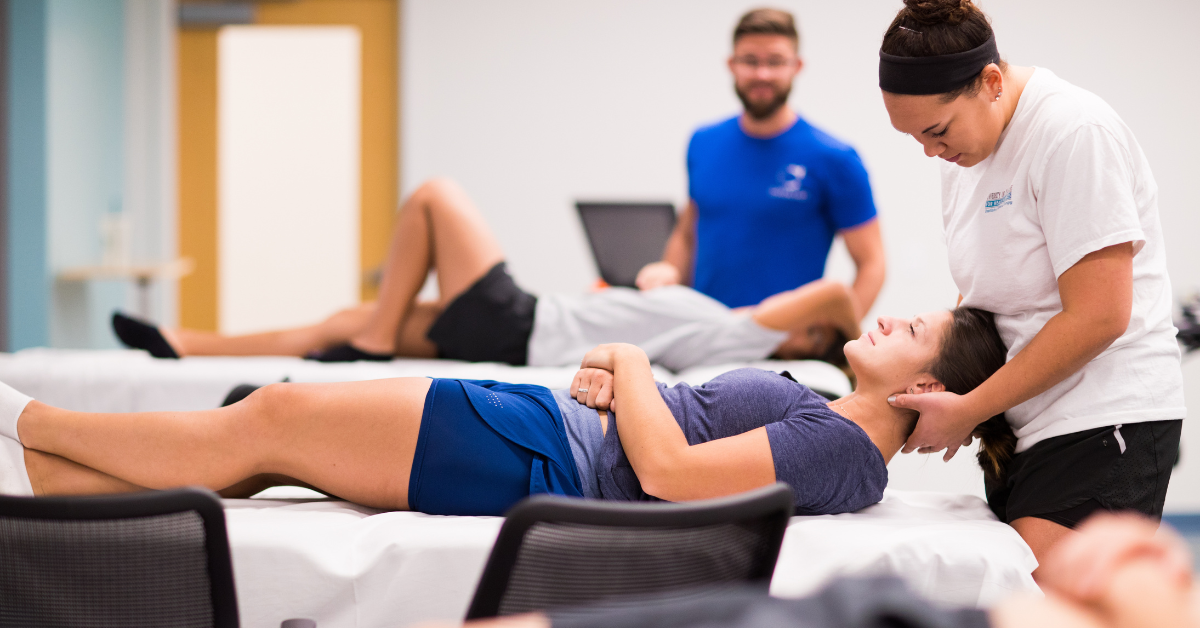
What is vestibular therapy? A specialized area of physical therapy (PT), vestibular rehabilitation is focused on helping people who experience dizziness, balance problems or vision issues related to vestibular disorders.1,2
In simple terms, it helps retrain the body and brain to work together again when the inner ear or balance system isn’t functioning properly. As part of neurological physical therapy, vestibular rehabilitation plays an important role in treating conditions that affect the inner ear, balance system and certain neurological pathways.2,3
For physical therapists who want to work in vestibular therapy, having a strong educational foundation is essential. A Doctor of Physical Therapy (DPT) degree program, like the one offered at the University of St. Augustine for Health Sciences (USAHS), can provide the knowledge and clinical skills needed to build a strong foundation for pursuing advanced practice in vestibular physical therapy.
Vestibular therapy is an exercise-based program created by trained physical therapists to reduce dizziness and improve balance and vision in people with inner ear and balance disorders.1 If you’ve ever known someone who feels off-balance just from standing up or dizzy when turning their head, you may have seen a vestibular condition in action.
The American Physical Therapy Association (APTA) describes vestibular rehabilitation as the most common treatment for peripheral vestibular hypofunction. The clinical practice guidelines help clinicians understand who to treat, which treatments to use, how to deliver care and when to adjust treatment plans.2
Vestibular physical therapy is regarded as a more advanced area within neurological physical therapy. It’s becoming more commonly known as an important part of physical therapy for individuals with neurological and balance disorders.3 If you are interested in exploring this career, vestibular rehabilitation offers a balance of clinical reasoning skill-building and hands-on practice.
What Is Vestibular Physical Therapy?
Vestibular physical therapy, also known as vestibular rehabilitation, focuses on how the brain and body process balance and movement. The goal is not just symptom relief but also functional improvement.
Vestibular therapy works to improve outcomes for patients with vestibular hypofunction and other related disorders. Physical therapists use exercise-based strategies to treat dizziness, vertigo, gaze instability and imbalance.3 Treatment plans typically include eye and head movement exercises, balance training and functional activities tailored to each patient’s symptoms and goals.
Vestibular physical therapy helps people return to daily activities, reduce fall risk and improve their overall quality of life.3 Many patients come in feeling unsure. Over time, guided exposure therapy and exercises help them rebuild confidence and independence.
Conditions Vestibular PTs Treat
Vestibular physical therapists treat a wide range of balance-related conditions. These conditions often fall into one of two categories: peripheral vestibular disorders and central or mixed disorders.
Peripheral vestibular conditions involve the inner ear. Common examples include benign paroxysmal positional vertigo (BPPV), unilateral or bilateral vestibular hypofunction, Menière’s disease and vestibular neuritis or labyrinthitis.4 These conditions often cause spinning sensations and dizziness or imbalance, all worsening with head movement or a change in position.
Central and mixed disorders often involve the brain and nervous system and typically require the help of neurology and other specialists. These disorders may include vestibular migraine, post-concussion dizziness, brainstem or cerebellar lesions and other neurological conditions that affect balance and spatial orientation.5
Vestibular physical therapists play a vital role in helping patients adapt and recover necessary function, even when symptoms seem unpredictable or complicated.
Salary and Job Outlook for Vestibular Physical Therapists
Salary and job outlook for vestibular physical therapists follow broader physical therapist trends, since vestibular clinicians work under the physical therapist role in outpatient clinics, hospitals and other care settings.6
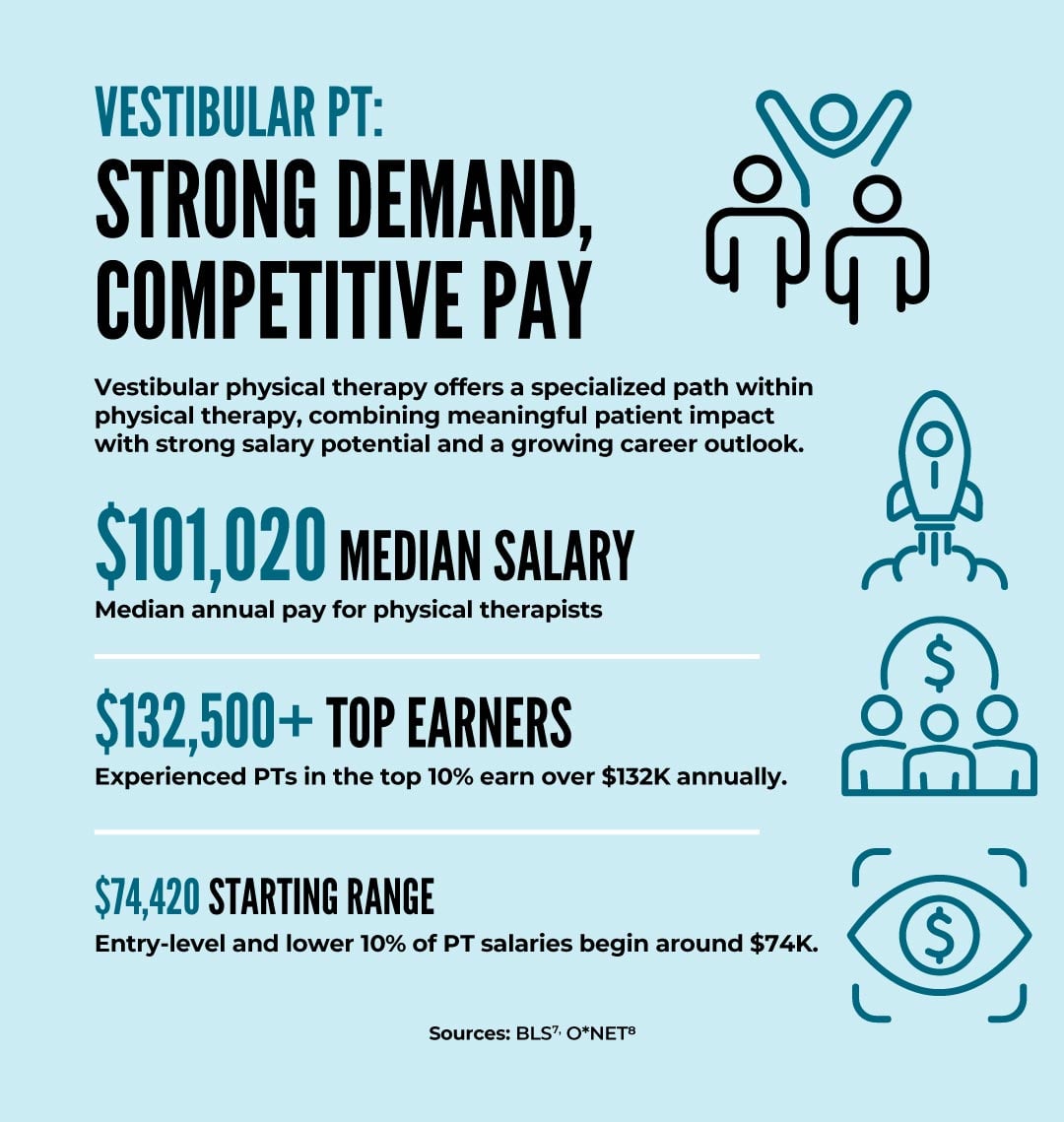
According to the Bureau of Labor Statistics (BLS) Occupational Outlook Handbook, the median annual wage for physical therapists was $101,020 as of May 2024.7 The lowest 10% of professionals earned under about $74,420. The highest 10% earned over about $132,500.7
Physical therapists most commonly work in:7
- Offices of physical, occupational and speech therapists
- Hospitals
- Home health services
- Nursing and residential care facilities
O*NET names physical therapists as a “much faster than average” growth occupation, mirroring broader workforce trends reported by the BLS.8 Vestibular clinicians often practice in outpatient and neurological rehabilitation settings where care connected to balance and dizziness is an ongoing need.6
How to Become a Vestibular Physical Therapist
Are you wondering how to become a certified vestibular therapist? Here’s a comprehensive look at the pathway that can help you get there.
Earn a DPT From a CAPTE-Accredited Program
To practice as a physical therapist in the United States, you need to complete vestibular therapy courses, coursework that involves the study of vestibular therapy, and earn a Doctor of Physical Therapy (DPT) degree from a program accredited by the Commission on Accreditation in Physical Therapy Education (CAPTE). CAPTE grants specialized accreditation to qualified entry-level physical therapy programs and expects them to meet certain standards.9
USAHS offers a DPT degree in multiple formats designed to align with different lifestyles.
Our DPT pathways include:
- Residential DPT: A campus-based experience with weekday classes, hands-on labs and in-person skill development supported by some online coursework.
- Hybrid Immersion: Includes online coursework, live virtual weekday sessions and two on-campus lab immersions per term.
- Flex DPT: Built for students who need more weekday flexibility, this format combines online coursework with live virtual evening/weekend sessions and on-campus labs on select weekends so you can keep moving toward your DPT with a schedule that works for you.
Across all pathways, USAHS focuses on experiential learning through the Centers for Innovative Clinical Practice (CICPs) across each of our campuses. CICPs mimic hospital and home environments with medical equipment and cutting-edge educational technology. Students practice clinical skills in realistic settings before entering full-time rotations.
USAHS DPT students also benefit from being surrounded by individuals with valuable clinical expertise. With expert physical therapy faculty-practitioners to guide them, students gain exposure to a variety of perspectives and learn from faculty with expertise across diverse fields. Electives and micro-credentials allow students to explore areas like Neurology, Sports Therapy, Pelvic Health, Manual Therapy and Business Leadership.
All program formats have the same curriculum and overall mission, with different pacing and delivery to align with student schedules and lifestyles. Faculty member backgrounds include neurological and vestibular rehabilitation, balance and fall prevention and movement disorders. Students gain early exposure to concepts they’ll need to be familiar with later on.
Pass the NPTE and Get Licensed
After graduating from a CAPTE-accredited DPT program, you need to pass the National Physical Therapy Examination (NPTE). You also need to meet state-specific licensing requirements, which can be found through resources provided by CAPTE and the Federation of State Boards of Physical Therapy (FSBPT).10,11
The NPTE evaluates entry-level competence across a range of physical therapy fields. Once licensed, physical therapists (PTs) can begin general practice and continue growing in areas like vestibular rehabilitation through clinical experience and continuing education.
Build Foundational Neurologic and Vestibular Experience
Vestibular physical therapy is grounded in neurology, so building a strong neurologic base early can make a big difference. During your DPT program and your first years in practice, it’s helpful to seek out clinical rotations in neurologic rehabilitation and, when available, vestibular or balance-focused programs. Those experiences give you more practice with the assessments and treatment strategies you’ll use in vestibular care.
Mentorship matters, too. Learning alongside PTs who hold neurologic clinical specialist credentials or who have vestibular expertise can accelerate your growth. With the right rotations and mentorship, you can sharpen clinical reasoning, improve evaluation skills and build confidence treating more complex balance and dizziness conditions.
Become a Board-Certified Neurologic Clinical Specialist (NCS)
Vestibular physical therapy is often closely connected to neurologic physical therapy, since balance, eye movement control and dizziness can be driven by the nervous system. As clinicians build experience in this area, many choose to pursue physical therapy vestibular continuing education. Advanced credentials, such as the Neurologic Clinical Specialist (NCS) certification, are available through the American Board of Physical Therapy Specialties (ABPTS).12
According to ABPTS, board-certified neurologic physical therapists have advanced expertise in examining and treating people with neurologic dysfunction, which can include patients with vestibular disorders.12 For PTs who want to deepen their vestibular skill set, the NCS pathway is one way to formally demonstrate specialized knowledge and clinical competence.13 Certification isn’t needed to practice vestibular rehabilitation, but it can lead to greater levels of professional advancement.
How USAHS Can Help You Launch a Vestibular PT Career
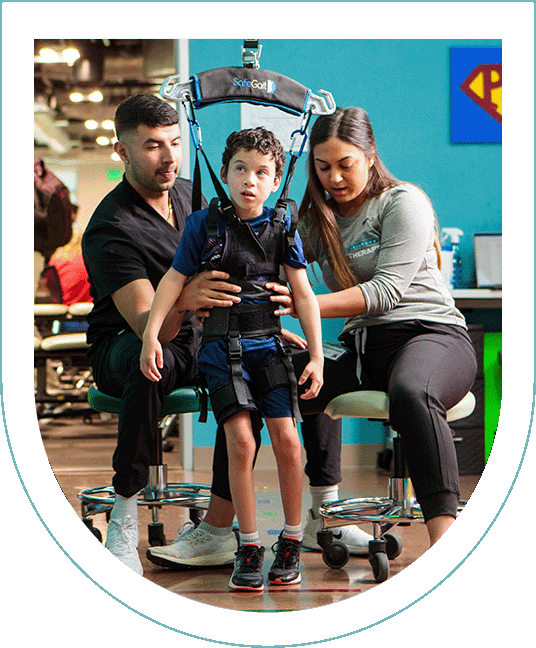
Pursuing a DPT at USAHS can support your long-term goals, including future specialization in vestibular rehabilitation. As a student, you’ll move through coursework in areas such as neurology, neuromuscular physical therapy and rehabilitation so you can understand how the nervous system influences movement, balance and function.
You’ll also learn alongside faculty, many of whom are practitioners, with expertise in diverse areas across physical therapy. Having access to that expertise can help you connect classroom concepts to real clinical scenarios and start thinking like a clinician.
We also know flexibility matters. That’s why we offer multiple DPT pathways that allow you to balance school with life responsibilities while still completing the hands-on labs and clinical education required for entry-level practice. For students who want to pursue advanced interests like vestibular rehabilitation, that flexibility can make it easier to stay on track and move toward a career.
FAQs
What’s the difference between a general PT and a vestibular physical therapist?
A general physical therapist treats a wide range of movement and functional conditions. A vestibular physical therapist focuses more on balance, dizziness and disorders related to the vestibular system. Vestibular clinicians use certain assessment tools and exercise-based interventions to treat symptoms like vertigo, gaze instability and imbalance.3
General PTs may treat vestibular conditions in some cases, but vestibular specialists have more specific, advanced training and clinical experience.
Is vestibular physical therapy a good career?
Yes. Vestibular physical therapy offers the opportunity to work with patients and help them make improvements that improve their daily function and quality of life.3 The profession allows clinicians to develop advanced neurological expertise while also practicing within the broader physical therapy profession.
Salary and job outlook data follow physical therapist trends reported by the BLS, which show strong earning potential and job demand across various work settings.7,8 Whether this career feels like a good fit depends on your interest in neurological care, patient education and problem solving for individuals with complicated conditions.
Salary data may not reflect starting pay for recent graduates.
References:
- “Vestibular Rehabilitation,” Cleveland Clinic, 2026, https://my.clevelandclinic.org/departments/rehabilitation/services/vestibular-rehabilitation.
- Hall, C. D., et al. “APTA Academy of Neurologic Physical Therapy: Vestibular Rehabilitation for Peripheral Vestibular Hypofunction – Updated (CPG+),” American Physical Therapy Association (APTA), April 1, 2022, https://www.apta.org/patient-care/evidence-based-practice-resources/cpgs/vestibular-rehabilitation-for-peripheral-vestibular-hypofunction-an-evidence-based-clinical-practice-guideline-cpg.
- MacDowell, S., et al. “Clinical Practice Guideline: Vestibular Rehabilitation for Peripheral Vestibular Hypofunction” Academy of Neurologic Physical Therapy, https://www.neuropt.org/docs/default-source/default-document-library/cpg-vestibular-rehab-for-peripheral-vestibular-hypofunction-with-reference.pdf.
- “Summary of the Clinical Practice Guideline,” American Speech-Language-Hearing Association,(ASHA), https://apps.asha.org/EvidenceMaps/Articles/ArticleSummary/84b2bb3c-252a-ed11-8137-005056834e2b.
- “TOPICS IN VESTIBULAR PHYSICAL THERAPY: Vestibular SIG Update,” APTA and Academy of Neurologic Physical Therapy, January 2025, https://www.neuropt.org/docs/default-source/vestibular-sig/vsig-newsletters/update-1-8-24_tvpt-winter-jan-2025.pdf.
- “Vestibular Rehabilitation Therapy (VRT),” Vestibular Disorders Association (VeDA), https://vestibular.org/article/diagnosis-treatment/treatments/vestibular-rehabilitation-therapy-vrt/.
- “Occupational Outlook Handbook: Physical Therapists,” U.S. Bureau of Labor Statistics (BLS), August 28, 2025, https://www.bls.gov/ooh/healthcare/physical-therapists.htm.
- “Physical Therapists,” O*NET Online, 2024, https://www.onetonline.org/link/summary/29-1123.00.
- “Welcome to CAPTE,” Commission on Accreditation in Physical Therapy Education (CAPTE), 2024, https://www.capteonline.org/.
- “National Exam (NPTE): All about the NPTE,” Federation of State Boards of Physical Therapy (FSBPT), 2023, https://www.fsbpt.org/Secondary-Pages/Exam-Candidates/National-Exam-NPTE.
- “About the National Physical Therapy Examination,” American Physical Therapy Association (APTA), 2025,https://www.apta.org/your-practice/licensure/national-physical-therapy-examination.
- “Become a Board-Certified Neurologic Clinical Specialist,” American Board of Physical Therapy Specialties (ABPTS), 2025, Nhttps://specialization.apta.org/become-a-specialist/neurology.
- “Neurologic Physical Therapy Description of Specialty Practice,” American Board of Physical Therapy Specialties (ABPTS), 2025, https://specialization.apta.org/become-a-specialist/neurology/dsp.