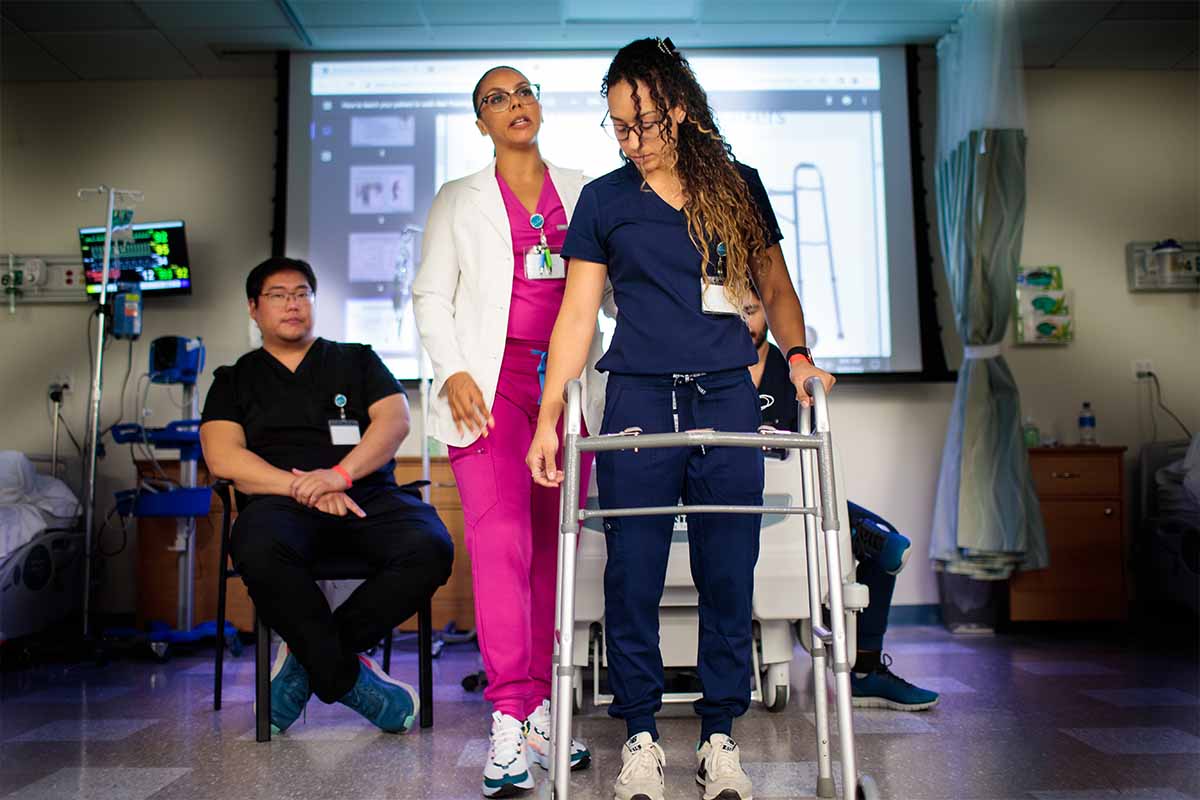
What does immersive education look like in an occupational therapy (OT) program? For the University of St. Augustine for Health Sciences (USAHS) graduate occupational therapy students, it involves stepping outside of the classroom and into the community to engage with innovative technology and see how it helps people live more independently.
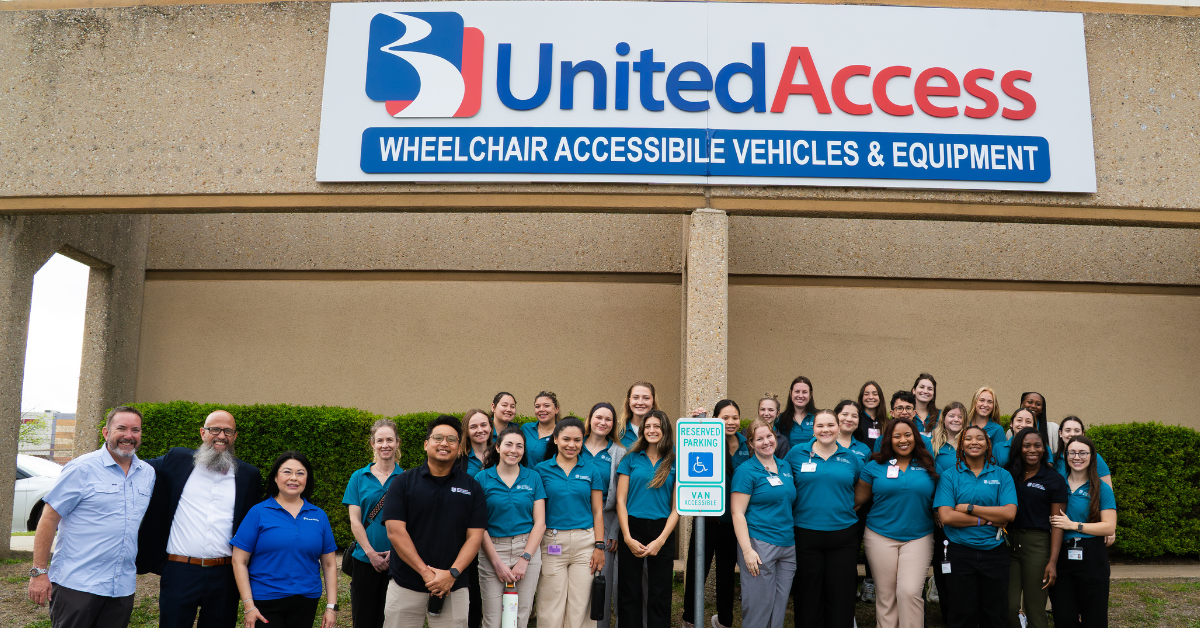
Recently, as a part of their Adapted Transportation Lab and Innovations course, USAHS OT students traveled to United Access. A Central Texas mobility dealership, United Access specializes in wheelchair-accessible vehicles, mobility lifts, driving aids and adaptive seating devices. The demonstration gave students an up-close look at the tools and technologies that can make everyday activities more accessible for individuals living with disabilities, injuries and chronic health conditions.
For many students, seeing these solutions in action transformed theoretical concepts into something tangible.
“There’s something about reading these things in a textbook as opposed to actually seeing the devices implemented that’s really beneficial,” says Philip P., USAHS OT student.
Hands-on training, real-world impact
Experiential learning is a core part of the USAHS OT journey to clinical excellence. Community partnerships like this one allow students to explore real-world applications of occupational therapy while gaining a deeper understanding of the challenges and solutions their future clients may encounter.
The visit introduced students to a wide range of adaptive transportation solutions, from wheelchair-accessible vans to specialized driving equipment designed to help individuals maintain independence and participate more fully in daily life.
As Philip P. explains, “We saw a lot of mobility and accessibility opportunities within cars and transportation needs. I think it was an eye-opening experience for all of us.”
These initiatives help students connect classroom knowledge to clinical practice before they begin their careers.
Transportation is about more than getting from one place to another. It’s often the key to employment, access to healthcare, social participation and independence.
“This is where the rubber meets the road,” advocates Christopher Ebner, EdD, MS, OTR, assistant professor, OT programs at USAHS. “When we think about our client population, those individuals who have a variety of different types of disabilities, illnesses or injuries, the ability to get out into the community and socialize is a vital component to what our clients need to do to resume their daily activities.”
By exploring adaptive mobility technology firsthand, students begin to understand the profound impact these solutions can have on a person’s quality of life.
“I think a big takeaway is the independence that these devices provide for our clients,” says Anapaola F., USAHS OT student. “Being able to drive is a huge part of feeling independent for a person. It gets you out of the house. It gets you to the places you want to be. I think it’s a very meaningful occupation for our clients.”
Growth through community engagement
Occupational therapists collaborate with clients, caregivers, healthcare providers and community partners to help individuals achieve their goals.
Visits like the one to United Access help students appreciate their role within a broader network of support.
“I’ve reinforced to the students today that they are a part of the interdisciplinary team that’s responsible for collectively ensuring their client has everything they need,” Dr. Ebner explains. “In essence, an informed and educated clinician results in an informed and educated client.”
These partnerships also expose students to a range of career pathways and resources.
Developing real-world readiness
One of the greatest benefits of experiential learning is the confidence it builds, preparing students for professional practice.
“It opens up the realm of possibilities,” Dr. Ebner says. “You can look around today and see the cogwheels turning in the students’ heads. That’s good insight because you know they’re going to be carrying these experiences forward into fieldwork and into clinical practice where they’ll impact lives on a day-to-day basis.”
Through community partnerships like these, hands-on labs, fieldwork experiences and Pro Bono Clinics, USAHS OT students develop the knowledge, skills and real-world expertise to make a positive difference in the lives of others.
Watch the video to learn more about the United Access visit.