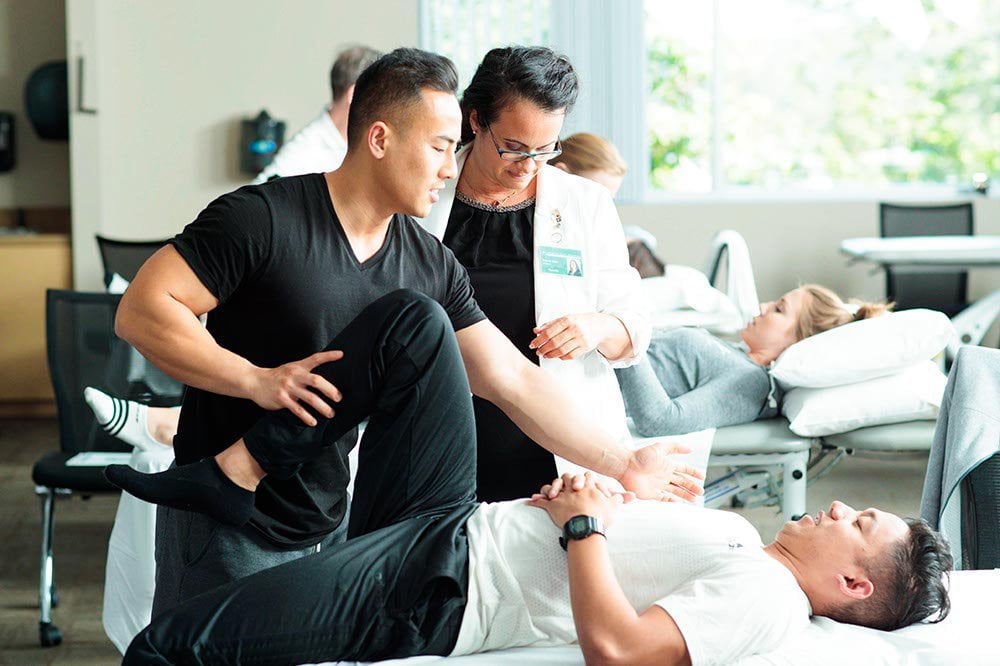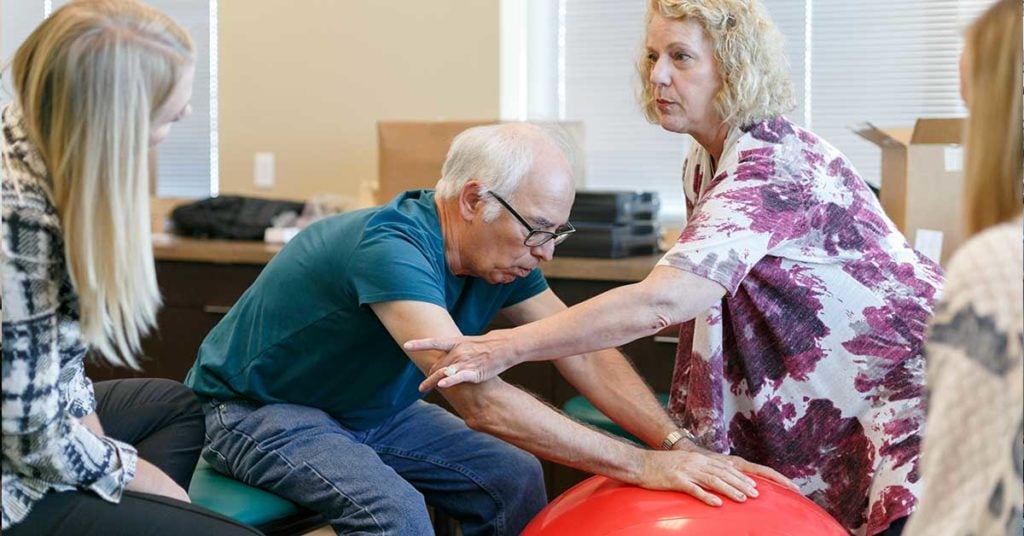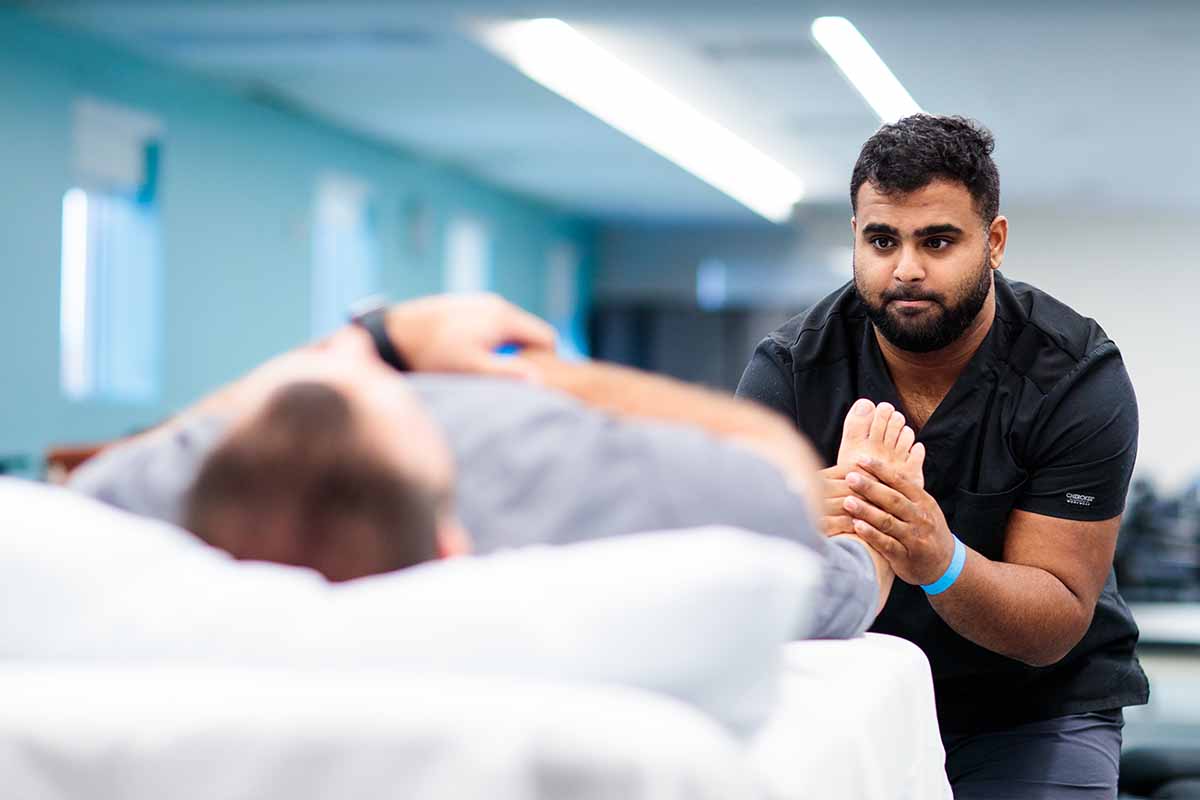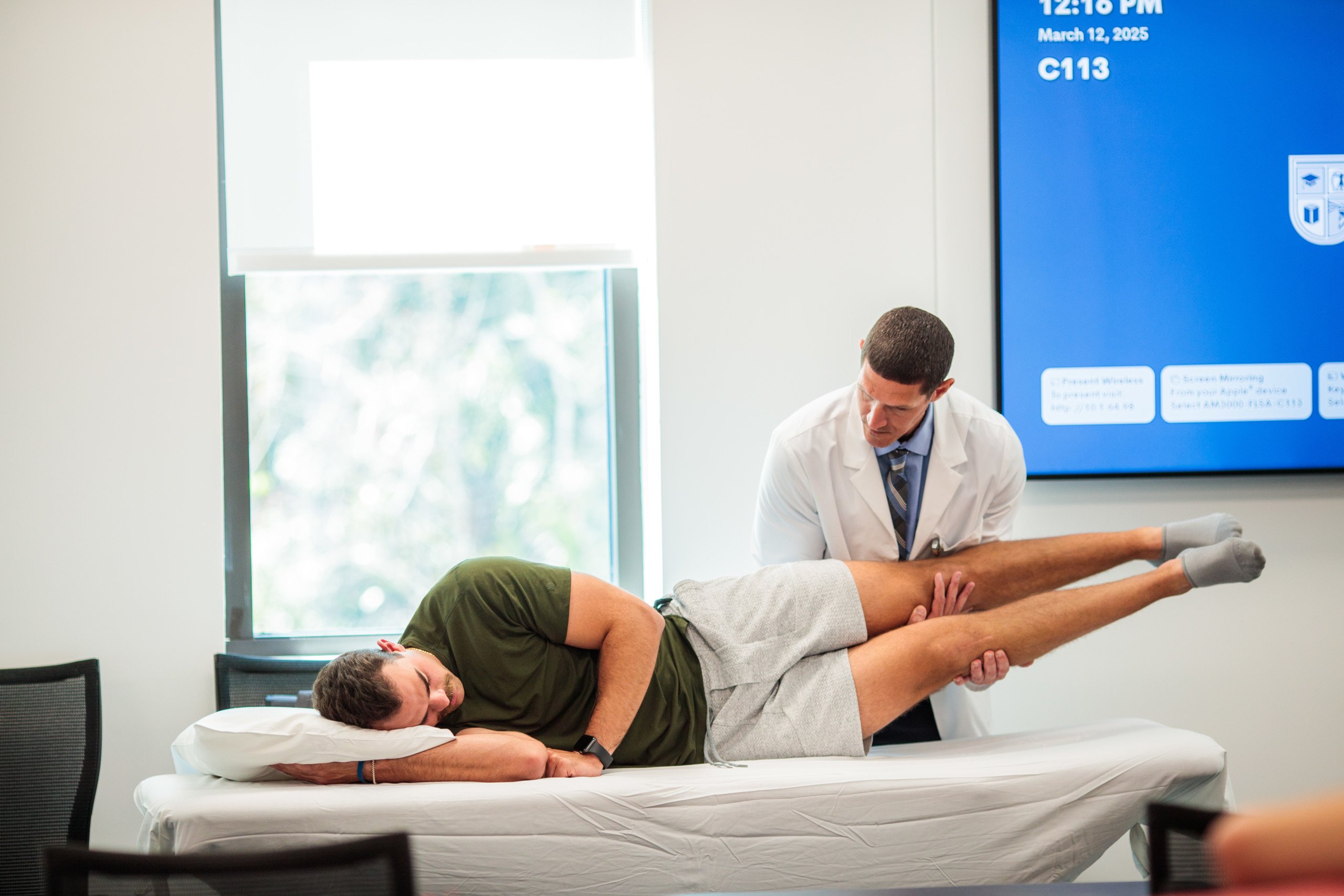

So, what is women’s health physical therapy? If you are drawn to helping women through some of the most transformative and vulnerable states in life, women’s health physical therapy offers a meaningful and growing path. This developing specialty is supported by the American Physical Therapy Association (APTA), and continues to gain momentum through board certification opportunities, expanding residency programs and evolving continuing education options.1
Earning your Doctor of Physical Therapy (DPT) at the University of St. Augustine for Health Sciences (USAHS) provides the strong clinical foundation you’ll need, along with the flexibility to pursue women’s health specialization as your interests and career goals take shape.
Let’s consider the career outlook for women’s health physical therapists, including projected job growth, drivers of demand and specialization pathways. We’ll also discuss how earning your DPT at USAHS can set you up for success in a women’s health physical therapy career.
Job Outlook: PT and Pelvic/Women’s Health
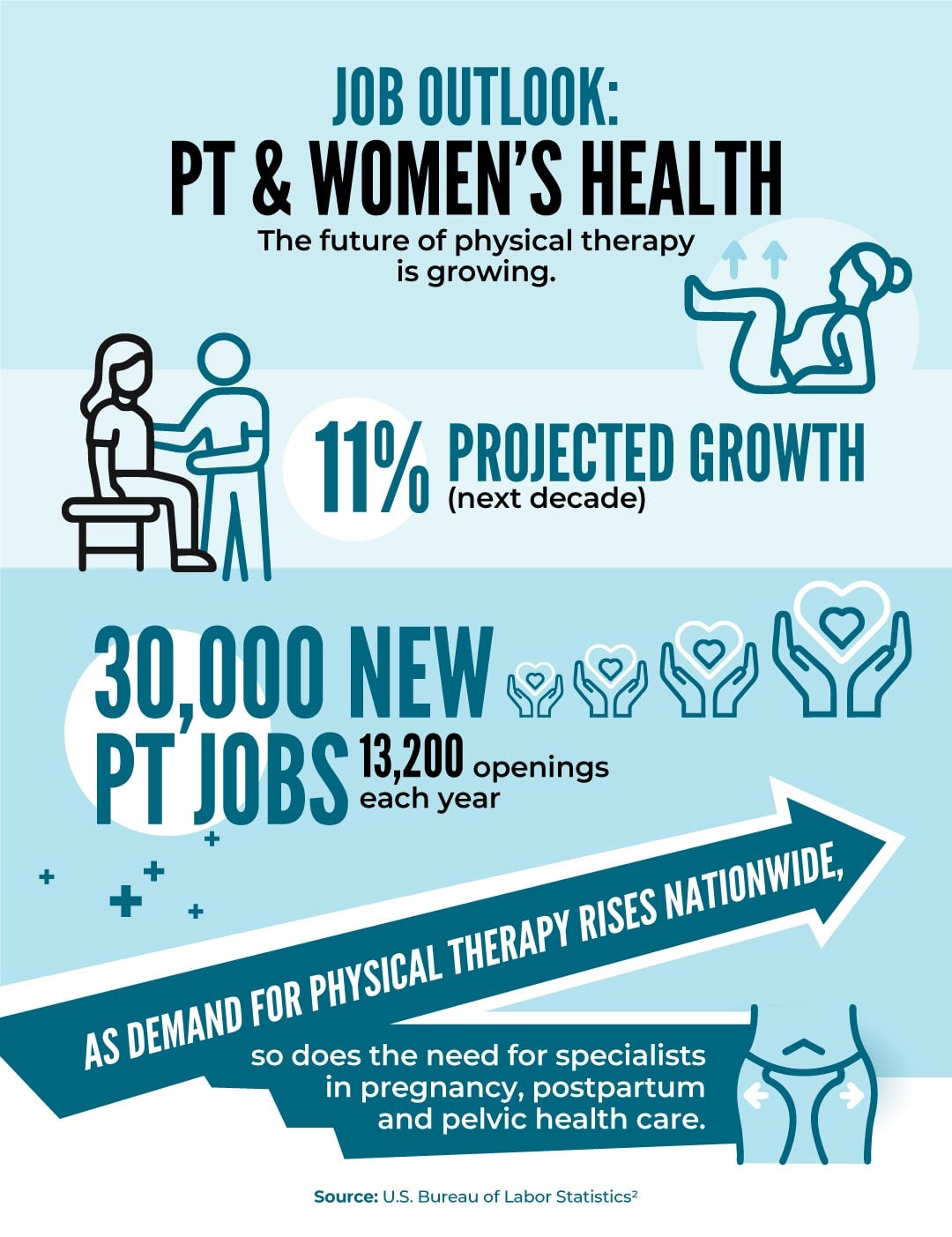
According to the U.S. Bureau of Labor Statistics (BLS), physical therapy is projected to grow much faster than average for all occupations, with an expected increase of 11% over the next decade. That equates to nearly 30,000 more new physical therapy positions in addition to the projected 13,200 job openings per year.2
APTA identifies pelvic health physical therapists as part of a collaborative care team addressing conditions across the lifespan, including pelvic pain, urinary and fecal incontinence and postpartum dysfunction.3
The Academy of Pelvic Health Physical Therapy, an affiliate component association of APTA, has experienced continued membership growth and has developed dedicated clinical practice guidelines, supporting formal residency programs and board certification.4 Together, these factors indicate a rapidly growing specialty within an already robust profession.
Demand Drivers for Women’s Health Physical Therapists
So, why is women’s health pelvic floor physical therapy important? There are several reasons:
- Awareness: APTA notes that limited awareness of pelvic health physical therapy among healthcare providers and patients continues to restrict access to care, particularly during pregnancy and the postpartum period, suggesting an unmet need for qualified clinicians.3
- Postpartum care: Growing attention at the national level to maternal health outcomes and postpartum care has facilitated a greater need for women’s health and pelvic health physical therapists. Advocacy efforts focused on improving recovery after childbirth increasingly recognize pelvic health physical therapy as a valuable component of comprehensive care.
Because of these factors, there’s a need for this specialty in numerous practice settings.
Women’s Health Physical Therapy Salary and Earning Potential
According to the BLS, the median annual wage for physical therapists was $101,020 in May 2024.2 The lowest 10% earned less than $74,420, while the highest 10% earned more than $132,500.2* These figures reflect general physical therapy compensation, not women’s health or pelvic health specifically.
As a physical therapist, your earnings may vary based on factors such as geographic location, years of experience, work setting and advanced training or certifications. APTA reports steady growth in the number of board-certified clinical specialists across recognized specialties, including women’s health, which may support professional advancement over time.5
Specialization Path: From DPT to Women’s Health Clinical Specialist
With all of this in mind, let’s take a closer look at the specialization path that takes you from a DPT to a women’s health clinical specialist.
Start with a DPT and Licensure
The first step toward a career in women’s health physical therapy is earning a Doctor of Physical Therapy (DPT) from a CAPTE-accredited program, followed by passing the National Physical Therapy Examination (NPTE) and obtaining state licensure.
USAHS offers a DPT program designed to prepare graduates for diverse clinical settings and future specializations, like women’s health. USAHS provides three pathway options: Residential, Hybrid Immersion and Flex. These formats allow students to choose a path that aligns with their learning preferences and life commitments.
Across pathways, our students benefit from:
- Hands-on lab immersions that emphasize coached skill development
- Full-time clinical experiences that build real-world readiness
- Evidence-based curriculum with a strong focus on clinical reasoning
- Opportunities to explore specialty interests, including pelvic health
- Faculty mentorship and integrated NPTE preparation
These elements create a strong foundation for graduates who plan to pursue women’s health physical therapy through post-professional training.
Build Pelvic Health Skills with Continuing Education
After licensure, many physical therapists interested in women’s health pursue continuing education through APTA Pelvic Health.
APTA Pelvic Health offers training courses in Pelvic Health Physical Therapy Levels 1 through 3, pregnancy and postpartum-focused courses and advanced topics such as pediatric pelvic floor conditions, oncology-related pelvic health and gender-affirming care.6 They also offer a Certificate of Advanced Practice in Physical Therapy in Pelvic Health or Obstetrics, which recognizes focused post-professional training.
Continuing education allows clinicians to gradually build competence while practicing in general outpatient, hospital-based or specialty clinics. Graduates of the USAHS’ DPT program have a strong foundation that allows them to pursue continuing education with confidence.
Consider a Pelvic or Women’s Health Residency
If you are looking for a more structured post-professional training, pelvic health and women’s health residencies are good options. These programs are overseen by the American Board of Physical Therapy Residency and Fellowship Education (ABPTRFE) and combine mentored clinical practice with advanced didactic education.7
Residencies may help clinicians deepen their clinical reasoning, refine their hands-on skills and prepare for future board certification.
Become a Board-Certified Women’s Health Clinical Specialist (WCS)
You don’t have to be board-certified in women’s health to practice it, but the American Board of Physical Therapy Specialties (ABPTS) offers the Board-Certified Pelvic & Women’s Health Clinical Specialist (PWCS) credential, which recognizes advanced knowledge in women’s health physical therapy.1
This certification encompasses clinical sciences, behavioral sciences, practice management and evidence-based care, and could help bolster your professional development and consideration for leadership within the specialty.
Women’s Health PT Career Outlook
Are you interested in women’s health physical therapy? This specialty exists within the broader field of physical therapy, which is projected to grow by 11% over the decade.2
This specialty continues to be important due to the prevalence of conditions that affect pregnancy, postpartum recovery, pelvic pain and quality of life issues across the lifespan.3
For students and clinicians drawn to reproductive health, pelvic health and patient-centered care, women’s health physical therapy offers a meaningful career path. A DPT degree from USAHS provides the foundational education needed to begin this journey and pursue specialization.
Salary data may not reflect starting pay for recent graduates.
FAQs
Is women’s health physical therapy in demand?
Women’s health physical therapy is a specialty within physical therapy. Physical therapy is projected to grow faster than other occupations. National organizations note the ongoing unmet need for pelvic health services, particularly in pregnancy and postpartum care.2,3
Do I need a special degree to become a women’s health PT?
You’ll need to earn a Doctor of Physical Therapy (DPT) degree from a CAPTE-accredited program, followed by licensure. Women’s health expertise is typically developed through continuing education, mentorship, residencies and optional board certification.
How can USAHS help me pursue women’s health PT?
USAHS offers flexible and immersive Doctor of Physical Therapy pathways that emphasize hands-on learning, strong clinical foundations and faculty mentorship. Exposure to pelvic and women’s health-related content can help prepare graduates for future continuing education, residencies or Board-Certified Pelvic & Women’s Health Clinical Specialist credential.
References:
- “Become a Board-Certified Pelvic and Women’s Health Clinical Specialist,” American Physical Therapy Association (APTA), APTA Specialist Certification (ABPTS), https://specialization.apta.org/become-a-specialist/womens-health.
- “Physical Therapists:.” Occupational Outlook Handbook,” U.S. Bureau of Labor Statistics (BLS), Aug. 28, 2025, https://www.bls.gov/ooh/healthcare/physical-therapists.htm.
- “About Us,” American Physical Therapy Association (APTA), https://www.aptapelvichealth.org/about#:~:text=Present%20%2D%20The%C2%A0Academy,wellness%20and%20exercise.
- “Academy of Pelvic Health Physical Therapy,” APTA Pelvic Health, 2026, https://www.aptapelvichealth.org/ptlocator/aptapelvichealth.
- “Number of Certified Specialists by Year,” APTA Specialist Certification (ABPTS), July 3, 2025, https://specialization.apta.org/about-abpts/abpts-data-outcomes/number-of-certified-specialists-by-year.
- “Live Course Descriptions,” APTA Pelvic Health, 2026, https://www.aptapelvichealth.org/course-descriptions.
- “Residency Education,” APTA Pelvic Health, 2026, https://www.aptapelvichealth.org/residencies/.