
Occupational Therapy Programs

Master of Occupational Therapy (MOT) Program

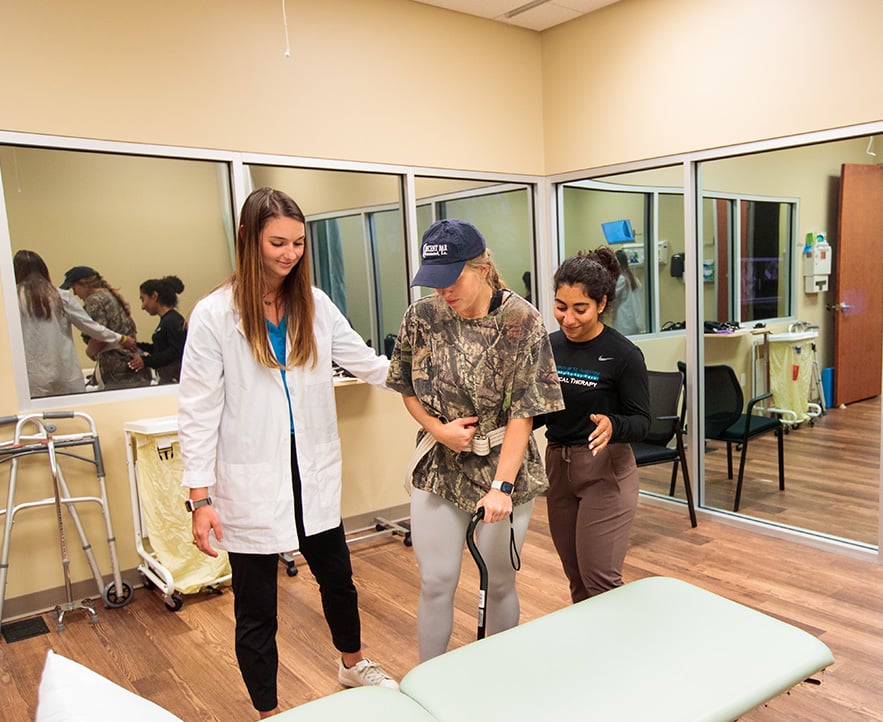
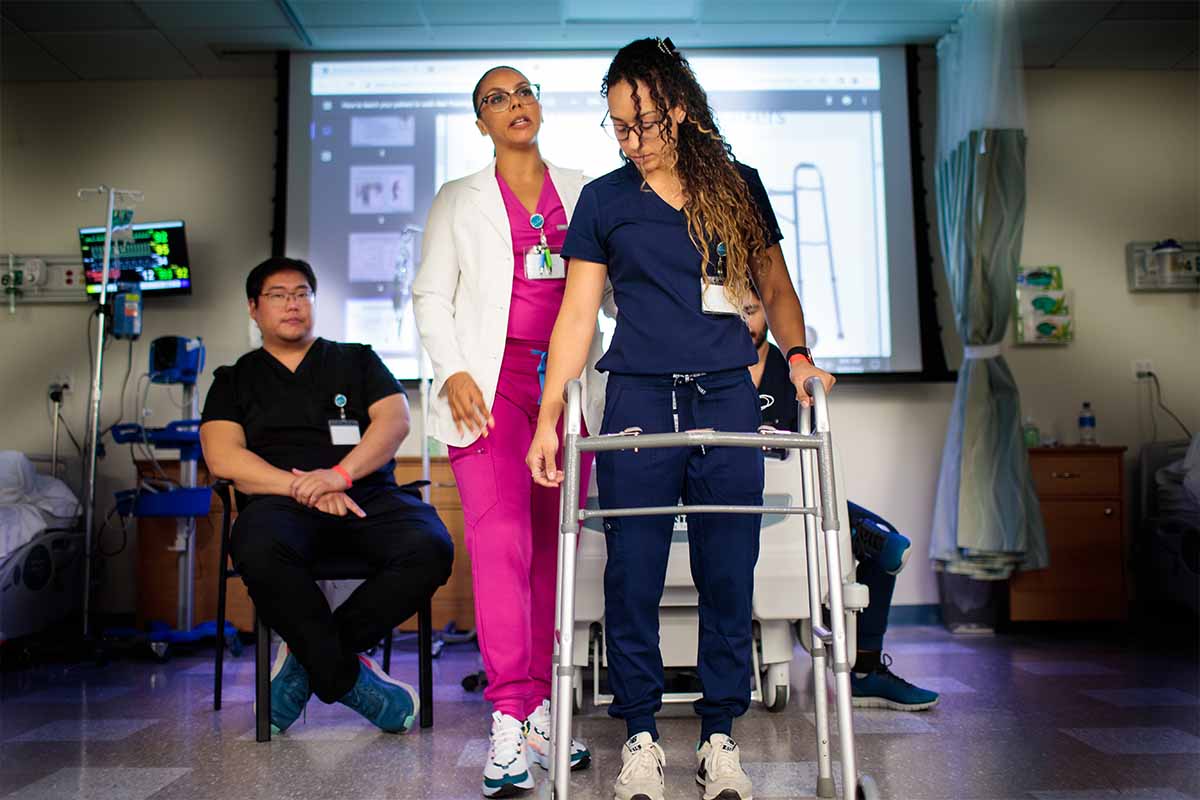
Gain the skills, confidence, and experience to become a licensed OT. Our Master of Occupational Therapy (MOT) program features expert faculty mentorship, work with real clients, hands-on training, and community engagement. Graduate practice-ready with the clinical skills and critical thinking needed to make an immediate impact in diverse healthcare settings.

Offered in three formats – Residential, Hybrid Immersion or Flex – USAHS has a program that fits your lifestyle and meets your personal needs.  Read more about these options below.

See Requirements & Program Details

Shorter and Newly Enhanced Curriculum

Now you can earn your MOT in as few as 1.7 years and start your career sooner.*Time to completion may vary by student, depending on individual progress, credits transferred and other factors.

Program at a Glance

Campuses: San Marcos, CA | St. Augustine, FL | Miami, FL | Austin, TX | Dallas, TX

Format: On-Campus Weekday Classes and Labs + Some Online Coursework

Start Dates: Sept., Jan., May (varies by campus)

Duration: 1.7 years (5 trimesters)*

Campuses: San Marcos, CA | St. Augustine, FL | Miami, FL | Dallas, TX

Format: Online Coursework, Live Virtual Weekday Sessions + 2 On-Campus Extended Weekend Labs per Term

Start Dates: Sept., Jan. (varies by campus), May

Duration: 1.7 years (5 trimesters)*

Campuses: San Marcos, CA | St. Augustine, FL | Miami, FL | Austin, TX | Dallas, TX

Format: Online Coursework, Live Virtual Evening/Weekend Sessions + On-Campus Labs on Select Weekends

Start Dates: Sept., Jan., May (varies by campus)

Duration: 2.7 years (8 trimesters)*

*Time to completion may vary by student, depending on individual progress, credits transferred and other factors.

Facts and Figures

handshake-icon

1-ON-1

Faculty Support and Mentorship Each student is assigned a faculty mentor when they start the program. On-demand appointments with the faculty mentor and/or course instructors are available.

faculty-icon

175+

Faculty
with Expertise in 30+ OT Specialties Data current as of August 2025

graduation-cap-icon

5,000+

OT Alumni.
Largest community of OT alumni Based on total MOT and OTD degrees conferred during 2020-2023 as reported by the Integrated Postsecondary Education Data System (IPEDS). Data is captured by IPEDS through interrelated surveys conducted annually by the Department of Education’s National Center for Educational Statistics (NCES) and from USAHS’ internal graduation data.

lighthouse-icon

25+

Year Legacy
of OT education

Why USAHS for Your Master’s in Occupational Therapy?

Immersive Hands-on Practice
Engage in extensive hands-on experiential learning in simulations to develop your critical thinking and practice with real clients with diverse challenges helping them get back to their daily occupations. Explore Simulaton Labs Explore Pro Bono
Expert Faculty Mentorship
Learn from 175+ expert OT faculty who are educators, researchers, and clinicians across 30+ specialties, dedicated to guiding, mentoring, and empowering your success. See Faculty
Support Along your Journey
Enjoy a smooth and fulfilling student experience with services and resources designed to inform, support, nurture, and connect you throughout your journey at USAHS. See Student Services
The Journey to Clinical Excellence
Embark on a transformative, student-centered experience where expert faculty-practitioners guide you through immersive education, shaping you into an OT ready to lead the future. Learn More
Flexible Learning Pathways
Find a learning format that fits your schedule and preferences, from in-person classes to a blend of online learning with in-person labs—designed to match your needs and availability. Explore Pathways
Prepare for Career Success
Prepare for your OT career with a program that equips you for the NBCOT certification exam and builds your confidence to excel in interprofessional environments and professional practice. See Curriculum Explore IPE

Master of Occupational Therapy Scholarships

USAHS offers scholarships for students pursuing their Master of Occupational Therapy degree to recognize and reward outstanding academic achievement.

Curriculum

Fall 2025

Master of Occupational Therapy Curriculum

The Residential MOT format and the Hybrid Immersion MOT format can be completed in 5 trimesters (1.7 years), while the Flex MOT format can be completed in 8 trimesters (2.7 years).  For all formats of the Master of Occupational Therapy program, students must complete 82 credit hours with virtual didactic coursework, hands-on clinical labs, and Level I and Level II fieldwork. Upon successful completion of the MOT program, graduates will be eligible to take the National Board for Certification in Occupational Therapy (NBCOT) certification examination.

Degree Requirements

Students must meet the following program requirements to complete the MOT degree and be eligible for graduation. These are located in the USAHS Catalog/Handbook. Instructions for how to locate each can be found below each requirement.

Students must meet the following program requirements to complete the MOT degree and be eligible for graduation:

  • Meet all requirements of the University’s Satisfactory Academic Progress policy. Locate by visiting catalog.usa.edu > Academic Policies > Satisfactory Academic Progress Policy.
  • Satisfactorily complete all program curricular requirements.
  • Fulfill the requirements of the University’s Professional Conference Attendance policy. Locate by visiting catalog.usa.edu > Academic Policies > Professional Conference Attendance Policy.

Students must submit an application for graduation by the deadline for the term in which they anticipate completing all degree requirements. Students should review Commencement Ceremony and Graduation for information on University graduation requirements, participation in commencement, and degree conferral. Locate by visiting catalog.usa.edu > Admissions, Records, and Registration > Degree Completion/Graduation.

MOT Residential/Hybrid Immersion Curriculum

CoursesHours
Curriculum - For Students Entering Fall 2025 or After
Term I
OCT 5101 - Introduction to Occupational Therapy
This course examines the domain of occupational therapy, including its historical foundation and philosophical base. It covers essential content, including core values, the code of ethics, models, frames of reference, and the Occupational Therapy Practice Framework for persons, groups, and populations. Occupational balance, therapeutic use of self, intraprofessional and interprofessional relationships, licensure, credentialing, and associations are also covered.
3
OCT 5127C - Occupational Analysis and Professional Reasoning
This course explores activity analysis with motor control principles and kinesiology. Students learn to perform detailed, occupational-based activity analyses and understand the biomechanical and neuromuscular factors influencing human movement. The course also addresses the occupational therapy process, including professional reasoning and the techniques of grading and adapting activities to meet the needs of diverse client populations. Emphasis is placed on integrating theoretical knowledge with practical skills to enhance occupational performance and promote client-centered care.
4
OCT 5133C - Evaluation and Assessment
This course provides a comprehensive exploration of evaluation and assessment principles across persons, groups, and populations. Students gain the knowledge, skills, and professional reasoning necessary to select, administer, and interpret assessments across various client populations, including, but not limited to pediatric, adult, and geriatric populations and across diverse practice settings. Effective and culturally aware written and verbal communication methods for documenting and disseminating evaluation findings are also covered.
4
OCT 5142C - Human Function
This course provides an in-depth exploration of human function from the perspective of occupational therapy, integrating cognitive, psychological, and physical aspects. Students develop a comprehensive understanding of the interplay between these dimensions and their impact on an individual's ability to engage in meaningful occupations and daily activities.
4
OCT 5151 - Conditions
This course introduces common mental health, neurological, orthopedic, and genetic conditions across the lifespan, linking the condition to physiology, neuroscience, and anatomy, the impact of cultural and socioeconomic elements on persons, groups, and populations. Students learn about basic screening assessments, understand the effects of various conditions across their lifespan, and gain foundational knowledge of pharmacological intervention.
5
Total Hours 20
Term II
OCT 5205 - Process of Occupational Therapy
This course examines the Occupational Therapy Practice Framework, focusing on the elements of evaluation, intervention, and outcomes for persons, groups, and populations. It emphasizes documenting the occupational therapy process.
3
OCT 5224 - Professional Scholarship
This course familiarizes students with scholarship of practice in occupational therapy. Students learn to become critical consumers of research by evaluating research methodologies, designs, and analyses. Ethical issues and the integration of research principles into evidence-based clinical practice are explored. Interprofessional collaboration is introduced and applied to evidence-informed research and practice.
2
OCT 5238C - Group Process and Therapeutic Use of Self
This course covers the characteristics and elements of various group dynamics, emphasizing how these factors influence therapeutic outcomes. Students learn about group models, protocols, characteristics, and the OT role within groups and apply these concepts to different populations. Additionally, students explore therapeutic use of self as it pertains to oneself and how it applies to the group process.
2
OCT 5240C - Mental Health Interventions
This course prepares students to critically appraise and deliver occupational therapy interventions in mental health practice settings to persons, groups, and populations across the lifespan who are labeled with or at risk of experiencing mental illness with the goal of facilitating the recovery process. Trauma-informed care perspectives are presented as foundational elements that inform mental health practice across settings and populations. The course integrates opportunities for developing reflective practice skills, therapeutic use of self, and advocacy while considering the impact of sanism and stigma in mental health practice.
5
OCT 5251C - Adult Interventions I
This course addresses occupational therapy interventions for adults with a variety of physical conditions, guided by but not limited to the biomechanical and rehabilitative frames of reference. Students learn to critically appraise and deliver evidence-based occupational therapy interventions to enhance independence in basic or instrumental activities of daily living as it applies to persons, groups, and populations across various settings. Conditions addressed may include orthopedic, amputations, burns, cardiopulmonary, oncology, and other physical conditions. Students focus on addressing these conditions with orthotics and physical agent modalities and how they enhance occupational performance. Other topics for discussion include referral, consultation, discharge, transition of care, inter- and intraprofessional collaboration, and cultural considerations. 
5
OCT 5263C - Innovations in Occupational Therapy
This course addresses occupational therapy interventions for adults with a variety of physical conditions, guided by but not limited to the biomechanical and rehabilitative frames of reference. Students learn to critically appraise and deliver evidence-based occupational therapy interventions to enhance independence in basic or instrumental activities of daily living as it applies to persons, groups, and populations across various settings. Conditions addressed may include orthopedic, amputations, burns, cardiopulmonary, oncology, and other physical conditions. Students focus on addressing these conditions with orthotics and physical agent modalities and how they enhance occupational performance. Other topics for discussion include referral, consultation, discharge, transition of care, inter- and intraprofessional collaboration, and cultural considerations.
2
OCT 5271 - Fieldwork I-A
Fieldwork Level I experiences enable students to integrate and apply course content from the Mental Health Interventions and Adult Interventions I courses through guided participation and observation. Students must demonstrate professional and clinical skills to engage in Fieldwork I-A successfully.Course is pass/fail graded. 
1
Total Hours 20
Term III
OCT 5313 - Leadership and Administration
This course includes assessing leadership skills and promoting professional development and self-reflection. Additional content includes supervision, mentorship, service, entrepreneurial opportunities, and operational responsibilities, including strategic planning, reimbursement, business planning, and billing. Students acquire skills including advocacy, interprofessional collaboration and communication, and representing OT in state and local organizations.
2
OCT 5320C - Children and Youth Interventions
This course prepares students to critically appraise and deliver occupational therapy interventions for children and youth in various settings as they apply to persons, groups, and populations. Topics include common diagnoses, funding, equipment, evidence-based interventions, referral, consultation, discharge, transition of care, inter- and intra-professional collaboration and cultural considerations of the individual, and cultural considerations of the individual's family or community. This course provides opportunities for developing occupation-based practice skills while considering children and youth, families/caregivers, and their communities across a variety of practice settings and levels of care.
5
OCT 5338 - Program Development
Students learn the importance of generating knowledge that enhances occupational performance and participation and is responsive to society's and consumers' priorities. The primary focus is on implementing knowledge, including programmatic theory, logic models, and needs assessment, to develop innovative programs and advance occupational therapy practice.
2
OCT 5347C - Culminating Practice
This course is designed to integrate and apply theoretical knowledge and practical skills acquired throughout the courses in the occupational therapy program. Through simulations, practicals, and demonstration of competencies, this course serves as a bridge between academic learning and professional practice. The students become equipped to embark on Level II fieldwork with confidence in their continued pathway to clinical excellence.
2
OCT 5352C - Adult Interventions II
This course addresses occupational therapy interventions for adults with a variety of neurological conditions, guided by but not limited to the neurorehabilitation frames of reference. Students learn to critically appraise and deliver evidence-based occupational therapy interventions to enhance independence in basic or instrumental activities of daily living as it applies to persons, groups, and populations across various settings. Conditions addressed may include traumatic brain injury, CVA, neurodegenerative, spinal cord injury and other neurological conditions. Students learn how orthotics and physical agent modalities address these conditions and how they enhance occupational performance. Other topics for discussion include referral, consultation, discharge, transition of care, inter- and intra-professional collaboration, and cultural considerations.
5
OCT 5371 - Fieldwork I-B
Fieldwork Level I experiences enable students to integrate and apply course content from the Children and Youth interventions and Adult Interventions II courses through guided participation and observation. Students must demonstrate professional and clinical skills to engage in FW I successfully.
1
Total Hours 17
Term IV
OCT 5442 - Fieldwork II-A
This is the first of two off-campus fieldwork experiences, with an emphasis on applying occupational therapy theory and skills acquired in didactic coursework to a clinical setting. Students demonstrate entry-level competency and standards of practice within this practice area. Students interact online with faculty to facilitate student learning through reflective practice.
12
Total Hours 12
Term V
OCT 5512 - Preparation for Professional Practice
This course is designed to equip occupational therapy students with the essential skills and knowledge required to transition smoothly into professional practice. The course integrates preparation for the NBCOT exam, interviewing skills, crafting effective cover letters, developing professional profiles, and managing the transition to practice.
1
OCT 5552 - Fieldwork II-B
This is the second of two off-campus fieldwork experiences, with an emphasis on applying occupational therapy theory and skills mastered in IIA in a different clinical setting. Students demonstrate entry-level competency and standards of practice within this second practice area. Students interact with faculty online to facilitate student learning through reflective practice.
12
Total Hours 13
Degree Credit Hours82

Flex MOT Curriculum

CoursesHours
Curriculum - For Students Entering Fall 2025 or After
Term I
OCT 5101 - Introduction to Occupational Therapy
This course examines the domain of occupational therapy, including its historical foundation and philosophical base. It covers essential content, including core values, the code of ethics, models, frames of reference, and the Occupational Therapy Practice Framework for persons, groups, and populations. Occupational balance, therapeutic use of self, intraprofessional and interprofessional relationships, licensure, credentialing, and associations are also covered.
3
OCT 5142C - Human Function
This course provides an in-depth exploration of human function from the perspective of occupational therapy, integrating cognitive, psychological, and physical aspects. Students develop a comprehensive understanding of the interplay between these dimensions and their impact on an individual's ability to engage in meaningful occupations and daily activities.
4
OCT 5151 - Conditions
This course introduces common mental health, neurological, orthopedic, and genetic conditions across the lifespan, linking the condition to physiology, neuroscience, and anatomy, the impact of cultural and socioeconomic elements on persons, groups, and populations. Students learn about basic screening assessments, understand the effects of various conditions across their lifespan, and gain foundational knowledge of pharmacological intervention.
5
Total Hours 12
Term II
OCT 5127C - Occupational Analysis and Professional Reasoning
This course explores activity analysis with motor control principles and kinesiology. Students learn to perform detailed, occupational-based activity analyses and understand the biomechanical and neuromuscular factors influencing human movement. The course also addresses the occupational therapy process, including professional reasoning and the techniques of grading and adapting activities to meet the needs of diverse client populations. Emphasis is placed on integrating theoretical knowledge with practical skills to enhance occupational performance and promote client-centered care.
4
OCT 5133C - Evaluation and Assessment
This course provides a comprehensive exploration of evaluation and assessment principles across persons, groups, and populations. Students gain the knowledge, skills, and professional reasoning necessary to select, administer, and interpret assessments across various client populations, including, but not limited to pediatric, adult, and geriatric populations and across diverse practice settings. Effective and culturally aware written and verbal communication methods for documenting and disseminating evaluation findings are also covered.
4
Total Hours 8
Term III
OCT 5205 - Process of Occupational Therapy
This course examines the Occupational Therapy Practice Framework, focusing on the elements of evaluation, intervention, and outcomes for persons, groups, and populations. It emphasizes documenting the occupational therapy process.
3
OCT 5224 - Professional Scholarship
This course familiarizes students with scholarship of practice in occupational therapy. Students learn to become critical consumers of research by evaluating research methodologies, designs, and analyses. Ethical issues and the integration of research principles into evidence-based clinical practice are explored. Interprofessional collaboration is introduced and applied to evidence-informed research and practice.
2
OCT 5238C - Group Process and Therapeutic Use of Self
This course covers the characteristics and elements of various group dynamics, emphasizing how these factors influence therapeutic outcomes. Students learn about group models, protocols, characteristics, and the OT role within groups and apply these concepts to different populations. Additionally, students explore therapeutic use of self as it pertains to oneself and how it applies to the group process.
2
OCT 5263C - Innovations in Occupational Therapy
This course addresses occupational therapy interventions for adults with a variety of physical conditions, guided by but not limited to the biomechanical and rehabilitative frames of reference. Students learn to critically appraise and deliver evidence-based occupational therapy interventions to enhance independence in basic or instrumental activities of daily living as it applies to persons, groups, and populations across various settings. Conditions addressed may include orthopedic, amputations, burns, cardiopulmonary, oncology, and other physical conditions. Students focus on addressing these conditions with orthotics and physical agent modalities and how they enhance occupational performance. Other topics for discussion include referral, consultation, discharge, transition of care, inter- and intraprofessional collaboration, and cultural considerations.
2
Total Hours 7
Term IV
OCT 5240C - Mental Health Interventions
This course prepares students to critically appraise and deliver occupational therapy interventions in mental health practice settings to persons, groups, and populations across the lifespan who are labeled with or at risk of experiencing mental illness with the goal of facilitating the recovery process. Trauma-informed care perspectives are presented as foundational elements that inform mental health practice across settings and populations. The course integrates opportunities for developing reflective practice skills, therapeutic use of self, and advocacy while considering the impact of sanism and stigma in mental health practice.
5
OCT 5251C - Adult Interventions I
This course addresses occupational therapy interventions for adults with a variety of physical conditions, guided by but not limited to the biomechanical and rehabilitative frames of reference. Students learn to critically appraise and deliver evidence-based occupational therapy interventions to enhance independence in basic or instrumental activities of daily living as it applies to persons, groups, and populations across various settings. Conditions addressed may include orthopedic, amputations, burns, cardiopulmonary, oncology, and other physical conditions. Students focus on addressing these conditions with orthotics and physical agent modalities and how they enhance occupational performance. Other topics for discussion include referral, consultation, discharge, transition of care, inter- and intraprofessional collaboration, and cultural considerations. 
5
OCT 5271 - Fieldwork I-A
Fieldwork Level I experiences enable students to integrate and apply course content from the Mental Health Interventions and Adult Interventions I courses through guided participation and observation. Students must demonstrate professional and clinical skills to engage in Fieldwork I-A successfully.Course is pass/fail graded. 
1
Total Hours 13
Term V
OCT 5320C - Children and Youth Interventions
This course prepares students to critically appraise and deliver occupational therapy interventions for children and youth in various settings as they apply to persons, groups, and populations. Topics include common diagnoses, funding, equipment, evidence-based interventions, referral, consultation, discharge, transition of care, inter- and intra-professional collaboration and cultural considerations of the individual, and cultural considerations of the individual's family or community. This course provides opportunities for developing occupation-based practice skills while considering children and youth, families/caregivers, and their communities across a variety of practice settings and levels of care.
5
OCT 5352C - Adult Interventions II
This course addresses occupational therapy interventions for adults with a variety of neurological conditions, guided by but not limited to the neurorehabilitation frames of reference. Students learn to critically appraise and deliver evidence-based occupational therapy interventions to enhance independence in basic or instrumental activities of daily living as it applies to persons, groups, and populations across various settings. Conditions addressed may include traumatic brain injury, CVA, neurodegenerative, spinal cord injury and other neurological conditions. Students learn how orthotics and physical agent modalities address these conditions and how they enhance occupational performance. Other topics for discussion include referral, consultation, discharge, transition of care, inter- and intra-professional collaboration, and cultural considerations.
5
OCT 5371 - Fieldwork I-B
Fieldwork Level I experiences enable students to integrate and apply course content from the Children and Youth interventions and Adult Interventions II courses through guided participation and observation. Students must demonstrate professional and clinical skills to engage in FW I successfully.
1
Total Hours 11
Term VI
OCT 5313 - Leadership and Administration
This course includes assessing leadership skills and promoting professional development and self-reflection. Additional content includes supervision, mentorship, service, entrepreneurial opportunities, and operational responsibilities, including strategic planning, reimbursement, business planning, and billing. Students acquire skills including advocacy, interprofessional collaboration and communication, and representing OT in state and local organizations.
2
OCT 5338 - Program Development
Students learn the importance of generating knowledge that enhances occupational performance and participation and is responsive to society's and consumers' priorities. The primary focus is on implementing knowledge, including programmatic theory, logic models, and needs assessment, to develop innovative programs and advance occupational therapy practice.
2
OCT 5347C - Culminating Practice
This course is designed to integrate and apply theoretical knowledge and practical skills acquired throughout the courses in the occupational therapy program. Through simulations, practicals, and demonstration of competencies, this course serves as a bridge between academic learning and professional practice. The students become equipped to embark on Level II fieldwork with confidence in their continued pathway to clinical excellence.
2
Total Hours 6
Term VII
OCT 5442 - Fieldwork II-A
This is the first of two off-campus fieldwork experiences, with an emphasis on applying occupational therapy theory and skills acquired in didactic coursework to a clinical setting. Students demonstrate entry-level competency and standards of practice within this practice area. Students interact online with faculty to facilitate student learning through reflective practice.
12
Total Hours 12
Term VIII
OCT 5512 - Preparation for Professional Practice
This course is designed to equip occupational therapy students with the essential skills and knowledge required to transition smoothly into professional practice. The course integrates preparation for the NBCOT exam, interviewing skills, crafting effective cover letters, developing professional profiles, and managing the transition to practice.
1
OCT 5552 - Fieldwork II-B
This is the second of two off-campus fieldwork experiences, with an emphasis on applying occupational therapy theory and skills mastered in IIA in a different clinical setting. Students demonstrate entry-level competency and standards of practice within this second practice area. Students interact with faculty online to facilitate student learning through reflective practice.
12
Total Hours 13
Degree Credit Hours82

View MOT Curriculum prior to fall 2025 here.
Close

Accreditation and State Approvals/Post-Graduate Licensure

MOT Program Accreditation Status

San Marcos Campus

The entry-level occupational therapy master’s degree (MOT) program at the San Marcos, California campus is accredited by the Accreditation Council for Occupational Therapy Education (ACOTE) of the American Occupational Therapy Association (AOTA), located at 7501 Wisconsin Avenue, Suite 510E, Bethesda, MD 20814. ACOTE’s telephone number c/o AOTA is (301) 652-AOTA and its web address is www.acoteonline.org. Graduates of the program will be eligible to sit for the national certification examination for the occupational therapist administered by the National Board for Certification in Occupational Therapy (NBCOT). After successful completion of this exam, the individual will be an Occupational Therapist, Registered (OTR). In addition, all states require licensure in order to practice; however, state licenses are usually based on the results of the NBCOT Certification Examination. A felony conviction may affect a graduate’s ability to sit for the NBCOT certification examination or attain state licensure.

Students must complete 24 weeks of Level II fieldwork within 24 months following completion of all prior didactic portions of the program.

For more information about the occupational therapy accreditation process, contact the Accreditation Council for Occupational Therapy Education (ACOTE), 7501 Wisconsin Avenue, Suite 510E, Bethesda, MD 20814, 301-652-6611 or [email protected].

ACOTE Logo

St. Augustine Campus

The entry-level occupational therapy master’s degree (MOT) program at the St. Augustine, Florida campus is accredited by the Accreditation Council for Occupational Therapy Education (ACOTE) of the American Occupational Therapy Association (AOTA), located at 7501 Wisconsin Avenue, Suite 510E, Bethesda, MD 20814, ACOTE’s telephone number c/o AOTA is (301) 652-AOTA and its web address is www.acoteonline.org. Graduates of the program will be eligible to sit for the national certification examination for the occupational therapist administered by the National Board for Certification in Occupational Therapy (NBCOT). After successful completion of this exam, the individual will be an Occupational Therapist, Registered (OTR). In addition, all states require licensure in order to practice; however, state licenses are usually based on the results of the NBCOT Certification Examination. A felony conviction may affect a graduate’s ability to sit for the NBCOT certification examination or attain state licensure.

Students must complete 24 weeks of Level II fieldwork within 24 months following completion of all prior didactic portions of the program.

For more information about the occupational therapy accreditation process, contact the Accreditation Council for Occupational Therapy Education (ACOTE), 7501 Wisconsin Avenue, Suite 510E, Bethesda, MD 20814, 301-652-6611 or [email protected].

ACOTE Logo

Miami Campus

The entry-level occupational therapy master’s degree (MOT) program at the Miami, Florida campus is accredited by the Accreditation Council for Occupational Therapy Education (ACOTE) of the American Occupational Therapy Association (AOTA), located at 7501 Wisconsin Avenue, Suite 510E, Bethesda, MD 20814. ACOTE’s telephone number c/o AOTA is (301) 652-AOTA and its web address is www.acoteonline.org. Graduates of the program will be eligible to sit for the national certification examination for the occupational therapist administered by the National Board for Certification in Occupational Therapy (NBCOT). After successful completion of this exam, the individual will be an Occupational Therapist, Registered (OTR). In addition, all states require licensure in order to practice; however, state licenses are usually based on the results of the NBCOT Certification Examination. A felony conviction may affect a graduate’s ability to sit for the NBCOT certification examination or attain state licensure.

Students must complete 24 weeks of Level II fieldwork within 24 months following completion of all prior didactic portions of the program.

For more information about the occupational therapy accreditation process, contact the Accreditation Council for Occupational Therapy Education (ACOTE), 7501 Wisconsin Avenue, Suite 510E, Bethesda, MD 20814, 301-652-6611 or [email protected].

ACOTE Logo

Austin Campus

The entry-level occupational therapy master’s degree (MOT) program at the Austin, Texas campus is accredited by the Accreditation Council for Occupational Therapy Education (ACOTE) of the American Occupational Therapy Association (AOTA), located at 7501 Wisconsin Avenue, Suite 510E, Bethesda, MD 20814. ACOTE’s telephone number c/o AOTA is (301) 652-AOTA and its web address is www.acoteonline.org. Graduates of the program will be eligible to sit for the national certification examination for the occupational therapist administered by the National Board for Certification in Occupational Therapy (NBCOT). After successful completion of this exam, the individual will be an Occupational Therapist, Registered (OTR). In addition, all states require licensure in order to practice; however, state licenses are usually based on the results of the NBCOT Certification Examination. A felony conviction may affect a graduate’s ability to sit for the NBCOT certification examination or attain state licensure.

Students must complete 24 weeks of Level II fieldwork within 24 months following completion of all prior didactic portions of the program.

For more information about the occupational therapy accreditation process, contact the Accreditation Council for Occupational Therapy Education (ACOTE), 7501 Wisconsin Avenue, Suite 510E, Bethesda, MD 20814, 301-652-6611 or [email protected].

ACOTE Logo

Dallas Campus

The entry-level occupational therapy master’s degree program at the Dallas, Texas, campus is accredited by the Accreditation Council for Occupational Therapy Education (ACOTE) of the American Occupational Therapy Association (AOTA), located at 7501 Wisconsin Avenue, Suite 510E, Bethesda, MD 20814. ACOTE’s telephone number c/o AOTA is (301) 652-AOTA and its web address is www.acoteonline.org. Graduates of the program will be eligible to sit for the national certification examination for the occupational therapist administered by the National Board for Certification in Occupational Therapy (NBCOT). After successful completion of this exam, the individual will be an Occupational Therapist, Registered (OTR). In addition, all states require licensure in order to practice; however, state licenses are usually based on the results of the NBCOT Certification Examination. A felony conviction may affect a graduate’s ability to sit for the NBCOT certification examination or attain state licensure.

Students must complete 24 weeks of Level II fieldwork within 24 months following completion of the didactic portion of the program.

For more information about the occupational therapy accreditation process, contact the Accreditation Council for Occupational Therapy Education (ACOTE), 7501 Wisconsin Avenue, Suite 510E, Bethesda, MD 20814, 301-652-6611 or [email protected].

ACOTE Logo

MOT (82 credits)

Post-Graduation Licensure

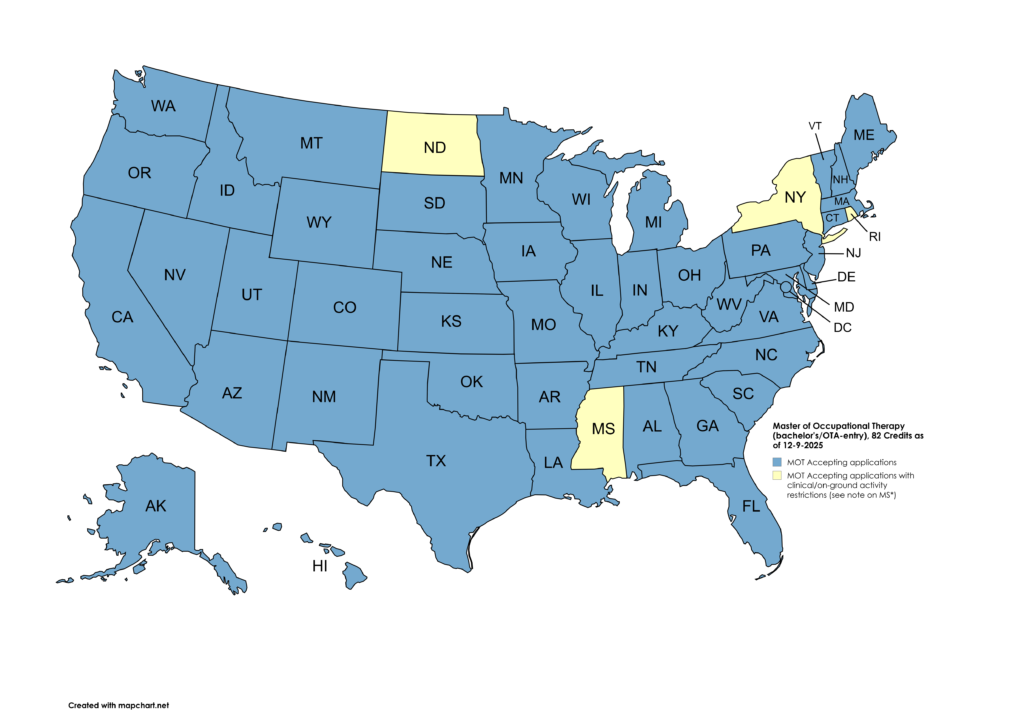
The MOT satisfies the educational requirements for licensure in all 50 states. For states denoted with clinical field experience and other on-the-ground activity restrictions, USAHS does not have the necessary state authorization approvals to offer on-the-ground activities of this kind in those states at this time. However, these restrictions should not impact a graduates’ eligibility for professional licensure in his/her state, provided all other requirements are met.

USAHS has not made a determination that its curriculum meets the educational requirements for licensure or certification in the following locations:  American Samoa, the Commonwealth of Puerto Rico, Guam, the Virgin Islands, the Commonwealth of the Northern Mariana Islands, the Republic of the Marshall Islands, the Federated States of Micronesia, and the Republic of Palau.

State Approvals

USAHS currently is accepting applications for enrollment in the Residential Master of Occupational Therapy (San Marcos, St. Augustine, Miami and Austin campuses) for residents of the following states: Alabama, Alaska, Arizona, Arkansas, California, Colorado, Connecticut, Delaware, District of Columbia, Florida, Georgia, Hawaii, Idaho, Illinois, Indiana, Iowa, Kansas, Kentucky, Louisiana, Maine, Maryland, Massachusetts, Michigan, Minnesota, Mississippi*, Missouri, Montana, Nebraska, Nevada, New Hampshire, New Jersey, New Mexico, New York, North Carolina, North Dakota, North Carolina, Ohio, Oklahoma, Oregon, Pennsylvania, Rhode Island, South Carolina, South Dakota, Tennessee, Texas, Utah, Vermont, Virginia, Washington, West Virginia, Wisconsin, and Wyoming.

USAHS is not accepting applications from prospective students residing in states where the institution does not have state authorization. However, prospective students are encouraged to check back in the near future as the program may be offered in additional states. Current and admitted students are also advised to monitor this page for any updates prior to relocating to another state, as this can have an impact on continued enrollment in the program and the ability to be placed for clinical field experience and other on-the-ground activity experiences.

MOT 82 CR map


*Please note for field placements in Mississippi, the Mississippi Commission on College Accreditation (MCCA) requires submission of application materials prior to each commission meeting, typically held 3-4 times per year, for review and approval by the MCCA prior to the beginning of field placement.

For states denoted with clinical field experience and other on-the-ground activity, USAHS does not have the necessary state authorization approvals to offer on-the-ground activities of this kind in those states at this time. However, these restrictions should not impact a graduates’ eligibility for professional licensure in his/her state, provided all other requirements are met. As such, the program satisfies the educational requirements for licensure in all 50 states.

It remains the student’s responsibility to understand, evaluate, and comply with all requirements relating to field education experiences, licensing or certification, authorization or endorsement for the state in which she or he resides.

MOT (Hybrid Immersion) (82 credits) San Marcos, St. Augustine, Miami, and Dallas

Post-Graduation Licensure

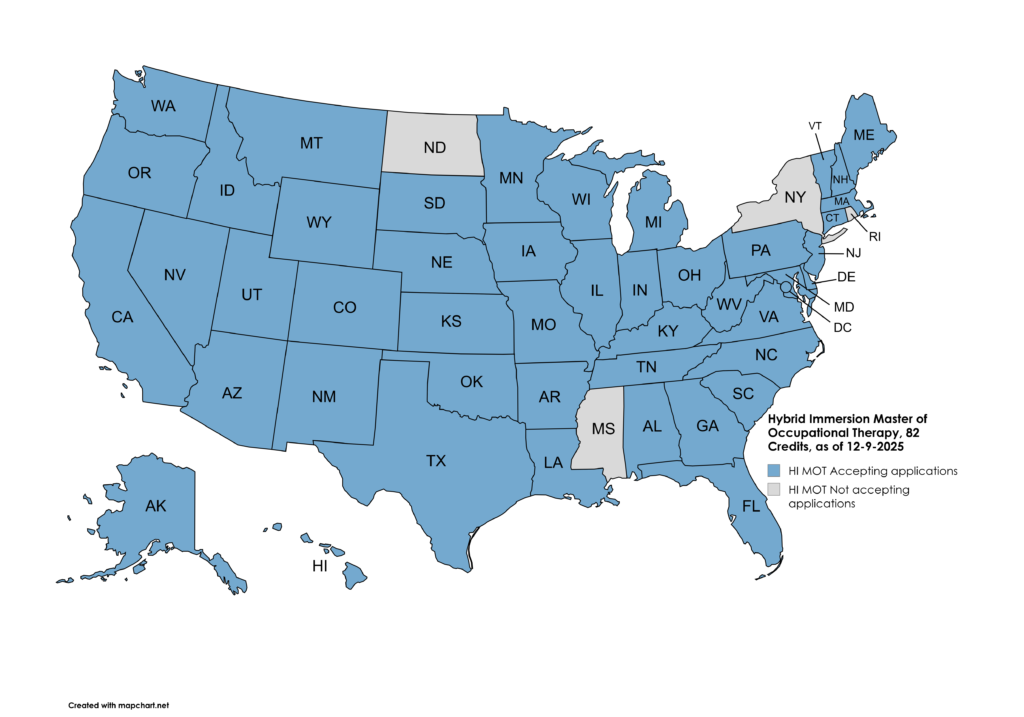
The MOT (Hybrid Immersion) satisfies the educational requirements for licensure in all 50 states. For states denoted with clinical field experience and other on-the-ground activity restrictions, USAHS does not have the necessary state authorization approvals to offer on-the-ground activities of this kind in those states at this time. However, these restrictions should not impact a graduates’ eligibility for professional licensure in his/her state, provided all other requirements are met.

USAHS has not made a determination that its curriculum meets the educational requirements for licensure or certification in the following locations:  American Samoa, the Commonwealth of Puerto Rico, Guam, the Virgin Islands, the Commonwealth of the Northern Mariana Islands, the Republic of the Marshall Islands, the Federated States of Micronesia, and the Republic of Palau.

State Approvals

USAHS currently is accepting applications for enrollment in the Master of Occupational Therapy (Hybrid Immersion) for residents of the following states:  Alabama, Alaska, Arizona, Arkansas, California, Colorado, Connecticut, Delaware, District of Columbia, Florida, Georgia, Hawaii, Idaho, Illinois, Indiana, Iowa, Kansas, Kentucky, Louisiana, Maine, Maryland, Massachusetts, Michigan, Minnesota, Missouri*, Montana, Nebraska, Nevada, New Hampshire, New Jersey, New Mexico, North Carolina, Ohio, Oklahoma, Oregon, Pennsylvania, South Carolina, South Dakota, Tennessee, Texas, Utah, Vermont, Virginia, West Virginia, Washington, Wisconsin and Wyoming.

USAHS is not accepting applications from prospective students residing in states where the institution does not have state authorization. However, prospective students are encouraged to check back in the near future as the program may be offered in additional states. Current and admitted students are also advised to monitor this page for any updates prior to relocating to another state, as this can have an impact on continued enrollment in the program and the ability to be placed for on-the-ground activities or clinical field experiences.


It remains the student’s responsibility to understand, evaluate, and comply with all requirements relating to field education experiences, licensing or certification, authorization or endorsement for the state in which she or he resides.

MOT (Flex) (82 credits)

Post-Graduation Licensure

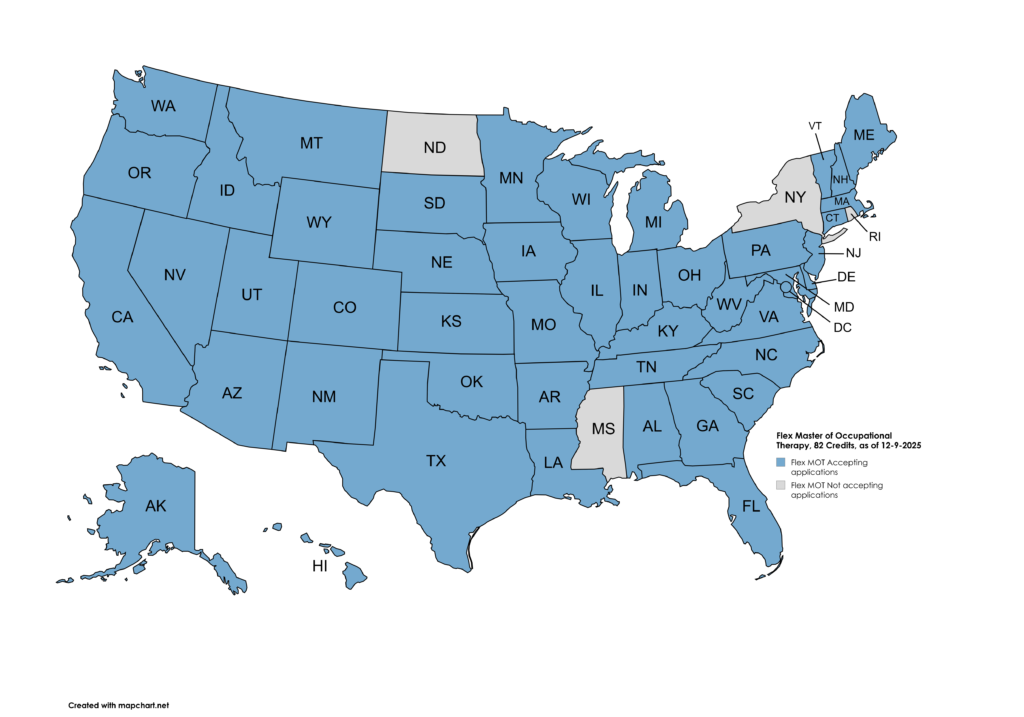
The MOT (Flex) satisfies the educational requirements for licensure in all 50 states. For states denoted with clinical field experience and other on-the-ground activity restrictions, USAHS does not have the necessary state authorization approvals to offer on-the-ground activities of this kind in those states at this time. However, these restrictions should not impact a graduates’ eligibility for professional licensure in his/her state, provided all other requirements are met.

USAHS has not made a determination that its curriculum meets the educational requirements for licensure or certification in the following locations:  American Samoa, the Commonwealth of Puerto Rico, Guam, the Virgin Islands, the Commonwealth of the Northern Mariana Islands, the Republic of the Marshall Islands, the Federated States of Micronesia, and the Republic of Palau.

State Approvals

USAHS currently is accepting applications for enrollment in the Flex Master of Occupational Therapy for residents of the following states:  Alabama, Alaska, Arkansas, Arizona, California, Colorado, Connecticut, Delaware, District of Columbia, Florida, Georgia, Hawaii, Idaho, Illinois, Indiana, Iowa, Kansas, Kentucky, Louisiana, Maine, Maryland, Massachusetts, Michigan, Minnesota, Missouri, Montana, Nebraska, Nevada, New Hampshire, New Jersey, New Mexico, North Carolina, Ohio, Oklahoma, Oregon, Pennsylvania, South Carolina, South Dakota, Tennessee, Texas, Utah, Virginia, Vermont, Washington, West Virginia, Wisconsin and Wyoming.

USAHS is not accepting applications from prospective students residing in states where the institution does not have state authorization. However, prospective students are encouraged to check back in the near future as the program may be offered in additional states.  Current and admitted students are also advised to monitor this page for any updates prior to relocating to another state, as this can have an impact on continued enrollment in the program and the ability to be placed for on-the-ground activities or clinical field experiences.

Flex MOT 82 CR Map


It remains the student’s responsibility to understand, evaluate, and comply with all requirements relating to field education experiences, licensing or certification, authorization or endorsement for the state in which she or he resides.

Close

Student Outcomes

MOT Student Outcomes

Graduation Rate

The entry-level Master of Occupational Therapy (MOT) program graduation is the number of students who graduate on time (# Students Graduating On Time) divided by the number of students admitted (# Students Entering) in the original cohort minus the number of students who withdrew due to military, health, family issues, death and other reasons not related to academic and clinical performance (# Students Excluded).

The total number of graduates and graduation rates from the University of St. Augustine for Health Sciences’ (USAHS) 93-credit MOT programs at the San Marcos, CA; St. Augustine, FL; Miami, FL; and Austin, TX, campuses during the three years of 2022-2024 are listed below. Note that these outcomes are relevant to the curriculum prior to fall 2025. Graduation rates for USAHS’ MOT program at the Dallas, TX, campus will be available at the end of summer 2025.

San Marcos, CA

Year# Students Entering# Students Excluded# Students Graduating On TimeOn-Time Grad Rate*# Students Graduating Within 101%-150%150% Grad Rate*
202210638381%1898%
202311449788%13100%
202410228989%998%
3-Yr Total322926986%4099%
*Graduation rate does not include students who withdrew for reasons other than academic performance.

St. Augustine, FL

Year# Students Entering# Students Excluded# Students Graduating On TimeOn-Time Grad Rate*# Students Graduating Within 101%-150%150% Grad Rate*
202210187581%1698%
2023146610978%2596%
2024137311586%489%
3-Yr Total3841729981%4594%
*Graduation rate does not include students who withdrew for reasons other than academic performance.

Miami, FL

Year# Students Entering# Students Excluded# Students Graduating On TimeOn-Time Grad Rate*# Students Graduating Within 101%-150%150% Grad Rate*
20226245086%8100%
20236644877%1195%
20245344286%596%
3-Yr Total1811214083%2497%
*Graduation rate does not include students who withdrew for reasons other than academic performance.

Austin, TX

Year# Students Entering# Students Excluded# Students Graduating On TimeOn-Time Grad Rate*# Students Graduating Within 101%-150%150% Grad Rate*
20229558089%10100%
202310958885%1599%
20248216277%886%
3-Yr Total2861123084%3396%
*Graduation rate does not include students who withdrew for reasons other than academic performance.

NBCOT Exam Pass Rate

Graduates of the accredited University of St. Augustine for Health Sciences’ Master of Occupational Therapy programs are eligible to take the certification examination administered by the National Board for Certification in Occupational Therapy.

Program performance data from the National Board for Certification in Occupational Therapy (NBCOT) can be found online at https://www.nbcot.org/Educators-Folder/SchoolPerformance.

Close

Program Data

Master of Occupational Therapy (MOT)

Click the campus/program below to view the occupational therapy master’s program data:

San Marcos, CA – Residential | FlexHybrid Immersion
St. Augustine, FL – Residential | FlexHybrid Immersion
Miami, FL – Residential | Flex | Hybrid Immersion
Austin, TX – Residential | Flex
Dallas, TX – Residential | Hybrid Immersion | Flex

Close

ACOTE and NBCOT Important Links

NBCOT examination results
Visit the NBCOT website for more information on NBCOT examination results.

ACOTE Accreditation
7501 Wisconsin Avenue, Suite 510E, Bethesda, MD 20814,
(301) 652-6611 or visit www.acoteonline.org.
Visit the ACOTE Website for more information on
the Accreditation Council for Occupational Therapy Education.

OTA to MOT

Learn more about our OTA-entry to the MOT program and earn your Master of Occupational Therapy degree in as little as 1.7 years. *Time to completion may vary by student, depending on individual progress, credits transferred and other factors.

How Do You Want To Study?

The Program is Designed to be Completed in

1.7 Years

Residential

I want to participate in an engaging, campus-focused education.

  • In-person coursework and immersive weekday lab experiences held on campus complemented by online learning.
Play Video

Hybrid Immersion

I want to live almost anywhere in the U.S. and benefit from blended learning.

  • Online coursework, live weekday sessions held virtually, and two immersive in-person lab experiences per term held on campus over extended weekends.
Play Video
2.7 Years

Flex

I want the benefits of blended learning while taking more time to earn my degree.

  • Online coursework, live evening and weekend sessions held virtually, plus immersive on-campus labs during select weekends.
Play Video

Take the Next Step Towards Your Future!

Want to learn more about the USAHS MOT program?
Program Details
OTA to OT Bridge

OTA to OT

OTA to OT Bridge

Admission to our Master of Occupational Therapy (MOT) program is open to Occupational Therapy Assistants (OTAs) without any additional coursework required.

If you’re an OTA and you don’t have a bachelor’s degree, you can pursue our OTA to OT bridge pathway and earn your master’s in occupational therapy in as little as 1.7 years! Our OTA to OT bridge pathway is ideal for an OTA wanting to expand their OT skills, advance their career and take on more responsibilities in the field of occupational therapy. You will take the exact same coursework and be in classes with other USAHS MOT students. It’s the fastest way to go from an OTA to OTR!

Occupational Therapy Assistant practitioners (OTAs) with a minimum of 84 credits from a U.S. Department of Education (USDE) recognized institution and at least 1 year of full-time work as an OTA can apply for admission to the USAHS Master of Occupational Therapy (MOT) program.

Getting Started

Need a little help taking the next step? Whether you’re ready to apply or seek additional information, it’s easy to get started on your path toward a fulfilling OT career.

Get More<br>Information

Get More
Information

Have questions? We can provide answers.

Schedule a One-on-One Consultation

Schedule a One-on-One Consultation

We’re with you every step of the way, no matter where you are on your journey

Start Your<br>Application

Start Your
Application

Now is the perfect time to get started with our easy step-by-step guide.


MOT Student Perspectives

Need help deciding which OT program is right for you?

Our MOT and OTD Programs

Need help deciding which OT program is right for you?

Use our helpful quiz to guide you to the right OT program for your career goals and lifestyle. We are happy to provide additional information, if needed.

Related Articles

Latest OT Articles

Let's Connect

We're here to support you on your educational journey.

Please complete our contact form. An enrollment advisor will reach out to provide information and answer your questions.