
Do you enjoy problem solving and coming up with creative solutions? Do you have the patience and empathy to work with children and help them become more independent? If so, you might consider becoming a pediatric occupational therapist.
In pediatric occupational therapy, you’ll have the opportunity to help children relearn and improve important coordination and motor skills so they can perform essential tasks in their lives more confidently.
Learn how to become a pediatric occupational therapist, including educational requirements and job responsibilities.
What Is a Pediatric Occupational Therapist?
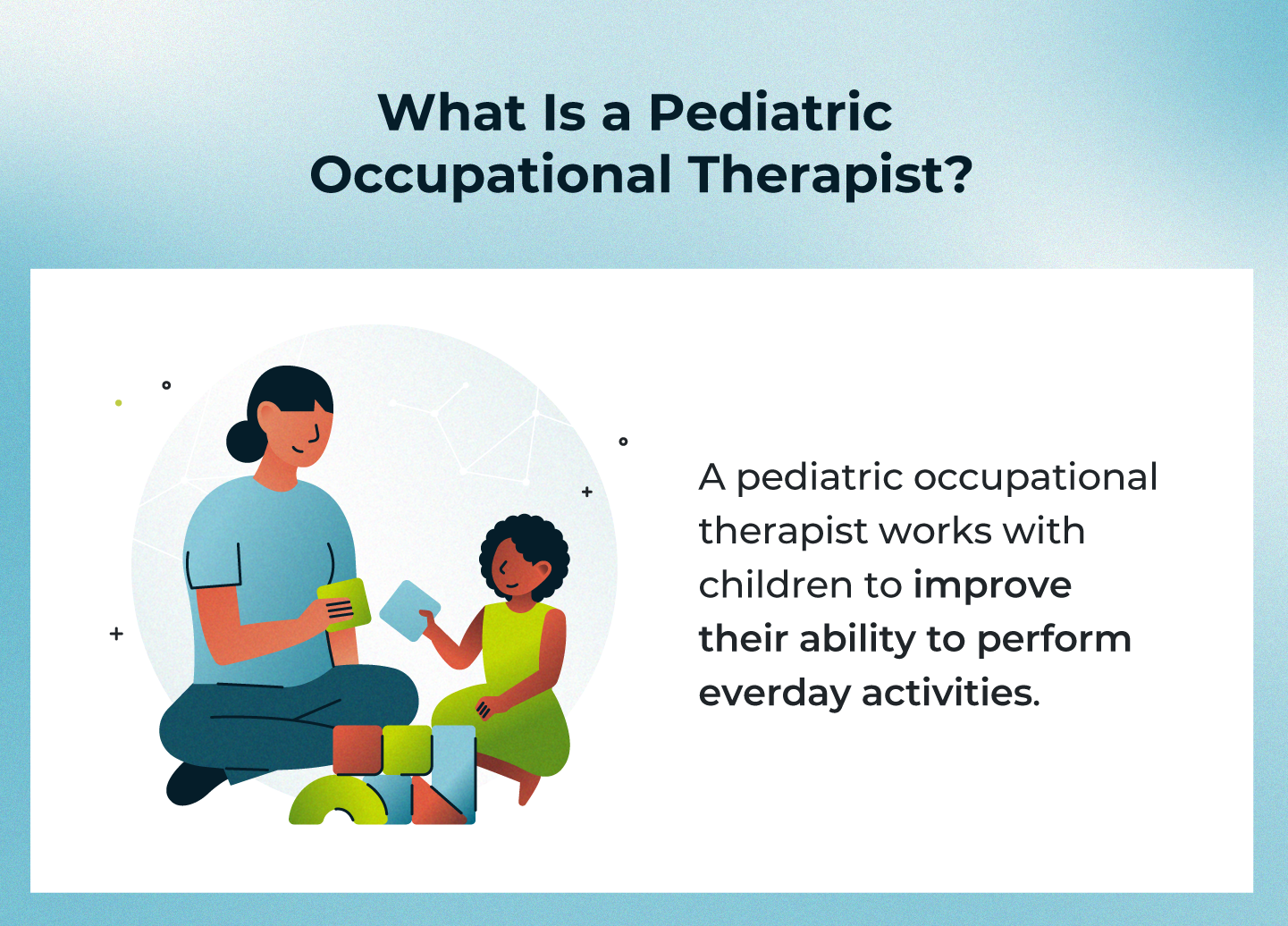
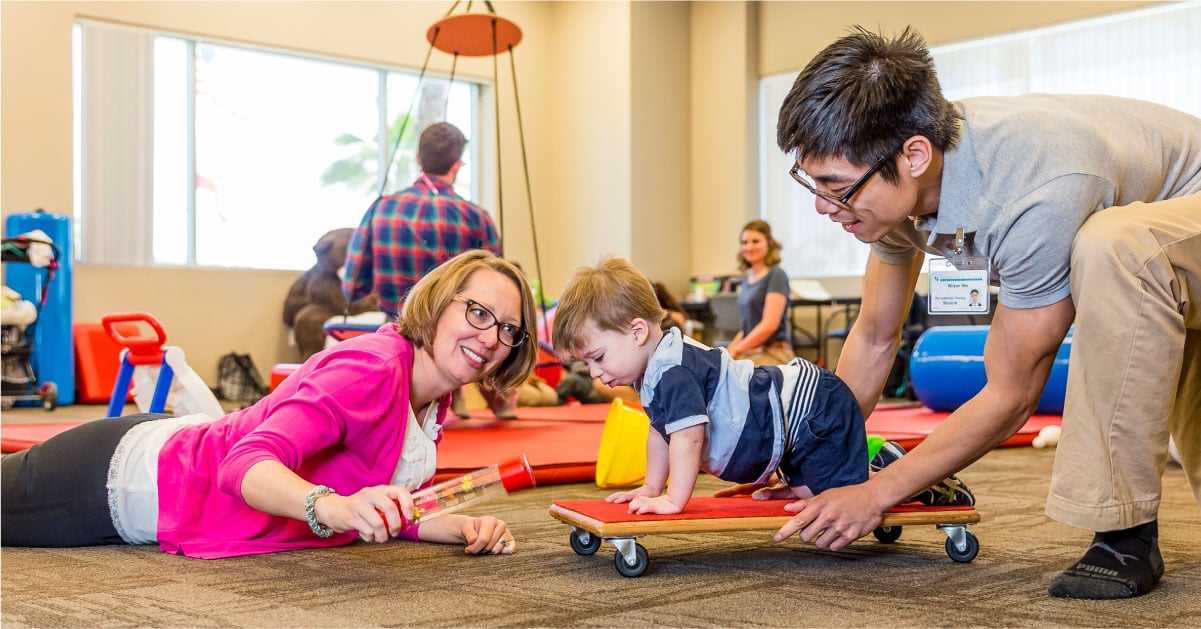
A pediatric occupational therapist (OT) works with children and adolescents with cognitive, mental and physical limitations to improve their fine motor skills so they can perform everyday tasks, like walking and grabbing an item.
Pediatric occupational therapists help patients develop and improve skills they need to be more independent in their everyday environments1. Occupational therapy helps them build more confidence so they can complete tasks by themselves.
What Do Pediatric Occupational Therapists Do?

Pediatric occupational therapists work in a variety of environments, including rehabilitation clinics, hospitals and schools. Some job duties will differ depending on the setting, but these are the most common responsibilities for pediatric occupational therapists2:
- Observe patients and perform assessments: Review a patient’s medical history before the initial visit, then assess the patient’s condition and limitations.
- Develop rehabilitation plans: Pediatric OTs must create rehabilitation plans for every patient that include goals and exercises. Adjust goals and treatment plans based on how the patient is progressing.
- Work with patients: Demonstrate exercises and activities to help the patient improve their motor and coordination skills.
- Monitor patient progress: Record patient progress with their treatment plan in client records.
- Provide at-home activities: Provide parents and guardians at-home activities for them to complete with the patient.
- Travel to patients’ homes: Visit the child’s environments, like home and school, to make sure accommodations are in place.
Pediatric OTs are cheerleaders for their patients, encouraging them every time they reach a goal in their treatment plan.
Five Steps to Becoming a Pediatric Occupational Therapist
DegreeMaster’s and higher
| Field of study | Occupational therapy |
| Certification | National Board for Certification in Occupational Therapy (NBCOT) |
| Specialization | Pediatrics |
| Median salary (2021) | $85,570 per year (all occupational therapists) |
| Job outlook (2021-2031) | 14% growth (all occupational therapists) |
| Number of jobs (2021) | 133,900 (all occupational therapists) |
There are educational and experiential requirements to become a pediatric occupational therapist. Follow these six steps to open the doors to a career in pediatric occupational therapy.
1. Earn a Bachelor’s Degree and Complete Fieldwork Experiences
First, you will need to earn a four-year undergraduate degree to qualify for a master’s degree program in occupational therapy.
We suggest maintaining a high GPA in your selected major to increase your chances of acceptance into your preferred graduate program.
Consider majoring in the following fields during your undergraduate program:
- Pre-occupational therapy
- Psychology
- Biology
- Kinesiology
- Physiology
- Education
- Child Development
You may also choose to complete an internship during your undergraduate program. Search for internships in occupational therapy clinics, schools, nursing homes and rehabilitation clinics.
2. Apply to Graduate School
You’ll need to apply to a two-year master’s program in occupational therapy after completing your undergraduate degree. The University of St. Augustine for Health Sciences’ (USAHS) MOT program offers Residential, Flex, and hybrid immersion formats. Students learn in a clinical setting while designing customized treatments for patients of all ages — so you have the option to choose the length and timing of your program and when you come to campus for hands-on labs.
If you plan to run an occupational therapy clinic in the future, you may consider obtaining a Doctor of Occupational Therapy (OTD) degree. USAHS’ Residential OTD program takes 2.7 years to complete.*
The MOT or OTD program you choose should hold accreditation status, which means it complies with the Accreditation Council for Occupational Therapy Education (ACOTE) standards. You can see if your MOT or OTD program is accredited on the ACOTE school directory4.
3. Take the NBCOT Exam
After you complete your graduate program(s), you’ll take the National Board for Certification in Occupational Therapy (NCBOT) exam5. To be eligible for the exam, you must complete an accredited MOT program and submit official transcripts. After you pass the NBCOT, you’ll be certified to practice occupational therapy.
4. Obtain State Licensure
You’ll need to obtain state licensure to practice occupational therapy in your state. Requirements vary by state, so we recommend going to your state board website for specific requirements.
5. Gain Pediatric Certification
After you receive your state licensure, you can legally practice occupational therapy in your state. You may go a step further and get certified in pediatric occupational therapy.
Pediatric occupational therapy certifications will strengthen your application for open positions in the pediatric field and give you a leg up in job interviews6. You can apply for certification through the American Occupational Therapy Association (AOTA). You’ll be required to complete an exam to test your knowledge of pediatric OT. Take a look at the other certification eligibility requirements before applying7.
Frequently Asked Questions
Below are commonly asked questions about becoming a pediatric occupational therapist.
What Is an Average Pediatric Occupational Therapist Salary?
The salary for a pediatric occupational therapist position will vary depending on location and certifications. The median salary for occupational therapists in 2021 was $85,570 per year3.
Currently, the average pay for pediatric occupational therapists is $37.53 per hour8.*
What Skills Do You Need To Be a Pediatric Occupational Therapist?
The skills required for pediatric occupational therapy are similar to the skills needed for occupational therapy, including9:
- Time management
- Interpersonal communication skills
- Patience
- Empathy
- Creativity
- Organization
Great pediatric occupational therapists also continue growing their knowledge in the field, especially about new health advancements and treatments.
How Do Occupational Therapy and Physical Therapy Differ?
There’s a big difference between occupational therapy and physical therapy. Though they are both rehabilitative sciences, occupational therapy aims to improve a patient’s ability to perform everyday tasks, whereas physical therapy aims to improve a patient’s range of motion and pain management.
Earn Your Master of Occupational Therapy With USAHS
Are you interested in pursuing a rewarding career in pediatric occupational therapy? USAHS offers several graduate programs in occupational therapy, including a two-year Master of Occupational Therapy program. Our MOT program stands out for its immersive lab opportunities and real-world clinical experiences.
*The information provided on this website is based on self-reported data and is intended for general informational purposes only. PayScale is a limited data source that relies on voluntary submissions from individuals and employers.
Please be aware that the accuracy, completeness, and reliability of the data may vary due to its voluntary nature and limited scope. While efforts are made to maintain the data’s accuracy, we cannot guarantee its absolute correctness or currency.
Salary data may not reflect starting pay for recent graduates.
Sources:
- Cleveland Clinic, “Pediatric Occupational Therapy,” Cleveland Clinic, https://my.clevelandclinic.org/health/treatments/25094-pediatric-occupational-therapy
- Learn.org, “What Is the Job Description of a Pediatric Therapist?,” Learn.org, https://learn.org/articles/What_is_the_Job_Description_of_a_Pediatric_Therapist.html
- U.S. Bureau of Labor Statistics, “Occupational Therapists,” U.S. Bureau of Labor Statistics, last modified March 2023, https://www.bls.gov/ooh/healthcare/occupational-therapists.htm
- ACOTE, “School Directory,” ACOTE, https://acoteonline.org/schools/
- NBCOT, NBCOT, https://www.nbcot.org/
- AOTA, “Board Certification in Pediatrics,” AOTA, https://www.aota.org/career/advanced-certification-program/pediatrics
- AOTA, “Advanced Certification Eligibility Criteria” AOTA, https://www.aota.org/career/advanced-certification-program/eligibility-requirements
- Payscale, “Average Pediatric Occupational Therapist Hourly Pay” PayScale, last modified 2023, https://www.payscale.com/research/US/Job=Pediatric_Occupational_Therapist/Salary
- Indeed Editorial Team, “How To Become a Pediatric Occupational Therapist (With Job Details),” Indeed, last modified June 2023, https://www.indeed.com/career-advice/finding-a-job/how-to-become-pediatric-occupational-therapist